
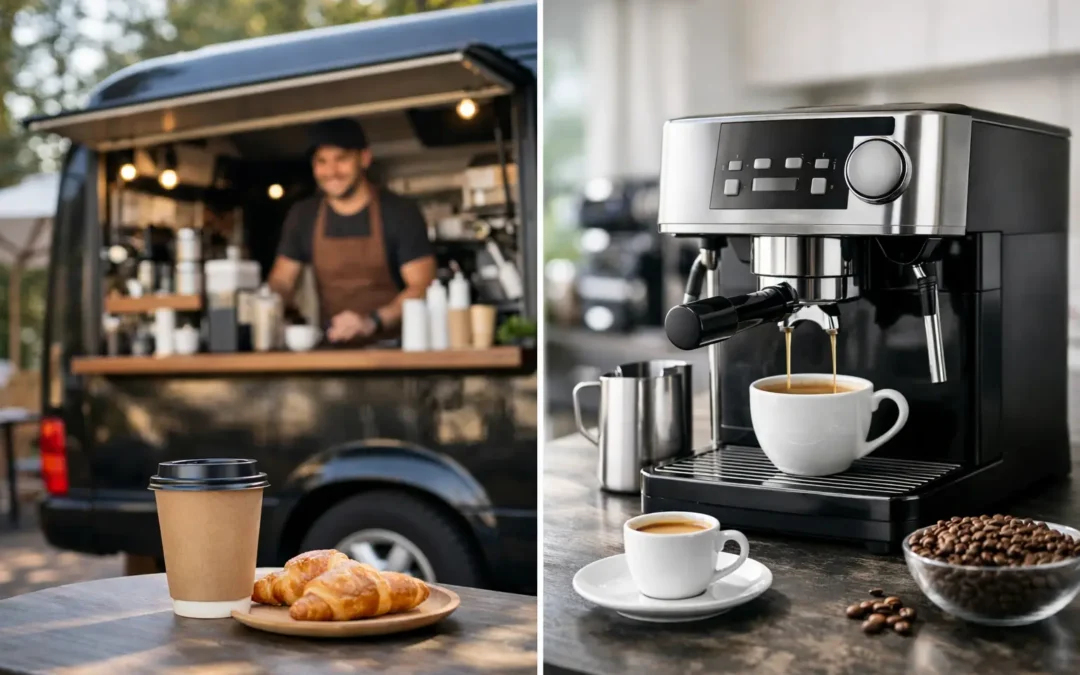
The moment someone asks, “How are we doing coffee?”, they’re rarely just talking about caffeine. They’re talking about guest experience, staff morale, wait times, clean-up, budget, and whether the coffee will actually be worth drinking. That’s where the question of mobile cafe versus coffee machine becomes much more interesting than it first sounds.
On paper, a coffee machine looks simple. Plug it in, keep it stocked, and coffee is sorted. A mobile cafe brings a different promise – freshly brewed coffee, a real barista, a polished setup, and the kind of atmosphere people remember. The better option depends on what you need the coffee to do.
Mobile cafe versus coffee machine: what are you really paying for?
If you’re comparing costs alone, a machine can look like the leaner option. Once the equipment is purchased or leased, the ongoing expense often comes down to beans, milk, cups, cleaning products, servicing, and the occasional repair bill that arrives at exactly the wrong time. For a workplace with steady daily use, that can make sense.
But cost in coffee is never just the line item. It also includes time, consistency, upkeep, and the hidden drag of asking staff to manage something that isn’t really their job. Someone has to refill milk, empty trays, wipe steam wands, order supplies, and sort out problems when the grinder jams or the machine starts producing flat, bitter cups.
A mobile cafe rolls those moving parts into the service itself. The machine, the grinder, the barista, the workflow, the speed, and the customer-facing polish are all built in. For events, launches, conferences, staff appreciation days, and one-off activations, that changes the equation completely. You’re not just paying for coffee. You’re paying for the experience being handled properly.
Taste is where the gap opens up
This is usually the deciding factor, even when people pretend it isn’t.
A standard office machine can produce a decent cup, especially if it uses fresh beans and receives regular maintenance. But even good machines rely on settings staying dialled in, milk systems staying clean, and beans staying fresh. Once any of those slip, flavour drops fast. Coffee becomes functional rather than memorable.
A mobile cafe is built around the cup itself. Freshly ground beans, textured milk, proper extraction, and drinks made to order create a very different result. You can taste the difference in the crema, the sweetness, the body, and the finish. Flat whites are silkier, long blacks are cleaner, and every sip feels like it came from an actual cafe because it did.
For businesses that want to impress clients or reward their team with something better than average, that quality matters. People notice when coffee is treated as part of the hospitality, not an afterthought parked on a bench.
Fresh beans change everything
Even the best equipment can only work with what it’s given. If beans have been sitting in a cupboard too long, no machine can bring back their character. Freshly roasted coffee carries more aroma, more definition, and more of the rich, layered flavour that makes people pause after the first sip.
That’s one of the biggest strengths of a speciality mobile setup. It closes the gap between convenience and quality. You don’t have to send people off-site for a proper coffee, and you don’t have to settle for a machine-made cup that simply gets the job done.
Convenience looks different for offices and events
A coffee machine is convenient when demand is constant and predictable. In an office kitchen, where staff grab a coffee across the day, it offers access without needing outside service every time someone wants a cappuccino. If your main goal is daily availability, a machine has a clear place.
Events are different. Demand arrives in waves. Everyone wants coffee at once – when guests arrive, during a morning break, after lunch, or at the exact moment the keynote wraps up. That is where a machine often shows its limits. A single self-serve unit can create queues, inconsistent drinks, and a bit of chaos around the station.
A mobile cafe is designed for volume with flow. A skilled barista manages the pace, keeps quality steady, and moves people through without the area feeling cluttered or neglected. It becomes part service point, part atmosphere. At corporate functions and public events, that presence adds energy in a way a benchtop machine simply can’t.
The human factor matters more than most people expect
Coffee service changes when there’s an actual person behind it.
With a machine, people help themselves. That’s fine in many settings, but it’s transactional. A mobile cafe adds conversation, personalisation, and hospitality. Guests can order exactly what they want. Staff can be welcomed with a proper morning coffee. Visitors feel looked after rather than left to poke at buttons and guess which setting means strong.
That human element also removes friction. There’s no wondering if the milk has run out, whether the machine has been cleaned, or who is meant to fix the mess around it. A barista handles the details while the host gets on with the event or the workday.
For branded events, there’s another advantage. A mobile coffee van can feel like part of the activation itself. It gives people a reason to stop, engage, and stay longer. Coffee becomes an invitation rather than just a refreshment.
Mobile cafe versus coffee machine for workplaces
For a permanent workplace setup, the right choice comes down to rhythm.
If your office needs all-day coffee access for a stable team, a machine may be the practical baseline. It gives people independence and keeps the kitchen running. But the machine is usually the minimum viable option, not the premium one. It solves access, not atmosphere.
A mobile cafe suits workplaces that want to create moments. Team reward mornings, client hosting days, end-of-quarter celebrations, on-site training sessions, and staff wellbeing activations all benefit from coffee that feels special. In those situations, the service says something about the business. It shows care, professionalism, and a willingness to go beyond the standard packet biscuits and instant blend.
Some businesses use both approaches well – a machine for everyday function and a mobile cafe for the days that call for more impact. That tends to be the sweet spot when the budget allows for it.
When a machine makes sense
A coffee machine is a sensible choice when usage is daily, budgets are tight, and no one expects cafe-level drinks every time. It can also work well in smaller offices where demand is spread out rather than concentrated.
The catch is that the machine has to be supported properly. Cheap beans, poor cleaning, and inconsistent maintenance quickly turn convenience into disappointment.
When a mobile cafe makes more sense
A mobile cafe is the stronger fit when coffee is part of the occasion, not just a utility. If you need to impress guests, reward staff, reduce event stress, or serve a crowd without sacrificing flavour, it’s hard to beat.
That’s especially true when reliability matters. A well-run mobile setup arrives ready, serves efficiently, and leaves the host free to focus on everything else.
The brand impression is very different
Coffee quietly tells people what kind of experience you’re offering.
A self-serve machine says, “Help yourself.” There’s nothing wrong with that. It’s practical and familiar. But a mobile cafe says, “We’ve thought about this.” It feels more deliberate. More generous. More polished.
For client-facing events, employee appreciation, conferences, and community gatherings, that distinction matters. People associate quality coffee with care and attention. They remember the smell of fresh espresso, the look of the setup, and the fact that someone handed them a drink made properly.
That memory can outlast the event itself.
So which one is better?
Better for what?
If you need affordable, ongoing coffee access in a workplace kitchen, a machine can do the job. If you need fresh flavour, faster service for groups, a stronger guest experience, and less operational hassle, a mobile cafe is usually the smarter choice.
The real comparison isn’t machine versus van. It’s basic access versus full-service coffee hospitality. One is built for routine. The other is built for impact.
For many businesses and event organisers, that makes the answer surprisingly clear. Coffee works hardest when it feels easy, tastes excellent, and adds something warm to the room. If that’s the standard you’re aiming for, a mobile cafe often delivers far more than caffeine – it brings the whole ritual with it.
And that’s the kind of coffee people talk about long after the cups are gone.