
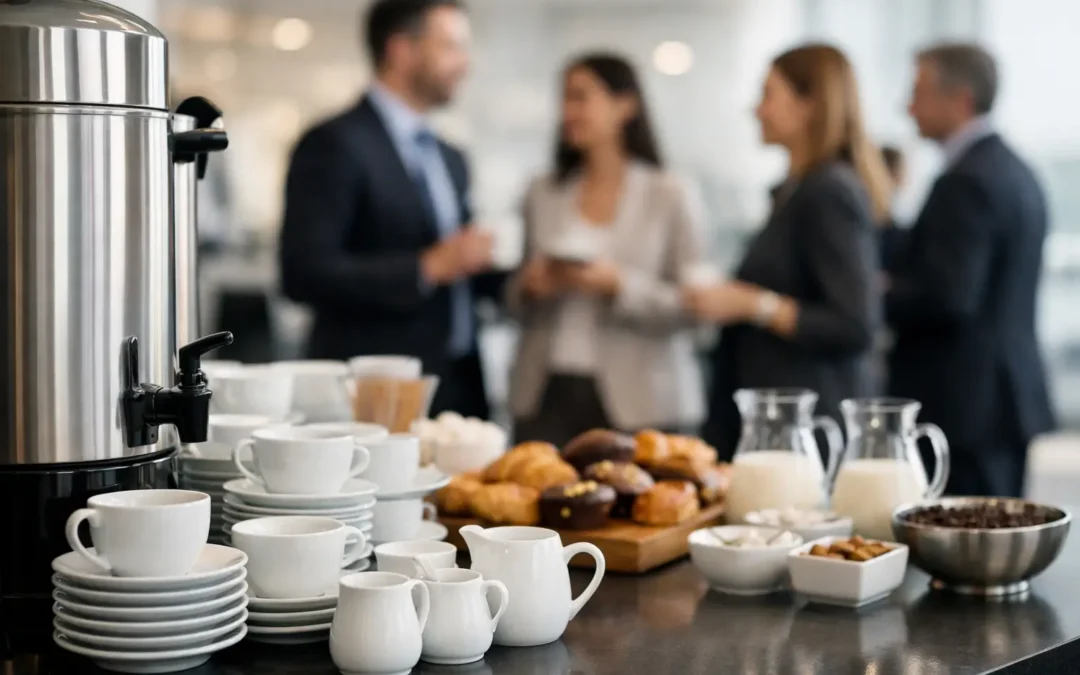
The fastest way to spot a flat corporate event is to look at the coffee queue. If guests are waiting too long, settling for average coffee, or skipping it altogether, the energy in the room drops with them. A strong corporate event coffee planning guide is not just about keeping cups full. It is about shaping flow, lifting mood, and giving guests a reason to stay engaged from the first arrival to the final conversation.
For office managers, event organisers, and brand teams, coffee sits in that sweet spot between practical service and memorable experience. Done well, it feels effortless. Done poorly, it creates bottlenecks, waste, and that quiet sense that the event was almost polished, but not quite. The difference usually comes down to planning the service around people, timing, and expectations rather than treating coffee as a last-minute add-on.
What a corporate event coffee planning guide should solve
At a corporate function, coffee has several jobs at once. It needs to refresh early arrivals, keep conference attendees alert, give teams a natural networking point, and reflect the standard of the business hosting the event. That means your coffee setup has to do more than serve beverages. It has to match the pace and purpose of the day.
A breakfast briefing needs quick turnover and reliable favourites. A client appreciation event might need a more premium feel, with beautifully made espresso drinks and a polished mobile setup that adds atmosphere. A public-facing activation may need branding opportunities, speed, and broad drink appeal. The right plan depends on the event, because volume, drink mix, and service style change fast once the audience changes.
That is why the first question is not, “Should we have coffee?” It is, “What role do we want coffee to play?” Once that is clear, the rest becomes easier to map out.
Start with guest numbers, then adjust for behaviour
Headcount is the obvious starting point, but it is rarely the full story. A guest list of 80 people can behave like 50 or 150 depending on when coffee is offered and how tightly scheduled the event is. If everyone arrives within 15 minutes before a presentation begins, demand spikes hard and early. If your event runs over several hours with informal movement, orders spread out more naturally.
As a guide, most daytime corporate events will see a large share of guests wanting coffee within arrival windows, morning tea breaks, or immediately after lunch. If your audience includes office professionals, clients, or trade attendees, expect many to want barista-made coffee rather than standard urn service. People know the difference, and they appreciate it.
It also helps to think about repeat cups. For a short one-hour function, one drink per guest may be enough. For a half-day seminar or networking event, many guests will go back for a second. The later the event runs, the more tea, hot chocolate, and lower-caffeine options start to matter too.
Match the service style to the event format
This is where many plans go off track. The coffee offering might be excellent, but the format is wrong for the room.
For high-volume arrivals, a mobile coffee van or streamlined cart setup often works best because it is built for speed and consistency. Guests can order quickly, move through the queue, and carry their drinks into the event. For premium hosted functions, a more visible barista station can add theatre and warmth. The sound of espresso pouring and milk texturing brings a genuine café feel that office machine coffee simply cannot imitate.
There is a trade-off, though. A broader menu creates more choice, but it can slow service if everyone starts customising heavily. If speed matters most, it can be smarter to focus on the most popular drinks and keep the workflow tight. If the event is designed for mingling and dwell time, a fuller menu may add value because guests are not rushing.
Build a menu people will actually order
A corporate crowd does not need a novelty-heavy menu. They want quality, familiarity, and enough choice to feel looked after. Espresso-based staples usually carry the service – flat whites, cappuccinos, lattes, long blacks, and hot chocolates. Tea and a few non-dairy milk options matter because they widen the appeal without overcomplicating the setup.
Where planners sometimes overestimate demand is with highly specialised drinks. A few guests may want something very specific, but the bulk of orders will stay with trusted favourites. That is good news, because it lets you design for speed while still delivering café-quality standards.
If your event runs in warmer weather or outdoors, cold options may be worth considering. Iced drinks can be a great fit, but only if they suit the event style and the service setup can handle them efficiently. Otherwise, they can slow a busy queue. It depends on the crowd, the season, and whether your event is more hospitality-led or throughput-led.
Timing matters more than most people expect
Coffee demand comes in waves. The biggest planning mistake is assuming the service can be treated as constant across the whole event. It cannot.
Morning arrivals usually create the first rush. Mid-session breaks can create a second sharp peak, especially if guests have been seated for a while. Post-lunch coffee is another classic moment, particularly at conferences, training sessions, and internal company events. If you know these surges are coming, you can position the coffee service where it supports movement rather than interrupts it.
That might mean opening the coffee service before formal registration begins, or extending service through a networking window rather than forcing everyone into one short break. Small timing changes can dramatically improve guest experience. They also reduce pressure on staff and help preserve drink quality under volume.
Don’t forget the practical details behind the barista magic
Great coffee at an event still needs practical groundwork. Access, power, placement, and bump-in timing all matter. If the setup is outdoors, weather cover and ground conditions come into play. If it is inside an office tower or event venue, loading access and positioning can affect how quickly service gets up and running.
Placement is especially important. Too close to the main entrance and you can create congestion. Too far from the action and guests may not bother. The best position is usually visible, easy to approach, and slightly off the main traffic line so the queue does not swallow the room.
This is also where working with an experienced mobile coffee caterer makes a real difference. A team that knows event service will think about throughput, logistics, and guest interaction at the same time. That means fewer surprises on the day and a much smoother experience for your attendees.
Coffee is part of your brand experience
If you are hosting clients, launching a product, rewarding staff, or activating in a public space, the coffee service says something about your business. Freshly roasted beans, skilled baristas, and a polished setup send a stronger message than generic self-serve coffee ever will. It tells people you cared about the details.
That matters because coffee is one of the few touchpoints almost everyone interacts with. Guests might not remember the exact chair styling or signage placement, but they will remember whether they were handed a rich, freshly brewed coffee with a smile or queued for a disappointing cup that felt like an afterthought.
For brands that want to go further, coffee can also become part of the event identity. A branded activation, custom service style, or locally roasted offering can help the experience feel more considered and more memorable. Lygon Coffee often sees this at Adelaide functions where businesses want the quality of a specialty café without the hassle of arranging equipment, staffing, and supply separately.
A smart coffee budget focuses on value, not just price
Cheap coffee can be expensive once you factor in guest experience. If service is slow, quality is patchy, or equipment is unreliable, the savings disappear into frustration. On the other hand, paying for a setup that is far too large for your guest count is wasteful in a different way.
The best value comes from getting the scale right. That means matching service capacity to demand, choosing a menu that suits the event, and working with a team that can deliver quality consistently. When coffee is handled well, it supports the whole event. It keeps people comfortable, encourages conversation, and adds an easy layer of hospitality that guests notice straight away.
There is also a sustainability angle worth considering. Thoughtful cup planning, realistic volume estimates, and avoiding unnecessary waste all help. More businesses are asking sharper questions here, and rightly so. Good planning should make the service feel generous without becoming excessive.
The best coffee plans feel easy because the thinking happened early
The strongest events rarely rely on luck. They feel calm because someone thought carefully about guest flow, service timing, menu fit, and quality from the start. Coffee deserves that same attention. It is one of the simplest ways to lift the standard of a corporate event, but only if it is planned as part of the experience rather than bolted on at the end.
If you are organising a function, think beyond the cup itself. Think about the arrival mood, the pace of the room, the kind of conversations you want to encourage, and the impression guests will carry away. Fresh, well-made coffee can do more heavy lifting than most event elements, and every sip should earn its place.