


Preserve premium bean freshness by storing beans in airtight, opaque containers away from heat, light, and moisture; grind only what you brew, and track roast dates so you enjoy peak flavor longer.
Key Takeaways:
- Airtight, opaque containers stored in a cool, dry, dark spot keep oils and aromas from degrading.
- Whole beans retain flavor far longer than preground coffee; grind right before brewing to capture peak aroma.
- Freeze only surplus or unopened bags in small, sealed portions; bring to room temperature before opening and avoid repeated thawing.
Identifying Primary Factors in Bean Degradation
Oxygen and moisture attack oils and aromatics in your beans, so you should minimize air exposure and keep humidity low to slow flavor loss. Light and heat compound these effects, pulling volatile compounds from the roast and flattening taste.
- Oxygen exposure
- High humidity
- Light (UV)
- Heat and temperature swings
- Elapsed time since roast
Storage choices determine how long you keep peak flavor, so you should use opaque, airtight containers and split larger amounts into smaller portions. Perceiving subtle shifts in aroma and crema helps you decide when to rotate stock or change your storage approach.
The Impact of Oxidation and Humidity
Humidity accelerates staling and encourages mold, so you should store beans in dry conditions and consider desiccants where air is damp. Oxidation strips volatile aromatics rapidly, which means you benefit from airtight packaging and small daily portions.
Role of Light and Thermal Exposure
Sunlight and UV break down delicate aromatics quickly, so you should keep beans in opaque containers out of direct light. Heat speeds oil degradation and alters flavor balance, making cool, stable storage preferable to warm spots.
Temperature swings force moisture movement and possible condensation inside packaging, so you should avoid placing beans near ovens, windows, or HVAC vents and aim for consistent, cool conditions.
Shielding beans from light with tinted jars or foil wraps and placing containers in a cool pantry helps you preserve the oils and volatile compounds that define your coffee’s signature notes.
How-To Select the Optimal Storage Container
Choose containers that block light, limit oxygen ingress, and are made from inert materials like stainless steel or dark glass; you should match container size to bean volume to reduce headspace and slow staling.
Keep a rotation of one vessel for daily use and one sealed for longer storage so you avoid repeated air exposure; you should place containers in a cool, dry spot away from heat and odor sources.
Advantages of Opaque Airtight Vessels
Opaque vessels protect beans from light-driven flavor degradation, so you preserve delicate aromatics; you should favor dark glass or metal over clear jars when storing premium beans.
Airtight seals limit oxygen contact and slow chemical changes that flatten taste, which helps preserve peak flavor for weeks; you should avoid oversized containers that leave excess air above the beans.
Evaluating Vacuum Seals and One-Way Valves
Inspect vacuum-sealed containers for a consistent, tactile seal and materials rated for food storage; you should check that lids lock evenly and that gaskets remain flexible to maintain a tight barrier.
Test one-way valves by watching for steady degassing after roasting and confirming that air does not re-enter; you should choose valves that sit flush and are rated to prevent backflow when beans release CO2.
Compare systems by pairing a one-way valve with an opaque, airtight container for best results: the valve allows initial degassing while the barrier blocks oxygen and light, and vacuum pumps can extend freshness for short-term use though frequent resealing may be needed if you access beans daily.
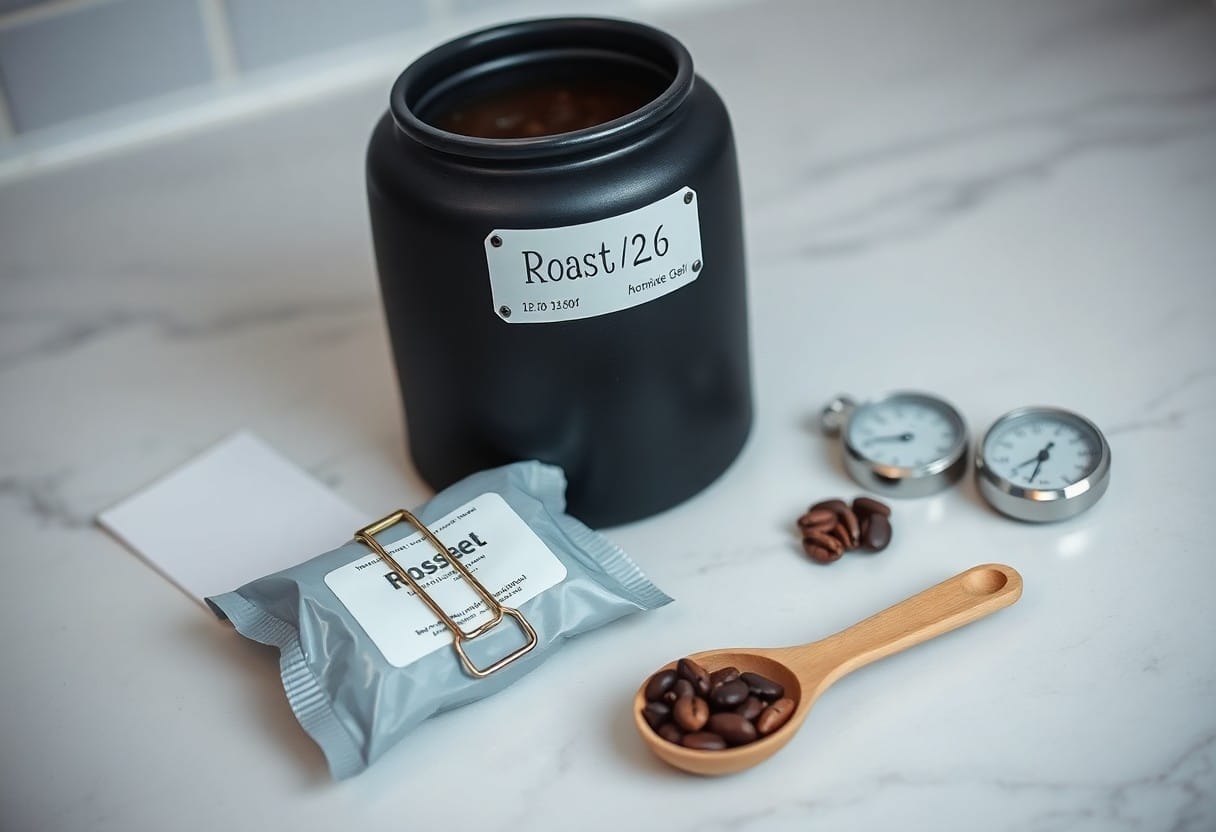
Environmental Control Tips for Maximum Longevity
Control storage by using airtight, opaque containers and limiting exposure to light, moisture, and fluctuating temperatures; you should place containers in consistently cool, dry spots away from heat sources.
- Store whole beans in small batches to reduce air exchange.
- Use one-way valve bags or sealed tins to preserve aroma.
- Knowing rotation and use within optimal windows keeps beans tasting their best.
Ideal Temperature Zones for Preservation
Aim to keep beans between 50-65°F (10-18°C); you will slow volatile loss and avoid condensation when you open containers.
Temperature Guide
| Temperature | Why |
|---|---|
| 50-65°F (10-18°C) | Maintains oils and slows oxidation for extended freshness. |
| Above 65°F (18°C+) | Accelerates staling and oil breakdown. |
Strategic Placement Away from Kitchen Heat
Position storage away from ovens, stovetops, dishwashers, and direct sunlight; you should avoid spots near coffee machines and windows where heat spikes shorten bean life.
Avoid placing containers above refrigerators or next to hot walls; you should choose high cabinets or a cool pantry and check ambient temperature before long-term storage.
How-To Handle Beans During Daily Preparation
You should prepare only the portion you plan to brew within the hour so the remainder of the bag stays sealed and fresher.
Store beans away from light and heat and keep the container closed so you reduce flavor loss between uses.
Minimizing Air Exposure During Measurement
Weigh beans directly into your portafilter or a small airtight vessel to limit the time the bulk is exposed to air and you preserve aromatics.
Seal the bulk container promptly after scooping and, if possible, use a one-way valve bag or canister so you keep oxygen away from remaining beans.
The Importance of Grinding Immediately Before Brewing
Grind immediately before brewing to capture peak volatile oils, and you will notice brighter, fuller flavor in the cup.
Delay between grinding and extraction traps aromatics in the grounds and you lose clarity and sweetness with time.
Finer adjustments require dialing dose and grind to maintain balanced extraction, so you should grind small test doses immediately and taste to confirm freshness and flavor.

Proactive Tips for Purchasing and Inventory
When you shop, prioritize roast-date transparency and plan quantities around your weekly brew rate to avoid long storage times. Seek whole beans in one-way-valve bags, buy from roasters who list roast dates, and prefer smaller, more frequent orders so you always have fresher stock.
- Check roast dates, not just “best by” labels
- Choose whole beans and grind just before brewing
- Store unopened bags cool, dark, and airtight
Thou rotate inventory using FIFO, order by consumption patterns, and favor smaller batches to keep flavor consistent.
Deciphering Roast Dates for Peak Freshness
Check the roast date on the bag and plan to consume most beans within two to four weeks after roast for peak aroma; shop with that window in mind so you purchase beans that will peak while you use them. You can mark calendars or set reminders to avoid long storage.
Managing Batch Sizes to Prevent Staling
Scale your purchases to match how much you brew each week: smaller batches reduce exposure time and preserve volatile oils that define flavor. You should test one- and two-week supplies to find the sweet spot for your routine.
Monitor actual usage for a month, then adjust order frequency and batch weight so beans are gone before flavor wanes, and communicate preferred sizes with your supplier to minimize leftover stock.
Final Words
Now you can preserve premium bean freshness by storing beans whole in an airtight, opaque container away from heat and moisture, and grinding only what you need. You should buy small batches, keep beans at stable room temperature, avoid the fridge or freezer for daily use, and use a scale and quick extraction to assess freshness.
FAQ
Q: How should I store premium coffee beans to preserve flavor?
A: Use an opaque, airtight container to block oxygen and light. Store the container in a cool, dry place away from heat sources and direct sunlight. Keep quantities small so beans are used within a few weeks of opening.
Q: Is it better to buy whole beans or pre-ground coffee for longer freshness?
A: Whole beans retain aromatics and flavor far longer than pre-ground coffee. Grind beans immediately before brewing with a burr grinder matched to your brew method to preserve volatile oils. Pre-ground coffee loses much of its flavor within hours to days due to increased surface area.
Q: What role does roast date play in bean freshness and how long are beans at peak flavor?
A: Look for a clearly labeled roast date rather than a sell-by date. Coffee often reaches peak flavor between 3 and 14 days after roast as it degasses, and most consumers find 2-4 weeks after roast acceptable depending on roast level. Store and use beans within that window for the best taste.
Q: Can I refrigerate or freeze my coffee beans to extend freshness?
A: Avoid refrigeration because moisture and odors can damage beans. Freezing unopened bags or properly portioned, vacuum-sealed packs can extend shelf life for months; thaw a sealed portion completely before opening to prevent condensation. Use thawed portions quickly and do not refreeze after opening.
Q: How should I handle beans during daily use to minimize flavor loss?
A: Keep the storage container sealed between uses and scoop or pour directly instead of leaving the bag open. Purchase amounts that match your consumption rate, such as one to two weeks for daily drinkers, to keep beans fresh. Avoid using containers that held pungent foods or residues that could transfer odors.
Q: What signs indicate coffee beans have lost their freshness?
A: Faded aroma, flat or stale taste, and weak crema on espresso are common signs of staled beans. Dark roasts can develop an oily surface as they age, and a musty or cardboard-like smell signals degradation. Discard beans that produce unpleasant flavors rather than trying to mask them.
Q: What purchasing habits help ensure I get the freshest premium beans?
A: Purchase from roasters that list roast dates and maintain small-batch turnover. Choose whole beans and buy quantities you will use within a few weeks; consider a subscription if you drink coffee daily. Ask roasters for freshly roasted batches and check reviews for consistency in quality.