

Most of your assessments depend on aroma, appearance, and extraction timing; you learn to sniff acidity, inspect oil sheen, and watch bloom and crema to judge bean freshness reliably.
Key Takeaways:
- Roast date and degassing: Allow 48-72 hours after roast for degassing; many brew methods taste best between 2-14 days after roast, with espresso often benefiting from the later end and filter brews from the earlier end.
- Aroma and appearance: Fresh beans give bright, complex aromas (floral, fruity, sweet) and lack papery or musty notes; an oily surface usually reflects dark roasting or age rather than freshness alone.
- Brew indicators: Strong bloom in pour-over, lively acidity and clear flavor separation, and good crema on espresso indicate optimal freshness; flat, muted flavors and weak crema indicate staleness.
Visual Inspection Techniques
Look closely for consistent sheen, cracking, or surface residue so you can spot oil migration, staleness, or roast defects at a glance. If you want deeper guidance on assessing freshness and handling, consult How to Unlock the Flavor & Freshness in Your Beans.
Evaluating Surface Oils and Sheen
Observe the amount and distribution of surface oil to infer roast level and storage history; fresh dark roasts have a light sheen while excessive oiling or sticky patches can indicate age or poor storage. You should avoid beans with pooled oil or obvious residue that can harm extraction and flavor.
Identifying Color Uniformity and Bean Integrity
Scan the batch for consistent color and size so you can expect even extraction; mottling, pale spots, or a mix of light and dark beans suggests uneven roasting or mixed lots. You will brew more predictably when beans share uniform appearance.
Examine individual beans for chips, cracks, insect holes, or strange spotting and remove defects before grinding to protect flavor clarity and prevent off-notes during brewing.
Sensory Evaluation Methods
You should follow a concise routine: assess dry aroma, grind a small sample, sniff immediately, then cup the brew against a fresh reference. Keep the environment neutral and your palate clean so subtle changes register clearly.
Practice consistent timing and notation after roasting so you can chart decline in aroma and flavor over days. Log roast date, grind setting, and tasting notes to spot patterns you can act on.
Recognizing Potent vs. Stale Aroma Profiles
Smell both whole and ground beans; potent profiles present bright fruit, floral, nutty, or cocoa notes that bloom on grinding. Stale profiles smell flat, papery, cardboard-like, or oddly oily and muted when compared side by side.
Compare quick sniffs before and after brewing to detect lost volatiles: if brewed aroma lacks clarity or complexity you once noted, the beans have likely declined and will underperform in cup.
Utilizing the Texture and Snap Test
Pinch a few beans between finger and thumb and note firmness and surface feel; fresh-roasted beans feel resilient and break cleanly, while stale beans may crumble, feel excessively dry, or exude old oil in darker roasts.
Observe the snap by biting or breaking a bean sharply: listen for a crisp fracture and inspect the interior surface-clean, flaky breaks signal freshness, whereas powdery or gummy interiors point to age and oxidation.
How-To Perform Practical Freshness Tests
You can perform simple tactile and sensory checks before brewing to gauge bean age. Smell whole and ground beans for a bright, vibrant aroma; press a bean to feel slight spring or surface oils. Flat scent or dry, brittle beans usually signal diminished freshness.
Collect small, controlled samples to compare results side by side by grinding and brewing identical doses. Taste for brightness and sweetness in brief filter or espresso shots-loss of acidity and muted flavors point to older beans.
The Ziploc Bag Expansion Method
Seal a handful of beans in a clear Ziploc bag with most air expelled, then set it at room temperature for a few hours. Watch for inflation: visible expansion means active CO2 release and recent roasting, while no change suggests the roast has off-gassed and aged.
Observing Carbon Dioxide Release During the Bloom
Watch the bloom during your pour-over: fresh beans produce lively bubbling as CO2 escapes, lifting the grounds and creating a domed surface. Note duration and intensity; a pronounced bloom indicates ample trapped gas and fresher beans.
Count seconds from the first pour until bubbling subsides and observe bubble size-longer, vigorous effervescence with larger bubbles aligns with very recent roasts, whereas weak, short blooms reveal beans that will taste flatter.

Expert Tips for Maintaining Peak Quality
Tips you can apply immediately include storing whole beans in small amounts, rotating by roast date, and minimizing oxygen exposure when opening containers. You should avoid placing beans near heat sources or bright light, and prefer quick turnover over long-term storage. Use one-way valve bags for short-term storage and sealed tins for daily use.
- Store whole beans and grind per brew.
- Avoid heat, light, and moisture.
- Buy smaller amounts more often.
Knowing how to match storage methods to your brewing pace will keep flavors consistent and reduce waste.
Selecting Optimal Airtight Storage Containers
Choose an opaque, airtight container with a quality gasket so oxygen exposure is minimized; you should favor stainless steel, ceramic, or tinted glass for home use. Clean containers between batches to prevent stale oils from affecting fresh beans, and limit headspace to slow oxidation.
Proper Environmental Control Strategies
Maintain steady, cool temperatures around 18°C (65°F) and relative humidity under 50% to slow degradation; you should keep beans away from ovens, windows, and heat-producing appliances. Position storage in a cool pantry or cabinet rather than on countertops.
Monitor ambient temperature and humidity with an inexpensive digital hygrometer so you can detect seasonal swings that affect bean life. You should track readings weekly during extreme weather changes.
Adjust purchase frequency and on-hand quantities based on those readings, buying less when storage conditions trend warmer or wetter so you preserve peak freshness.
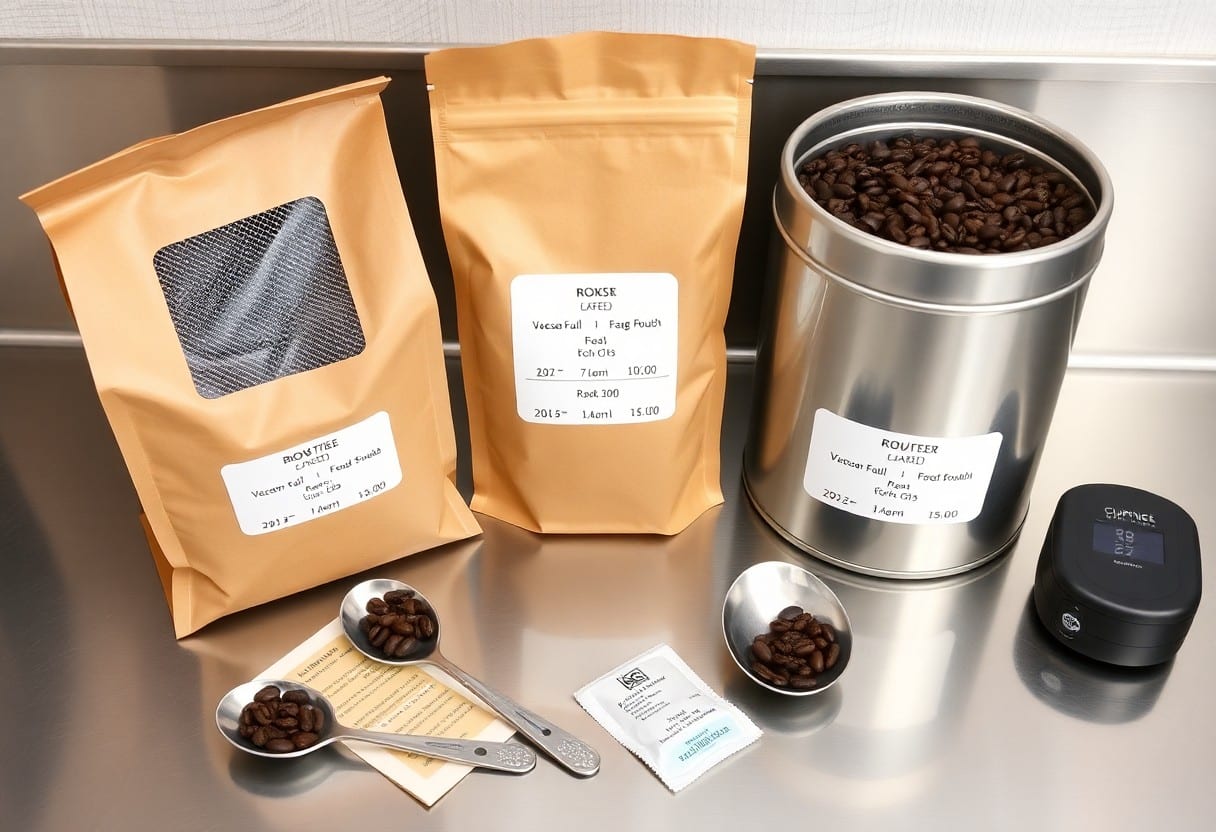
Sourcing and Packaging Considerations
Sourcing beans from roasters that publish roast dates and batch numbers lets you compare lots and judge how long a profile stays lively; you should favor sellers with transparent labeling so you can plan consumption.
Packaging that blocks light and oxygen preserves flavors; you should prefer opaque, resealable bags with minimal headspace to slow staling while you use small amounts over days or weeks.
Interpreting Roast Dates and Batch Labels
Reading roast dates as the start of usable freshness helps you set a brewing window-many roasts peak between day three and two weeks, depending on bean and roast level, so schedule trials accordingly.
If batch codes or roast-to-order notes are present, you can contact the roaster for specifics and track which batches deliver your preferred balance of aroma and decline over time.
The Function of One-Way Degassing Valves
Degassing valves let CO2 escape without admitting oxygen, protecting your beans from oxidation while preventing bag swelling; you should still allow very fresh roasts a short resting period before brewing to avoid off-gassing bitterness.
Many valves are passive and maintenance-free, so you must avoid puncturing the bag and keep it sealed between uses while storing beans in cool, dark conditions to extend peak freshness.
Observation of how quickly a bag collapses after opening indicates CO2 levels and roast activity; you can use that behavior to judge roast intensity, decide when to decant into an airtight container, and time experiments to find your ideal brew-day window.
Final Words
Now you inspect roast date, oiliness, and aroma to judge bean freshness. You look for vibrant, even color; a strong, bright scent; and firm, dry beans that crack when pressed. If beans smell flat, stale, or overly oily, you select a fresher bag or grind just before brewing for best flavor.
FAQ
Q: How can I tell if coffee beans are fresh?
A: Look for a clear roast date on the bag and prefer beans used within a few weeks of that date for most brewing methods. Smell whole beans; fresh beans emit a strong, complex aroma while stale beans smell flat or cardboard-like. Grind a small sample and inhale the immediate aroma-freshly ground beans release volatile oils and layered scents that dissipate with age.
Q: Which matters more: roast date or best-by date?
A: Choose roast date over best-by date when available because roast date shows when flavor peaked while best-by often serves marketing or safety guidance. Use roast-date windows: light-medium roasts often taste best 3-21 days after roast for filter, and 7-21 days for espresso depending on roast level and preference. Treat best-by dates as a loose ceiling, not a guarantee of peak flavor.
Q: What visual and tactile signs indicate fresh beans?
A: Inspect color uniformity, sheen, and surface texture; consistent color and a subtle sheen on dark roasts indicate proper roast and recentness. Feel a few beans between fingers; fresh beans tend to be firmer and less brittle than old ones. Watch for mold, discoloration, or an unusually powdery surface, which suggest poor storage or age.
Q: How should aroma guide my judgment of freshness?
A: Open the bag and take a short, focused sniff-fresh beans produce bright, layered aromas like floral, fruity, nutty, or chocolate notes. Grind a small amount and smell again; a strong, lively aroma right after grinding is a key freshness signal. Detect any sour, greasy, or papery off-notes and consider the beans past their prime if those dominate.
Q: What does CO2 degassing tell me about bean freshness and how should I use that information?
A: Observe visible degassing during bloom when pouring hot water; bubbling and a rising foam layer indicate active CO2 release and recent roasting. Expect very vigorous degassing in the first few days after roast, which can cause uneven extraction for espresso and some filter methods. Let beans rest a few days if degassing is extreme, or adjust dosing and grind to compensate.
Q: How can a quick cupping or brew test reveal bean freshness?
A: Perform a simple tasting: grind, steep with hot water, break the crust, smell the aroma, then sip while noting acidity, sweetness, body, and clarity. Fresh beans show distinct, bright acidity, clear sweetness, and defined flavor notes; stale beans present muted acidity, dull flavor, or cardboard and rancid butter notes. Use this test to compare batches or confirm the roast date’s relevance to your taste.
Q: What are the best storage practices and realistic timelines for keeping beans fresh?
A: Store beans in an opaque, airtight container at room temperature away from heat, light, and moisture to preserve volatile aromatics. Avoid exposing opened beans to air for prolonged periods; buy smaller quantities or reseal tightly and plan to use opened beans within 2-4 weeks for optimal flavor. Use the freezer only for long-term storage in fully sealed portions, thawing to room temperature before opening to prevent condensation.