
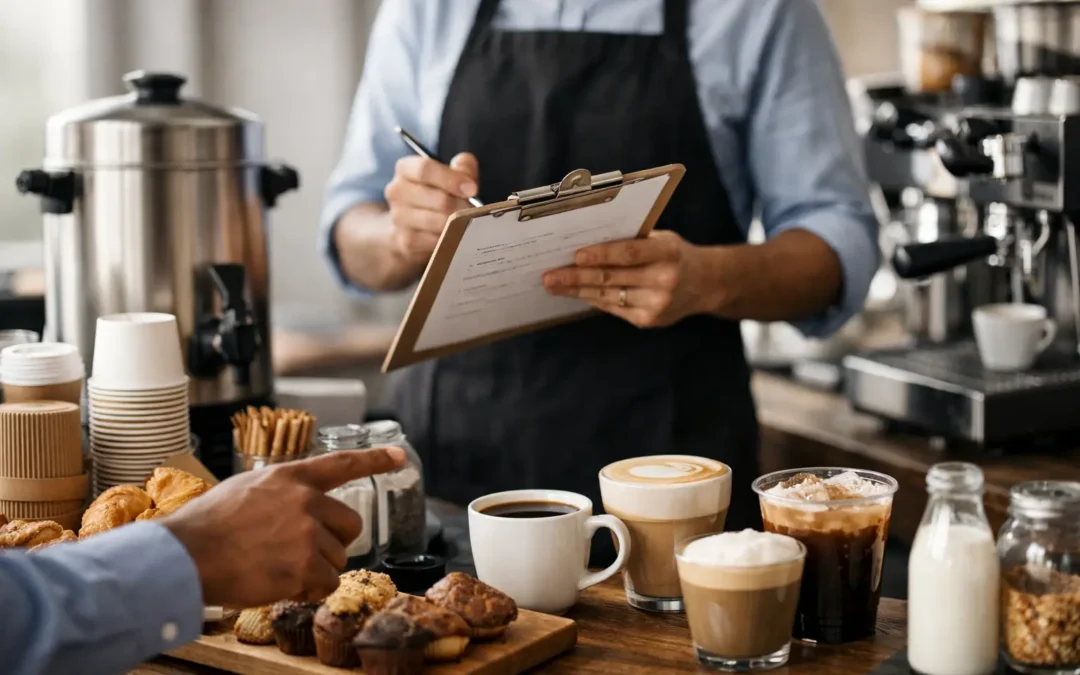
You usually know coffee catering matters when the usual event plan starts to look a bit flat. A tray of lukewarm urn coffee will keep people moving, but it will not create the kind of welcome that gets guests to linger, chat and actually enjoy themselves. If you are wondering how to book coffee catering, the good news is that the process is straightforward once you know what affects quality, flow and cost.
The right mobile coffee setup can do more than pour drinks. It can lift a workplace morning, sharpen the feel of a brand activation, and give a private event that polished finish people remember. The trick is booking a service that matches your crowd, your space and your expectations, not just the cheapest van with a machine in it.
How to book coffee catering for the right kind of event
Start by being clear on what the coffee is doing at your event. That sounds obvious, but it changes everything. A corporate breakfast with staff arriving in waves needs speed and consistency. A wedding recovery brunch might suit a slower, more relaxed service. A public activation often needs both volume and visual appeal, because the coffee van becomes part of the experience.
When you make an enquiry, describe the event in plain terms. Share whether it is an office booking, a conference, a community day, a private party or a promotional activation. Mention if guests are mostly coffee drinkers who expect a proper flat white, or if you need a broader menu with hot chocolate, chai and decaf as well. The more specific you are, the easier it is for the caterer to recommend the right setup.
This is also the point where location matters. A city office forecourt, a suburban school, a warehouse site and an outdoor festival all come with different access needs. Adelaide event organisers in particular often juggle a mix of compact CBD spaces and larger suburban venues, so access, bump-in timing and power availability should be discussed early.
Get your guest numbers as close as possible
Coffee catering works best when the service window is built around realistic numbers. If you tell a vendor to expect 50 people and 140 turn up wanting lattes in the first 20 minutes, the queue will tell the story. On the other hand, wildly overestimating can leave you paying for capacity you did not need.
A good rule is to think in drink demand, not just headcount. Not every guest will order coffee, and not everyone will order at once. For a workplace visit, the uptake may be high but staggered. For a morning event with no other beverage offering, demand is usually stronger and more immediate. For afternoon functions, some guests may switch to iced drinks, tea or skip caffeine altogether.
If your numbers are uncertain, say that. A good caterer will help you estimate likely demand based on the event type and duration. That conversation is far more useful than trying to sound certain when you are not.
Think about peak periods, not just total attendance
A two-hour booking for 100 guests is very different from serving 100 guests in a 30-minute arrival rush. One is manageable with a steady flow. The other may require additional baristas, a second machine or a simplified menu to keep service moving.
This is where practical event knowledge matters. Coffee tastes better when baristas have the space and pace to do it properly. Fast service is important, but so is maintaining quality in the cup.
Ask what is included before you compare prices
Coffee catering quotes can look similar at first glance, but they are often built very differently. Some cover full mobile café service with trained baristas, cups, milk options, machine setup and pack-down. Others quote a base rate and add extras later. If you are comparing providers, compare the actual service, not just the number at the bottom.
Ask what is included in the package. Find out whether the quote covers travel, setup time, all consumables and standard drink options. Check whether alternative milks are included or charged separately. Ask if there is a minimum spend, a minimum booking period or a cup limit.
There is also a quality trade-off here. Lower-cost options can work for casual gatherings, but if your event is client-facing or brand-led, the coffee itself becomes part of how people judge the experience. Freshly roasted beans, skilled baristas and a well-presented van are not cosmetic extras. They shape the whole impression.
Decide on service style early
One of the biggest booking decisions is how guests will be served. There is no single best option. It depends on your goals.
If you want the coffee to feel generous and easy, you might cover all drinks for a set time or a nominated cup count. That works well for staff appreciation days, weddings and private functions. If you are managing a public event or campaign budget, a capped package can help keep costs predictable. For promotional activations, custom branding or menu naming may also be worth discussing if the coffee service is part of the marketing itself.
Some events suit a tighter menu for speed. Others benefit from a full espresso offering. A short, high-volume service may run better with a focused menu of espresso, long black, flat white and cappuccino. If the event is more relaxed, adding mocha, chai and hot chocolate can round out the experience.
Do not ignore non-coffee drinkers
The best coffee service still needs options for people who do not drink coffee. Tea, hot chocolate, decaf and dairy alternatives can make a noticeable difference to guest satisfaction. It is a small detail that feels thoughtful, especially at mixed corporate or family events.
Check the site logistics before lock-in
This is the part people leave too late. A mobile coffee van needs practical access to deliver smooth service. Ask yourself where it will park, how guests will queue, whether the area is shaded or exposed, and whether the venue has restrictions on trading, noise or bump-in times.
If the caterer is fully self-sufficient, great. Even then, it helps to confirm whether they need anything from the venue. If power or water access is required, get clarity early. The same goes for clearances, permits and contact details for the site manager.
For office bookings, think about where people naturally gather. A van tucked around the back near loading bays will not create much atmosphere. Put it where the event actually happens, as long as access is safe and practical.
Book earlier than you think you need to
The best coffee caterers are often booked well ahead for peak periods, especially around end-of-year functions, school events, community festivals and corporate campaign dates. If your event sits on a Friday morning in spring or December, leave less to chance and enquire early.
That does not mean every booking needs months of lead time. Smaller workplace visits can sometimes be scheduled at shorter notice. But if date flexibility is low, early booking gives you more choice and more time to refine the details.
It also helps you avoid rushed decisions. Good coffee service relies on planning, from staffing to bean prep to travel timing. Last-minute bookings can still work, though they may come with fewer menu or branding options.
What to ask before you confirm
You do not need a long checklist, but you do want the essentials covered. Ask who will be serving, how many drinks can be made in your peak service window, what menu is included, and what happens if guest numbers shift. Confirm arrival time, setup requirements and whether wet weather changes the plan.
If presentation matters, ask for photos of the van or setup style. If coffee quality is a priority, ask about the beans being used and whether they are roasted in-house. That is often where the difference between basic event coffee and café-quality coffee really shows.
For brands that care about both hospitality and craft, this is where a provider like Lygon Coffee stands out – not only with a mobile café experience, but with the depth that comes from fresh roasting and a genuine specialty coffee focus.
A good booking feels easy on the day
The best coffee catering does not feel complicated once the event starts. Guests walk up, order what they actually want to drink, and receive something that smells incredible and tastes even better. The queue moves, the setup looks sharp, and you are not chasing extension cords or apologising for instant coffee in paper jugs.
That result starts with a few smart questions at the booking stage. Be clear about your event, honest about numbers, realistic about service windows and selective about quality. Coffee is a daily ritual for most Australians. At an event, it should feel like one of the best parts of the day, not an afterthought.
If you are planning something worth showing up for, book coffee catering the same way you would book any other key part of the experience – with care, with context and with a clear idea of how you want people to feel when that first cup lands in their hands.