
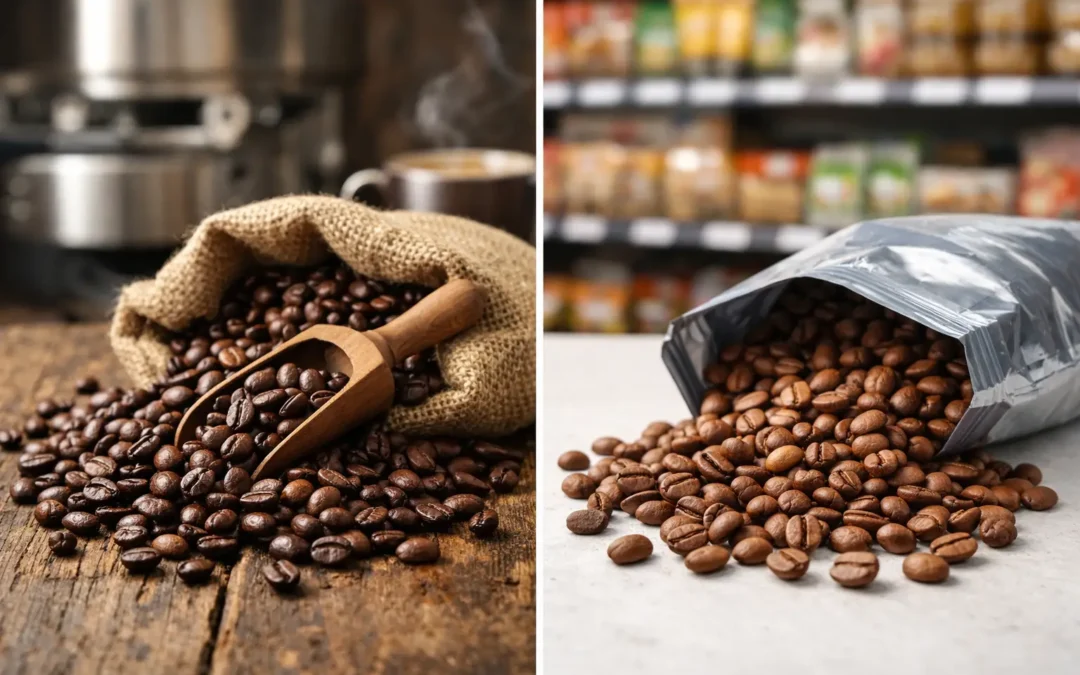
You can smell the difference before you even brew it. That first burst from a bag opened a few days after roasting is lively, sweet and full of promise. When people ask about fresh roasted beans versus supermarket coffee, that moment is often the whole story in miniature. One smells awake. The other too often smells flat, dusty or strangely anonymous.
That does not mean every supermarket coffee is bad, or that every fresh roast is automatically brilliant. It does mean freshness changes the cup in a way most coffee drinkers notice quickly once they know what to look for. If coffee is part of your daily ritual, whether it is the first quiet cup before work or the one that keeps the office moving at 10 am, the quality gap is worth understanding.
Fresh roasted beans versus supermarket coffee: what really changes?
The biggest difference is time. Coffee is an agricultural product, and once it is roasted the clock starts ticking. The beans release gases, aromatic compounds begin to fade, and the flavours that make a coffee taste vibrant slowly soften. Freshly roasted coffee is usually sold with a roast date, which gives you a clear idea of where it sits in that flavour window.
Supermarket coffee often works on a different timeline. It may have been roasted weeks or months before it reaches the shelf, then sit longer in storage and in your pantry. Packaging helps, of course, and some brands do a decent job preserving the coffee for longer. But packaging cannot create freshness that is no longer there.
That timing affects four things straight away: aroma, flavour clarity, body and finish. Fresh beans tend to smell more expressive, taste more distinct, feel more rounded in the mouth and leave a cleaner aftertaste. Supermarket coffee can still deliver caffeine and comfort, but it often blurs the finer details.
Why freshness matters in the cup
Freshness is not just a marketing line. It changes what ends up in your mug.
When coffee is recently roasted and handled well, you are more likely to taste sweetness, balance and origin character. A chocolatey blend tastes properly cocoa-rich rather than vaguely bitter. A fruit-forward coffee has sparkle rather than sourness. Milk-based drinks hold their coffee character better too, which matters if your go-to is a flat white rather than a black coffee.
Older coffee does not always taste stale in the dramatic sense people expect. More often it tastes muted. The acidity becomes dull, sweetness drops away, and bitterness can take over. You are left with a cup that is drinkable but not memorable. For many households and workplaces, that has become normal, which is why a genuinely fresh bag can feel like a reset.
There is a sweet spot, though. Beans brewed too soon after roasting can be a bit wild and uneven because they are still releasing a lot of gas. Most speciality roasters aim for a window where the coffee has had enough rest to settle while still keeping its liveliness. That balance is part of the craft.
Supermarket coffee does have a place
It is easy to turn this into a purity contest, but that is not useful. Supermarket coffee wins on convenience, availability and familiarity. You can grab it during the weekly shop, it is often cheaper upfront, and some drinkers simply prefer a dependable, no-surprises profile.
For large offices burning through kilos of coffee without much focus on flavour, supermarket beans may feel practical. The same goes for emergency top-ups when the cupboard is bare. If the choice is between average coffee and no coffee, most people are not holding out for perfection.
The trade-off is that convenience can come at the cost of freshness and transparency. You may not know when the coffee was roasted, how long it has been sitting around, or whether the flavour profile you liked last month will be exactly the same this month. If consistency matters, that uncertainty can be frustrating.
Fresh roasted beans versus supermarket: flavour, value and control
Price gets brought up quickly in this conversation, and fair enough. A bag of fresh roasted speciality coffee usually costs more than a supermarket option. But value is not the same thing as shelf price.
Fresh beans often go further because they extract better and deliver more flavour per dose. If your coffee is richer, sweeter and more satisfying, you may not need to use extra scoops to chase strength. You are also less likely to mask weak coffee with too much sugar or rely on a second cup because the first one did not quite hit.
There is also the question of control. With fresh roasted beans, you can choose a blend or single origin that suits how you drink coffee. You can buy for espresso, stovetop, plunger or filter. You can ask questions, tweak your grind and actually learn what works best in your setup. That is a more satisfying experience than grabbing a generic bag and hoping for the best.
For offices, event organisers and hospitality-minded businesses, the value equation shifts further. Good coffee says something about the standard you set. If clients, staff or guests are being served coffee that tastes fresh and intentional, the whole experience feels more polished.
The packaging question
One reason supermarket coffee has held its place is packaging technology. Vacuum bricks, nitrogen flushing and one-way valves all help preserve coffee after roasting. They absolutely matter, and without them shelf coffee would be far worse.
Still, they are preserving a product that may already be well past its peak. Think of it as slowing decline, not stopping it. A well-packed coffee can remain usable for a long time, but lively flavour is another matter.
Fresh roasted beans also rely on good packaging, especially in Australia where heat can be brutal. A proper bag with a valve, stored away from light and moisture, makes a real difference. Freshness is not just about roasting date. It is about the whole journey from roaster to grinder.
Who notices the difference most?
Not everyone experiences the gap between fresh roasted beans and supermarket coffee in exactly the same way. If you drink your coffee with lots of milk, sugar or flavoured syrups, the difference may feel smaller at first. If you mostly drink black coffee, use a quality grinder or enjoy tasting flavour notes, it is usually obvious.
Workplaces tend to notice in a practical way. Staff drink more of the coffee that tastes better, and they complain less about the machine. Homes notice it as a quality-of-life upgrade. What used to feel like just a caffeine stop becomes a part of the day you actually look forward to.
Event settings are another story again. When coffee is being served live, freshness is part of the atmosphere. Guests can smell the beans, watch drinks being made and connect quality with the experience in real time. That is a world away from the sad urn on a folding table.
How to tell if fresh roasted coffee is worth it for you
Start simple. Look for a roast date instead of only a best-before date. Pay attention to aroma when you open the bag. Notice whether your coffee tastes clearer, sweeter and more balanced across the week. If you use the same brew method and suddenly need less sugar or less milk to enjoy it, that is a strong sign.
It also helps to be honest about your routine. If you want coffee that is easy, good and consistent, fresh roasted beans can fit beautifully without turning your kitchen into a lab. You do not need scales and tasting wheels to appreciate a better cup. You just need beans that have been roasted with care and delivered while they still have something to say.
For many people, that is the tipping point. They realise the home brew does not need to be second-best, and the office coffee does not need to be tolerated. With a good local roaster, freshness and convenience are not opposing ideas. They belong together.
That is why the debate around fresh roasted beans versus supermarket coffee is really a question of what kind of coffee experience you want every day. If coffee is simply fuel, supermarket options may do the job. If you want richer flavours, better aroma and a cup that feels a bit more special without adding fuss, fresh roasted beans are hard to go past. Once you get used to that difference, going backwards usually tastes exactly like what it is – settling.