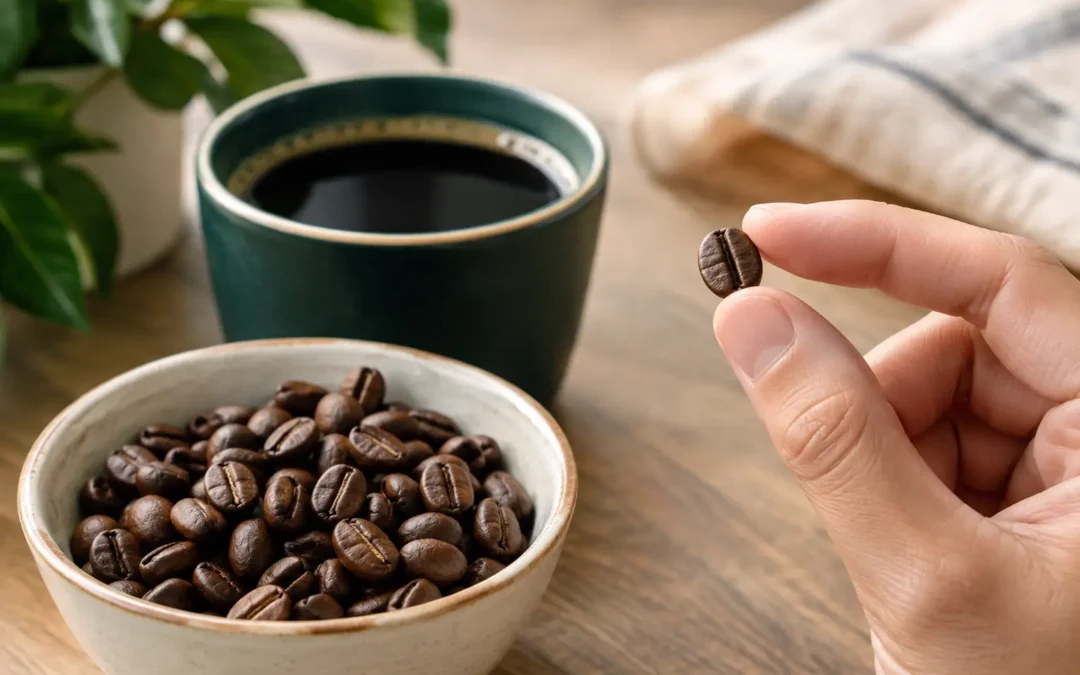
Yes, you can eat a coffee bean, particularly a roasted one. It is safe for most people as an occasional snack, but it is bitter, crunchy and more concentrated in caffeine than it first appears. Brewing is still the best way to taste what a bean has to offer.
A coffee bean looks simple in the grinder hopper, but it carries the same aroma, flavour and caffeine that end up in your cup. Eating one is a different experience from drinking coffee. There is no water to soften the flavour or spread the caffeine across a mug. What you get is the bean, whole and direct.
Can you eat a coffee bean straight from the bag?
Roasted coffee beans are edible. If you enjoy dark chocolate, toasted nuts and a little bitterness, you may even like them. The texture is dry and crisp, with a firm crunch that can catch people by surprise. A lighter roast often tastes brighter and more tangy, while a darker roast can lean toward cocoa, caramel and roasted nut notes.
Not every bean is equally pleasant to snack on. Coffee is roasted with brewing in mind, so the flavour is designed to open up when ground and mixed with water. A beautifully balanced espresso or filter coffee may taste intense, sharp or unusually dry when eaten whole. That does not mean the coffee is poor quality. It simply means you are tasting it in a very concentrated form.
Freshness matters here as much as it does in the cup. Fresh roasted coffee beans have more fragrance and livelier flavour. As beans sit exposed to air, their aromas fade and the oils on the surface can become stale. If you are going to try eating one, use a freshly opened bag and start with a single bean.
Roasted beans versus green beans
Green coffee beans are the pale, unroasted seeds before they go through the roaster. Technically, they can be eaten, but they are very hard, grassy and difficult to chew. They are not a good substitute for a roasted coffee snack, and they are not what most people mean when they ask whether coffee beans are edible.
Roasting changes far more than colour. Heat develops familiar coffee flavours, reduces the bean’s raw, vegetal character and makes it brittle enough to grind. It is why a roasted bean snaps between your teeth while a green bean feels closer to a hard seed.
What does eating a coffee bean taste like?
Think of the first second after a sip of black coffee, before milk or sugar rounds it out. The bean may taste bitter, toasted, earthy, fruity or chocolatey, depending on where it was grown and how it was roasted. Then comes a dry finish that can linger.
Single-origin coffee can make this small experiment especially interesting. A bean with berry-like or citrus notes in the cup may offer a bright, tangy crunch. One with a richer profile may bring cocoa, brown sugar or roasted hazelnut flavours. Those details are often easier to notice once the bean has been brewed, but eating a bean can still reveal its character.
The trade-off is intensity. A whole bean does not have the silky body of a flat white, the clarity of a filter brew or the refreshing lift of cold brew. It is a quick, bold taste rather than a relaxed coffee moment.
How much caffeine is in a coffee bean?
Coffee beans naturally contain caffeine, and eating them can add up faster than expected. The exact amount varies with the coffee, bean size and preparation, so there is no useful one-bean number that applies to every bag. Still, a handful of beans can deliver a meaningful caffeine hit, particularly if you have already had coffee that day.
This is where chocolate-covered coffee beans deserve a little restraint. They are easy to keep reaching for because the chocolate softens coffee’s bitterness. But each piece combines coffee with a sweet coating, and it is much harder to notice how many you have eaten than it is to count cups of coffee.
If you are sensitive to caffeine, keeping an eye on your intake for personal reasons, or making coffee treats for children, choose the ingredient carefully and keep portions small. Decaf coffee beans are also edible and offer the same roasted crunch and flavour, though decaf is not necessarily entirely caffeine-free.
Is it bad for your teeth?
Eating the occasional coffee bean is unlikely to be a problem for someone with healthy teeth, but they are hard enough to be rough on teeth and dental work. Do not bite down on a large handful, especially if you have a chipped tooth, sensitive teeth, crowns or fillings.
The other consideration is coffee’s natural colour. Just as regular coffee can leave colour behind on teeth over time, frequent snacking on beans may do the same. Water afterwards is a simple way to clear the lingering grounds and dry texture from your mouth.
Better ways to enjoy coffee beans
If you like the idea of eating coffee but find whole beans too intense, use them as an accent rather than the main event. Finely ground coffee can bring depth to chocolate baking, tiramisu, brownies or a dry rub for cooking. It should be ground finely enough to avoid an unpleasant gritty texture, and used with a light hand.
Whole beans also work well as a garnish where they are there to look good and add aroma, rather than to be eaten by the spoonful. A few on top of a dessert table or beside a cup of coffee create a simple café feel. Let guests know they are real beans, though. They can look like chocolate-coated decorations from a distance.
For most coffee drinkers, the best way to enjoy the bean is still through a brew that suits it. Espresso draws out sweetness and texture. Filter brewing brings more clarity to delicate flavours. Cold brew can make a coffee feel smooth and easy on a warm Adelaide afternoon. One well-roasted coffee can offer something different in each method.
LygonCoffee’s OmniSoul blend was created for that kind of flexibility. It is roasted to work across espresso, filter and cold brew, so you can explore the bean in the cup rather than chewing through the bag. For home drinkers, freshly roasted coffee beans also make it easier to find the flavour and brewing style that feels right for your daily ritual.
If curiosity got you to eat a bean, let it lead to a better cup next. Choose fresh roasted coffee beans, grind only what you need and take a moment to notice the flavours that appear once water does its work.
FAQs
Can you eat coffee beans raw?
You can chew green, raw coffee beans, but they are extremely hard and have a grassy, astringent taste. Roasted beans are the better choice if you want to eat a coffee bean.
Can you eat coffee beans after brewing?
You can, but used grounds and beans are wet, spent and generally unpleasant to eat. Their best use is in the compost or garden rather than as a snack.
Are chocolate-covered coffee beans edible?
Yes. They are a popular sweet snack, but it is easy to eat more than planned. Remember that they still contain coffee and caffeine beneath the chocolate.
Can you make coffee from whole beans without a grinder?
Yes, although a grinder gives a more even result. You can crush beans carefully with a mortar and pestle or a rolling pin, then use a simple immersion-style brew. Freshly ground coffee will usually taste more balanced.
Do coffee beans taste better than brewed coffee?
It depends on what you enjoy. A whole roasted bean offers a bold, dry crunch and concentrated bitterness. Brewing reveals more sweetness, aroma and detail, making it the better everyday way to enjoy coffee.