
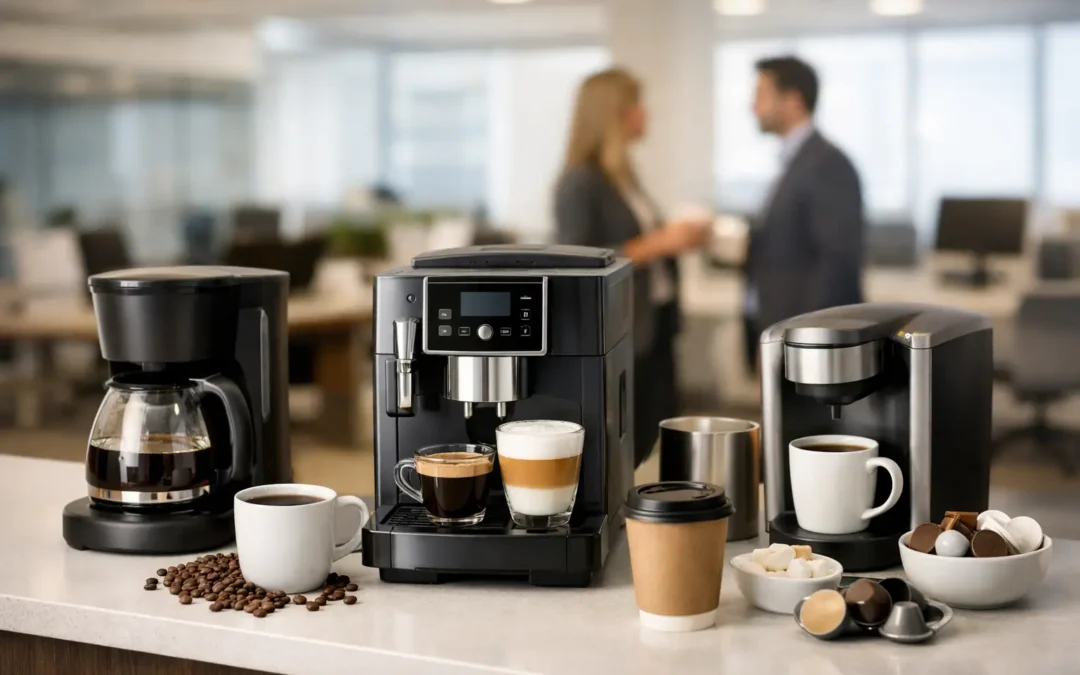
That 10:30 slump tells you a lot about an office coffee setup. If people are quietly leaving for the cafe downstairs, avoiding the kitchenette machine, or keeping a secret stash of decent instant in their drawer, the current system is not doing the job. The best coffee options for offices are the ones that match how your team actually drinks coffee – and deliver quality without turning someone in admin into a full-time barista.
For some workplaces, that means a reliable bean-to-cup machine and fresh beans on subscription. For others, it means skipping equipment headaches altogether and bringing in barista-made coffee on key days. The right answer depends on team size, budget, expectations, and how much effort your office wants to put into the ritual.
What makes the best coffee options for offices?
Office coffee sounds simple until you start pricing machines, cleaning schedules, milk storage, bean quality, and the inevitable debate between convenience and taste. A good setup is not just about caffeine. It shapes the morning mood, gives people a reason to gather, and says something about how much care a business puts into the everyday experience.
The best office coffee option usually gets four things right. It tastes consistently good, it is easy enough to manage on a busy workday, it suits the number of people using it, and it feels worth the spend. Miss one of those and the whole setup can become a source of frustration rather than a perk.
Freshness matters more than many offices realise. A premium machine cannot rescue stale beans, and cheap pods rarely give you the depth and richness people expect once they have had proper specialty coffee. If your workplace wants coffee that staff genuinely look forward to, start with the product in the cup, not just the hardware on the bench.
Option 1: Bean-to-cup machines for daily convenience
If your office wants coffee available all day with minimal training, bean-to-cup machines are often the most practical choice. They grind, extract, and in some cases froth milk at the touch of a button. For medium to large teams, that convenience can be hard to beat.
The upside is obvious. You get espresso-style coffee quickly, there is less room for user error, and anyone can make their own cup without learning dose, grind, or milk texturing. In a busy office where people want flat whites between meetings, that matters.
The trade-off is that convenience does not automatically equal cafe quality. Results vary enormously depending on the machine, the beans, cleaning habits, and milk system. If the machine is not maintained properly, even a strong setup can produce dull shots and burnt-tasting milk. Offices that go down this path need a realistic plan for upkeep, not just purchase.
This option suits teams who want consistency and volume over theatre. It is ideal where coffee is a daily operational need rather than a hospitality feature.
Option 2: Capsule machines for small teams
Capsule systems are popular because they are tidy, fast, and predictable. In a smaller office with only a handful of coffee drinkers, they can make sense. There is almost no training, clean-up is straightforward, and stock control is simple.
Still, there is a ceiling on flavour. Capsules can be neat and efficient, but they rarely offer the freshness, complexity, and crema you get from beans roasted recently and ground on demand. Cost per cup can also creep up over time, especially in offices where coffee consumption grows faster than expected.
There is also the waste question. Many businesses are paying closer attention to what they throw out, and single-serve systems can sit awkwardly with sustainability goals unless recycling is properly managed.
For a very small office, capsules may be good enough. For a workplace trying to create a more premium experience, they often feel like a stopgap rather than a long-term answer.
Option 3: Fresh beans with manual equipment
For offices with genuine coffee lovers in the team, a manual setup can be the most rewarding. Think an espresso machine, quality grinder, freshly roasted beans, and staff who actually enjoy making coffee. When everything is dialled in, the results can be excellent.
This approach gives you the most control over flavour. You can choose blends that suit the workplace palate, adjust extraction, and enjoy coffee with the body, aroma, and sweetness that make specialty roasting worth chasing. It turns a basic tea point into something with real character.
But there is a reason not every office does this. Manual equipment needs skill, time, bench space, and regular cleaning. If the one person who knows how to use it properly is on leave, standards can drop quickly. For some workplaces that is part of the charm. For others, it is too much effort for a Tuesday morning.
This setup works best where coffee culture is already strong and a few people are happy to take ownership of the process.
Option 4: Filter coffee for larger teams and meetings
Filter coffee is often overlooked in Australian offices, which is a shame. When brewed well with fresh specialty beans, it can be smooth, aromatic, and seriously satisfying. It is also one of the easiest ways to serve quality coffee to a larger group without creating a queue around a machine.
For boardrooms, training days, internal events, and long meetings, filter coffee can be a smart solution. It is fast to serve, less fussy than espresso, and easier to scale. A well-brewed batch holds its flavour far better than people expect.
The main limitation is preference. Many Australian coffee drinkers are loyal to milk-based espresso drinks, so filter may not satisfy everyone as the office default. It shines most when paired with another option or used for specific situations rather than as the only coffee offering.
Option 5: Mobile barista coffee service
Sometimes the best office coffee solution is not a machine at all. A mobile barista service brings the full cafe experience to your workplace, with professionally made coffees, fresh milk, quality beans, and none of the maintenance headaches sitting on your team.
This is especially valuable for staff appreciation days, client mornings, launches, team celebrations, and campaign activations. It creates energy instantly. The smell of freshly ground coffee, the sound of milk stretching, the visual polish of a proper setup – it changes the atmosphere in a way an office machine never will.
It is also a practical answer for businesses that want premium coffee without investing in equipment, training, servicing, and consumables. In Adelaide, that can be a particularly strong fit for offices wanting a reliable hospitality touch on-site without sending people off premises.
The only real catch is frequency. If you need coffee every hour of every weekday, a mobile setup is not your everyday replacement. But as a regular weekly treat, a high-impact event feature, or a way to impress clients and reward staff, it is one of the strongest options available.
How to choose between office coffee options
The smartest choice usually starts with volume. A team of eight has very different needs from a team of eighty. Small offices can get away with simpler systems. Larger workplaces need speed, consistency, and a plan for peak demand.
Then look at expectations. If your team is happy with a basic caffeine hit, you do not need to overcomplicate it. If they are used to good local cafes and know the difference between stale and freshly roasted coffee, quality needs to be part of the brief.
Budget matters too, but it should be looked at over time. A cheaper machine with poor coffee and frequent issues can cost more in lost goodwill than a better setup that simply works. The same goes for beans. Freshly roasted coffee may cost more upfront than supermarket options, but the improvement in flavour is immediate and noticeable.
Finally, think about ownership. Who will clean the machine, reorder beans, check milk, descale equipment, and troubleshoot problems? Offices often choose a setup based on ideal conditions, then struggle because nobody has time to run it properly. The best solution is the one your team can actually maintain.
The role of fresh beans in a better office brew
Whatever format you choose, bean quality is where the whole experience begins. Freshly roasted coffee brings out sweetness, balance, and texture that pre-ground supermarket coffee simply cannot deliver. If your office setup is average but your beans are excellent, you still have a strong foundation. If your setup is expensive and your beans are stale, people will taste the gap straight away.
That is why many offices do well with a simple combination: reliable equipment paired with fresh specialty beans delivered consistently. It removes guesswork and keeps quality high without turning coffee into a side project.
For workplaces that want to elevate both the daily ritual and occasional team moments, there is room to combine options. A bean-to-cup machine can cover everyday demand, while a mobile coffee service handles events, busy mornings, or staff rewards. That blend of practicality and cafe-quality experience is often where the sweet spot sits.
Good office coffee is never just about filling mugs. It is about creating a small part of the day that people genuinely enjoy, whether that comes from a quiet first cup at their desk or a barista-made flat white shared before a big meeting.