Specialty coffee roasting is the careful work of bringing out the best in each coffee, rather than roasting every bean to a single dark, generic flavour. It starts with great green coffee and finishes with a roast profile that suits how you like to brew and drink it.
A coffee bean may look simple, but it carries a remarkable amount of character. Where it was grown, the local climate, processing method and harvest all influence what arrives in the roastery. Roasting is where those qualities become flavour in the cup: sweetness, body, acidity, chocolate, fruit, caramel or spice.
Specialty coffee roasting starts with the bean
Good roasting cannot rescue poor coffee. Specialty coffee roasting begins with beans selected for their quality, traceability and potential in the cup. A naturally sweet Brazilian coffee might lend itself to cocoa and hazelnut notes, while a washed Ethiopian coffee can offer delicate florals, citrus and tea-like clarity.
That does not mean one origin is better than another. It means the roasting approach should respect what the bean has to say. A roast that brings satisfying body and rich sweetness to one coffee might flatten the fruit character of another.
Before a roast is finalised, the roaster tastes, adjusts and tastes again. The goal is not to make every coffee taste identical. The goal is to make each one taste balanced, enjoyable and true to its origin.
Heat, time and judgement
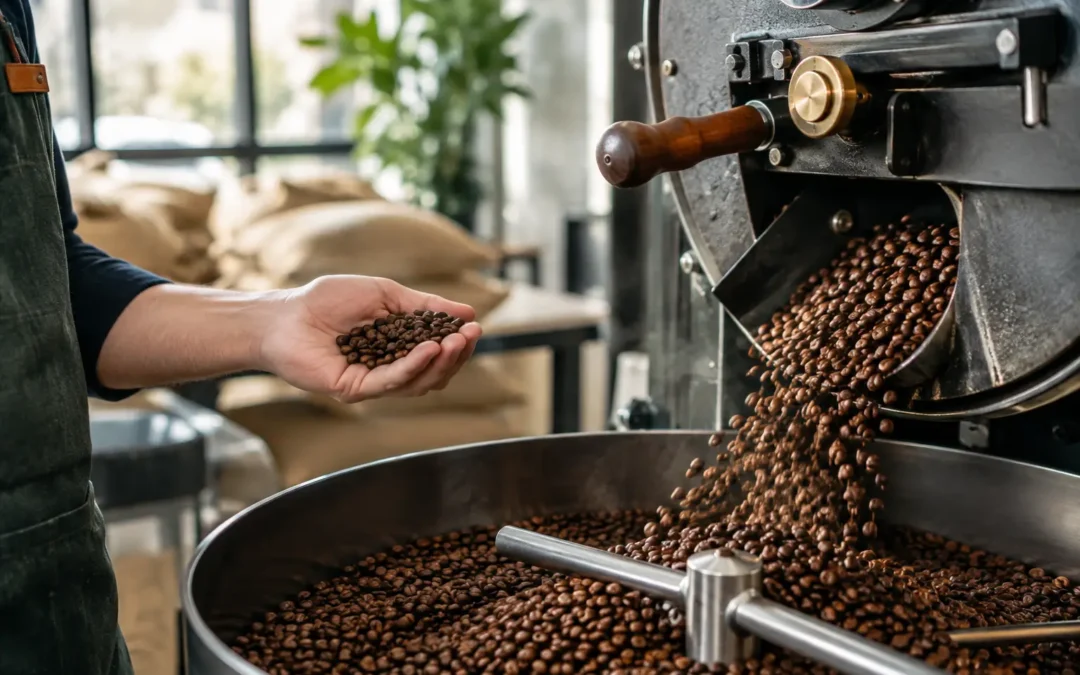
Roasting coffee is a controlled transformation. Green beans enter the roaster dense, pale and grassy. As heat builds, they lose moisture, change colour, expand and develop the compounds that create familiar coffee flavours and aromas.
The useful part is not just applying heat. It is applying the right amount at the right time. Early in the roast, the roaster builds momentum without scorching the outside of the bean. Through the middle, sugars develop and sweetness begins to form. Later, small decisions around heat and timing shape the final balance.
Roast too quickly and the coffee can taste underdeveloped, with a raw, cereal-like edge. Roast too slowly and it may lose liveliness or take on flat, baked flavours. Push a coffee darker and you can build more body and roast character, but you may cover up the origin notes that made it interesting in the first place.
This is why roasting is both technical and sensory. Roasters watch the roast data, but they also rely on smell, sound, colour and regular tasting. A good profile on a screen still needs to make a good cup.
Light, medium and dark are only part of the story
Roast labels can be helpful, but they do not tell you everything. One roaster’s medium roast can look and taste very different from another’s. What matters more is whether the coffee is developed properly for its intended brew method.
A lighter roast may highlight sparkling acidity, florals and fruit. It can be beautiful as filter coffee, especially when brewed with care. A medium roast often balances sweetness, body and origin character, making it versatile across espresso and filter. Darker roasting can suit drinkers who prefer bold body and deeper caramelised flavours, particularly in milk-based espresso drinks.
None of these styles is automatically right or wrong. The best choice depends on the coffee, the brewing method and the person drinking it.
Roasting for espresso, filter and cold brew
The same coffee can behave very differently depending on how it is brewed. Espresso uses pressure and a concentrated recipe, so it often benefits from a profile designed for sweetness, body and a forgiving extraction. Filter brewing uses more water and a gentler process, making clarity and structure easier to notice.
That is why some roasters create separate roast profiles for espresso and filter. It gives them more control over how the coffee performs in each setting. But versatility also has its place. A well-developed all-round profile can make life easier for home brewers who switch between espresso, plunger, pour-over and cold brew.
LygonCoffee’s OmniSoul is built around that idea. It is a Brazil and Colombia blend roasted to work across espresso, filter and cold brew, giving home drinkers one dependable coffee without needing separate bags for every method.
For a café or restaurant, the decision can be more specific. A house blend needs to taste consistent through a busy service, hold its own in milk and still reward customers who order a long black. For a coffee van, the roast needs to perform reliably while the queue grows and the day changes from cool morning to warm afternoon. Consistency is not boring. It is what lets a good cup stay good, cup after cup.
Freshness matters, but so does rest
Fresh roasted coffee beans are at their best when they have had time to settle after roasting. During this period, the coffee releases carbon dioxide. Brew it immediately and espresso can be difficult to dial in, with uneven flow and excessive gas. Leave it too long and the aromas gradually fade.
There is no single perfect number of days for every coffee or brew method. Espresso often benefits from a little more rest than filter coffee, while packaging, storage and roast style all affect the window. The practical answer is simple: buy coffee in quantities you will enjoy while it is fresh, keep the bag sealed, and store it somewhere cool and dry away from direct light.
Avoid the fridge unless you are storing coffee for a longer period in carefully sealed portions. Everyday opening and closing in a fridge can introduce moisture and odours. A pantry cupboard is usually the better home for your beans.
Small batches make room for care
Small-batch roasting gives a roaster the chance to pay attention. Each batch can be monitored closely, assessed after roasting and adjusted when a new crop or seasonal change calls for it. Coffee is an agricultural product, not a factory ingredient. Even a familiar origin can shift slightly from one harvest to the next.
That attention matters to businesses as much as it does to home drinkers. A café needs coffee that staff can dial in with confidence. A hotel wants a dependable offering across breakfast service. An office wants coffee people are genuinely pleased to make during the day, without adding another task to the operations list.
For workplaces, good beans are only one part of the experience. The right coffee machine for office use should match the number of people, the drinks they enjoy and the level of support required. Businesses can buy a machine outright or use finance through equipment partners, then pair it with regular deliveries of freshly roasted coffee beans. The result is straightforward: better coffee at work, with a setup that suits the team.
What to taste when you open the bag
You do not need a trained palate or a long list of flavour words to enjoy specialty coffee. Start with a few simple questions. Does it smell inviting when you grind it? Is there sweetness in the cup? Does the acidity feel lively and pleasant, or sharp and sour? Does the finish leave you wanting another sip?
Milk can change the picture too. A coffee with berry-like brightness may taste vivid as a black coffee but less familiar in a flat white. A chocolatey, fuller-bodied blend may feel comforting and balanced through milk. This is not a compromise. It is about choosing coffee for the moment you want to create.
At home, try adjusting one variable at a time. Grind slightly finer or coarser. Change the dose. Shorten or lengthen the brew. Small changes can reveal a different side of the same coffee and help you find the cup you enjoy most.
Good coffee is made for sharing
Specialty coffee roasting can sound technical, but its purpose is simple. It helps turn a daily coffee into a better moment: the first quiet brew at home, a conversation across the office bench, or a well-made flat white handed over at an event.
If you are choosing beans, start with how you drink coffee most often and buy fresh enough to enjoy it properly. Shop freshly roasted coffee beans when you are ready to find a coffee that fits your everyday ritual.
FAQs
What is specialty coffee roasting?
Specialty coffee roasting is the process of roasting high-quality, carefully selected coffee beans in a way that develops their natural sweetness, balance and origin character. The roast profile is adjusted to suit the bean and its intended brew method.
How fresh should fresh roasted coffee beans be?
Fresh roasted coffee beans generally benefit from a short rest after roasting, then are best enjoyed over the following weeks. Keep them sealed in a cool, dry cupboard and buy quantities that match how quickly you drink coffee.
Can I use the same beans for espresso and filter coffee?
Yes. Some coffees are roasted specifically for one method, while others are designed to work well across espresso, filter and cold brew. A versatile blend is a practical choice if you use more than one brewing method at home.
What should I consider when choosing a coffee machine for office use?
Consider the number of people using it, peak coffee times, preferred drinks and how hands-on your team wants the process to be. The best setup pairs a suitable machine with reliable fresh bean deliveries and clear support.
Does a mobile coffee van use specialty coffee?
A good mobile coffee van should use freshly roasted specialty coffee and have the capacity to serve consistently during busy periods. If you need a coffee van for hire for an Adelaide event, ask about bean freshness, service speed and whether the van can operate without site power or water.