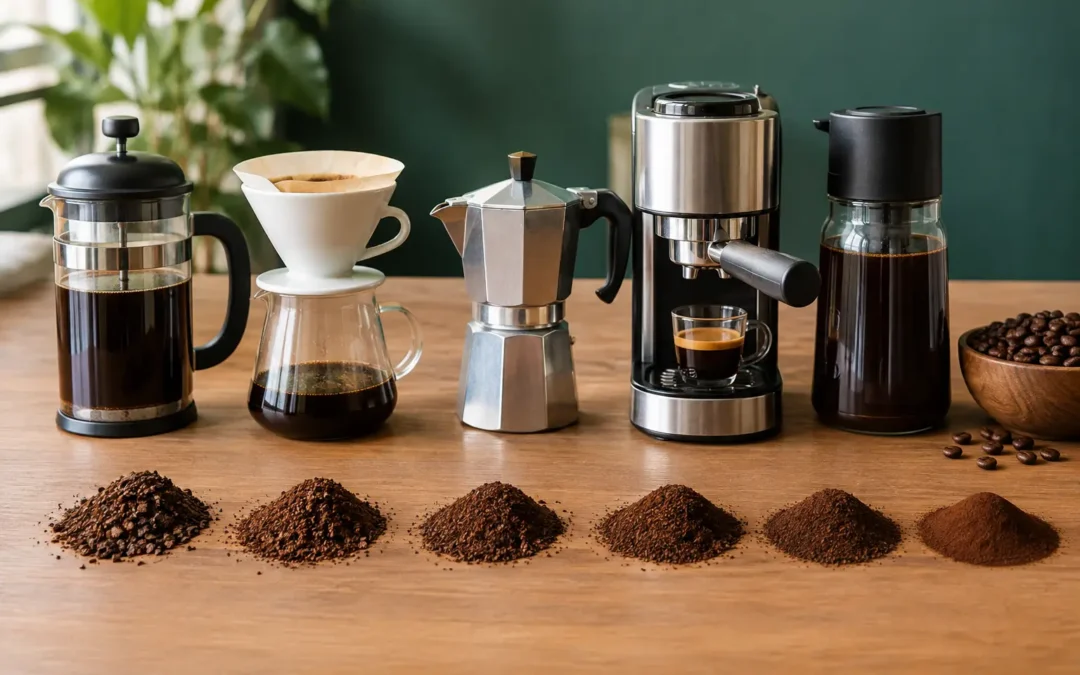
The right grind is the one that lets water draw out sweetness, body and aroma without turning your cup sour or bitter. This coffee grind size chart for every brew method gives you a reliable starting point, then helps you adjust for the coffee, brewer and taste you enjoy.
A grinder setting can look like a small detail, but it changes almost everything in the cup. Grind too fine and water struggles to pass through, often leaving a dry, bitter finish. Grind too coarse and water rushes through before it has picked up enough flavour, giving you a thin or sharp brew.
Coffee grind size chart for every brew method
Grind labels are useful, but every grinder is a little different. Think of this chart as a direction rather than a fixed rule. A medium setting on one grinder may be close to medium-fine on another.
| Brew method | Starting grind | What it should resemble | Typical brew time |
|---|---|---|---|
| Turkish coffee | Extra-fine | Powder, finer than table salt | 3-4 minutes |
| Espresso | Fine | Fine table salt | 25-35 seconds |
| Moka pot | Fine to medium-fine | Fine sand | 4-6 minutes |
| AeroPress | Medium-fine | Fine sand | 1-3 minutes |
| V60 or flat-bottom dripper | Medium-fine | Sand | 2-4 minutes |
| Automatic filter or batch brewer | Medium | Regular sand | 4-6 minutes |
| Clever Dripper | Medium-coarse | Coarse sand | 3-4 minutes |
| Chemex | Medium-coarse | Coarse sand | 4-5 minutes |
| French press | Coarse | Raw sugar crystals | 4 minutes |
| Percolator | Coarse | Coarse salt | 7-10 minutes |
| Cold brew | Extra-coarse | Cracked peppercorns | 12-18 hours |
The goal is not to chase a particular setting number. It is to make a cup you want to drink again tomorrow. Keep the dose, water temperature and brew time steady while you change the grind, and the difference becomes much easier to taste.
Why grind size changes flavour
Coffee extraction is simply water dissolving flavour from ground coffee. Smaller particles have more surface area, so they give up flavour quickly. Larger particles take longer. That is why espresso needs a fine grind for a fast, pressurised brew, while cold brew needs a much coarser grind for its long steep.
The best grind size also depends on how evenly your grinder produces particles. A quality burr grinder creates a more consistent bed of coffee, which helps water move through at a steadier rate. Blade grinders can still get you started, but they tend to create a mix of dust and larger chunks. That can mean bitterness and sourness in the same cup.
Grinding just before brewing makes a noticeable difference too. Whole beans hold on to their aromatic oils and delicate flavours far better than pre-ground coffee. Once coffee is ground, those aromas begin to fade quickly.
Espresso: make small changes
Espresso is the most sensitive brew method on the chart. A small adjustment can move a shot from bright and watery to heavy and bitter. Start fine, then watch how quickly the espresso pours.
If the shot races through in less than about 25 seconds, make the grind finer. If it barely drips or runs well past 35 seconds, make it coarser. Aim for a steady, syrupy flow and a balanced flavour, not a number for its own sake.
Bean freshness, roast style, humidity and the basket in your machine can all shift the ideal setting. This is normal. Cafés adjust their grinders through the day for that reason, and a good home setup benefits from the same patient approach.
Filter coffee: let the water flow evenly
For V60, flat-bottom drippers and automatic filter brewers, medium-fine to medium is usually where good coffee starts. You are looking for an even drawdown, where the water passes through the coffee bed without stalling or draining in a rush.
A sour, watery cup usually needs a finer grind. A bitter cup that takes too long to drain usually needs a coarser one. Before changing anything, check that you are pouring evenly and that your filter is sitting correctly. Technique matters, but grind size is still the clearest first adjustment.
Chemex brewing generally benefits from a slightly coarser setting because of its thicker filter paper and longer drawdown. The result can be clean, bright and tea-like, especially with coffees that carry floral or citrus notes.
Immersion brews: coarse is not always the answer
French press and cold brew are often described as coarse-grind methods, and that is broadly right. But extremely coarse grounds can under-extract, particularly if the coffee has a light roast or you prefer more sweetness and body.
For French press, begin coarse and steep for four minutes. If the cup tastes weak, try moving one step finer before extending the brew time. A little sediment is part of the traditional French press style, but a more even grinder will keep the texture cleaner.
Cold brew needs extra-coarse grounds because the coffee sits with water for many hours. Fine particles can create a murky concentrate with a woody, drying finish. Use cool, filtered water and taste the concentrate after dilution, as the final ratio has as much influence as the grind.
AeroPress and moka pot: use the recipe as your guide
The AeroPress is flexible by design. A short brew with a finer grind can produce a concentrated, espresso-style cup, while a longer steep with a medium grind can create something closer to filter coffee. Start medium-fine, then adjust according to your recipe and whether the plunge feels too easy or overly resistant.
Moka pots sit between espresso and filter coffee. Use a fine to medium-fine grind, a touch coarser than espresso. Too fine can restrict the flow and bring out harsh bitterness. Fill the basket loosely, never tamp it, and take the pot off the heat when the stream begins to pale and sputter.
A simple way to dial in any coffee
When a brew is not tasting right, change only one thing at a time. Grind size is the best place to begin. If the cup is sour, sharp, salty or lacks sweetness, grind finer. If it is bitter, dry, harsh or overly heavy, grind coarser.
There are exceptions. A very dark roast can taste bitter even at the right grind, while an exceptionally light coffee may need hotter water or a longer brew. Still, one measured grind adjustment is more useful than changing the dose, recipe and temperature all at once.
Write down the setting that works for each brew method and coffee. Your morning routine becomes much simpler, and you will learn what your own palate prefers. A chocolatey coffee may shine with a fuller, slightly finer French press brew, while a delicate washed coffee may taste clearer with a coarser pour-over setting.
Start with coffee worth grinding
Grind size can only reveal what is already in the bean. Fresh roasted coffee beans give you more aroma, sweetness and clarity to work with, whether you are pulling an espresso before work or making a slow Sunday filter.
LygonCoffee’s OmniSoul blend is roasted to work across espresso, filter and cold brew, making it a practical choice if your household uses more than one brew method. Start with the chart, make one small adjustment, and let the cup tell you where to go next.
Ready to put the chart to work? Shop fresh beans from LygonCoffee.
FAQs
What is the best grind size for espresso?
Start fine, close to the texture of fine table salt, and aim for a shot that pours in about 25 to 35 seconds. If it runs fast and tastes sour, grind finer. If it drips slowly and tastes bitter, grind coarser.
What grind size should I use for an office coffee machine?
For a bean-to-cup office coffee machine, the ideal setting depends on the machine and beans. Begin around fine for espresso-style drinks, then make small changes until the coffee tastes balanced and the flow is steady.
Can I use one grind size for every brew method?
Not if you want the best result. Espresso, filter coffee and French press all move water through coffee differently. A medium grind is the most versatile compromise, but separate settings will give each method more flavour and balance.
Why does my French press coffee taste gritty?
Some sediment is normal with a French press. If it feels overly gritty, use a slightly coarser grind, pour gently and avoid pressing the plunger all the way to the bottom. A more consistent burr grinder also helps.
What grind size is best for cold brew?
Use an extra-coarse grind, similar to cracked peppercorns, and steep for 12 to 18 hours. Finer grounds make a muddy, over-extracted concentrate that is harder to strain.
A good grinder rewards a little attention. Choose fresh beans, begin with the setting that suits your brewer, then adjust in small steps until every cup tastes like yours.