A hotel breakfast coffee program example that works is simple: serve freshly brewed coffee that suits your breakfast format, keep the station clean and easy to use, and make consistency part of every morning shift. Guests do not need a complicated coffee ritual before a meeting or road trip. They need a good cup, served quickly, every time.
For hotels, breakfast coffee is one of those small details that leaves a big impression. It is often the first thing a guest tastes in your venue. A rich, balanced cup beside eggs and toast can make breakfast feel generous. A burnt, empty pot can make an otherwise polished buffet feel neglected.
Start with the breakfast experience
The best program starts with a clear picture of who is drinking the coffee and how they move through the room. A 20-room boutique hotel with plated breakfasts needs a different setup to a 150-room property managing a sharp 7.00 am rush.
Think about your busiest 30 minutes, not your quietest hour. How many guests arrive at once? Are they helping themselves from a buffet, ordering from staff, or grabbing coffee as they leave? Is breakfast included, charged separately, or part of a conference package? These answers shape the equipment, bean volume and service routine.
A good hotel program should feel considered without slowing anyone down. That might mean batch-brewed filter coffee at a buffet, espresso made to order in a smaller dining room, or both. There is no single right format. The right choice is the one your team can deliver well when the breakfast room is full.
A practical hotel breakfast coffee program example
Picture a 70-room hotel with a buffet breakfast from 6.30 am to 10.00 am. Weekday guests are mostly business travellers. Weekends bring families and couples. The hotel wants coffee that tastes better than the standard buffet offering, but it also needs a system that staff can manage during the morning rush.
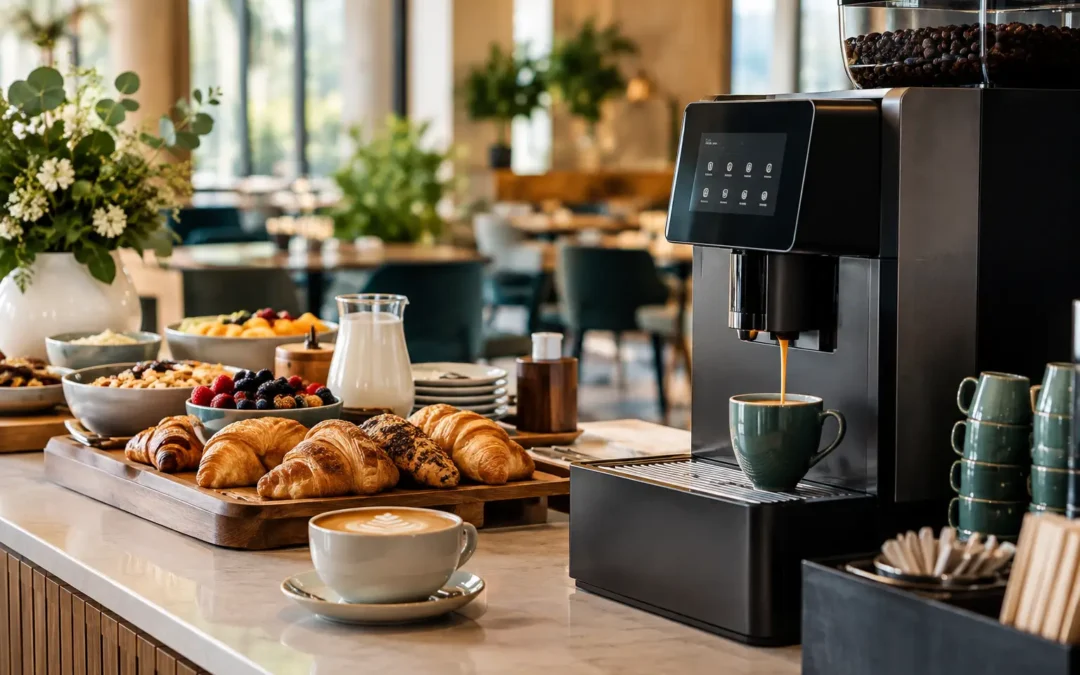
The program could centre on two options. First, a batch brewer supplies fresh filter coffee in insulated servers at a tidy self-serve station. This keeps the queue moving and gives early departures a fast, reliable cup. Second, a compact espresso setup sits near the service counter for guests who order milk coffee, long black or decaf.
The bean choice is a medium, chocolatey blend with enough sweetness to work black and enough body to hold its character through milk. This is where a consistent custom blend can be particularly useful. Breakfast includes many palates, and a bright, delicate single origin may be beautiful for a small café menu but less forgiving when brewed at volume or paired with a full hot breakfast.
Staff brew smaller batches more often rather than making one large volume to sit for hours. They check the coffee station every 20 minutes: cups stocked, milk refreshed, lids clean, sugar and alternative sweeteners tidy, and no tired coffee left on the warmer. Espresso equipment is switched on early, purged, wiped down and ready before the first guests arrive.
That is not flashy. It is good hospitality. Guests notice the calm of a breakfast room where coffee is ready when they are.
What this example gets right
It separates speed from choice. Filter coffee handles demand efficiently, while espresso gives guests a more personal option. It also avoids overbuilding the offer. A long menu can create delays, increase training needs and leave staff juggling too much during service.
Most importantly, it treats freshness as an operating habit rather than a marketing line. Fresh roasted coffee beans matter, but so do sensible batch sizes, clean equipment, correct water temperature and a team that knows when to replace a pot.
Choose coffee that suits breakfast
Breakfast coffee should be approachable. Guests range from coffee lovers to people who simply want a familiar flat white before a flight. A balanced profile with notes such as chocolate, caramel, toasted nuts or gentle fruit tends to work across black coffee, milk drinks and buffet service.
That does not mean every hotel should pour the same thing. A design-led city hotel may want a seasonal single origin on espresso alongside its house blend. A regional property with coach groups may prioritise a dependable filter coffee that tastes full and satisfying at scale. A luxury retreat may build a slower, more guided coffee moment into the guest experience.
The trade-off is straightforward. More choices can create interest, but they also add complexity. Every additional coffee needs a clear recipe, a place on the menu, stock control and team confidence behind it. Begin with a strong house coffee, then add variety only where it genuinely improves the guest experience.
Make the station easy to trust
A self-serve coffee station should look inviting at first glance. Keep it bright, clean and close to the breakfast flow without creating a bottleneck near the buffet. Guests should be able to see cups, coffee, milk and condiments without asking where anything is.
Small details matter here. Use insulated servers that hold temperature without cooking the coffee. Label regular and decaf clearly. Keep dairy and non-dairy milk cold and replenish it in smaller amounts. Provide bins that are easy to spot but do not dominate the station. If your hotel uses takeaway cups for guests leaving early, make them available before people have to ask.
Water is part of the result, too. Coffee is mostly water, so filtered water and a planned maintenance schedule protect both flavour and equipment. If a machine is inconsistent, slow or difficult to clean, it will show up in the cup and in the mood of the breakfast team.
Train for the busy moments
A coffee program only works when it is easy to hand over between shifts. Document the essentials in plain language: grinder settings where relevant, batch recipes, how long brewed coffee may stay in service, cleaning steps, milk handling and who to contact when equipment needs attention.
Training should include the practical moments that cause stress. What does the team do when 25 guests arrive at once? How do they respond if a guest asks for stronger coffee? When should filter coffee be refreshed early? Who restocks cups while another team member clears tables?
A short pre-service check is more useful than a thick folder no-one reads. Taste the first batch. Make one milk coffee. Look at the station from a guest’s point of view. Then make adjustments before the room fills.
Measure what guests actually experience
You do not need a complicated report to improve breakfast coffee. Start by watching the room and asking the breakfast team a few useful questions at the end of the week. Are queues forming? Is coffee being thrown out? Are guests asking for stronger, hotter or decaf options? Does the station run out of milk at the same time each morning?
Track coffee usage against occupancy over a few weeks. This helps you order the right volume and identify patterns around conferences, school holidays and weekend stays. It also reduces waste. If your espresso offer is popular but filter coffee is barely touched, the answer may be a different batch size or station layout, not simply more beans.
For hotels looking for dependable supply, LygonCoffee can help shape a wholesale coffee program around your breakfast service, from fresh roasting and blend selection to equipment guidance through our equipment partners. The aim is not to make breakfast more complicated. It is to make the first cup feel worth waking up for.
Frequently asked questions
What coffee is best for a hotel breakfast buffet?
A balanced blend is usually the safest choice because it tastes good black, works with milk and appeals to a wide mix of guests. Choose a profile that stays full and sweet when brewed in larger batches, then keep batches small enough to remain fresh.
How often should hotel breakfast coffee be replaced?
Replace it based on taste and holding quality, not just whether the server is empty. Smaller, regular batches are generally better than coffee sitting for a long period. Your supplier can help set a practical brew schedule for your equipment and guest numbers.
Should a hotel offer espresso and filter coffee at breakfast?
It depends on the property and service flow. Many hotels run both: filter for speed at the buffet, espresso for choice in smaller or more premium dining rooms.
Can a coffee machine for office use work in a hotel breakfast room?
A coffee machine for office settings can suit a small, low-volume hotel breakfast area, especially where guests want simple bean-to-cup drinks. For a larger buffet or high peak demand, purpose-matched commercial equipment and a planned service setup are usually the better fit.
Where can hotels buy fresh roasted coffee beans in Australia?
Hotels can work with a roaster that supplies fresh roasted coffee beans consistently and understands commercial service. Ask about roast timing, ordering rhythm, blend options, equipment support and training. The best next step is to discuss your room count, breakfast format and busiest service window before choosing a program.