
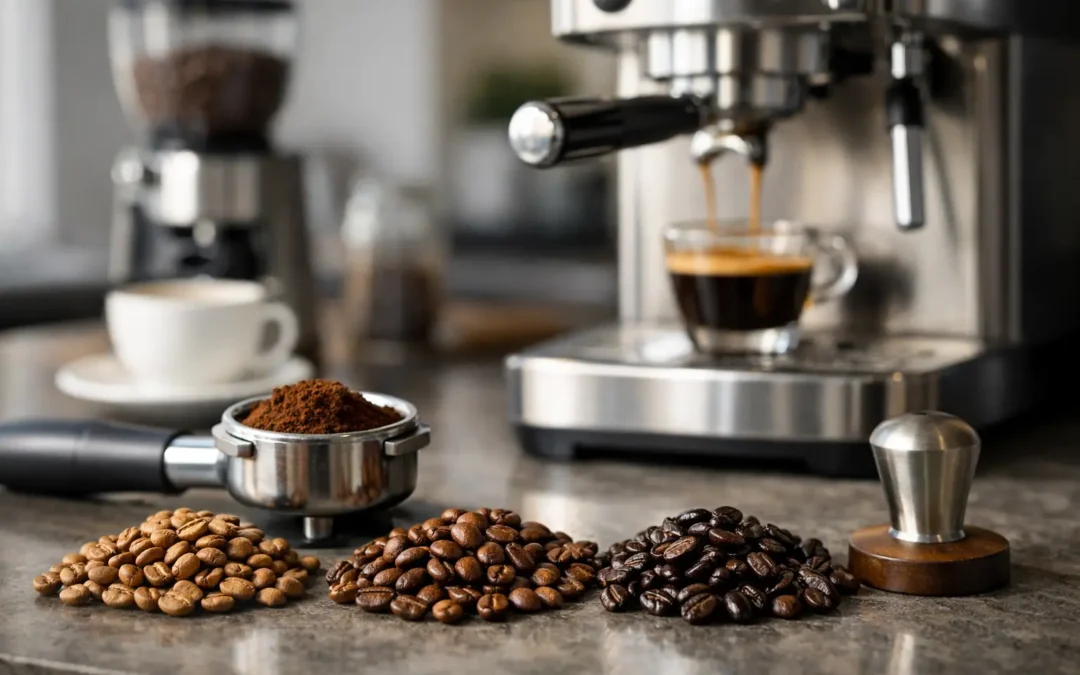
Espresso puts every choice under a microscope. A bean that tastes sweet and balanced through filter can become sharp, heavy or surprisingly flat when brewed under pressure. So, which roast level suits espresso? For most home coffee drinkers, a medium to medium-dark roast is the most forgiving and satisfying place to start – but the best answer depends on the flavour you enjoy, your grinder and how you like to drink your coffee.
The old rule that espresso must be dark roasted is no longer the whole story. Specialty coffee has made room for lighter, more expressive shots, while well-developed medium roasts continue to deliver the chocolatey comfort many people expect from their morning flat white. The aim is not to chase a roast label. It is to find beans that give you a rich, sweet and repeatable cup.
Which roast level suits espresso best?
A medium roast is often the sweet spot for espresso. It holds onto the coffee’s natural sweetness and character while developing enough solubility for an even, accessible extraction. Expect flavours such as caramel, milk chocolate, nougat, roasted nuts and ripe fruit, with a rounded body that works beautifully black or with milk.
A medium-dark roast suits drinkers who want more weight, lower perceived acidity and classic espresso depth. It can bring dark chocolate, cocoa, toffee and toasted notes, often with a fuller mouthfeel. This style is particularly dependable in milk drinks, where bolder flavours need to carry through steamed milk.
A light roast can make a memorable espresso, but it asks more of your setup and technique. It may offer bright citrus, berry, florals or tea-like sweetness, yet it is harder to extract evenly. Without a capable grinder and careful dial-in, the shot can taste sour, thin or underdeveloped.
A dark roast produces the familiar intense profile many people associate with traditional Italian-style espresso: low acidity, heavy body and flavours leaning towards bittersweet chocolate, roast and spice. Done well, it can be comforting and punchy. Taken too far, though, roast flavours can overshadow the bean itself, leaving ashiness or bitterness in the cup.
Roast level changes more than flavour
Roasting changes the bean’s structure. As coffee spends longer in the roaster, it becomes more porous and generally easier for water to dissolve. That is why darker beans can often extract more readily than lighter ones.
For espresso, this matters because water has only a short time to do its work. A light roast may need a finer grind, a warmer brew temperature, a longer ratio or a longer shot time to reveal its sweetness. A darker roast may need a slightly coarser grind, a cooler temperature or a shorter ratio to avoid bitter, dry flavours.
Roast level also changes how acidity feels. Acidity is not a fault – it is part of what makes coffee lively and layered. In a well-roasted light espresso, it can feel like juicy mandarin or red berries. In a medium roast, it may become softer and more integrated, like stone fruit or brown sugar. Darker roasting reduces that brightness, but does not automatically make a coffee smoother. If pushed too hard, it can replace fruit acidity with a harsh, smoky bitterness.
Choose the roast for the way you drink espresso
Your favourite drink is one of the clearest guides to the right bean.
For flat whites, lattes and cappuccinos
Choose medium or medium-dark roasted beans with plenty of sweetness and body. Milk naturally softens delicate flavours, so coffees with chocolate, caramel, hazelnut and toffee notes tend to stay present from first sip to last. A coffee can be excellent as a bright black espresso yet disappear in a large latte.
This does not mean milk drinkers need the darkest roast available. A balanced medium roast can taste richer, cleaner and sweeter than a very dark bean, especially when it has been freshly roasted and ground just before brewing.
For short black, long black and straight espresso
Medium roasts offer the broadest appeal. They bring enough body for a satisfying crema-topped shot while allowing origin character to come through. If you enjoy dark chocolate and a syrupy finish, move towards medium-dark. If you love fruit, sparkling acidity and a more adventurous cup, try a light-medium or lighter espresso roast from a skilled specialty roaster.
The key is to manage expectations. A light, fruit-led espresso will not taste like the classic café shot you remember from a traditional blend. It is meant to be brighter, more aromatic and sometimes a little wild.
Why “espresso roast” is useful, but not absolute
“Espresso roast” usually signals that a coffee has been developed with pressure brewing in mind. It may be a medium or medium-dark roast, and the roaster has likely designed it for sweetness, body and easy extraction. That makes it a useful shortcut when you are choosing beans for a home machine, office setup or event coffee service.
Still, there is no universal espresso roast level. Different origins, processing methods and bean densities respond differently in the roaster. A dense washed Ethiopian coffee might be roasted lighter to preserve florals and juicy fruit, while a natural Brazilian coffee may shine at a more developed medium roast, bringing out its chocolate and nut character.
Look beyond the colour of the bean or the word on the bag. Tasting notes, intended brew method and roast date offer more useful clues. A fresh specialty blend built for milk drinks will often be a more reliable choice than an anonymous bag labelled simply “dark roast”.
Freshness makes the roast choice work
Even the right roast level cannot compensate for stale coffee. Espresso relies on fresh gases and aromatic compounds to produce a lively crema, appealing aroma and full flavour. Beans usually need a short rest after roasting, then perform best while they are still fresh rather than sitting in the pantry for months.
Buy an amount you can use in a few weeks, keep it sealed away from heat and light, and grind only what you need. If your espresso suddenly tastes dull, papery or lifeless, the roast level may not be the issue at all.
At LygonCoffee, small-batch roasting is about giving beans the attention needed to taste expressive and dependable in the cup. That matters whether you are making a quick pre-work flat white or serving a crowd from a mobile café.
Dial in before you write off the beans
A good espresso roast can still taste disappointing when the recipe is off. Before deciding a coffee is too light, too dark or simply not for you, make a few measured adjustments.
If the shot tastes sour, salty or thin, it is likely under-extracted. Grind a little finer, increase your yield slightly, or let the shot run a touch longer. Light roasts often benefit from this extra extraction.
If it tastes bitter, hollow, dry or overwhelmingly roasty, it may be over-extracted. Grind a little coarser, stop the shot earlier, or reduce the yield. Darker beans commonly respond well to gentler brewing conditions.
Start with a straightforward recipe: use 18 grams of ground coffee to produce around 36 grams of espresso in roughly 25 to 32 seconds. It is a starting point, not a law. Weighing your dose and yield takes the guesswork out of changes, helping you taste what each adjustment actually does.
The practical answer for most coffee drinkers
If you are buying beans without tasting first, choose a fresh medium roast or a medium-dark blend designed for espresso. It offers a generous margin for error, delivers sweetness and body, and works across flat whites, lattes, long blacks and short blacks. It is the sensible choice for busy households and workplaces where every person takes coffee a little differently.
Once your routine is running smoothly, let your palate lead the next bag. Go lighter when you want fruit and sparkle. Go darker when you want intensity and a heavier finish. Espresso is at its best when the roast, recipe and ritual all suit the person holding the cup – so make the next shot one you genuinely look forward to.
Try it fresh. Our OmniSoul blend is roasted in small batches in Adelaide, with delivery included Australia-wide and 10% off when you subscribe. Visit the shop.