
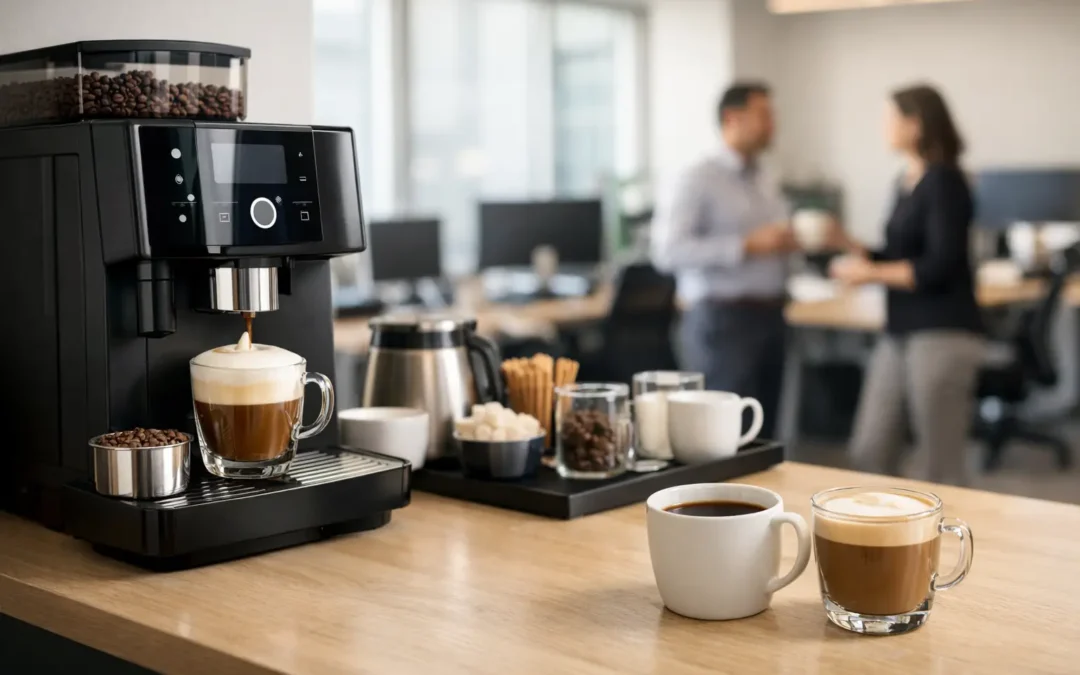
The best office coffee upgrade example is not a shiny machine dropped into the kitchen and forgotten by Friday. It is a coffee setup that makes a busy workday feel more considered: fresh aroma in the morning, better conversations between meetings and a proper cup that staff are genuinely pleased to drink.
For many Adelaide workplaces, the current arrangement is familiar. A pod machine sits beside a half-empty jar of instant coffee. Someone buys beans, another person adjusts the grinder, and the milk in the fridge is always questionable. It works, technically, but it does not create the kind of daily ritual that helps people feel looked after.
A meaningful upgrade starts by deciding what problem you actually want coffee to solve.
A practical office coffee upgrade example
Picture a 45-person creative studio with a mix of office-based staff, visiting clients and hybrid team members who come in for planning days. The office has a capsule machine, but it is slow at peak times, creates a stream of rubbish and delivers a different result depending on who is making the coffee. The team spends more on takeaway coffees than it realises, and client meetings often begin with an apologetic offer of instant.
Instead of buying a complicated commercial machine and asking someone to become the unofficial office barista, the business creates a two-part coffee plan. Freshly roasted specialty beans are supplied for everyday brewing, while a mobile coffee service visits on key team days, client presentations and quarterly celebrations.
The everyday side might be a quality automatic machine or a simple filter setup, matched with beans roasted for consistency and flavour. The event side brings trained baristas, café-quality equipment, fresh milk options and a proper menu directly to the workplace. Staff can order their usual flat white, long black or oat latte without leaving the building, while visitors get an experience that feels polished rather than improvised.
That is an office coffee upgrade because it improves more than the coffee. It removes equipment pressure, gives the workplace a small but memorable point of difference and turns scheduled office days into something people look forward to.
Start with the office rhythm, not the machine
Coffee requirements change depending on the shape of the workweek. A small office with eight people may only need fresh beans, a reliable grinder and a straightforward brewer. A larger workplace with 80 staff arriving at 8.30 am has a different challenge: volume, queue times and milk-based drinks.
Before choosing a solution, look at when people drink coffee and why. Are Mondays your busiest in-office day? Does the team host clients regularly? Is the kitchen used as a gathering point, or do people head straight out to the nearest café? These details matter more than whether a machine has ten buttons or twenty.
There is also a useful distinction between daily coffee and occasion coffee. Daily coffee needs to be easy, consistent and affordable over time. Occasion coffee can be more theatrical: a mobile café setup for a product launch, staff appreciation morning or all-hands session brings energy that a kitchen bench never will.
Fresh beans change the baseline
Great office coffee begins with the bean, not the badge on the machine. Freshly roasted specialty coffee has more aroma, clarity and sweetness than coffee that has sat in a warehouse for months. Even a simple brewing method can produce a noticeably better cup when the coffee is fresh and selected for how your team likes to drink it.
For an office where milk coffees are the favourite, choose a blend with enough body to stay rich through milk, with chocolate, caramel or nutty notes that feel familiar and satisfying. If your team includes black coffee drinkers, consider offering a second rotating option with brighter fruit or floral character. The goal is not to make everyone a coffee critic. It is to give people a cup with genuine flavour and a little more care behind it.
Storage helps protect that investment. Keep beans in an airtight container, away from heat and direct light, and buy quantities that will be used while they are still tasting their best. Ground coffee is convenient, but it loses character quickly. If the office can manage a grinder, it is often one of the simplest ways to lift the result.
Know when a machine is the right answer
An automatic machine can be a sensible choice for workplaces that need fast, self-serve coffee throughout the day. It is especially useful when people take breaks at different times, the office is open long hours or there is no appetite for hands-on brewing.
The trade-off is maintenance. Beans, milk systems, cleaning cycles and servicing all need attention. A premium machine can still make disappointing coffee if it is poorly calibrated or cleaned only when somebody complains. Assigning responsibility clearly, or choosing a service arrangement that includes support, avoids the familiar problem of a costly machine becoming a neglected kitchen ornament.
A manual espresso machine can produce beautiful results, but it is only right for an office with confident users or a dedicated barista. It should not be purchased because it looks impressive in the break room. A great coffee program is one your team can use well on a rushed Tuesday morning.
Bring in baristas when the moment matters
Some occasions deserve more than better beans. A mobile coffee bar brings the warmth and theatre of a café to the office, without sending staff down the street or asking the admin team to manage caterers, equipment and coffee orders.
It works particularly well for onboarding days, leadership sessions, client workshops, brand activations and end-of-quarter celebrations. The van or pop-up station becomes a natural meeting point. People chat while waiting for a freshly brewed coffee, visiting clients are welcomed with something more memorable than a bottle of water, and the workplace feels deliberately hospitable.
For businesses planning a regular staff benefit, a monthly or fortnightly barista visit can be more practical than subsidising unlimited takeaway coffees. It creates a defined occasion, makes costs easier to manage and gives teams a reason to gather. LygonCoffee can bring freshly roasted coffee and barista-made drinks to Adelaide workplaces, so the team gets café quality without the equipment workload.
Build the experience around people
The strongest office coffee upgrades acknowledge that not everyone drinks the same thing. Offer dairy and plant-based milk options where possible, make decaf available and ensure tea drinkers are not treated as an afterthought. A good hospitality moment lets people choose without fuss.
It is also worth thinking about presentation. Clean cups, a tidy coffee area and clear instructions make a modest setup feel considered. If you host clients, keep a small supply of attractive takeaway cups and lids for meetings that need to move quickly. These details do not need to be extravagant. They simply signal that people are welcome.
Sustainability is part of the experience too. Whole beans and reusable cups can significantly reduce the waste created by single-use capsules. Where takeaway cups are needed, plan the quantities carefully rather than ordering cartons that sit unused in storage. Better coffee should not mean more clutter in the rubbish room.
Measure value beyond the cup price
It is tempting to compare only the cost of beans, capsules or a coffee service invoice. A more useful view includes staff time, maintenance, client hospitality and the value of keeping people on site during busy periods.
If ten staff leave for takeaway coffee each day, that is not necessarily a problem. Breaks are healthy and local cafés matter. But on a packed workshop day, giving people excellent coffee at the office keeps the schedule moving and makes the whole day feel better organised. Likewise, a mobile barista service may cost more than self-serve coffee per cup, yet it can make a staff event feel far more generous and memorable.
Ask staff what they actually want after a trial. You may find that the team values a dependable everyday coffee station, while leadership prefers barista service for higher-stakes gatherings. That combination often delivers better value than trying to force one solution to cover every need.
Make the next cup feel intentional
An office coffee upgrade does not have to begin with a major fit-out. Start with fresher beans, a better brewing routine or one hosted coffee morning. Notice what gets people talking, what runs smoothly and what creates the richest flavour with the least friction.
When coffee is treated as part of workplace hospitality rather than an afterthought, every cup has the chance to make the day feel a little more generous.
Want better coffee at work? LygonCoffee roasts in small batches in Adelaide and supplies workplaces with fresh beans and barista-style setups. Explore our office coffee options.