
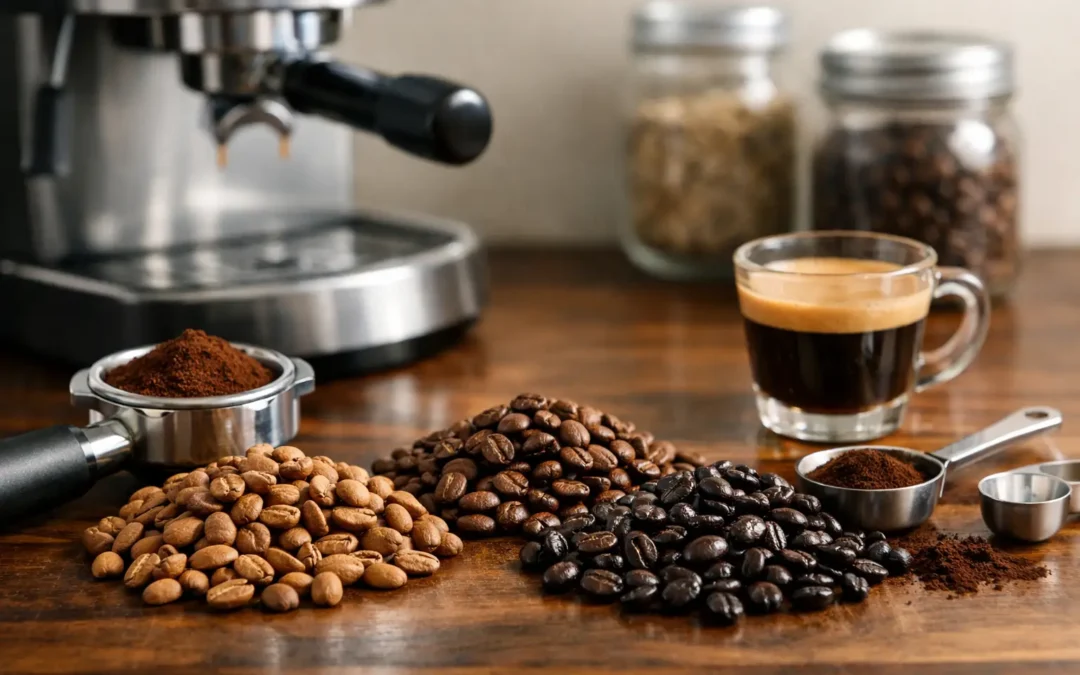
A bag labelled espresso is not a promise of rich, balanced coffee. It is a starting point. Knowing how to choose espresso roast means looking beyond the roast name and matching the beans to the way you actually drink coffee – whether that is a sharp long black before work, a silky flat white, or a round of cappuccinos for the office.
The best espresso roast is not automatically the darkest, strongest or oiliest bean on the shelf. It is the one that gives you sweetness, body and clarity in your cup, while being fresh enough to dial in properly on your machine. A little attention at the point of purchase can turn a frustrating morning ritual into a café-quality one.
Start with the coffee you like to drink
Before comparing roast levels, think about your usual order. Espresso behaves differently when served black than it does under steamed milk. A roast that tastes beautifully bright and floral as a short black can feel too delicate in a large latte. On the other hand, a deep, chocolate-driven roast may be brilliant with milk but feel heavy or bitter as a long black.
If milk drinks are your regular go-to, look for coffees with notes such as chocolate, caramel, toffee, hazelnut or brown sugar. These flavours tend to hold their own through milk and create the full, comforting sweetness many people expect from a flat white or cappuccino. A medium to medium-dark roast is often a dependable place to begin.
For espresso, long blacks and americanos, you may prefer more fruit character, sparkling acidity and a cleaner finish. A lighter-to-medium roast can reveal flavours like stone fruit, citrus, berries or tea, particularly when the coffee has been roasted with care. That does not mean it will taste sour. Well-extracted lighter espresso can be sweet, lively and complex. It simply asks more of your grinder, machine and dial-in routine.
How to choose espresso roast by roast level
Roast level matters because heat changes how coffee tastes, dissolves and performs under pressure. Yet the labels are not regulated. One roaster’s medium may be another’s medium-dark, so use flavour descriptions and brewing advice alongside the roast name.
Light roast: expressive but less forgiving
Light roasts preserve more of the coffee’s origin character. You are more likely to notice distinct fruit, floral or tea-like notes, plus a lively acidity. For an experienced home barista with a capable grinder, they can make an exceptional espresso that feels precise and memorable.
The trade-off is that light roasts are usually harder to extract. They often need a finer grind, careful temperature control and enough brew time to avoid a sour, thin shot. If you enjoy experimenting and mostly drink coffee black, a light espresso roast can be rewarding. If you want a reliable, chocolatey latte before a busy commute, it may not be your easiest option.
Medium roast: the versatile sweet spot
Medium roasts are popular for espresso because they balance sweetness, acidity and body. They can still show the personality of the bean while offering enough solubility for a more forgiving extraction. Expect flavours ranging from nougat and stone fruit to milk chocolate, depending on the origin and blend.
This is often the best place to start for homes, workplaces and events where different people drink coffee in different ways. A thoughtfully developed medium roast can make a satisfying piccolo, flat white or long black without forcing every shot into a narrow recipe.
Medium-dark and dark roast: bold, classic and milk-friendly
As a coffee is roasted further, fruit character generally gives way to deeper caramelisation. The cup becomes fuller-bodied, lower in perceived acidity and more likely to show cocoa, roasted nuts, spice and darker sugar notes. Medium-dark roasts can be terrific for traditional espresso lovers and milk drinks.
Very dark roasts deserve a closer look. Their smoky, bitter edge may suit people who genuinely enjoy an old-school, intense profile, but darkness can also obscure the quality of the green coffee. Beans with a very oily surface can create more residue in a grinder and may taste ashy if brewed too hot or extracted too long. Dark is not bad, but it is a flavour choice, not a shortcut to better espresso.
Choose a blend or single origin with purpose
A blend is designed to create a consistent, rounded espresso profile. It may combine coffees for sweetness, body, crema and balance, which makes it a practical choice when you want dependable results from bag to bag. For a busy household, workplace kitchen or mobile coffee service, that consistency matters. It makes daily coffee easier to enjoy and easier to share.
Single-origin coffees come from one country, region, farm or lot, depending on the coffee. They can offer a clearer sense of place, with distinctive flavours that change through the season. A washed Ethiopian might bring floral brightness, while a Brazilian coffee may lean nutty and chocolatey. They are ideal when you are curious about flavour and happy to adjust your recipe as the coffee develops.
Neither option is more sophisticated. Choose a blend when you want a polished, familiar espresso experience. Choose a single origin when you want to taste something more specific and are prepared for a little variation.
Freshness is part of choosing the roast
A brilliant espresso roast will not shine if it has been sitting around too long. Always look for a roast date, not just a best-before date. Freshly roasted coffee releases carbon dioxide for several days after roasting, so it is usually at its best for espresso after a short resting period rather than on the very day it was roasted.
As a practical guide, many espresso coffees perform beautifully from around 7 to 30 days after roasting, though the ideal window varies with the coffee, roast level and packaging. Lighter roasts can need a little longer to settle, while darker roasts may become easier to extract sooner. Once opened, store beans in their sealed bag or an airtight container away from heat, light and moisture. Do not keep them in the fridge.
Buy enough beans to keep your coffee routine flowing, but not so much that the final shots from the bag are flat and lifeless. For most home drinkers, smaller, more regular purchases are better than stocking up for months.
Match the coffee to your equipment
Your equipment influences what will taste best. A quality burr grinder is one of the biggest advantages you can give any espresso roast. Pre-ground coffee loses aroma quickly and makes it much harder to control flow rate, sweetness and texture. Grind immediately before brewing wherever possible.
Entry-level machines can make excellent coffee with a balanced medium or medium-dark roast, particularly when paired with a pressurised basket. More advanced machines with stable temperature control and unpressurised baskets give you room to explore lighter, more nuanced coffees. If your machine struggles to produce enough heat or pressure consistency, a very light roast can become unnecessarily difficult.
Water also matters more than most people expect. If your tap water has an overpowering mineral taste or chlorine smell, it will show in the cup. Filtered water can make a noticeable difference, while helping protect your machine from scale.
Read flavour notes as a guide, not a guarantee
Tasting notes describe what a roaster experiences in the cup. They do not mean chocolate or berries have been added to the beans. Think of them as a map of possible flavours, shaped by origin, processing, roasting and preparation.
Use those notes to narrow your choices. If you love a rich, classic coffee, choose caramel, cocoa, praline or roasted almond. If you want something brighter, seek orange, cherry, peach or honey. If you dislike sharp acidity, avoid assuming that every light roast will suit you. Ask for a medium roast with developed sweetness instead.
Your shot recipe will still decide what reaches the cup. A coffee described as plum and dark chocolate can taste harsh when over-extracted or sour when under-extracted. The bag gives you direction; the dial-in brings it to life.
Give each roast a fair dial-in
Do not judge a new espresso roast from one rushed shot. Start with a sensible recipe, then make one small change at a time. For a traditional double espresso, try a brew ratio around 1:2 – for example, 18 grams of dry coffee yielding about 36 grams of liquid espresso. From there, adjust the grind before changing everything else.
If the shot rushes through and tastes sour, watery or salty, grind finer. If it drips painfully slowly and tastes dry, bitter or burnt, grind coarser. Keep your dose, yield and tamp consistent while you learn what the coffee needs. A medium roast may be ready quickly, while a lighter roast may need a slightly longer ratio or warmer brew temperature to reveal its sweetness.
Keep brief notes for the first few coffees from a new bag. It sounds fussy, but it saves beans and helps you recognise the flavour profile you genuinely enjoy. After a few bags, your preferences become far clearer than any roast label.
A great espresso roast should make you want another sip, not send you hunting for sugar to cover it up. Start with fresh beans that suit your preferred drinks, trust your palate over marketing language, and give the coffee a little care at the grinder. The everyday cup is where great coffee earns its place.