
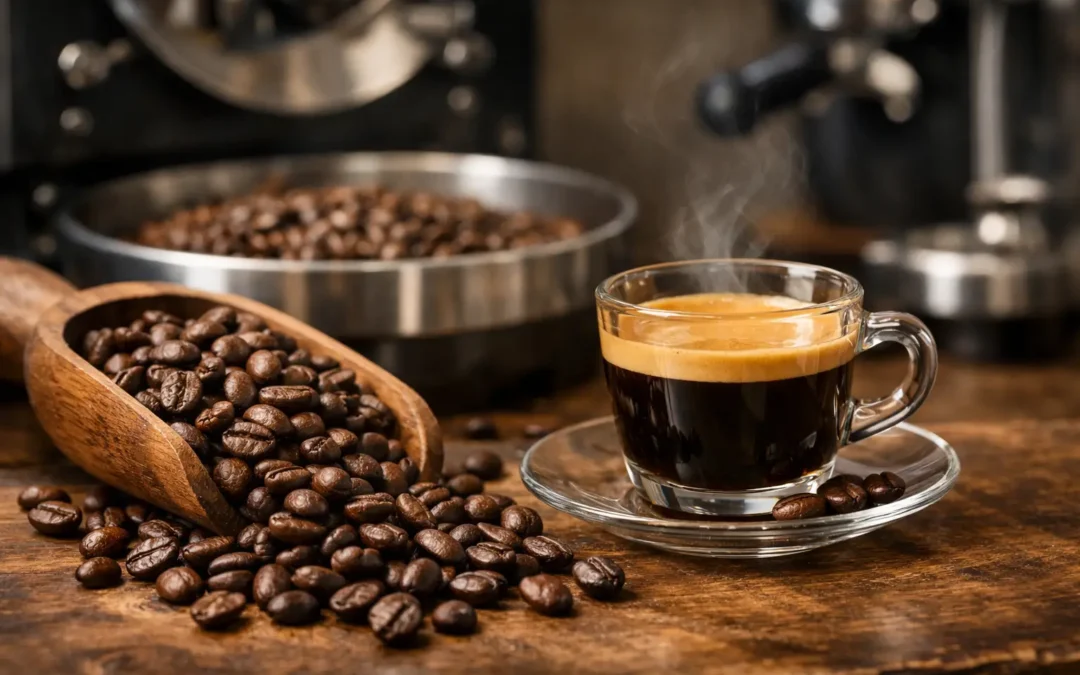
The difference is there before the first sip. Grind a bag of fresh roasted espresso beans and the room fills with chocolate, toasted nuts, ripe fruit or caramel – the character of the coffee arriving in the air before it reaches your cup. Pull the shot well and you get sweetness, texture and a crema that looks as inviting as it tastes. Leave those same beans sitting too long, though, and that lively promise begins to fade.
For home baristas, busy offices and anyone who believes the daily coffee deserves more than a rushed compromise, freshness is not a marketing flourish. It is the foundation of a genuinely café-quality espresso.
Why fresh roasted espresso beans make a difference
Coffee is at its best within a useful window after roasting. During roasting, heat develops the sugars, acids and aromatic compounds that give a coffee its flavour. The beans also release carbon dioxide, a natural process called degassing. A little degassing is helpful for espresso; too much gas can make extraction uneven and create a sharp, bubbly pour.
That is why beans roasted yesterday are not automatically the best choice for your machine. Most espresso coffees begin to settle beautifully after several days, often reaching a sweet spot roughly one to three weeks from roast, depending on the coffee, roast style and how it is brewed. At this stage, the flavours are expressive but the coffee is usually easier to dial in.
As time passes, oxygen gradually dulls the aromatics and oils that make espresso so satisfying. The result can be a flat cup, thin body, dry finish or crema that disappears before you have taken a second sip. Freshness will not rescue poor-quality beans or a neglected machine, but it gives good coffee every chance to shine.
Fresh roasted espresso beans need the right roast
Espresso is a brewing method, not a single flavour profile. It uses pressure to push water through a fine bed of coffee, which means it highlights body, sweetness and intensity – as well as any imbalance. A roast suited to espresso needs enough development to produce a full, syrupy cup, without roasting away the origin character that makes the coffee interesting.
A darker roast may deliver familiar notes of dark chocolate, cocoa and roasted hazelnut, with lower perceived acidity and plenty of body. That can be a brilliant choice for a flat white, latte or long black when you want a classic, comforting profile. Go too dark, however, and bitterness can take over, leaving milk to do the heavy lifting.
A medium or medium-dark roast often brings more complexity: caramel sweetness, stone fruit, berry-like brightness or spice, supported by a creamy texture. These coffees can be exceptional as black espresso and still cut through milk. The trade-off is that lighter, more delicate profiles ask more of your grinder and recipe. They reward attention, but may not be the easiest place to start on a weekday morning.
For many households and workplaces, a carefully built espresso blend is the practical sweet spot. Blends are designed for consistency, balance and versatility, so the coffee tastes generous whether it is poured as a short black or paired with silky milk. A blend such as OmniSoul is made for that kind of dependable, crowd-pleasing experience: rich enough for the first coffee of the day, refined enough to savour.
How to choose a bag that suits your cup
Start with how you actually drink coffee, rather than chasing a flavour description that sounds impressive. If your usual order is a milk coffee, look for beans with chocolate, caramel, nutty or toffee notes and a fuller body. These profiles remain present through milk and make a naturally sweet, rounded cup.
If you favour espresso, piccolo or long black, you may enjoy a coffee with more fruit, florals or lively acidity. These notes can make a short shot feel layered and memorable, but balance still matters. Bright should taste juicy and clean, not sour.
The roast date deserves a quick look too. Choose beans with a clear roast date, rather than relying on a distant best-before date alone. Buy an amount you can realistically finish within two to four weeks of opening. A one-kilogram bag can make sense for a busy office or a household making several coffees daily; for one or two drinkers, a smaller bag is usually the fresher, smarter option.
Whole beans are the better choice whenever possible. Grinding exposes dramatically more surface area to air, so pre-ground coffee loses its fragrance and flavour much faster. A decent burr grinder is one of the most worthwhile upgrades a home barista can make, even before investing in a more elaborate machine.
Keep the flavour in the bag
Fresh beans need simple, sensible storage – not a complicated ritual. Keep them in their original resealable bag if it has a one-way valve, or transfer them to an airtight, opaque container. Store them in a cool, dry cupboard away from sunlight, heat and strong food smells.
The fridge is usually not the answer. Coffee can absorb odours, and repeated temperature changes can introduce condensation. Freezing can work for unopened portions you will not use for a while, especially if you divide a larger purchase into airtight single-week packs. Once a portion is thawed, keep it sealed and use it normally rather than freezing and thawing it again.
Avoid leaving beans in the hopper for days. It is convenient, but light, warmth and air do their work quickly there. Fill the hopper with what you expect to use that day, then keep the rest protected.
A better espresso starts with a better routine
Great beans are only part of the story. Espresso is wonderfully precise, which is why a few small habits have such a noticeable effect. Use filtered water if your tap water tastes heavily chlorinated or mineral-heavy, keep your machine clean, and warm the portafilter and cup before brewing.
Then grind immediately before you make the coffee. Begin with a sensible recipe, such as 18 grams of ground coffee yielding around 36 grams of espresso in 25 to 30 seconds, and taste before changing anything. If the shot is sharp, thin or sour, try grinding finer or extending the yield slightly. If it is harsh, dry or bitter, grind a little coarser or shorten the yield.
Change one variable at a time. It is tempting to adjust dose, grind and shot time all at once when a coffee tastes off, but that makes it impossible to know what helped. A quick note on your mobile can turn the morning trial-and-error into a repeatable, delicious routine.
Milk drinkers should give the espresso equal attention. No amount of beautifully textured milk can replace a balanced base shot. When the coffee is fresh, sweet and properly extracted, milk becomes a partner rather than a cover-up, bringing out notes of chocolate, malt and caramel in every sip.
Freshness is part of the coffee experience
There is a special kind of confidence in opening a bag that has been roasted with care, knowing it is ready to meet your grinder, your machine and your preferred way of drinking it. It makes the home setup feel less like an appliance on the bench and more like a small daily café ritual.
For a workplace, fresh beans can change the rhythm of the day too. Better coffee gives people a reason to pause, chat and return to their work feeling looked after. For events, it is the detail guests remember: the fragrance drifting from the grinder, the first polished pour, and a cup that feels considered rather than convenient.
Choose beans that suit your taste, buy them close enough to roast to enjoy their best weeks, and give them a little care once they arrive. Your next espresso does not need to be complicated – it just needs to start fresh.
Try it fresh. Our OmniSoul blend is roasted in small batches in Adelaide, with delivery included Australia-wide and 10% off when you subscribe. Visit the shop.