
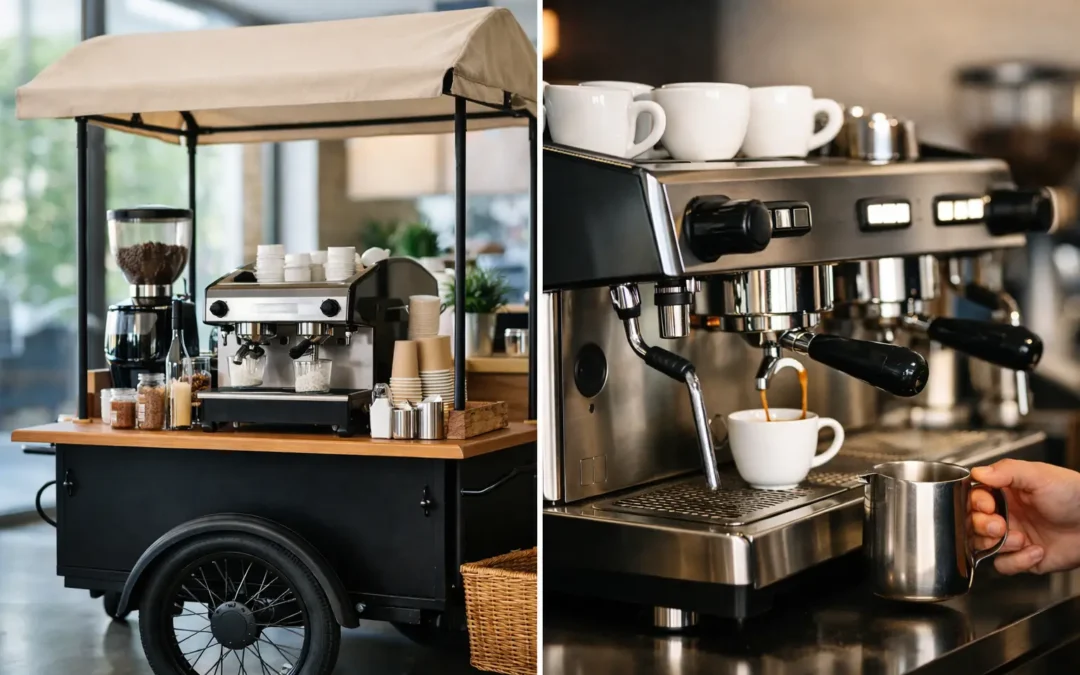
A flat white can change the feel of a morning meeting, a product launch or a Saturday celebration. But when you are weighing up a coffee cart versus espresso machine, the real question is not simply which option makes coffee. It is whether you need an experience delivered to your people, or a permanent setup that your team can use every day.
Both can produce a satisfying cup when they are chosen well. The difference lies in who operates the equipment, how many guests you are serving, the standard of service you want and how much responsibility you are prepared to take on once the coffee is poured.
Coffee cart versus espresso machine: the practical difference
A coffee cart is a mobile café brought to your workplace, event or activation. It typically arrives with commercial-grade equipment, freshly roasted beans, milk, cups, a skilled barista and everything required to serve café-quality coffee on site. Guests order what they enjoy, from espresso and long blacks to silky lattes, hot chocolates and alternative milk options.
An espresso machine is an asset you buy, lease or install in a fixed location. Depending on the model, it may be a compact automatic machine that staff operate at the touch of a button, or a traditional commercial machine paired with a grinder. It is designed for ongoing access rather than one-off service.
That distinction matters. A coffee cart is hospitality. An espresso machine is infrastructure. One creates a moment around coffee; the other makes coffee available whenever someone needs a break.
When a coffee cart makes more sense
For an event, a mobile coffee cart is usually the stronger choice because it removes the hard work from the organiser. You are not asking an admin team member to learn dosing, tamping and milk texturing while also welcoming guests. You are not calculating how much milk to chill, whether the grinder needs adjusting or where the used coffee grounds will go.
Instead, a barista manages the details that make a cup taste right. They dial in the grind, keep service moving, handle dietary requests and make each drink to order. That is especially valuable when attendees know their coffee and expect more than a sachet on a catering table.
A cart also gives people a natural reason to gather. At a corporate function, the aroma of freshly brewed coffee can pull guests into conversation between sessions. At a community event, it creates a friendly meeting point. At a branded activation, cups, signage and service can become part of the experience rather than an afterthought.
Coffee carts are particularly well suited to occasions with a clear start and finish: conferences, office appreciation days, weddings, showroom openings, staff training, markets and promotional events. In Adelaide, where a good coffee is part of the daily rhythm for many locals, a proper mobile café can make a business gathering feel considered from the first pour.
What you are paying for with mobile service
The cost of a coffee cart covers more than the machine. It includes professional barista labour, commercial equipment, setup and pack-down, fresh coffee, consumables, service planning and the ability to handle a busy rush without leaving guests waiting too long.
That can make a cart look more expensive than buying a small office machine at first glance. Yet for a single event, purchasing equipment often creates costs of its own: machine hire or purchase, beans, milk, cups, a grinder, cleaning supplies, staff time and the risk of a queue building while no-one is confident operating the setup.
With a cart, the event host can focus on their guests. The coffee team focuses on the coffee.
When an espresso machine is the better investment
An espresso machine earns its place when demand is consistent. If your office has a steady group of coffee drinkers every weekday, a machine may be a practical way to improve the kitchen and give the team a better daily ritual.
The right setup depends on volume and expectations. A bean-to-cup machine suits workplaces that prioritise speed and simplicity. Staff can make their own drink with minimal training, and the machine can be available throughout the day. It will not replace the craft of a barista-made piccolo or perfectly textured oat latte, but it can be a meaningful step up from instant coffee or pods.
A traditional espresso machine can deliver a higher ceiling for quality, especially when paired with freshly roasted beans and a capable grinder. It also demands more attention. Someone needs to understand the workflow, clean the steam wand, empty the knock box, check the water filtration and notice when a shot is running too fast or too slow.
For a café, hospitality venue or office with a trained coffee enthusiast on hand, that effort can be worthwhile. For a busy workplace where everyone is already juggling priorities, it can become an expensive bench-top ornament.
The ongoing responsibilities people forget
Buying an espresso machine is only the beginning. Good coffee relies on good maintenance, and the routine is not optional. Machines need daily cleaning, regular backflushing, descaling where required and periodic servicing. Grinders need attention too, because stale grounds and blunt burrs can flatten even the most beautiful coffee beans.
You will also need to manage stock. Fresh beans matter, but they need to be stored carefully and ordered regularly. Milk, alternative milks, cups and cleaning products must be replenished. If the machine breaks down, someone has to arrange the repair and decide what happens to the office coffee routine in the meantime.
None of this rules out an espresso machine. It simply means the best decision is based on the total commitment, not the sticker price.
Quality is about the whole coffee chain
It is tempting to assume that a commercial machine guarantees a better result than a coffee cart, or that an automatic machine is always inferior. In reality, quality comes from the whole chain: fresh coffee, grinder settings, water, milk handling, equipment cleanliness and the person making the drink.
A talented barista working from a well-equipped coffee cart can adjust a grinder as the weather changes and tailor drinks to individual preferences. That level of care is difficult to replicate with an unattended machine during a hectic office morning.
On the other hand, a thoughtfully maintained espresso setup with quality beans can give a small team reliable, enjoyable coffee every day. The key is matching the setup to the people who will actually use it. A machine that makes excellent coffee only when one trained person is in the office may not be the practical answer you hoped for.
Consider volume, not just headcount
A workplace of 40 people does not necessarily need a large espresso installation. Perhaps only 10 employees drink coffee, spread across the day. Conversely, an event with 80 guests may need fast service in a tight 45-minute window, which creates a much bigger rush than the guest number suggests.
Ask when people will want coffee, not only how many people are attending. Are guests arriving all at once? Is coffee being served before a keynote? Will it be the main refreshment on a cool morning? Do you need a single service station or multiple options across a large site?
For events with concentrated demand, barista service can protect the guest experience. A properly planned coffee cart has the equipment, workflow and hands-on service to keep the line moving while still treating each cup with care.
A hybrid approach often works best
You do not always have to choose one option forever. Many businesses benefit from a quality office machine for ordinary weekdays and book a coffee cart for the occasions that deserve a lift. That might be a quarterly team breakfast, client presentation, end-of-year celebration or a day when you want to thank staff with something more memorable than another catered tray.
The two options serve different jobs. Your office machine supports routine; a mobile coffee service turns coffee into hospitality. For teams that care about culture, that difference can be felt long after the last cup is cleared away.
Choose the option that protects your time
If your priority is daily access, predictable volumes and a fixed location, an espresso machine can be a smart long-term addition. Choose one that fits your real usage, commit to fresh beans and maintenance, and be honest about how much staff involvement it requires.
If your priority is a polished event, effortless hosting and café-quality drinks made by professionals, book a coffee cart. LygonCoffee brings freshly roasted flavour, experienced baristas and the warmth of a proper coffee stop directly to the people you are looking after.
The best coffee solution is the one that lets your guests or team enjoy the ritual without making you manage every moving part. When the aroma is rich, the service feels easy and every cup is made with care, coffee does exactly what it should: it brings people together.
Planning an event in Adelaide? LygonCoffee’s mobile coffee van serves our own freshly roasted specialty coffee at weddings, corporate days and community events. See our mobile coffee packages.