
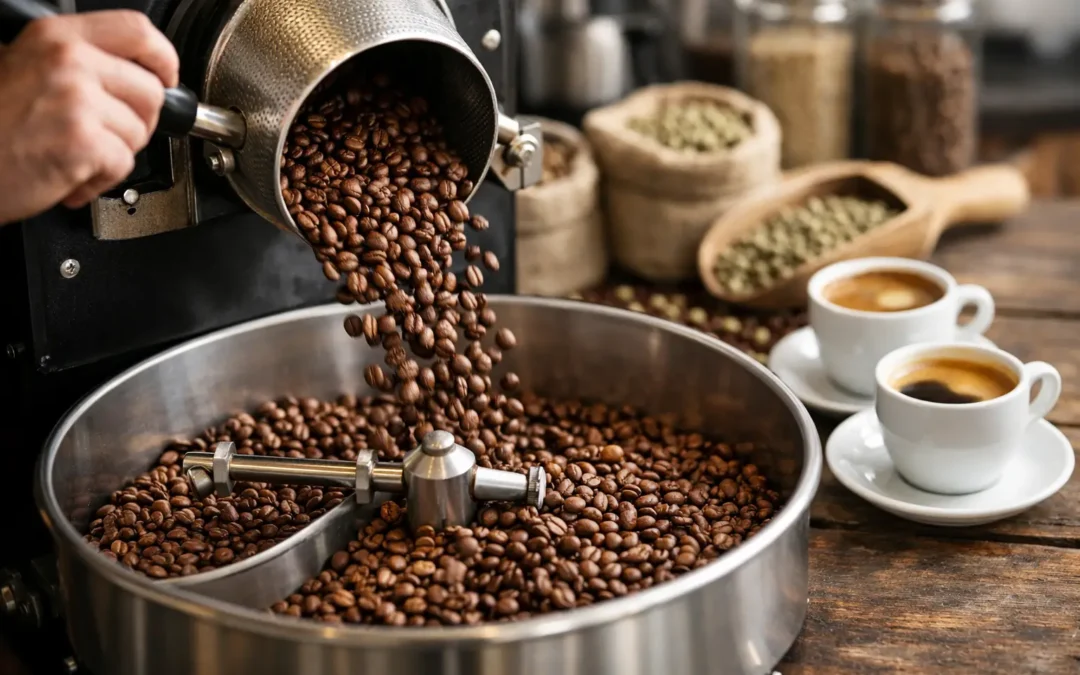
You can taste when coffee has been treated like a commodity. It lands flat in the cup – plenty of bitterness, not much personality, and none of the spark that makes you stop mid-sip. Small batch roasting changes that. It gives the roaster room to pay attention, respond to the bean, and build flavour with intention rather than pushing volume for volume’s sake.
For coffee drinkers, that difference shows up where it matters most: in the cup. For offices, events and households that want café-quality coffee without the fuss, it also means more consistency, better freshness and a product that actually reflects care. When you are buying beans for your kitchen bench, your workplace or a catered event, the way those beans were roasted matters just as much as where they were grown.
What small batch roasting actually means
Small batch roasting is exactly what it sounds like – roasting coffee in smaller quantities rather than loading up for maximum output. That might sound simple, but the effect is significant. Smaller batches give the roaster tighter control over heat application, airflow, development time and the subtle changes that happen as a coffee moves from green bean to finished roast.
Coffee is not a one-note ingredient. Different origins, processing methods, moisture levels and bean densities all behave differently in the roaster. A dense washed Ethiopian and a chocolatey Brazilian won’t respond the same way to heat, even if the end goal is balance in the cup. With smaller batches, adjustments can be made with far more precision.
That does not mean bigger roasters cannot produce good coffee. They absolutely can. But in a small batch setup, there is less pressure to force every coffee into the same template. That freedom is where a lot of character comes from.
Why small batch roasting brings out more flavour
At its best, roasting is flavour development, not flavour cover-up. The goal is not to roast every bean until it tastes generically “coffee-ish”. The goal is to highlight what is already there – sweetness, body, fruit, spice, cacao, florals, nuts, caramel – and shape it into a balanced, enjoyable cup.
With small batch roasting, the roaster can track the bean’s progress more closely and make smaller, smarter decisions along the way. If a coffee needs a gentler approach to preserve bright acidity, there is room to do that. If another coffee needs more development to deepen its sweetness and round out the finish, that can be managed as well.
The result is usually a cup with more clarity and more identity. You are more likely to taste the difference between blends, between origins, and between roast styles. That matters for specialty coffee drinkers, but it also matters for everyday drinkers who simply want their morning flat white to taste richer, smoother and fresher.
Freshness is not a marketing extra
One of the biggest advantages of small batch roasting is timing. Smaller roasting cycles often support a fresher production rhythm, which means beans are roasted more regularly and spend less time sitting around before they reach the cup.
Freshness in coffee is not about hype. Roasted beans begin changing from the moment they come out of the drum. Gas releases, volatile aromatics fade, and flavour gradually loses its edge. There is a sweet spot where coffee has had enough time to rest but still holds onto its liveliness. That window matters.
For home coffee drinkers, fresh beans mean more aroma when you open the bag and better extraction when you brew. For workplaces and events, it means the coffee service starts from a stronger foundation. If you are serving dozens or hundreds of cups, stale beans won’t hide behind milk for long. People notice.
Better control means better consistency
There is a myth that handcrafted always means unpredictable. Good small batch roasting proves the opposite. Precision and consistency are not enemies of craft – they are the result of it.
In smaller batches, it is easier to monitor bean temperature, rate of rise, airflow and roast progression in real time. If a coffee is behaving differently because of seasonal changes or a new lot arrival, those details can be addressed before they become problems. The roaster is not just following a fixed recipe. They are reading the coffee and responding to it.
That is especially valuable when reliability matters. Offices want beans that perform well day after day. Event organisers want drinks that taste polished from the first cup to the last. Consistency is not only about making coffee taste the same. It is about making sure the quality is dependable enough to build trust.
The trade-off: smaller scale, bigger care
Small batch roasting is not magic, and it is not automatically better just because the batch is small. A poor roaster with a tiny machine can still produce disappointing coffee. Skill, sourcing and quality control still matter.
There is also a practical trade-off. Smaller batches often mean higher labour input, tighter production limits and less room for bargain-basement pricing. If your only priority is buying the cheapest beans available, small batch coffee may not be what you choose.
But if you care about freshness, flavour and the confidence that someone has paid close attention to what is in the bag, the value becomes clear. You are not just paying for less volume. You are paying for more intention.
Small batch roasting for home, office and events
The beauty of small batch coffee is that it fits into very different parts of daily life. At home, it upgrades the routine. Your first brew of the day feels less like fuel and more like a ritual worth slowing down for.
In the office, it changes expectations. Good beans can lift the standard of every cup without sending staff down the road to queue at a café. It is one of the easiest ways to make a workplace feel more considered and better looked after.
At events, quality coffee does more than fill a gap between activities. It creates atmosphere. Guests gather around it, conversations start around it, and the experience feels more polished when every drink is made from beans that have been roasted with care. That is where the roasting side and the hospitality side of coffee really meet.
How to spot coffee roasted with care
You do not need to be a professional taster to recognise signs of quality. Start with freshness. Look for beans roasted recently, not just packed recently. Then pay attention to how the coffee is described. If every blend sounds vague and interchangeable, that can be a clue that flavour distinction is not the priority.
Brewing performance tells you a lot too. Fresh, well-roasted coffee tends to have more aroma, better balance and a cleaner finish. Espresso should taste structured rather than harsh. Milk-based drinks should still let the coffee come through. Black coffee should have interest beyond simple bitterness.
It is also worth noticing whether the roaster treats coffee as an agricultural product with variation, or as a uniform commodity. The best results usually come from businesses that respect both the craft and the practical side of service. That balance matters whether you are stocking a home grinder or planning coffee for a crowd.
Why this matters more than ever
Coffee drinkers are more switched on than they used to be. People know when a cup tastes stale, burnt or forgettable. They also know the difference a genuinely fresh, well-roasted coffee makes to the day. That has lifted expectations across homes, workplaces and events.
Small batch roasting meets that shift because it keeps quality close to the process. It allows room for precision, for adjustment, and for flavour that still feels alive when it reaches the cup. For a business like LygonCoffee, that is not just about selling beans. It is about making café-quality coffee more accessible wherever people want to enjoy it.
The best coffee experiences rarely happen by accident. They start with beans roasted carefully, served fresh, and chosen with purpose. If you want a cup with more character, more balance and more reason to go back for the next sip, start with how the coffee was roasted.
Try it fresh. Our OmniSoul blend is roasted in small batches in Adelaide, with delivery included Australia-wide and 10% off when you subscribe. Visit the shop.