
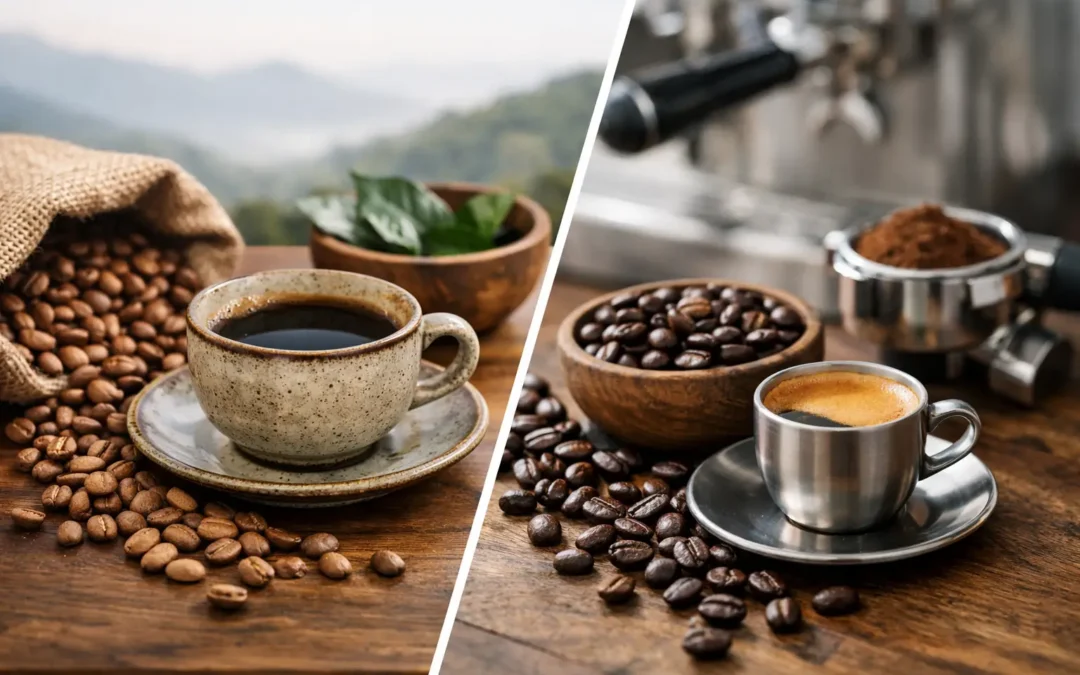
You taste it straight away. One coffee hits with a bright citrus snap and a floral lift that keeps changing as it cools. Another lands rounder, richer and more settled in the cup, with chocolate, nuts and a finish that feels built for a second sip. That is the real conversation behind single origin vs signature blend – not which one is better, but which one suits the way you like to drink coffee.
For home brewers, office coffee buyers and event organisers, that difference matters more than most people realise. The right coffee can sharpen your morning ritual, carry milk beautifully, or keep service smooth when you are pouring cup after cup. The wrong one can still be decent, but it may never feel quite right for the moment.
Single origin vs signature blend: what is the difference?
A single origin coffee comes from one producing region, farm, co-op or lot. The point is traceability and character. You are tasting a coffee with a more specific sense of place, shaped by altitude, variety, processing and season. That is why single origins often feel more expressive. They can be juicy, delicate, floral, winey or intensely fruit-forward, depending on where they come from and how they have been roasted.
A signature blend is built differently. Instead of showcasing one coffee’s identity, it combines multiple coffees to create a flavour profile with balance, consistency and purpose. A roaster might blend for sweetness, body, crema, milk performance or a reliable black coffee finish. Done well, a signature blend is not a compromise. It is a crafted recipe.
That distinction is worth remembering. Single origin celebrates specificity. Signature blend prioritises harmony.
Why flavour feels so different in the cup
Single origin coffees tend to have more obvious edges, in the best way. You might notice sharper acidity, more unusual fruit notes, or a cleaner finish that lets subtle details stand out. For people who enjoy slowing down and paying attention, that is part of the fun. A washed Ethiopian might feel tea-like and floral. A natural Colombian might bring berries and tropical fruit. The cup can tell a very vivid story.
Signature blends usually aim for a broader kind of satisfaction. Rather than one note standing above the rest, the flavour is shaped to feel complete. Think caramel sweetness, cocoa depth, nutty warmth or a syrupy body that gives the espresso some weight. These profiles often feel more familiar and more forgiving, especially if you are making coffee every day and want quality without having to chase tiny adjustments.
Neither style is automatically superior. The trade-off is character versus consistency, though even that is not absolute. Some single origins are beautifully balanced, and some blends are surprisingly layered.
When single origin makes the most sense
If you brew black coffee at home, single origin can be a great place to explore. Filter, pour over, AeroPress and batch brew methods tend to reveal the detail that makes these coffees exciting. You taste more of the growing conditions, processing style and roast approach. For coffee lovers who enjoy comparing one bag to the next, single origin keeps things interesting.
It also suits customers who value seasonality. Fresh crop arrivals can shift throughout the year, which means your coffee routine does not become static. There is always something new to taste, and every bag can offer a slightly different experience.
That said, single origin often asks a little more from the brewer. A coffee with lively acidity and delicate structure can be brilliant when dialled in, but less forgiving if your grind, dose or water temperature is off. If your morning routine needs to be quick and automatic, that may matter.
Where signature blends really shine
Signature blends are often the smarter choice for espresso, milk-based drinks and high-volume service. That is because they are designed to perform reliably and taste complete across different brew styles. If you want a flat white with sweetness, body and a clean finish, a well-built blend often delivers exactly that.
This is also why many workplaces and events lean towards blends. When you are serving a crowd, consistency matters. You want a coffee that behaves predictably in the grinder, tastes balanced across multiple cups and still cuts through milk without becoming harsh. A signature blend can do that with confidence.
For daily coffee drinkers, there is another advantage. Familiarity is underrated. A blend that tastes great every morning becomes part of the ritual. You know what you are getting, and when it is roasted fresh and handled properly, that reliability feels premium rather than plain.
Single origin vs signature blend for milk coffee
If milk is your go-to, the decision gets more practical. Single origin espresso can be excellent with milk, but it depends heavily on the coffee. Bright, floral or highly acidic coffees may become muted or slightly awkward once milk is added. Sometimes the complexity gets lost. Sometimes it turns into something unique and delicious. It really depends on the profile.
Signature blends are usually built with milk compatibility in mind. The sweetness, body and roast development are often tuned so the coffee still speaks clearly through dairy or alt milk. That matters in cafés, offices and mobile coffee service, where drinks need to taste generous and well-rounded from the first cup to the last.
If your coffee habit is mostly flat whites, cappuccinos and lattes, a blend is often the safer and more satisfying pick.
Choosing for home, office or events
At home, the best choice comes down to how you like to brew and how much variation you enjoy. If you treat coffee as a hobby as well as a habit, single origin offers discovery. If you want a dependable bag that works across espresso and milk drinks, signature blend usually fits more smoothly into everyday life.
In an office, coffee needs to please more than one palate. Staff want something easy to enjoy, not a cup that divides the room. That is where a signature blend usually earns its keep. It gives you a polished, crowd-friendly flavour with less risk of someone finding it too bright, too funky or too light.
For events, the same logic applies but with higher stakes. Guests want their coffee fast, hot and satisfying. A blend makes that easier to deliver at scale. It supports smoother service and a more consistent experience, especially when most guests are ordering milk-based espresso drinks.
Price, rarity and what you are really paying for
Single origin coffees can cost more, especially when the lot is small, the processing is labour-intensive, or the coffee has exceptional cup quality. You are paying for traceability, distinctiveness and often scarcity. For people who care about coffee the way others care about wine, that added cost can feel completely justified.
Signature blends are not necessarily cheaper because they are lower quality. In specialty coffee, a blend can include excellent components and a lot of roasting skill. What you are often paying for is the work of building a profile that performs consistently and tastes right across different settings.
So if you are comparing value, ask a better question than which one costs less. Ask which one gives you the best experience for the way you drink coffee.
How to choose without overthinking it
Start with your cup, not the label. If you love black coffee with brightness, fruit and a sense of surprise, try single origin. If you want chocolate, caramel, body and an easy everyday rhythm, start with a signature blend.
Then think about context. Are you making one careful brew for yourself, or are you keeping an office happy? Are you chasing flavour detail, or do you need a coffee that shows up beautifully in every flat white? The answer often points the way.
A lot of coffee drinkers enjoy both, and that is probably the best position of all. Keep a blend on hand for daily espresso and milk drinks, and rotate a single origin when you feel like something more expressive. That approach gives you comfort and curiosity in equal measure.
At LygonCoffee, that is how we think about it too. Fresh coffee should suit the moment, whether it is a slow morning at home, a busy workplace run or a packed event where every cup needs to land just right.
The smartest coffee choice is usually the one that matches your taste, your brew style and the kind of experience you want to create – because when the coffee fits the moment, every sip feels more worthwhile.
Ready to explore? Browse LygonCoffee’s single origin coffees, roasted in small batches in Adelaide with delivery included Australia-wide.