
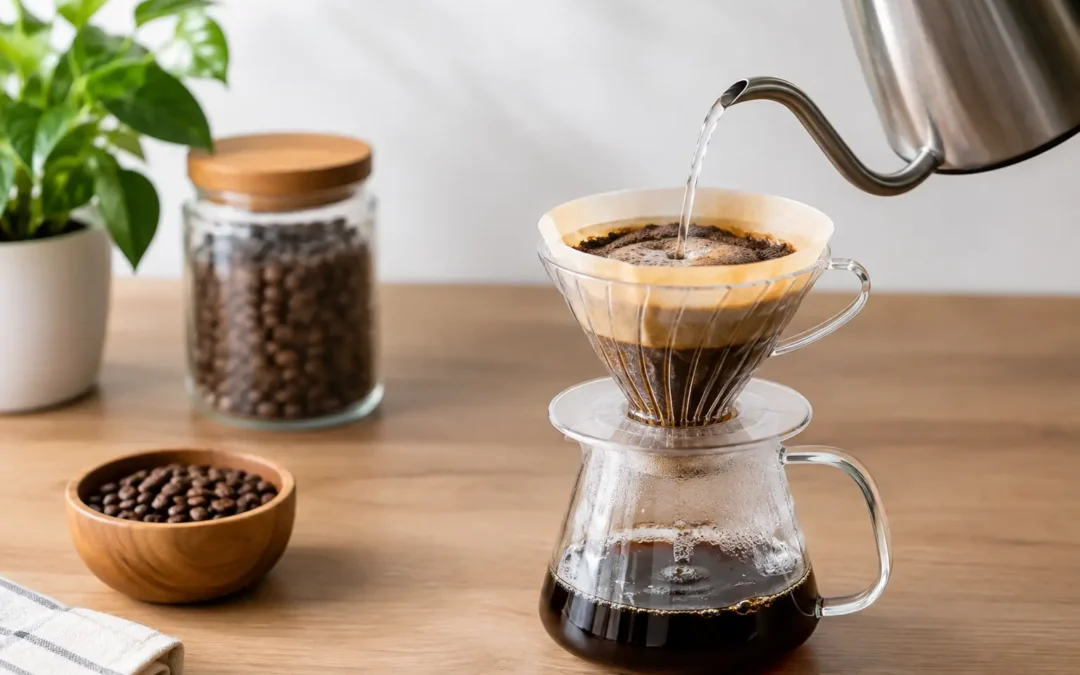
A great pour over is not about turning your kitchen bench into a science lab. It is about giving fresh coffee, clean water and a little patience the chance to shine. The pour over brewing method rewards small adjustments with a cup that feels bright, sweet and unmistakably made for the moment.
For anyone used to pressing a button or grabbing a quick takeaway, it can seem like extra effort. But the ritual is part of the appeal. A measured dose, the first bloom of aroma, the gentle spiral of water – it is a calm few minutes that can make an ordinary morning feel properly looked after.
Why the pour over brewing method tastes so clear
Pour over coffee is brewed by pouring hot water over ground coffee held in a paper filter. Gravity draws the water through the coffee bed and into your server or mug. Because the filter captures much of the fine sediment and coffee oils, the finished cup is typically cleaner and lighter in body than a French press.
That clean texture makes flavour easier to notice. Depending on the bean, you might pick up stone fruit, citrus, caramel, cocoa or floral notes that can sit quietly behind milk in an espresso drink. It is a brilliant way to enjoy single origins, but a thoughtfully roasted blend can be just as satisfying when you want a rounded, dependable cup.
There is a trade-off. A pour over will not deliver the thick crema or concentrated punch of espresso, and it cannot be rushed without affecting the result. What it offers instead is clarity, control and a brew you can tailor to your taste.
Start with fresh coffee and the right grind
The coffee does most of the talking, so start there. Beans are at their most expressive when they have been freshly roasted and ground just before brewing. Pre-ground coffee is convenient, but it loses aroma quickly once the bag is opened. If your morning coffee matters, a burr grinder is one of the most worthwhile upgrades you can make.
For most cone-shaped drippers, begin with a medium-fine grind. Think finer than a typical plunger grind, but not as powdery as espresso. The grounds should resemble fine sand rather than flour. Flat-bottom brewers often respond well to a medium grind, so use the brewer manufacturer’s guidance as a useful starting point rather than a fixed rule.
If your coffee tastes sharp, hollow or sour, the water may have moved through too quickly. Try grinding a little finer. If it tastes bitter, dry or overly heavy, the brew may be running too slowly, so move slightly coarser. Change one thing at a time. That is how you learn what your coffee is telling you.
The simple recipe worth learning first
A dependable starting ratio is 1:16 – one gram of coffee for every 16 grams of water. For a generous single cup, use 20 grams of ground coffee and 320 grams of water. A small digital scale makes this easy and takes the guesswork out of repeating a brew you loved.
Heat filtered water to around 92-96°C. If you do not have a temperature-controlled kettle, bring the kettle to the boil and let it stand for roughly 30 seconds before pouring. Water that is too cool can leave the cup underdeveloped; water that is excessively hot can emphasise bitterness in some coffees.
Place the filter in your dripper and rinse it thoroughly with hot water. This warms your vessel and removes any papery flavour. Tip out the rinse water, add your grounds, then give the brewer a small shake so the coffee bed sits level. An even bed helps water meet all the grounds more evenly.
Begin with the bloom
Start your timer and pour about 40-60 grams of water over the grounds, enough to wet them all. Let the coffee bloom for 30 to 45 seconds. You will see it swell and release tiny bubbles as trapped carbon dioxide escapes, especially with freshly roasted beans.
This first pour matters more than it seems. Dry pockets in the coffee bed create uneven extraction, which can make a cup taste both sour and bitter at once. Pour gently in small circles until every part of the bed is saturated, without flooding the paper filter itself.
Pour slowly, not timidly
After the bloom, add the remaining water in two or three steady pours. Keep the kettle close to the coffee bed and pour in slow circles, beginning near the centre and moving outwards before returning. Avoid repeatedly pouring directly onto the filter wall, where water can bypass the coffee instead of brewing it.
For the 20-gram recipe, aim to reach 320 grams of water by around 1 minute 45 seconds. The total drawdown will usually finish somewhere between 2 minutes 45 seconds and 3 minutes 30 seconds. Those timings are a guide, not a scorecard. Different coffees, grinders and brewers behave differently.
Once the dripper has stopped dripping, swirl the brewed coffee gently in the server before pouring. This combines the layers of the brew for a more consistent cup. Let it cool for a minute or two before judging it. Coffee reveals more sweetness and detail as it drops slightly below serving temperature.
Small adjustments that make a big difference
The most common frustration with pour over coffee is inconsistency. Often, the issue is not your hand technique but a variable you have not noticed yet. A blade grinder creates uneven particles, for example, so some grounds over-extract while others barely brew. A burr grinder gives you a far more even foundation.
Water quality is another quiet game-changer. If you would not enjoy drinking your tap water on its own, it is unlikely to make your coffee taste its best. Filtered water is usually a simple improvement, particularly in areas where mineral content or chlorine is noticeable.
Your pouring kettle matters, too, but it is not an immediate requirement. A gooseneck kettle gives you exceptional control over flow and direction, which is helpful with smaller brewers and lighter roasts. A regular kettle can still make beautiful coffee if you pour carefully and keep your approach consistent.
Do not chase complexity before you have a reliable baseline. Use the same recipe for a few brews, take a mental note of sweetness, acidity and body, then adjust the grind by a small step. If you want more body, try a slightly higher coffee dose or a finer grind. If you prefer a lighter, tea-like cup, use a touch more water or a coarser grind.
Choose a brewer that fits your routine
Cone brewers tend to highlight brightness and detail, making them a lovely match for expressive, fruit-forward coffees. Flat-bottom brewers often produce a sweeter, more rounded cup with plenty of body. Neither is automatically better. The best choice is the one that suits the flavours you enjoy and the amount of attention you want to give your morning ritual.
A compact dripper is ideal for home, a desk or a quiet weekend away. For a workplace, client meeting or event, pour over can also become a memorable coffee moment, though it is naturally slower than an espresso service. When a crowd is waiting, a mobile coffee bar brings the speed of café-quality espresso while still keeping the focus on freshly brewed flavour.
At LygonCoffee, we love that both experiences have their place: the considered pace of a single pour at home and the energy of serving excellent coffee to a room full of people.
When your cup is not quite right
Sourness usually points to under-extraction. Start by grinding finer, checking that the grounds were fully saturated during the bloom, or using slightly hotter water. Bitterness and a drying finish usually suggest over-extraction, so grind coarser, shorten the brew time or check that you are not pouring too slowly.
A weak cup does not always need a finer grind. It may simply need more coffee. If the flavour is pleasant but too delicate, increase the dose from 20 grams to 21 or 22 grams while keeping the water amount steady. If the cup is strong but muddled, use a little more water or reduce the dose.
Keep your equipment clean, particularly the dripper, server and grinder. Coffee oils build up quietly and can dull even the freshest beans. A quick rinse after each brew and a proper clean every so often protects the bright flavours you worked to create.
The best pour over is not the one that follows every online rule. It is the cup that makes you pause after the first sip, notice what is in it, and look forward to brewing it again tomorrow.
Try it fresh. Our OmniSoul blend is roasted in small batches in Adelaide, with delivery included Australia-wide and 10% off when you subscribe. Visit the shop.