
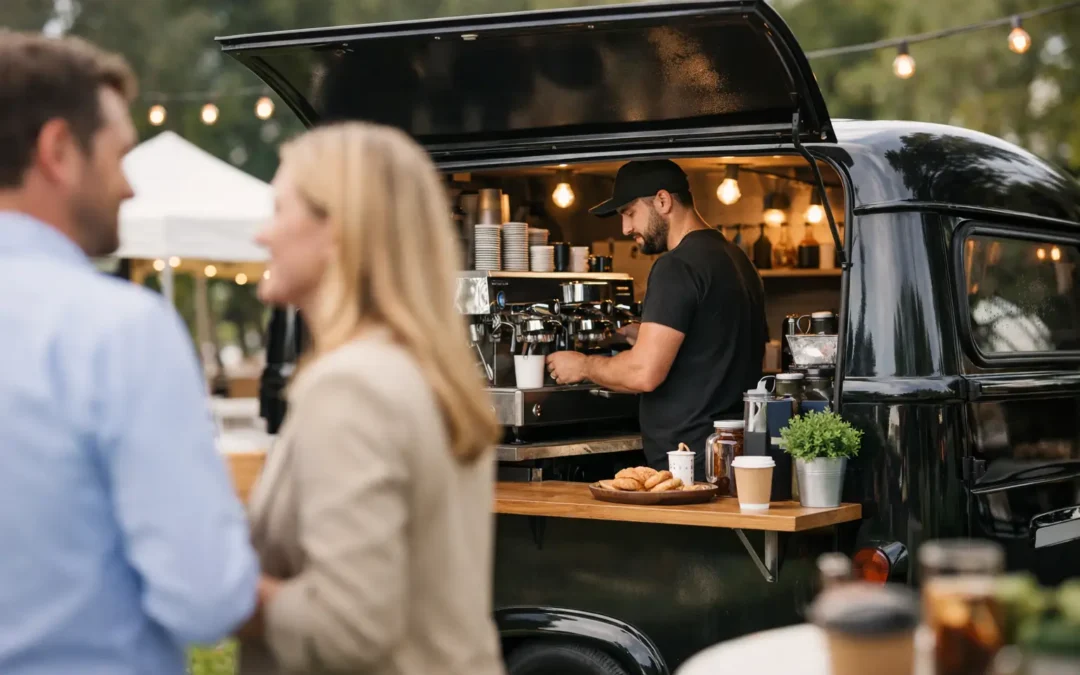
The best events have a moment when people naturally gather: beside the aroma of freshly ground coffee, catching up before a meeting, or taking a well-earned break between presentations. Knowing how to order a coffee van means planning for that moment properly, so your guests receive café-quality drinks without queues, equipment headaches or a last-minute scramble for refreshments.
A mobile coffee service can suit everything from an early workplace shout to a brand activation, wedding recovery brunch or community event. The key is giving your coffee provider enough detail to shape the right service around your people, location and schedule.
Start with the purpose of your coffee van booking
Before requesting a quote, decide what role coffee will play on the day. Is it a simple morning thank-you for staff? A steady stream of barista-made drinks during an all-day conference? Or a feature of a public-facing activation where every cup is part of your brand experience?
The answer affects the size and timing of the service. A 90-minute office visit for 40 people is a very different job from serving hundreds of guests across a festival afternoon. Be clear about whether drinks are complimentary to guests, paid individually, capped at a set number, or offered through vouchers. This helps the provider recommend an arrangement that feels generous while still working within your budget.
For promotional events, consider the experience beyond the cup. A coffee van creates a natural point of connection. Guests pause, chat and spend time with your team while a barista prepares their order. If branded cups, custom messaging or a tailored menu are important, raise them early rather than treating them as an add-on at the end.
How to order a coffee van with the right details
A good booking enquiry does not need to be complicated, but a few practical details make all the difference. Share the event date, service start and finish time, full location, estimated guest numbers and the type of event. If attendance will rise and fall at particular times, mention that too. For example, a 10 am conference break can create a sharper rush than an open-house event where guests arrive gradually.
It is also useful to tell the provider who will be drinking the coffee. An office crew who know their usual flat white order may move quickly, while a mixed public crowd often needs more time to choose. Tea, hot chocolate, decaf and alternative milk options matter as well, particularly for inclusive workplace and community events.
When you contact LygonCoffee, think of the booking conversation as part event planning, part hospitality planning. The more accurately the team understands your brief, the better they can match the service to it.
Give an honest guest estimate
Guest numbers are the foundation of planning, but they are rarely exact. Give your best estimate and say whether it is firm, tentative or likely to grow. If you expect 150 people but only half will be present during the coffee service, say so. This is more helpful than simply supplying the largest possible number.
A quality provider can advise on likely drink volumes, barista coverage and the time required to serve your crowd. Allow for the fact that coffee demand can spike quickly in the morning, after lunch and at scheduled breaks. A little extra service time can be worth it if it prevents people missing out or rushing back to their next session with an empty hand.
Confirm site access before the day
A coffee van needs a suitable place to park and operate safely. Ask your venue whether there is vehicle access, enough clearance for the van, and a spot close to where guests will gather. Office car parks, loading areas, forecourts and event spaces can work beautifully, provided access is confirmed in advance.
Check whether the site has restrictions around vehicle entry times, height limits, gates, noise or shared access. For a busy city location, consider where the van can park without blocking deliveries, pedestrian routes or emergency access. If your event is indoors, a van may be able to serve from nearby, but guests need an easy and well-signed path to it.
Power and water requirements vary between setups, so do not assume every venue arrangement is the same. Your provider can tell you what is needed. Sending site photos or a simple map ahead of time is often a smart move, especially for a first-time venue or a large corporate site.
Choose a menu that feels generous and practical
The heart of a coffee van booking is the cup itself. Freshly brewed espresso, properly textured milk and well-roasted beans turn a refreshment break into something people remember. But the best menu is not necessarily the biggest one.
For a short, high-volume service, a focused menu of popular espresso drinks can keep orders moving while still giving guests genuine choice. For a longer event, you may want a broader selection that includes tea, hot chocolate, decaf and plant-based milks. Seasonal weather matters too. A hot Adelaide afternoon may call for iced options, while a winter morning invites richer, warming favourites.
Ask what beans will be served and how they are roasted. Specialty coffee should taste considered, not merely convenient. A balanced house blend can be a crowd-pleaser, while a more distinctive roast may suit coffee-focused guests who enjoy asking the barista about flavour notes and preparation.
If dietary needs are likely, communicate them before confirming the booking. Alternative milks are common, but availability and handling should be clear. The same goes for pastries, food pairings or any request outside standard drinks. Early planning gives you more choice and avoids promises that cannot be delivered on site.
Pick a payment model that suits the occasion
There is no single best way to pay for a mobile coffee service. It depends on why you are hosting and what you want guests to feel.
A fully hosted service is ideal when coffee is part of the hospitality budget. Your guests simply order, enjoy and get back to their day. This works well for staff appreciation, client meetings, launches and private functions.
A capped service gives you a clear spend limit. You might cover the first 100 drinks, offer vouchers, or host coffee during a defined window. It is a practical option for larger gatherings where you want to provide a treat without committing to unlimited service.
For public events, guests may purchase their own drinks. This can work particularly well when the van is an amenity rather than the central activation. Even then, clear signage and a prominent location will help the service feel welcoming rather than tucked away.
Build coffee into the event run sheet
Coffee works best when it is planned around people, not simply parked nearby. Consider when guests are arriving, when they will have breaks and when a coffee will be most appreciated. For an 8 am team meeting, having the van ready before attendees arrive creates an immediate lift. For a conference, opening service 20 to 30 minutes before the first formal break can reduce the first rush.
Tell your MC, reception team or event staff where the van is located and when it is operating. A quick announcement can make a major difference to uptake. For an activation, position the van where it supports rather than competes with your main attraction. You want people to be able to find it easily, queue comfortably and keep moving through the space.
Allow the coffee team enough time to arrive, park and prepare before guests appear. The barista should be ready to serve, not still finding the loading dock while your first attendees are looking for their morning latte.
Questions worth asking before you confirm
A professional coffee van provider will welcome clear questions. Ask what is included in the quoted service, how long setup takes, what access is required and how the team manages peak periods. Confirm the menu, alternative milk choices, payment method, wet-weather plan and what happens if guest numbers change.
It is also worth asking who your point of contact will be on the day. One organised contact person from your side can resolve access, parking and timing questions quickly. That small detail keeps the service calm and lets your guests focus on the good part: choosing their coffee.
Make the first cup part of the welcome
A well-planned coffee van does more than keep people caffeinated. It sets a tone of care. Fresh coffee tells staff they are valued, gives clients a reason to linger and turns a practical event break into a small ritual with real warmth.
Book early when your date matters, share the details that shape service, and leave room for a barista-made cup to do what it does best: bring people together, one rich, freshly brewed coffee at a time.
Planning an event in Adelaide? LygonCoffee’s mobile coffee van serves our own freshly roasted specialty coffee at weddings, corporate days and community events. See our mobile coffee packages.