
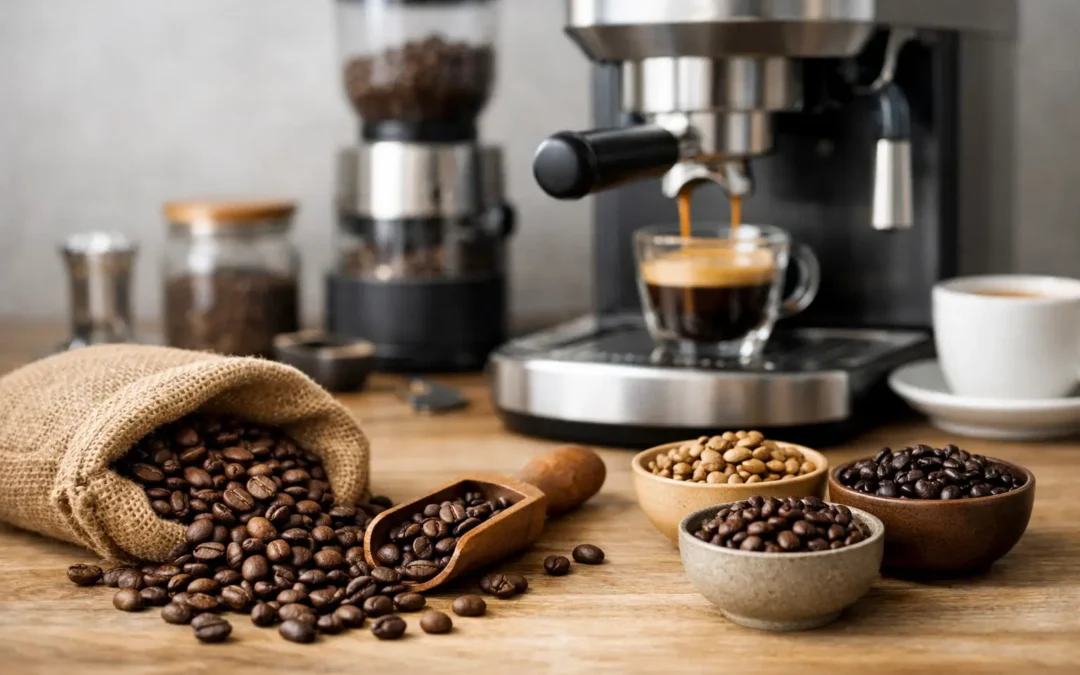
You can clean your machine, dial in your grind, and weigh every dose to the gram – but if the beans are wrong, the cup still falls flat. A good home espresso beans guide starts there. Espresso is unforgiving in the best way. It rewards freshness, balance, and beans that actually suit how you brew at home.
For most people, the problem is not a lack of options. It is too many options, too many tasting notes, and not enough straight answers. Should you buy a blend or single origin? Light roast or medium? How fresh is too fresh? And why did the bag that tasted brilliant at a cafe suddenly run sour in your kitchen? The answer is usually in the bean choice, not just the machine.
A home espresso beans guide begins with roast style
Espresso concentrates everything. Sweetness becomes richer, acidity becomes sharper, and roast character becomes more obvious. That is why beans that taste lovely as filter coffee do not always translate neatly into espresso.
For most home setups, medium to medium-dark roasts are the easiest place to start. They tend to give you more body, more chocolate and caramel notes, and a friendlier dial-in window. If you want a reliable morning coffee with good crema and a full mouthfeel, this style usually makes life easier.
Lighter roasts can be stunning, but they are less forgiving. You may get bright citrus, florals, or stone fruit, yet they often need tighter temperature control, a very capable grinder, and more patience. If your machine is entry-level or your routine needs to be quick before work, a light roast can feel like hard work for an inconsistent payoff.
Darker roasts bring boldness and low acidity, but there is a trade-off. Push too dark and the cup can tip into ash, bitterness, and a one-note finish. For milk coffee drinkers, though, a slightly deeper roast can cut through milk beautifully and still taste rich rather than harsh.
Blend or single origin?
This is where a lot of home brewers get stuck, because both can be excellent. It depends on what you want from the cup and how much adjusting you are happy to do.
Blends are often the smartest choice for home espresso. They are built for balance and consistency, which matters when you are pulling shots across different mornings, weather changes, and milk-based drinks. A well-made espresso blend can deliver the richest flavours without demanding constant tweaks. If flat whites and cappuccinos are your daily ritual, blends usually offer the smoothest path.
Single origins are more expressive. They can show off a region, processing style, or seasonal profile in a way blends do not. That can be brilliant if you enjoy black espresso and want more character in the cup. The catch is that single origins can be less stable across extraction, especially at home. A bean with sparkling acidity and delicate fruit may taste incredible one day and underwhelming the next if your grind shifts slightly.
Neither option is better in every situation. Blends favour consistency and comfort. Single origins favour distinction and curiosity. Your best bean is the one that suits both your taste and your tolerance for tinkering.
Freshness matters, but not in the way people think
Freshly roasted coffee is essential, but beans that are too fresh can be awkward for espresso. Right after roasting, coffee releases a lot of gas. That can lead to wild extractions, excessive crema, and shots that taste uneven or sharp.
For espresso, beans often hit a better rhythm after a short resting period. As a general guide, somewhere around 7 to 21 days post-roast is a comfortable zone for many coffees. Some improve even further after that, especially denser or lighter-roasted beans. If you brew through milk, you may find the sweet spot feels broader.
This is why a roast date matters more than a vague best-before date. You want to know when the coffee was roasted so you can buy with confidence and brew at the right moment. Freshness is not just about speed. It is about timing.
What tasting notes actually tell you
Tasting notes can be useful, but they are not a promise that your espresso will taste exactly like blueberry jam or blood orange. Think of them more as signposts than guarantees.
If a bag mentions chocolate, toffee, nuts, or cocoa, you are usually looking at a coffee that will feel comfortable as espresso and pair well with milk. If the notes lean toward berries, florals, citrus, or tropical fruit, the coffee may be brighter and more expressive, but also more demanding to extract cleanly.
Processing matters too. Washed coffees often taste cleaner and more precise. Natural processed coffees can bring more fruit, body, and sweetness, sometimes with a wilder edge. Honey and experimental processes can be delicious, but if you want dependable espresso before 8 am, classic profiles are usually easier to live with.
Choosing beans for black coffee or milk coffee
A home espresso beans guide should always ask one simple question first – how do you actually drink coffee?
If you mostly drink espresso, long blacks, or short milk drinks where the shot still leads, look for clarity, sweetness, and structure. Medium roasts and some single origins can shine here, as long as your grinder and machine are capable enough.
If you mostly drink flat whites or lattes, aim for beans with body and depth. Notes like chocolate, caramel, hazelnut, malt, and dark fruit tend to hold their own in milk. In these drinks, subtle floral notes can disappear quickly, which is why some highly delicate coffees can feel wasted if milk is your default.
This is where many home brewers save money and frustration. Buy for the cup you actually make, not the one you admire on a tasting card.
Your grinder matters almost as much as your beans
Great beans cannot rescue an inconsistent grind. If your espresso is running too fast, choking the basket, or swinging between sour and bitter from shot to shot, the grinder may be the real bottleneck.
Beans with higher solubility and more developed roast profiles are often easier on modest grinders. Lighter, denser beans ask more from burr quality and adjustment precision. So when choosing coffee, be honest about your setup. The right beans for a prosumer machine and premium grinder are not always the right beans for a more basic home station.
That is not bad news. It simply means matching expectations to equipment. Plenty of beautifully roasted blends are designed to taste excellent on everyday home machines.
Storage can preserve flavour or quietly ruin it
Once you have bought good beans, keep them away from heat, light, moisture, and air. Leave them in their original bag if it has a proper one-way valve and a decent seal, or transfer them to an airtight container that is actually airtight, not just stylish on the bench.
Do not store coffee in the fridge. It invites moisture and odour transfer, and your beans deserve better than tasting faintly of last night’s leftovers. Freezing can work for longer-term storage if done carefully in sealed portions, but for everyday use, buying sensible amounts more often is usually the better move.
How to tell when your beans are the problem
If your shots suddenly lose crema, taste papery, or feel thin and tired no matter how you adjust, stale beans may be the issue. If they gush too quickly and taste both sharp and hollow, the coffee may be too fresh or simply not suited to espresso. If every adjustment still lands in a narrow zone between sour and bitter, the roast profile may be pushing beyond what your machine handles well.
This is why consistency from a trusted roaster matters. One well-developed espresso blend can teach you more about your machine than five random bags bought on impulse.
The smartest way to buy beans for home espresso
Start with one dependable blend and learn it properly. Pull enough shots to understand how it behaves across small grind changes, different dose levels, and milk versus black coffee. Once you have that baseline, branch out into more adventurous coffees.
If you buy coffee regularly, look for freshly roasted beans with clear roast dates and flavour profiles that match your preferences. Small-batch roasting is especially useful here because it tends to favour freshness and tighter quality control. For home brewers who want café-level results without the guesswork, that balance between craftsmanship and consistency makes all the difference.
At LygonCoffee, that same thinking sits behind every roast – coffee should feel exciting, but it should also work beautifully in real kitchens, busy mornings, and daily rituals.
The best bean is not the rarest, the most expensive, or the one with the fanciest tasting notes. It is the one that gives you a shot you want to make again tomorrow, with flavour that feels generous, fresh, and easy to love.
Try it fresh. Our OmniSoul blend is roasted in small batches in Adelaide, with delivery included Australia-wide and 10% off when you subscribe. Visit the shop.