
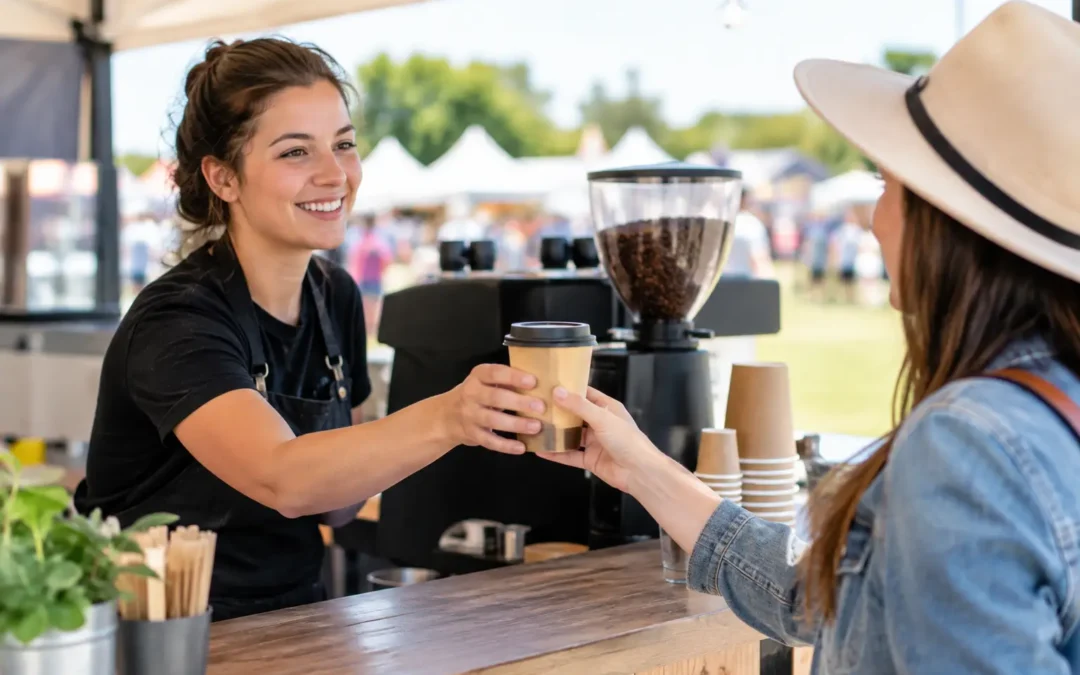
A great festival coffee service does more than keep people caffeinated. It creates a welcoming first stop at the gate, a reason to linger between sets, and a small moment of comfort when the weather turns or the afternoon energy dips. The best festival coffee service examples balance quality with speed, giving guests a properly made flat white or long black without sending them to the back of a sprawling queue.
For organisers, coffee is also a practical decision. You need a setup that suits the crowd, site access, power supply, trading hours and event personality. A polished mobile café can lift the whole food offering, but only when its service style matches the way people move through the festival.
Festival coffee service examples for every event
1. The high-volume main gate coffee van
At a morning fun run, food and wine festival or family day, the main gate is often the strongest coffee location. Guests arrive early, many have travelled, and they want something warm in hand before they find their bearings.
A mobile coffee van works beautifully here because it is visible, self-contained and ready to trade before the headline activities begin. The menu should stay focused: espresso coffee, alternative milks, hot chocolate, chai and a small selection of cold drinks. A clear menu board and tap-and-go payment keep the line moving while baristas focus on consistent extraction and milk texture.
This format is built for volume rather than long conversations. It suits large public events with a predictable early rush, especially where a powered indoor bar would be impractical.
2. A roving coffee cart for smaller precincts
Not every festival needs one huge service point. Community events, design markets and neighbourhood celebrations often have several smaller pockets of activity. A compact coffee cart can bring freshly brewed coffee closer to a kids’ zone, artisan market, workshop tent or acoustic stage.
The advantage is convenience. Guests do not have to leave a relaxed part of the event just to find a coffee, and stallholders appreciate having good caffeine nearby during a long trading day. This option needs realistic planning around water, power and waste, but it can ease pressure on the main coffee van.
It is particularly effective when there is a natural lull in one precinct while another gets busy. A flexible service position lets the event respond to the actual flow of people, not just the site map created weeks earlier.
3. Branded coffee for a sponsor activation
Coffee is one of the few festival purchases people hold, photograph and talk over. That makes it a smart fit for sponsors wanting an activation with genuine usefulness, rather than a giveaway that ends up in the rubbish.
A branded coffee service might include customised cups, a feature blend named for the campaign, or complimentary coffees issued through a simple voucher system. The key is to keep the brand presence tasteful. Guests should feel they have received a generous, well-made drink, not a sales pitch with foam on top.
For corporate partners, this can turn a standard sponsorship into a memorable interaction. It also gives organisers an attractive asset when building premium sponsor packages. The trade-off is that free-coffee periods can create sudden queues, so staff numbers and redemption rules need to be clear from the start.
4. A premium bar in the VIP or artist area
Festival guests in VIP lounges, hospitality zones and backstage areas tend to value a more considered coffee experience. Here, speed still matters, but menu depth can increase. Think single-origin espresso options, batch brew, iced lattes and a few quality pastries or biscuits alongside the regular café favourites.
This service creates a calm, generous feel in an area designed for guests, performers or partners. It can also support early call times for crew and artists, when a dependable espresso is far more welcome than an instant coffee sachet.
A premium bar needs the right equipment, experienced baristas and enough bench space to work cleanly. If the guest list is intimate, a smaller station may be enough. If a corporate hospitality tent turns over hundreds of people, treat it like a busy café and plan accordingly.
5. Pre-order coffee for timed sessions
Ticketed workshops, conferences within festivals and seated tastings run to the clock. In these settings, pre-order coffee can make a major difference. Guests place an order when booking their ticket, or scan a QR code before the session begins, then collect during an allocated window.
This approach reduces the rush just before doors open and helps organisers predict demand. It is ideal for an event where a 15-minute delay affects a full programme of speakers, demonstrations or classes.
Pre-ordering will not suit every crowd. Spontaneous, walk-up festivals may find it adds unnecessary friction. But for structured sessions, it turns coffee from a queue problem into a well-timed part of the guest experience.
6. An all-day coffee and cold drink station
South Australian festival weather can ask for two completely different drink menus in one day. A crisp morning may call for cappuccinos and hot chocolate, while a sunny afternoon shifts demand towards iced lattes, cold brew and refreshing alternatives.
An all-day station is designed around that change. It starts strong with espresso service, then keeps cold options visible and ready as temperatures rise. The best operators watch demand rather than treating the morning menu as fixed. Extra ice, chilled milk, cold cups and quick cold-drink workflows matter as much as the espresso machine.
For organisers, this is a useful way to extend trading across a long programme. Guests who have already had their morning coffee may return for an iced drink later, creating a second peak rather than a quiet afternoon.
7. Coffee paired with local food stalls
Coffee earns more when it feels part of the food story, not a separate utility at the edge of the site. Place the coffee service near breakfast vendors, bakery stalls or dessert traders, and guests naturally build a complete order: a toasted pastry with a flat white, or a sweet treat with an iced long black.
This arrangement benefits the whole precinct. The aroma of freshly brewed coffee draws people in, while nearby food gives them a reason to stay. It also helps festival-goers find what they need without criss-crossing the grounds.
There is one caution: avoid placing too many high-demand vendors in a narrow pathway. The ideal coffee precinct has room for a queue, clear entry and exit points, and space for guests to stand without blocking foot traffic.
8. Coffee for volunteers, vendors and crew
The people making a festival happen often arrive well before the gates open. A dedicated coffee window for volunteers, stallholders and crew is a practical gesture that can change the mood of a long shift.
This might be a short pre-event service, a staff-only voucher arrangement or a mobile van positioned near bump-in. It supports morale, gives teams a reliable break point and means public-facing staff are not beginning the day under-caffeinated.
For events with an early pack-in, a service such as LygonCoffee’s mobile café can also remove the headache of arranging machines, milk, beans and cleanup on site. The result is café-quality coffee where the work is actually happening.
How to choose the right festival coffee setup
Start with crowd behaviour, not just expected attendance. A 2,000-person event where everyone arrives between 8.30 and 9.00 am needs a different coffee plan from a 5,000-person music festival with arrivals spread across six hours. Look at gate times, programme breaks, weather, nearby food, and whether guests are likely to stay all day.
Then consider the site realities. Is vehicle access available? Where will the service queue form? Is there reliable power and water, or does the vendor need to be self-sufficient? A coffee service that looks perfect on a site plan can struggle if it is placed behind a noisy stage, away from foot traffic or in a location with no room for guests to wait.
Menu design should be purposeful too. A tightly edited menu speeds up service, particularly during peak periods. Add options only when they suit the audience and can be delivered well. Alternative milks are expected by many guests, while iced drinks become essential for warm-weather events. Food can be a valuable addition, but it should not slow the bar team at the busiest time of day.
Finally, give coffee the same operational attention as other major vendors. Confirm trading hours, access times, waste arrangements, staffing and contingency plans for rain or heat. Good coffee service feels effortless to guests because the detail has been handled behind the counter.
The right cup at the right moment can become part of what people remember: warm hands on a cool Adelaide morning, the scent of fresh espresso near the market stalls, or a welcome iced latte between festival sets. Plan for that moment, and your coffee service will do far more than fill a gap in the programme.
Planning an event in Adelaide? LygonCoffee’s mobile coffee van serves our own freshly roasted specialty coffee at weddings, corporate days and community events. See our mobile coffee packages.