
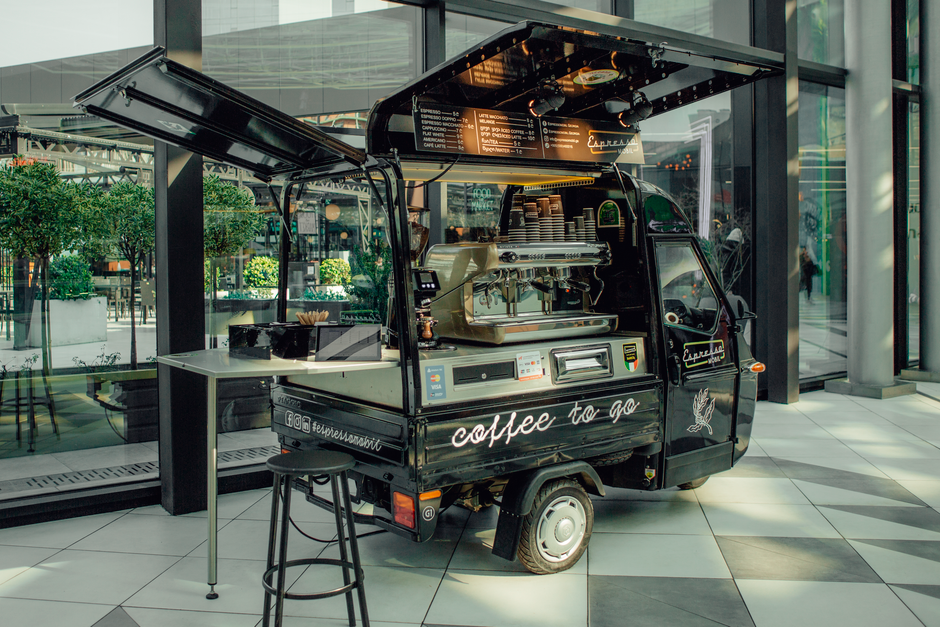
Most Adelaide events book one of two mobile coffee setups: the cart or the van. Both pour espresso. Both can work a queue. Both often get described as "the coffee van" by whoever is booking them. The differences show up on the day, when a setup either fits the space and keeps pace with the crowd, or spends the afternoon working around a doorway it cannot get through.
Choosing between them is less about the coffee and more about the site, the guest list and how the power and water will work. Here is how the two compare for Adelaide weddings, corporate functions, markets and private events.
Start with the space, not the menu
Most organisers pick the coffee first and the position second. Reverse that order. A cart's whole advantage is its footprint. A folding cart keeps the unit compact, which minimises the space it takes up in a vehicle and lets it sit in tighter spots on site. That same compactness is what makes it work in courtyards, marquees and indoor corners where a vehicle simply cannot go.
A van needs more room and a clear approach: a driveway, a gate wide enough to pass, a loading area, a surface that will take the weight. What you get in return is a bigger service counter, more storage and the ability to keep pouring when a crowd arrives all at once.
What a coffee cart actually is
A cart is a compact unit, often folding, built around an espresso machine, a grinder and the basics needed to serve coffee. The folding design lowers the barrier to entry for operators by cutting costs and making better use of the space inside a vehicle, which is one reason carts are a common sight at smaller events and market stalls.
The trade-off is capacity. Cart size is the main factor in how many guests you can expect to serve across an event, so a cart suits a gathering with a relaxed pace rather than a hard 45 minute window where 200 people all want a flat white.
What a coffee van actually is
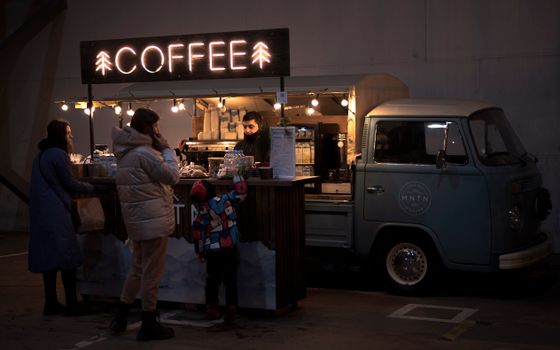
A van is a full fitout built into a vehicle. Fitouts are usually one of two styles: rear operating, where the barista works from the back doors, or stand-in, where the barista works inside the van. Van size drives how much can be carried and how quickly drinks can be handed out, which is why vans tend to appear at weddings, festivals and larger corporate days.
Vans also carry more of everything: more milk, more cups, more bench space, more backup equipment. Some run on electric power, which reduces running costs and supports stronger sustainability credentials than a generator-driven setup.
Coffee cart vs coffee van at a glance
| Factor | Coffee cart | Coffee van |
|---|---|---|
| Footprint | Compact, often folding, suits tight spaces | Full vehicle footprint, needs clear access |
| Guest capacity | Better suited to smaller, slower-paced gatherings | Built for larger crowds and longer queues |
| Equipment | Espresso machine, grinder, essentials | More bench space, storage and backup kit |
| Power and water | Varies by unit, confirm before booking | Battery and solar options need no power or water |
| Venue access | Courtyards, marquees, indoor corners | Driveways, gates and loading access |
| Best fit | Intimate events, short service windows, tight sites | Weddings, festivals, corporate days, markets |
Where the venue decides for you
Before anything else, walk the site or ask the venue coordinator a few blunt questions. Is there a gate the setup has to pass through, and how wide is it? Are there stairs, gravel, soft lawn or a heritage floor that cannot take a heavy load? Is there somewhere safe to park that will not block a fire exit or a delivery bay? Is there a power point within reach, and is there a tap?
Answers to those questions often eliminate one option immediately. A cart can be carried or wheeled into places a van cannot reach. A van needs a route in, a place to sit and enough room for guests to queue without blocking a thoroughfare. Confirm access requirements with both the venue and the coffee provider before you lock anything in.
Guest numbers and service pace
Think in terms of peak demand, not total attendance. A 120 guest wedding where coffee is served alongside dessert might only produce a rush of 30 people at once. A 300 person market where people drift past all morning is a different shape of demand entirely, even though more coffee gets poured over the day.
Cart size sets the realistic ceiling on guest numbers for a cart booking. Van size plays the same role for van bookings. If your event has a fixed window for coffee, say between the speeches and the first dance, tell the provider that window and let them recommend the setup. A provider who asks about timing and guest numbers is doing the right thing.
Power, water and weather
This is where mobile setups separate from each other. Some need a mains connection and a water supply to operate. Others run on battery and solar and need neither, which opens up parks, ovals, beaches, farms, vineyards and marquees in the middle of a field where there is nothing to plug into.
Weather matters too. A van gives the barista a roof, which keeps service steady in a downpour and shields the machine from wind. A cart under a marquee works well, but an exposed cart on an open site in bad weather is a harder day for everyone. If your event is outdoors, ask how the setup handles wind and rain.
Matching the setup to your event
Weddings
Vans are the common choice, largely because of venue access. Many Adelaide wedding venues have a designated area for mobile vendors, often a lawn or courtyard with vehicle access, and the van becomes part of the styling rather than an afterthought. A cart suits smaller ceremonies, elopements, welcome drinks or a venue where every entry point is narrow.
Corporate events and workplace functions
Corporate bookings usually have a tight window: a morning launch, a client thank you, a staff celebration. Throughput matters more than footprint here, so a van is often the safer pick. For a small team event in an office courtyard or an indoor space, a cart can be the neater fit.
Markets and festivals
Long trading hours, high volume and a fixed pitch. Vans handle this well because they carry more stock and can be restocked less often. Carts work at markets where the pitch is small or the operator is running a lean setup, and the folding design makes transport and storage easier between markets.
Private parties and community fundraisers
Birthdays, engagements, school fetes and community days sit in the middle. Guest lists are moderate, the site is often a backyard or hall, and the coffee service runs over a couple of hours. Either setup can work. Access and power are usually the deciding factors.
What about trailers and trucks?
Carts and vans are not the only two options. Trailers are towed behind another vehicle and can be moved to a new location, which gives an operator flexibility that a fixed pitch does not. Trucks are typically large panel vans, and fitouts are built around either rear operating or stand-in service.
For event organisers, the practical point is that the term "coffee van" gets used loosely. A provider might arrive with a cart, a trailer or a truck. Ask which one you are booking, and what space it needs, rather than assuming from the name on the website.

Questions to ask before you book
- Which unit will actually attend, and what are its dimensions?
- Does it need mains power, a water connection, or neither?
- How much access does it need to get onto the site?
- How many guests can it serve comfortably in my service window?
- What drinks are on the menu, and is there a decaf or non-dairy option?
- Who supplies cups, lids and napkins, and are they compostable?
- Where are the beans roasted, and can I taste them first?
- What happens if the site changes or the weather turns?
Why LygonCoffee runs a battery and solar powered van
LygonCoffee serves its OmniSoul blend, roasted in Adelaide, from a mobile setup that runs on battery and solar power, so no mains power and no water connection are needed on site. That removes one of the biggest constraints at Adelaide venues, particularly parks, ovals, farms and marquees well away from a building. Our van serves up to 160 cups over a four-hour service, so it suits most weddings and corporate events.
The mobile coffee packages cover weddings, corporate events, festivals and markets, and every cup is pulled on beans roasted in Adelaide. If you want to taste the coffee before you commit, the online shop carries the signature blend, single origins and a decaf. For operators weighing up their own setup, the wholesale and custom blend side of the business supplies cafés, hotels and coffee vans.
Frequently Asked Questions
Is a coffee cart or a coffee van cheaper to hire?
Hire pricing depends on the provider, the size of the setup, the length of service and travel to your venue, so it is best confirmed in a written quote rather than assumed. Carts are often a lighter option to run because a folding design minimises costs for the operator, but that does not automatically translate into a lower price for your event. Compare quotes on what is included.
How many guests can a coffee van serve?
The size of the van plays the biggest role in how many guests can be served, along with the length of your service window and the style of drinks ordered. Ask the provider what volume their unit handles comfortably in an hour, then match that against your peak demand rather than your total guest list. A provider will usually tell you honestly if a booking is too tight. As a guide, our van serves around 20 cups every half hour.
Do mobile coffee setups need power and water on site?
It depends on the unit. Some require a mains power connection and a water supply, which limits where they can be placed. Others, including battery and solar powered vans, need neither and can operate on a lawn, in a park or inside a marquee with no services at all. Always confirm the requirements before finalising your site plan.
Can a cart or van serve drinks other than espresso?
Most mobile setups can offer a wider menu than espresso alone, including long blacks, batch brew, cold brew and hot chocolate, and many carry alternative milks and decaf. Menu depth usually comes down to how much bench space and equipment the unit carries. Ask for the full drinks list early so you can plan around dietary needs.
What if the weather turns bad on the day?
A van gives the barista and the machine shelter, so service can continue through rain and wind without much disruption. A cart under a marquee works well in most conditions, though an exposed cart on an open site is more vulnerable. Ask your provider how they handle weather, and whether shade or cover is needed.