
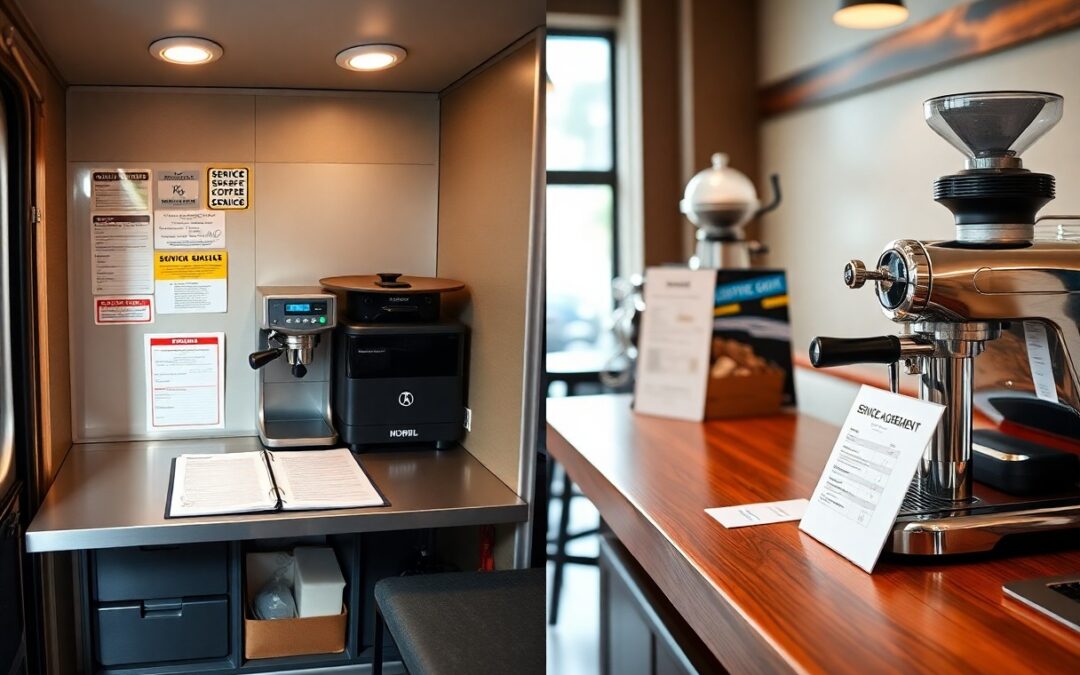
Over the planning process, you assess menu, volume, space, and budget to pick espresso machines, grinders, brewers, and refrigeration that fit your service model and workflow, ensuring efficiency and consistent drinks for every customer.
Key Takeaways:
- Match equipment capacity and footprint to projected sales and available space; size the espresso machine, grinder, and hot water system for peak throughput.
- Select machines that fit your power, water, and ventilation limits (mobile vans often need tanked-water or low-wattage options) and secure local service and spare-part availability.
- Balance purchase price with lifecycle costs by factoring maintenance, energy use, and expected durability to ensure consistent extraction and long-term value.
How-to Select the Core Espresso Machine
Tips for matching boiler capacity to your expected volume
Estimate your peak hourly drink count and choose boiler capacity accordingly: single-group machines suit compact vans, while double or triple groups with larger boilers prevent queues in busy cafés.
- Single-group: ideal for 30-60 drinks per hour in mobile setups.
- Double-group: supports 60-120 drinks per hour with steady steaming.
- Triple-group or larger: handles 120+ drinks per hour and continuous service.
Perceiving a safety margin in recovery rate and reserve capacity helps you avoid steam or shot lag during peaks, so you should prioritize recovery specs over headline boiler liters.
Evaluating aesthetic appeal versus technical performance
Compare the machine’s looks with its service access and component quality so you don’t select a showpiece that sacrifices temperature stability or maintenance ease.
Consider internal layout, PID control, and parts availability when weighing style against function, and pick a finish you can maintain without compromising extraction consistency.
Choosing High-Performance Grinders
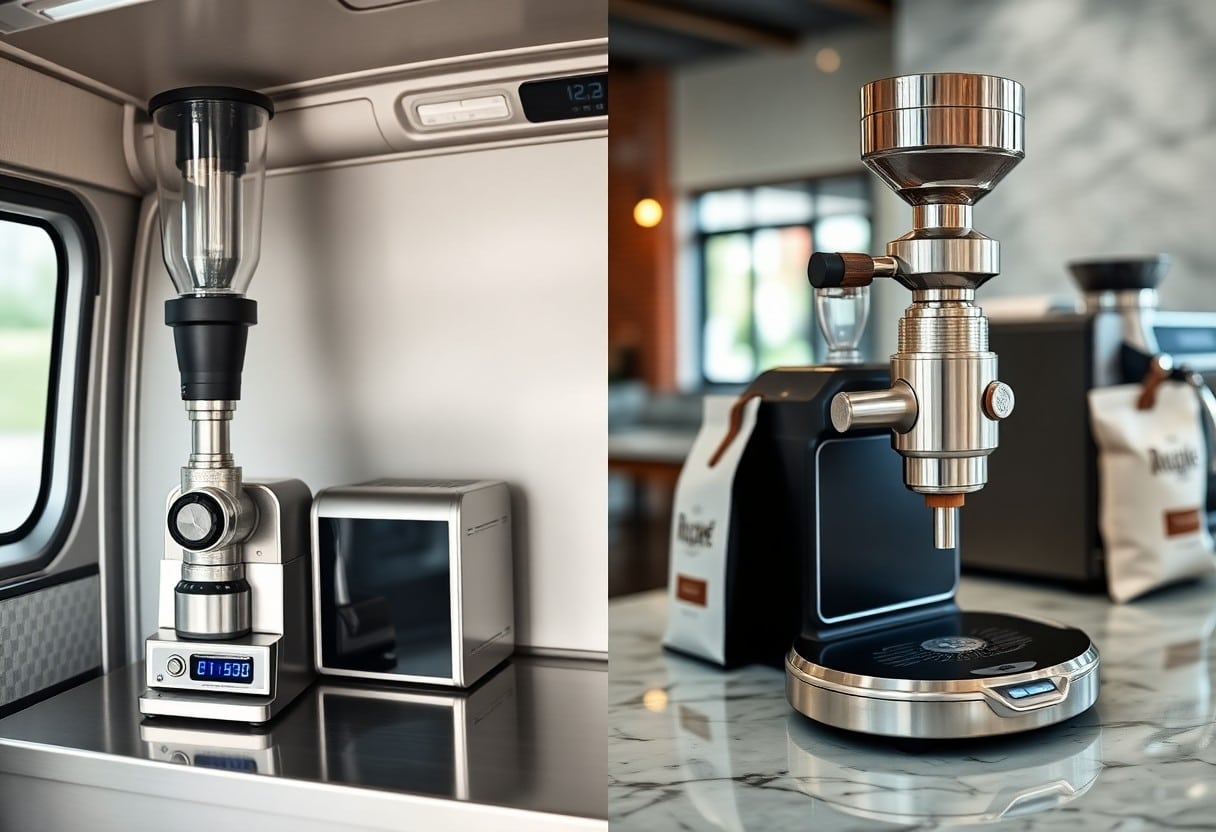
Grinders determine extraction precision and service speed, so you should match burr size, motor torque, and build quality to your daily volume. Choose commercial-grade burrs and simple maintenance access to keep downtime low and shot profiles consistent.
Factors influencing grind consistency and speed
Grind consistency depends on burr geometry, RPM stability, and heat management, while speed is driven by motor torque, burr diameter, and chute design to keep pace with service without degrading quality.
- You will prefer flat burrs for uniform particle distribution and conical burrs for lower retention when switching blends.
- You should consider larger burr diameters for higher throughput and finer control at scale.
- You must match motor torque and RPM to your busiest shifts to avoid stalling on dense roasts.
- You should factor in cooling, retention, and easy cleaning to preserve consistency throughout service.
Thou should prioritize shot-to-shot uniformity over raw speed when configuring grinders for tight counters or mobile vans.
How-to choose between manual and electronic dosing
Decide by assessing your service model: manual dosing offers tactile control and lower upfront cost, whereas electronic dosing delivers repeatable weight-based shots and faster multi-cup service when you need strict consistency.
Compare maintenance, calibration, and staff training so you can plan downtime and skill development: electronic dosers need firmware upkeep and stable power, while manual systems rely on barista technique and routine weighing to maintain quality under pressure.
Essential Water Filtration and Refrigeration
Tips for maintaining water quality in different environments
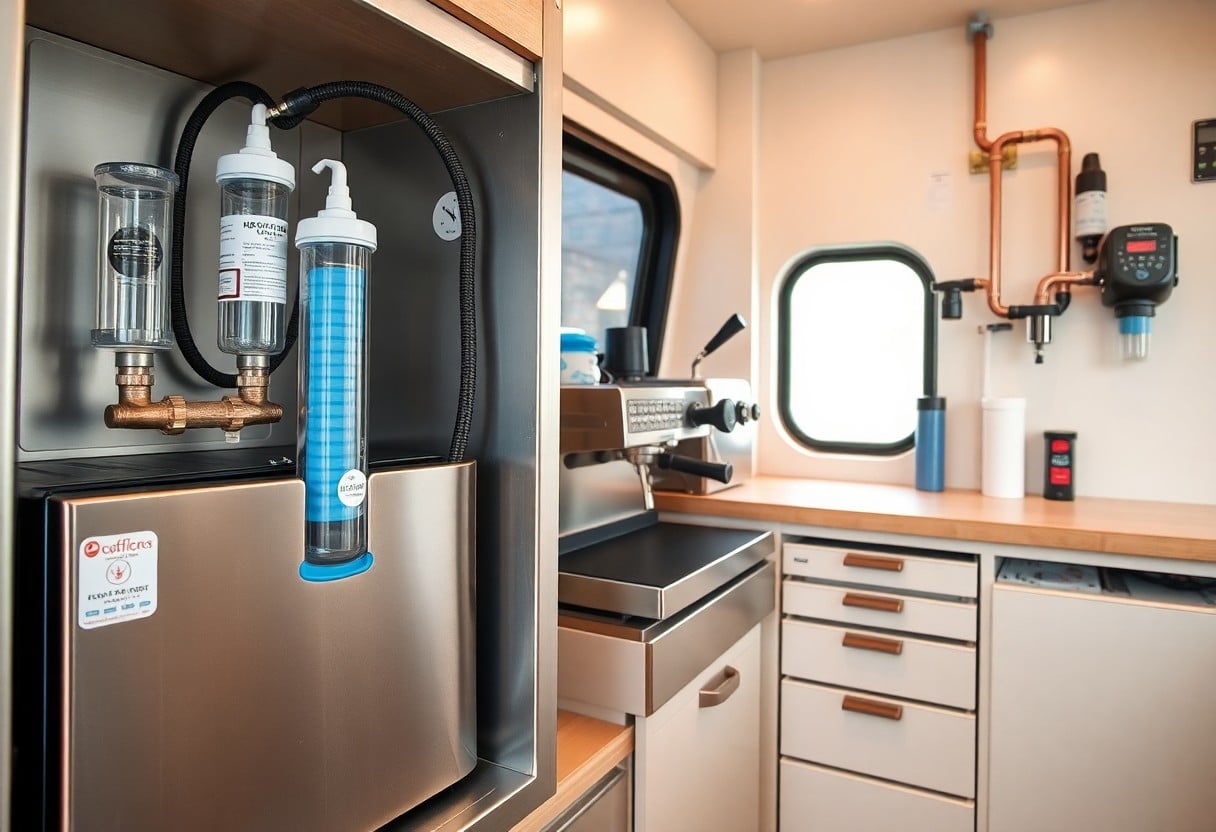
You should match filtration to source water: municipal supplies typically need carbon and sediment polishing, while well water may require softening and UV. Change cartridges on the manufacturer’s schedule and test TDS and pH monthly to track shifts that affect flavor. Keep lines flushed daily and sanitize reservoirs weekly to prevent biofilm and off-flavors.
- Monitor TDS and adjust filters when readings trend upward.
- Carry spare cartridges, fittings, and basic testing strips on every route.
- Protect filtration housings from freezing and excessive heat during storage or transit.
This lets you tighten maintenance in hot, humid areas, increase change frequency with higher TDS, and log results so you can maintain consistent taste and equipment reliability.
Selecting compact cooling solutions for limited spaces
Choose undercounter refrigerators or drawer-style units sized to your menu, prioritizing good insulation and low energy draw to preserve power in a van. Fit ventilation clearances and position compressors to reduce heat buildup and allow easy service access.
Consider dual-zone units or a small glycol chiller if you handle milk-heavy drinks, and evaluate noise, power type, and serviceability when selecting models. Keep capacity margins to avoid overfilling and plan drain routing to manage condensation and sanitation.
Evaluating Service Agreements and Reliability
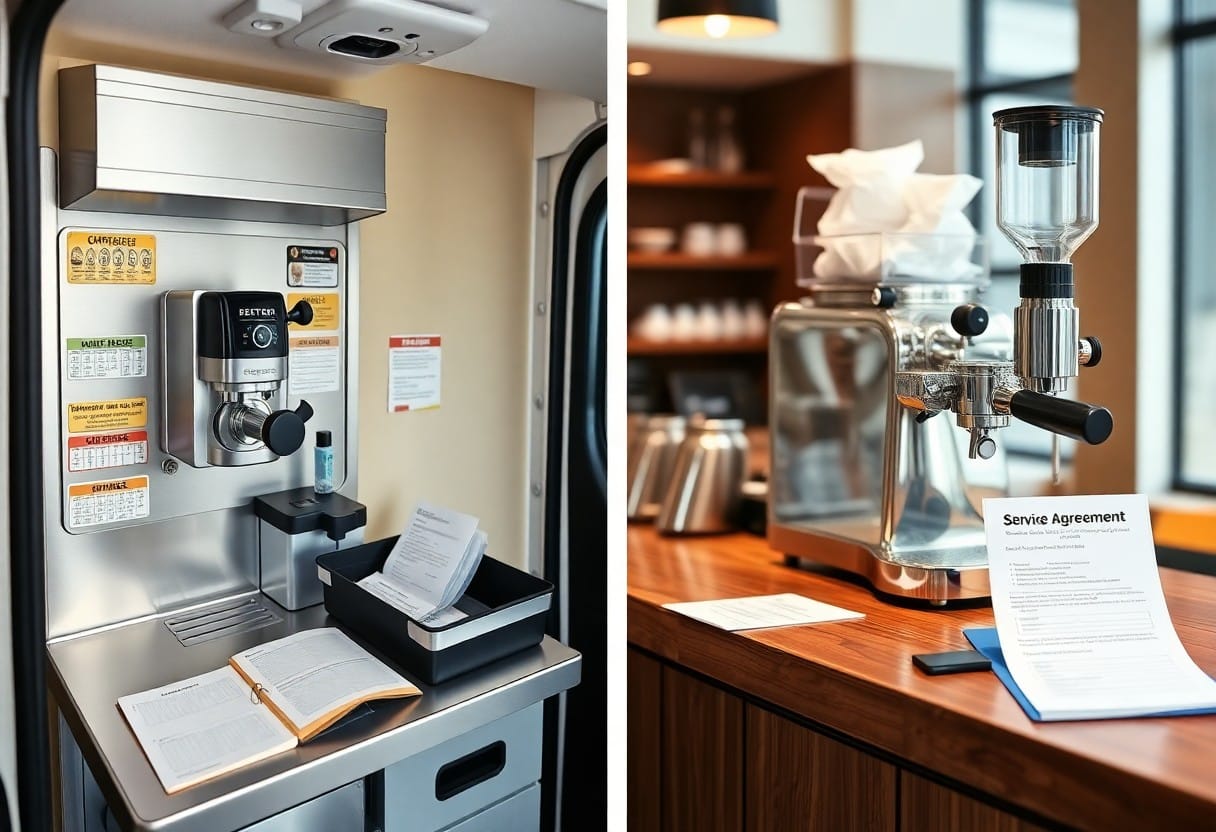
Assess the fine print of service agreements, focusing on response times, included parts, labor coverage, and exclusion clauses; compare SLA terms to your expected daily throughput and peak hours. See practical setup tiers in 4 Coffee Cart Setups For Any Budget to match service levels with your budget.
Inspect provider reliability by requesting uptime statistics, repair turnaround examples, and local technician coverage for your area; prioritize vendors with documented emergency response plans. You should verify on-site spare parts availability and escalation contacts before signing.
Factors to consider for equipment longevity and repair
Compare build quality, parts commonality, and service network size when choosing machines; simpler designs and widely used components reduce downtime and repair costs.
- Material quality of boilers and brew groups
- Availability and cost of spare parts
- Ease of field servicing and technician training
Any choice you make should weigh warranty duration and parts lead times against your daily service demands.
How-to establish a preventative maintenance schedule
Schedule routine checks for water filtration, group head backflushing, grinder calibration, and boiler pressure; create a digital log with deadlines, assign tasks to staff, and set quarterly professional inspections to catch wear early so you avoid sudden failures and keep service consistent.
To wrap up
You match expected volume and menu to machine size and grinder capacity, measure your van or café layout to fit equipment and service flow, confirm electrical and water requirements, and select durable models with local service and good warranties. You balance upfront cost against lifecycle expenses and supplier support to ensure consistent quality, efficiency, and profitability.
FAQ
Q: How do I choose equipment based on space, expected service volume, and menu?
A: Assess expected daily cups and peak cups per hour first. Small mobile vans serving under ~150 cups/day operate well with a single-group or compact double-group espresso machine and one strong grinder. Cafés with 150-500 cups/day benefit from a two-group heat-exchanger or dual-boiler machine and at least two grinders for espresso and filter. High-volume sites over 500 cups/day need multi-group machines, commercial batch brewers, and multiple grinders to avoid bottlenecks. Match refrigeration and storage capacity to menu items and factor footprint and staff workflow when finalizing equipment.
Q: Which type of espresso machine suits a compact coffee van versus an elegant café?
A: Compact vans often need single-group or compact double-group machines with low water and power demands and quick heat recovery. Heat-exchanger machines give good steam performance for milk drinks in a smaller package; dual-boiler machines provide precise temperature control and better shot consistency for cafés that prioritize specialty espresso. Full-size cafés should consider two- or three-group commercial machines to cover simultaneous baristas and steady high-volume demand. Check machine weight, service access, and whether the machine can run on available power in a van.
Q: What should I look for in grinders and dosing options?
A: Choose grinders with commercial-grade burrs, easy adjustment, and consistent dose weight. Doserless (on-demand) grinders reduce grind retention and are preferred for specialty espresso; stepped grinders simplify repeatable settings, while stepless grinders allow finer tuning. Use a dedicated grinder for filter coffee when offering brewed or pour-over beverages to preserve flavor. Prioritize models with accessible parts and straightforward burr replacement for routine maintenance.
Q: What are the power, water, and waste considerations for a coffee van?
A: Confirm available electrical capacity and whether you will use shore power, a generator, or a battery/inverter setup; calculate combined amperage for espresso machine, grinders, fridge, and water heater. Install a proper water filtration system that handles hardness and chlorine to protect boilers and improve taste. Fit an adequate fresh-water tank and grey-water storage sized for service hours and local regulations. Plan plumbing layout to allow quick hookup for waste disposal and regular sanitation checks.
Q: What refrigeration and storage solutions work in tight van spaces and elegant café layouts?
A: Under-counter refrigerators and refrigerated drawers maximize counter space in vans while keeping milk and perishables close to the barista. Compact blast chillers can preserve batch-brewed cold drinks in small vans that offer cold menu items. Elegant cafés often use reach-in refrigerators, display cases for retail and pastries, and walk-in storage if volume and space permit. Ensure airflow clearance, energy-efficient models, and easy-clean interiors to meet health standards.
Q: How should workflow and ergonomics influence equipment layout?
A: Place the grinder, espresso machine, and milk station within easy reach to minimize steps during peak service. Design counter heights and reach zones to reduce wrist strain and allow one-handed operation of steam wands and tamping. Provide sufficient clear counter space for cup staging, tamping, and cleaning. Test a mock service flow with staff to spot pinch points and adjust equipment positions before final installation.
Q: How do I balance budget, reliability, and service when selecting brands and models?
A: Compare total cost of ownership: purchase price, energy use, maintenance parts, and expected downtime impact. Prioritize brands with local service networks and available spare parts to reduce repair lead times. Consider manufacturer warranties and optional service contracts for busy operations. Evaluate used equipment for lower upfront cost but verify service history, boiler condition, and part availability before purchase.
Try it fresh. Our OmniSoul blend is roasted in small batches in Adelaide, with delivery included Australia-wide and 10% off when you subscribe. Visit the shop.