Adelaide drinkers know a good shot when they taste one, and they will notice the difference between a café with its gear sorted and one still finding its feet. Your equipment choices decide how fast you can serve, how consistent each coffee tastes and how much of your day goes into fixing problems instead of talking to customers.
This checklist covers the coffee side of the setup: the machine, the grinders, the brewing gear, the smallwares that vanish behind the counter, plus storage and cleaning. Work through it in order and you will finish with a list you can quote, compare and budget against.
The checklist at a glance
Group your list by station rather than by supplier. It makes quoting easier and it shows you quickly where the gaps are.
| Area | What to include |
|---|---|
| Coffee station | Commercial espresso machine, grinder (one per bean), knock box, milk jugs |
| Smallwares | Tampers, scales, bar spoons, espresso shot glasses, steam pitchers, whisks, kettles |
| Brewing | Batch or drip brewer, French press, carafes for holding brewed coffee |
| Storage and cooling | Fridge space for milk, sealed containers for beans, organised bench storage |
| Cleaning and maintenance | Brushes, cloths, bins, a written cleaning schedule, a service contact |
| Front of house | POS system, website, online menu |
Treat the table as the skeleton and the sections below as the detail. Anything you cannot answer confidently, confirm with the supplier before you pay a deposit.
Start with the coffee station
Everything else in the café supports the coffee station. Build that first, because the machine and grinders set your workflow, your power requirements and how much bench depth you need to allow.
The espresso machine
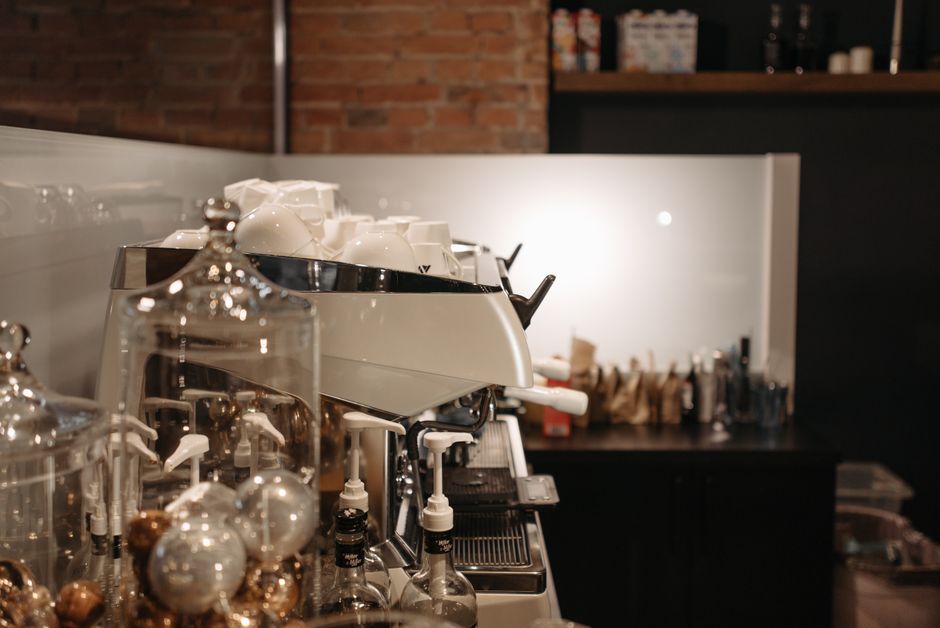
A commercial espresso machine is the centrepiece. Look for a model rated for commercial volume rather than a scaled-up domestic unit, and confirm that local service and spare parts are available before you commit. Group count, footprint and steam capacity should match the drinks you expect to sell on your busiest morning, not your quietest Tuesday. Position the machine so the barista can reach the grinder, the knock box and the milk fridge without stepping sideways.
Grinders, one per bean
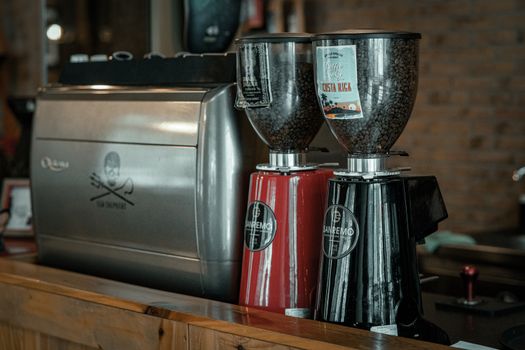
Plan for one grinder per bean you serve. A house blend on one grinder and a rotating single origin or decaf on another keeps dialling simple and stops you chasing settings through the middle of service. If you intend to offer filter as well, allow for a separate grinder suited to that job rather than swapping beans in the espresso grinder all day.
Brewing equipment beyond the espresso machine
Not every customer wants milk, and a filter option gives you a second price point without touching the espresso machine. A basic brewing setup usually includes:
- A batch or drip coffee brewer for volume service
- A French press for small runs and tasting
- A water kettle for pour over and tea service
- Carafes for holding brewed coffee during service
Match the brewing kit to your menu. If you are unsure whether filter will sell, start smaller and add capacity once you have real sales data from your own counter.

Smallwares and barista tools
The small items are the ones that get forgotten, and the ones that stop service when they run out. Build in spares for anything you touch on every drink.
- Steam pitchers in a couple of sizes, plus a separate set for alternative milks
- Espresso tampers that fit your baskets properly
- Scales for dosing and checking extraction
- Bar spoons for stirring and layering
- Espresso shot glasses for checking pours
- Milk jugs for service and for the fridge
- A knock box within arm's reach of the grinder
- Whisks for mixing powders and drinks
- Cleaning cloths, including a dedicated cloth for the steam wand
Buy the sturdy version of anything that gets washed dozens of times a day. Cheap pitchers and thin tampers cost more over a year than the good ones.
Storage and cooling
Beans, dairy and anything cold need proper storage from day one. Your list should cover sealed containers for opened bags of beans, fridge space sized for the milk volume of your busiest shift, and enough bench storage that stock is not stacked on the floor. Keep beans away from the hot side of the machine and out of direct sun, because heat and humidity change how they behave in the grinder.
Cleaning and maintenance tools
A machine that is cleaned properly lasts longer and tastes better. Cleaning gear belongs on the opening checklist, not on a wishlist for later.
- Brushes and cleaning tools for the grinder and the machine
- Cloths kept separate from the steam wand cloth
- Bins positioned so staff can clear grounds quickly
- A written cleaning and maintenance schedule on the wall
- A named supplier contact for servicing and parts

Front of house and the online menu
Equipment extends past the espresso machine. A point of sale system, a website and an online menu make up the customer-facing side of the setup, and they are far easier to organise before opening than during your first busy week. Decide early how customers will read your menu, whether you need online ordering, and how those tools connect to the till and to your stock counts.
Common gaps that catch new cafés out
Most missing items fall into the same few categories. Check your list against these before you finalise it.
- No spare steam pitchers, so service stalls while one is being washed
- No scales, which makes consistent espresso guesswork
- Fridge space sized for a quiet day rather than a busy one
- No written cleaning routine, so maintenance drifts
- No confirmed service contact for the machine
Turning the list into a buying plan
An equipment list becomes useful once it has an order and a budget attached. Work through it in this sequence.
- Write the menu first, because the menu determines the machine, the grinders and the brewing kit.
- Match the espresso machine and grinders to peak service volume rather than average sales.
- Price the whole job, not just the machine, including smallwares, delivery, installation and servicing.
- Confirm service and spare parts availability locally before you commit to a brand.
- Leave room to add a grinder or a brewer later without rebuilding the bench.
Get itemised quotes so you can compare like with like. A quote that includes the smallwares, the install and a service arrangement is easier to judge than a headline figure for a machine on its own.
Where a roaster fits into the checklist
Beans are part of the equipment conversation, because the grinder settings, the menu and the training all depend on what you are serving. LygonCoffee roasts in South Australia and supplies cafés through wholesale beans and custom blends, which is useful if you want a house blend built for your menu rather than taking whatever is on the shelf.
If you would rather bundle the hardware and the coffee side together, our café equipment packages combine a commercial machine, a grinder and beans. For a wider view of what the business offers cafés and workplaces, the business coffee hub is the place to start. None of this replaces your own due diligence on the machine, the lease and the site, but it does shorten the list of decisions you have to make alone.
Ready to price your café setup? See the café equipment packages to find out how a commercial machine, grinder and beans come together.
Frequently Asked Questions
What coffee equipment do I need to open a café?
At minimum you need a commercial espresso machine, a grinder for each bean you serve, a knock box, milk jugs, tampers, scales, bar spoons, shot glasses, steam pitchers, storage and cooling, cleaning tools, and a point of sale system with a menu. Add a brewer or French press if you plan to offer filter coffee.
Do I really need more than one grinder?
One grinder per bean keeps your settings stable and your shots consistent. Two grinders cover most small cafés well, and you can add a third later if the menu grows.
Should I buy new or used café equipment?
Both are viable. Used machines can stretch a budget, but check service history, parts availability and who will repair it locally before you commit. Ask for itemised quotes either way, and confirm what the price includes in terms of delivery, installation and any warranty support from the supplier.
How much should I budget for café coffee equipment?
There is no single figure, because it depends on the machine, group count, number of grinders, whether you buy new or used, and the smallwares you choose. Gather itemised quotes across the whole list, including servicing and spares, then compare total cost rather than headline machine prices.
Can I use a domestic espresso machine in a café?
Most cafés run machines rated for commercial volume. A domestic unit may struggle with continuous service and is often not built for the cleaning cycle a café puts it through. Check the duty rating, warranty terms and service support with the supplier before you consider it.