
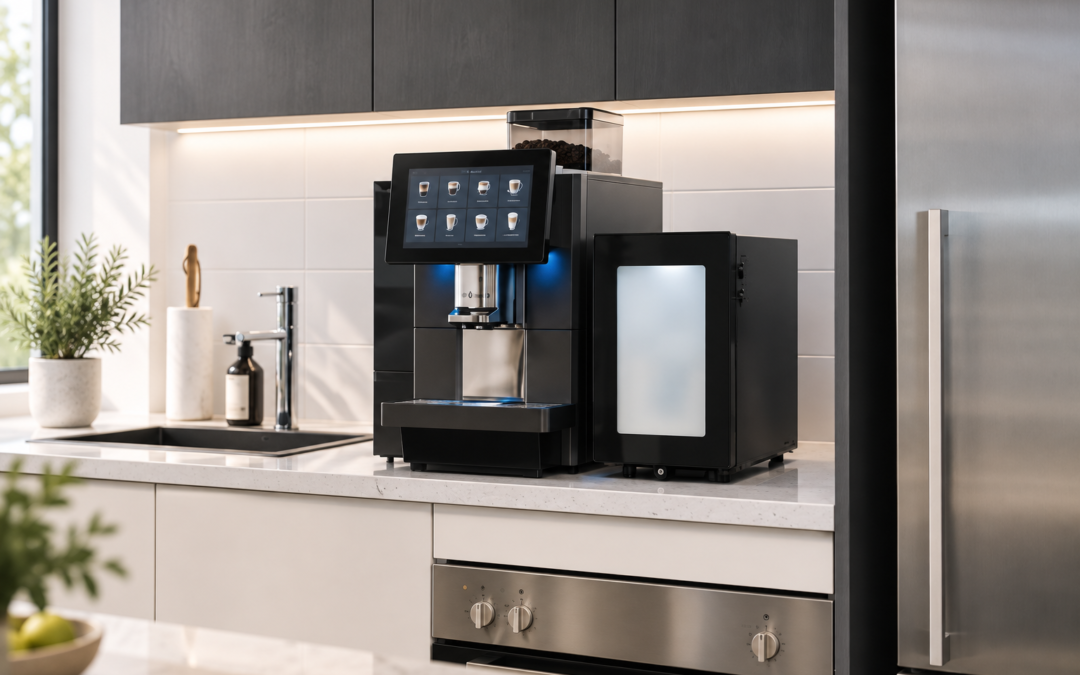
A bean to cup machine grinds, doses and brews at the press of a button, and that is exactly why it is easy to forget everything happening inside it. Coffee oils, milk residue and mineral scale build up quietly. The first sign of trouble is usually a cup that tastes flat or thin, not a flashing warning light.
Keeping an automatic machine in good shape does not take much time. A short daily routine, a monthly deep clean and a descaling schedule matched to your water will cover most of it. Here is a practical maintenance plan for home kitchens, offices and cafés running bean to cup equipment.
Why maintenance changes how your coffee tastes
Every shot leaves something behind. Oils from roasted beans coat the grinder, the chute and the brewing unit. Milk leaves a film on the milk system that sets hard if it is not rinsed. Water leaves calcium and magnesium behind as scale, and hard water leaves it faster.
None of that is visible from the outside. What you notice instead is a coffee that loses its sweetness, a crema that disappears quickly, or a machine that sounds like it is working harder than it used to. Cleaning removes the residues that change flavour and protects the parts that cost real money to replace.
The daily routine
Daily care is mostly about emptying and rinsing, and it takes a few minutes at the end of service. The habits worth locking in are simple.
- Remove the drip tray and the coffee grinds container, then clean the drip tray by scrubbing it with warm, soapy water. Rinse it thoroughly so no soap residue is left behind, and check that nothing is building up in the corners.
- Wipe down the exterior with a damp cloth to keep the machine looking clean and to stop spills drying onto the casing.
- Wash the bean hopper in hot soapy water, rinse it and dry it completely. Never put a hopper in the dishwasher.
- Use a small paint brush to brush out any build-up from around the grinder and the chute, where fine grounds and oils collect.
- Run the rinse cycle your machine offers at shutdown, which flushes the brewing unit and water paths between sessions.
Look after the milk system every day
Milk is the part people skip, and it is the part that causes the most complaints. Milk residue left in lines and frothers sets hard, then flakes into the next drink. Flush and clean the milk system as the manufacturer directs, every day the machine has been used for milk drinks. If your office runs flat whites all morning, this is not a weekly job.
Keep an eye on the water tank
Water sits in the tank overnight, and a tank that is never cleaned develops a film. Empty it, clean and sanitise it, and refill with fresh water rather than topping up day after day. It is one of the easiest jobs on the list and one of the most commonly forgotten.
The monthly cleaning tablet cycle
Automatic machines are designed to make deep cleaning straightforward. Cleaning a bean to cup machine usually means adding a specially developed cleaning tablet, pressing a few buttons and letting the machine run its program. You are not dismantling anything.
- Check your manual for where the tablet goes. On most automatic machines it is a dedicated slot or the brewing unit itself.
- Use a tablet made for your machine rather than a general purpose cleaner. The wrong product can leave a taste or damage seals.
- Run the cleaning program from start to finish and let the machine complete every rinse step.
- Repeat the cycle without detergent if your manual asks for it, so no cleaner is left inside the brew path.
The general guidance for automatic machines is a cleaning tablet cycle at least once a month. Busy offices and cafés should treat that as a floor, not a target, because a machine making dozens of coffees a day accumulates oils far faster than a home machine making two.
Descaling: match the schedule to your water
Scale is the slow killer. It builds inside the boiler and the water paths, restricting flow and making the machine work harder for the same cup. In hard water areas, the guidance is to descale every two to three months.
Two things matter here. First, use the descaler your manufacturer specifies, because the wrong acid can attack internal components. Second, do not wait for a problem before you descale. If your machine prompts you, run the program then. If it does not, follow your manual and your water supply. Adelaide water varies by suburb, so if you are unsure how hard yours is, ask your machine supplier or your service technician for advice rather than guessing.
Grinder and hopper care
The grinder is where flavour is either protected or ruined. Oily beans leave residue on the burrs and in the chute, and that residue goes stale long before the beans do. Brushing out build-up daily keeps it under control, and cleaning tablets formulated for grinders help remove the oily film that a brush alone will not shift.
The hopper deserves the same attention. Wash it in hot soapy water, dry it properly before refilling, and never put it through a dishwasher, because heat and harsh detergent damage the plastic and can leave a lingering smell that transfers to your beans. Only fill the hopper with what you will use in the near term so the beans stay at their best.
What a preventative maintenance visit covers
Some jobs belong with a technician. A preventative service on a commercial or office machine typically includes a full clean of the coffee brewing unit, a check of the steam pressure, cleaning and sanitising the water tank, and cleaning the internal metal contact points. Those checks catch worn seals, tired pumps and drift in brewing pressure before they turn into a breakdown during a busy service.
If your workplace machine is under a supply arrangement, this is often built into the plan. LygonCoffee's office coffee packages include machine setup and fresh bean delivery, so the machine stays in the hands of people who know it. Cafés and hospitality venues can look at café equipment packages or the broader business coffee solutions range.
Maintenance schedule at a glance
| Task | How often |
|---|---|
| Empty and clean the drip tray and grinds container with warm soapy water | Daily |
| Wipe the exterior with a damp cloth | Daily |
| Brush out build-up around the grinder and chute with a paint brush | Daily |
| Wash the hopper in hot soapy water, rinse and dry (never dishwasher) | Daily or as needed |
| Clean and sanitise the water tank | Regularly, plus at service |
| Run a cleaning tablet cycle on the automatic machine | At least monthly |
| Clean the grinder with grinder cleaning tablets | As part of the monthly cycle |
| Descale | Every two to three months in hard water |
| Full service check: brewing unit, steam pressure, water tank, metal contact points | Book with your technician |
Signs your machine needs attention now
Maintenance is not only about the calendar. Certain changes tell you something has shifted inside the machine and it is worth investigating rather than waiting for the next scheduled clean.
- Coffee tastes flat, bitter or stale even with fresh beans in the hopper.
- Shots arrive cooler or thinner than they used to.
- The machine takes longer to heat up or sounds louder in operation.
- There is visible residue or an oily film around the grinder, chute or brew area despite regular brushing.
- The drip tray or grinds container fills faster than usual, suggesting more grounds are being dumped than brewed.
Work through the daily and monthly tasks first, since most of these symptoms trace back to something simple. If they persist after a full tablet cycle and a descale, it is time for a technician rather than another round of cleaning.
Beans and water: the two inputs you control
No maintenance routine can rescue poor inputs. Freshly roasted beans and clean water do more for cup quality than any accessory. Beans that sit in a hopper for weeks lose aroma, and the oils that make them taste good are the same oils that gum up a grinder.
Buy beans in quantities you will actually drink, keep the hopper topped up rather than packed to the brim, and pair the machine with a roast that suits automatic brewing. Our OmniSoul signature blend is a medium omni roast built from Brazilian and Colombian beans, with chocolate and nutty notes, roasted in South Australia to work across espresso, filter and cold brew. It is a straightforward match for a bean to cup machine at home or in the office. If you are still deciding on hardware, the home espresso machine and grinder range covers setups for domestic kitchens.
Frequently Asked Questions
How often should I clean a bean to cup machine?
Run a cleaning tablet cycle at least once a month, and handle the quick jobs daily: empty and rinse the drip tray and grinds container, wipe the exterior, brush out build-up around the grinder and wash the hopper in hot soapy water. Busy offices and cafés making dozens of coffees a day should clean more often than a home machine.
Do bean to cup machines need descaling?
Yes, especially where the water is hard. The guidance for automatic machines is to descale every two to three months in hard water, using the descaler your manufacturer specifies. Scale restricts water flow and makes the machine work harder, so sticking to a schedule is better than waiting for a noticeable drop in performance.
Can I put the bean hopper in the dishwasher?
No. Wash the hopper by hand in hot soapy water, rinse it thoroughly and dry it completely before refilling. Dishwasher heat and harsh detergent can damage the plastic and leave behind a smell that transfers to your beans. The same applies to any plastic part the manufacturer has not marked as dishwasher safe.
Do I need separate cleaning tablets for the grinder?
They are a different job from the brew unit tablets. Brew unit tablets clean the internal coffee path, while grinder cleaning tablets are designed to lift the oily film that builds on the burrs and in the chute. A daily brush-out handles most of it, and a grinder tablet clean as part of your monthly routine removes what brushing leaves behind.
Why does my coffee taste stale even after cleaning?
Check the beans first. Coffee sitting in a hopper for weeks loses aroma, and the oils that taste good are the same ones that gum up a grinder. If the beans are fresh and the machine has had a full tablet cycle and a descale, the remaining suspects are worn burrs or a pressure issue, which is a technician's call.