
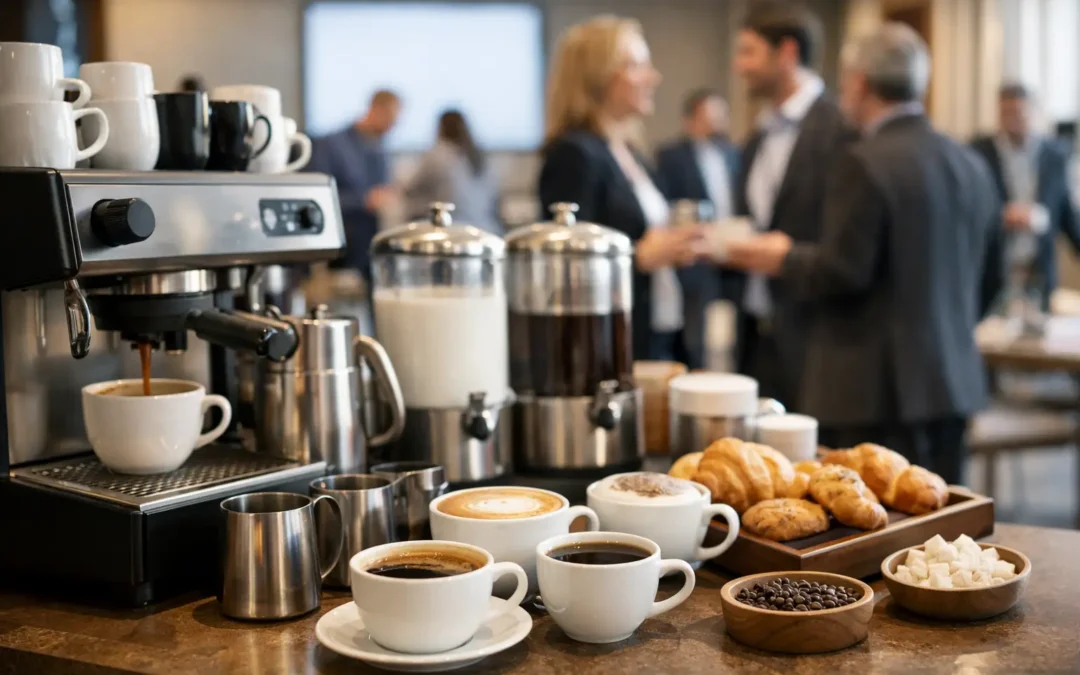
A conference schedule can be packed with smart speakers, useful sessions and big ideas, then lose momentum in a queue for lukewarm urn coffee. Coffee catering for conferences changes that moment. A proper mobile coffee bar gives delegates a freshly brewed reason to step outside, reset between sessions and start the next conversation with real energy.
For organisers, it is not simply about putting drinks in hands. It is about creating a hospitality experience that feels considered, runs to time and reflects the standard of the event itself. From a compact leadership forum to a full-day industry gathering, great coffee can make the breaks feel as memorable as the agenda.
Why coffee catering for conferences earns its place
Conferences ask a lot of people. Delegates arrive early, listen closely, take notes, network through lunch and often head straight back to work afterwards. Quality coffee supports the rhythm of the day without pulling focus from the purpose of the event.
A barista-made flat white or long black offers more than caffeine. It signals care. People notice when an organiser has made the effort to provide café-quality coffee rather than relying on instant sachets, pods or a tired self-serve station. That small detail can lift the perceived quality of the whole experience.
It also gives networking a natural home. The coffee queue is one of the few places where a first-time attendee can easily strike up a conversation with a potential client, collaborator or speaker. A well-positioned coffee van creates a welcoming meeting point, particularly at larger venues where delegates may otherwise scatter during breaks.
There is a practical benefit too. A mobile coffee setup removes the need to hire machines, arrange milk deliveries, find staff to operate equipment or manage the inevitable clean-up. The right caterer brings the coffee, baristas, equipment and service know-how, leaving your team free to run the conference.
Start with the shape of your event
The best coffee service is planned around delegate behaviour, not just headcount. A 60-person breakfast briefing has very different needs from a 400-person conference with two short morning breaks. Before choosing a package, look closely at the run sheet, venue access and the moments when people are most likely to want a drink.
Morning arrival is usually the biggest rush. Delegates often come in from a commute and want a coffee before registration or the opening session. If registration starts at 8.00 am, having the bar ready before doors open makes a visible difference. It prevents the first break from becoming a catch-up period for everyone who missed their morning cup.
Mid-morning and post-lunch service matter just as much. These are the points where attention can dip, especially in a full-day programme. Consider whether the coffee bar should remain open continuously, or operate in concentrated windows around the busiest breaks. Continuous service feels generous and flexible, while set service times can be the smarter option for a tightly managed budget.
Location is equally important. Place the coffee station near registration, the breakout space or the main networking area, but avoid creating a bottleneck outside presentation rooms. At Adelaide venues with limited indoor space, a mobile coffee van positioned close to the entrance can work beautifully. Just make sure delegates can reach it easily without stepping into traffic, rain or a long walk between sessions.
Match service capacity to the break times
Headcount alone does not tell you how many coffees will be ordered. Consider the length of each break, how many other refreshment stations are available and the profile of your audience. A room full of early-start professionals may have stronger coffee demand than an afternoon panel attended by local community groups.
Short breaks need throughput. If 200 delegates have 15 minutes between sessions, a single small service point may not keep pace, no matter how good the coffee tastes. Extra baristas, a second machine or a simplified menu can keep the line moving while still delivering a proper cup.
For longer breaks, you have more room for choice. Delegates can order alternative milks, chai, hot chocolate or decaf without feeling pressured to rush. The goal is not to turn your break into a café visit. It is to give people enough choice that they feel looked after, while maintaining a calm, reliable flow.
Choose coffee that suits the room
Specialty coffee should be approachable at a conference. Most guests know what they like and want their usual order made well: flat white, latte, cappuccino, long black or espresso. A balanced, freshly roasted blend with sweetness and body works especially well across milk and black coffee, pleasing a broad range of palates without making the menu feel overly complicated.
Freshness matters. Coffee is at its best when it has been roasted with care, ground to suit the equipment and extracted by someone who understands the craft. The aroma alone changes the atmosphere around a break area. It is warm, inviting and far more compelling than a row of disposable cups beside an urn.
Milk choice deserves attention, too. Dairy remains the most common request, but oat, soy and almond options are now expected at many corporate events. Ask your caterer what is included, how alternative milks are handled and whether dietary needs can be accommodated without slowing service.
LygonCoffee brings freshly roasted specialty coffee and experienced baristas to conference settings, so guests receive the kind of drink they would happily order from their favourite café, right where the event is happening.
Give the service a clear brief
A good coffee caterer will ask useful questions before the day. Be ready to share guest numbers, event timings, venue address, access instructions, power availability and parking details. If the coffee van needs to arrive before venue staff, arrange that access in writing rather than assuming the doors will be open.
It also helps to decide how drinks will be paid for. Some organisers cover an agreed number of coffees per guest, while others offer complimentary service during selected windows. For public-facing conferences, a branded voucher system can give delegates a hosted drink while keeping spend easy to track. If coffee is available for purchase, make that clear in pre-event communications so there are no surprises on the day.
Branding can add another layer when the conference is client-facing or part of a larger activation. Branded cups, a tailored menu board or a coffee station styled to complement event colours can make the service feel integrated rather than bolted on. Keep it tasteful. The coffee should support your brand experience, not compete with the speaker programme.
Do not forget the small operational details
The smoothest events are built on quiet preparation. Confirm where waste will go, whether the site has enough clearance for a van, and what happens if weather shifts for an outdoor setup. Ask about water, power and any venue rules around external caterers.
A capable mobile coffee team will guide you through these details, but the final responsibility often sits with the organiser. A five-minute site check before event day can prevent a coffee bar being placed too far from the crowd or blocked by a last-minute furniture change.
Make every break feel intentional
Coffee is strongest when it is part of the event design. Pair the morning service with fresh pastries or fruit, build a longer networking break after a keynote, or use an afternoon coffee moment to draw delegates back into the exhibition area. These choices guide movement through the venue and give people a reason to pause together.
There is a balance to strike. If the agenda is running late, protect enough time for people to actually enjoy the service. A five-minute break may look efficient on paper, but it rarely gives delegates time to visit the bathroom, grab a coffee and return ready to listen. A slightly longer, well-timed break can improve attention and leave the room feeling more engaged.
The best conference coffee is never an afterthought. It is freshly brewed hospitality that says your guests’ time, comfort and conversations matter. Plan it with the same care as your speakers, and the energy it creates will carry well beyond the final session.
Planning an event in Adelaide? LygonCoffee’s mobile coffee van serves our own freshly roasted specialty coffee at weddings, corporate days and community events. See our mobile coffee packages.