
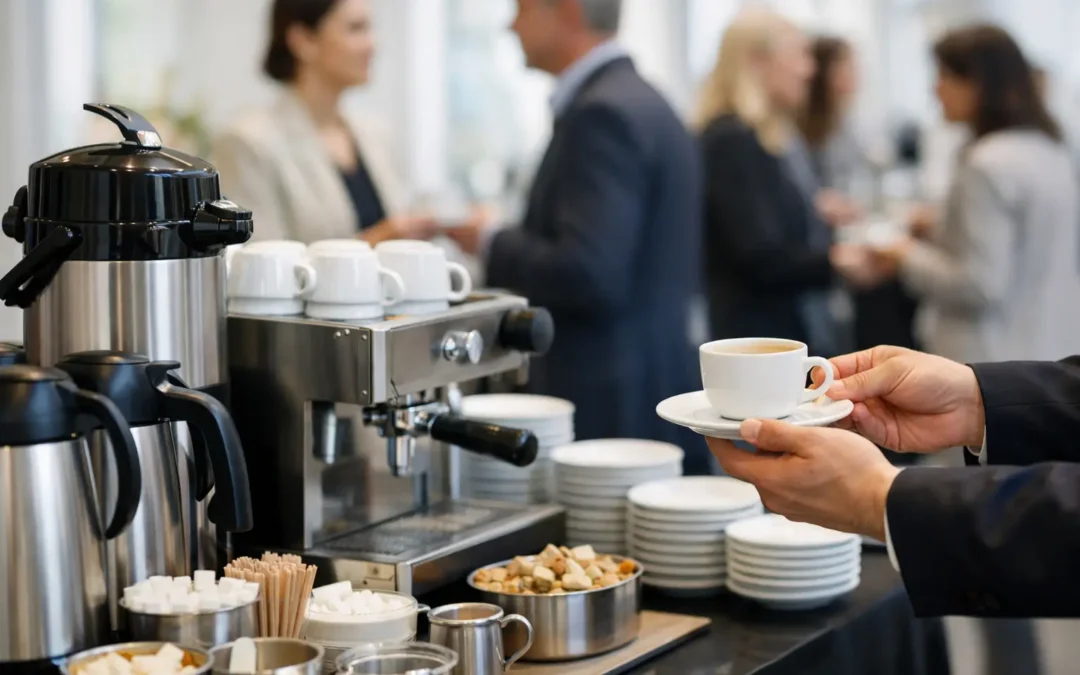
The first coffee served at an event often sets the tone. A fragrant flat white in a guest’s hand says they are welcome, looked after and worth more than a lukewarm urn in the corner. Knowing how to serve coffee at events means balancing that café-quality moment with practical planning: guest numbers, timing, power, space and the kind of experience you want people to remember.
For a small morning meeting, a simple brewed coffee station may be exactly right. For a busy corporate launch, wedding reception or public activation, a staffed mobile coffee bar can turn refreshment into a genuine drawcard. The best choice is not always the biggest setup. It is the one that makes good coffee easy for your guests to enjoy.
Start with the event, not the coffee machine
Before choosing beans, cups or equipment, consider how the event will move. Coffee demand is rarely spread evenly across the day. It arrives in waves: when guests first arrive, after a keynote, during a mid-morning break, or as people gather before heading home.
A breakfast briefing with 30 guests may need most drinks within the first 20 minutes. A full-day conference might need a steady service through several planned breaks. At a market, festival or community day, demand can rise suddenly when a queue forms nearby or the weather turns cool. These patterns determine whether self-service is sufficient or whether you need baristas who can keep the line moving without sacrificing the pour.
Think about the guest mix as well. A room of regular coffee drinkers will expect espresso-based favourites such as lattes, cappuccinos, long blacks and flat whites. An all-ages event needs thoughtful alternatives, including tea, hot chocolate, decaf and non-dairy milk. Offering choice is not about creating an oversized menu. It is about making sure no guest feels like an afterthought.
Choose the right coffee service format
There are three common ways to serve coffee at events, and each has a place.
A self-serve filter coffee station
Filter coffee works well for short meetings, training days and casual gatherings where guests are comfortable helping themselves. It is efficient, approachable and can serve many people quickly. Use quality, freshly roasted coffee, keep the brew topped up and provide milk, sugar, cups, lids and stirrers in a tidy, obvious layout.
The trade-off is that filter coffee does not offer the theatre or personal touch of a barista-made drink. It can also lose its best flavour if it sits too long. Brew smaller, fresher batches rather than preparing one large volume at the start and hoping it carries the session.
An espresso bar or mobile coffee van
For events where hospitality matters, espresso service brings the familiar comfort of a proper café to the venue. Guests can order their usual coffee, chat with a barista and enjoy a drink made fresh to their preference. It is especially effective for corporate functions, staff appreciation days, property launches, client events, open days and brand activations.
A mobile coffee setup also removes much of the operational burden. The provider brings professional equipment, freshly roasted beans, trained baristas and the rhythm needed to manage a queue. In Adelaide, this can be a practical way to give an office car park, warehouse forecourt or outdoor venue an instant café feel without relying on the venue’s kitchen.
A hybrid approach
Longer events often benefit from both. Start with barista coffee during arrival and scheduled breaks, then keep a modest self-serve filter station available between peak periods. This protects the premium experience when it counts while ensuring guests are not left searching for a caffeine top-up later in the day.
Plan quantities around real drinking habits
Event coffee planning is part science, part local knowledge. As a starting point, estimate that 60 to 80 per cent of guests will have at least one coffee at a daytime business event. For a morning function, many will want one on arrival and another after the first session. If coffee is complimentary, highly visible and genuinely good, uptake can be higher again.
Rather than only counting guests, map the likely cups across the schedule. A 100-person breakfast event may generate 90 to 120 drinks in a narrow window. A 100-person afternoon launch might produce closer to 50 to 70. Weather matters too. Chilly mornings invite long blacks and extra flat whites, while a warm outdoor activation may call for iced drinks if your service setup can support them.
Milk is usually the pressure point. Dairy milk will remain the most requested option for many events, but oat, almond and soy are now standard expectations in professional hospitality. Ask for dietary requirements during registration when possible, then allow a sensible buffer. It is better to have a little left over than to run out of oat milk midway through a guest queue.
Make the coffee station easy to find and easy to use
Great coffee will not deliver its full value if guests cannot see it, reach it or understand when it is available. Place the station where people naturally pass, ideally near arrival, catering or networking areas, but not in a bottleneck. Keep enough room around it for a queue that does not block doors, registration desks or food service.
For a mobile coffee bar, consider vehicle access, ground surface and shelter. A van needs a clear place to park and room to operate safely. Outdoor events may need protection from rain, wind or harsh sun, while indoor venues need confirmation of power access, ventilation and building rules. These details are not glamorous, but they are what keep service calm when guests arrive.
Clear signage helps, particularly when coffee is part of a ticket, a package or a staff perk. Let guests know whether drinks are complimentary, limited to one per person, or available for purchase. If the event has a timetable, list coffee service times so people can plan their break rather than all arriving at once.
Protect quality from first grind to final cup
Coffee tastes best when the details are respected. Freshly roasted beans, clean equipment, properly textured milk and trained hands all make a difference. A rich espresso should hold its sweetness through milk, while a long black should taste balanced rather than bitter or burnt.
Avoid treating coffee as an item to tick off a catering checklist. Pre-made jugs, neglected machines and tired beans can leave guests with a disappointing drink, even at an otherwise polished event. If you are supplying coffee yourself, test the setup beforehand and assign someone to check supplies, refresh the station and deal with spills or rubbish.
Cups deserve attention too. Use sturdy takeaway cups with secure lids for standing events, outdoor sites and guests on the move. For seated lunches or more formal functions, ceramic cups can create a more considered experience if washing facilities are available. Compostable options may suit events with sustainability goals, but only if the venue has the correct waste stream. A compostable cup in general rubbish does not deliver the outcome organisers are hoping for.
Build coffee into the event experience
Coffee is a useful pause button. It gives people a reason to arrive early, linger after a presentation and start conversations with someone they have not met. For workplace events, it can be a genuine gesture of appreciation. For a brand activation, it can create a relaxed, welcoming touchpoint before the sales conversation begins.
A branded coffee experience can go further with cups, signage or a menu that reflects the event, but restraint matters. Guests still want a good drink quickly. The most memorable activations pair visual personality with efficient service, rather than making a barista station feel like a complicated promotion.
This is where an experienced mobile provider earns their place. They understand how to read a queue, adjust the pace, keep the milk flowing and maintain the standard of every cup. LygonCoffee brings that balance of freshly roasted flavour and practical event service, so hosts can focus on their guests instead of troubleshooting an espresso machine.
Brief the team and have a small backup plan
Even simple coffee service benefits from a clear brief. Confirm arrival and setup times, service hours, the expected guest count, dietary needs, venue access, payment arrangements and who makes decisions on the day. If coffee is being served around a keynote or ceremony, agree on a quiet period so grinder noise and orders do not compete with the programme.
Allow extra water, milk, cups, lids, napkins and bins. For outdoor events, have a wet-weather alternative or covered position ready. If the event is large, stagger breaks by group where possible. A five-minute adjustment to a run sheet can save guests from spending half their break in line.
The goal is simple: make coffee feel effortless for guests, even when the planning behind it has been careful. When the aroma is inviting, the service is friendly and every cup is made with attention, coffee becomes more than a refreshment. It becomes one of the reasons people are glad they came.
Planning an event in Adelaide? LygonCoffee’s mobile coffee van serves our own freshly roasted specialty coffee at weddings, corporate days and community events. See our mobile coffee packages.