
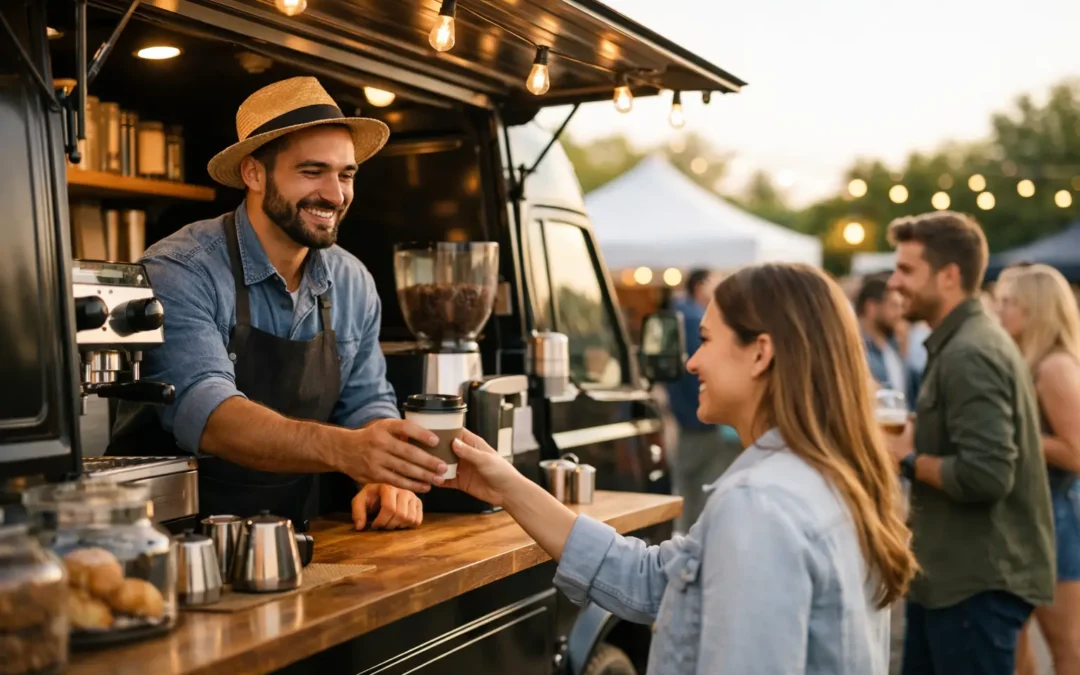
A flat white in someone’s hand changes the mood of an event faster than most branded giveaways ever will. Good coffee draws a crowd, gives people a reason to pause, and turns a quick interaction into a genuine conversation. That is why a smart mobile cafe activation guide starts with more than logistics. It starts with understanding what the coffee moment is meant to do for your brand, your guests, or your team.
If you are planning a workplace pop-up, product launch, community event or promotional campaign, a mobile cafe is one of the few activations that feels both useful and memorable. People already want coffee. The value is immediate. The challenge is making sure the setup does more than serve drinks. It needs to support your event goals, move smoothly on the day, and still deliver café-quality flavour in every cup.
What a mobile cafe activation should actually achieve
The best activations do two jobs at once. They satisfy a practical need and create a branded experience people want to engage with. Coffee is especially strong here because it sits comfortably across corporate, public and private settings. It can feel polished at a business event, relaxed at a community gathering, and premium at a brand launch.
That said, not every event needs the same kind of coffee service. A staff appreciation morning has a different purpose from a lead-generation activation. In one case, speed and warmth might matter most. In the other, dwell time, presentation and branded touchpoints may carry more weight. Before you lock anything in, get clear on the role the mobile cafe is playing.
If the goal is foot traffic, think about visibility and queue appeal. If the goal is hospitality, think about menu simplicity and service pace. If the goal is brand recall, think about cups, signage and the way the setup fits into the wider campaign. Coffee can do all of this, but not all at once unless the activation is planned properly.
Mobile cafe activation guide: start with the guest experience
A lot of activations are planned from the supplier side first. Power, access, bump-in times, permits, staffing. Those details matter, but guests experience the activation from the outside in. They notice the smell of fresh espresso, the look of the setup, the friendliness of the barista and how long they wait. That is the real event.
Start by mapping the journey. Where do people first see the van or cart? Is it easy to approach without blocking foot traffic? Will the queue feel exciting or awkward? Can guests read the menu quickly? Do they receive their drink in a way that encourages them to stay, chat or move on, depending on your objective?
The sweet spot is a setup that feels generous without becoming complicated. A tight, well-chosen menu often performs better than trying to offer every possible variation. Espresso-based favourites, a couple of milk options, hot chocolate and perhaps an iced option in warmer weather usually cover most needs. More choice can sound appealing, but too much can slow service and dilute the experience.
Match the coffee setup to the event, not the other way around
This is where many organisers overestimate or underestimate what they need. A large public activation may require a full mobile coffee van with multiple baristas and a high-volume setup. A smaller office visit might suit a compact station with a focused menu. Neither is better. It depends on numbers, timing and the atmosphere you are trying to create.
For a morning rush in a workplace, efficiency matters. People want excellent coffee, but they also want to get to their desk on time. For a brand activation at a public event, there is more room to slow the moment down. Guests may take photos, ask questions, interact with staff and spend more time at the setup.
Space also shapes the service model. Outdoor events can offer strong visibility and aroma, but weather is always a factor. Indoor sites may feel more controlled, though access, ventilation and power can be trickier. A good operator will help assess what is realistic, but the earlier you think through the site conditions, the smoother the day tends to run.
Branding matters, but coffee quality matters more
There is a temptation in promotional activations to focus heavily on visuals. Branded cups, signage, wraps, uniforms and social content all have their place. They absolutely help turn a coffee service into a full brand touchpoint. But if the drink itself is average, the activation loses its strongest advantage.
People remember quality. They remember the crema on a well-pulled espresso, the texture of properly steamed milk, and the fact that the coffee tasted like it was made by someone who cares. That sensory memory is what gives the branding weight. Without it, the setup risks feeling like another event prop.
This is especially important for businesses that want to position themselves as thoughtful, premium or detail-driven. A mobile cafe should reinforce that message, not contradict it. Freshly roasted beans, skilled baristas and reliable equipment are not background details. They are the heart of the experience.
Timing, volume and flow make or break the activation
Even beautiful coffee service can struggle if the event flow is wrong. The key question is simple: when will everyone want coffee? If 200 guests arrive at once and all head for the van in the first 15 minutes, you need a service model that can handle that surge. If demand is spread across three hours, the setup can be more flexible.
This is why realistic forecasting matters. Guest count alone is not enough. You need to know likely order windows, audience behaviour and how coffee fits into the broader program. A post-registration rush, a mid-morning slump, or a break between speakers can create sudden spikes.
There are a few ways to manage this. A shorter menu speeds up throughput. Pre-agreed serving times help. Positioning the coffee service slightly off the main pinch point can ease congestion while still keeping it visible. In some cases, staggered drink vouchers or service blocks work well. In others, open service feels more natural. It depends on the event format and the patience of the crowd.
Don’t overlook the practical details
A polished activation still relies on practical groundwork. Access for the vehicle, safe setup space, nearby power if needed, rubbish management, water supply and pack-down timing all need attention. These are not glamorous decisions, but they shape how professional the experience feels.
Permits and site rules can also come into play, especially for public events or council-managed spaces. If the activation is in a busy office precinct or at a community venue, check what is required well in advance. The same goes for wet weather planning. A mobile setup gives you flexibility, but it does not remove the need for a backup plan.
Communication matters here too. A good brief should cover arrival times, contact people on site, guest numbers, branding inclusions, dietary expectations and any access constraints. The more clearly these details are shared, the easier it is to deliver the kind of smooth hospitality people tend to remember for the right reasons.
How to measure whether the activation worked
The strongest activations are not just busy. They are effective. That means deciding early what success looks like. For some organisers, it is cup count and queue length. For others, it is lead capture, staff engagement, social content or guest feedback.
A workplace coffee service might be judged on morale and participation. A branded campaign may care more about dwell time, photo opportunities and meaningful conversations. A community event may prioritise accessibility, speed and overall atmosphere. Again, it depends.
What matters is aligning the coffee service with a clear outcome. If you know what the activation is meant to achieve, you can make better decisions about menu, setup, branding and staffing. Coffee is powerful, but it works best when it is part of a wider event strategy rather than an afterthought.
Why a thoughtful mobile cafe activation guide pays off
When a mobile cafe is done well, it never feels like just a van serving drinks. It feels like hospitality with purpose. It gives guests a reason to gather, gives brands a natural way to connect, and gives events a layer of warmth that is hard to fake.
For Adelaide businesses and event organisers, that can be the difference between a forgettable setup and one people genuinely talk about afterwards. And that usually comes down to getting the basics right – great coffee, sensible planning, clear goals and a service style that suits the crowd.
Every activation has its own rhythm. Some need speed, some need theatre, and some simply need a beautifully made cup at the right moment. If you plan with that in mind, the coffee does more than fill cups. It gives the whole event a stronger flavour.
Planning an event in Adelaide? LygonCoffee’s mobile coffee van serves our own freshly roasted specialty coffee at weddings, corporate days and community events. See our mobile coffee packages.