
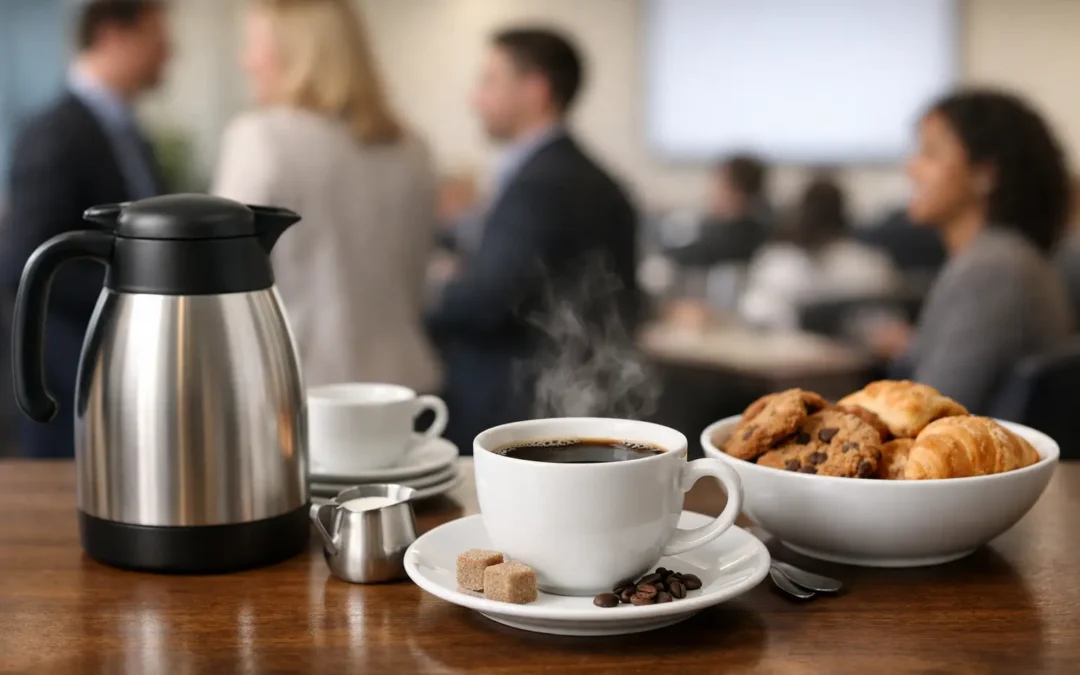
The first flat white of the morning can set the mood for an entire conference. When guests arrive after an early start, a packed commute and a full day of sessions ahead, coffee for conference attendees is not a small detail. It is part of the welcome, part of the pacing and, often, the difference between a room that feels switched on and one that is still waking up.
Conference organisers usually think carefully about speakers, signage, AV and catering, yet coffee sometimes gets lumped into the general refreshments line. That is where the experience can slip. If the coffee is slow, average or badly timed, people notice. If it is fresh, well made and easy to access, they notice that too – and the whole event feels more polished.
Why coffee for conference attendees matters more than it seems
A conference runs on attention. People are there to listen, network, take notes, ask smart questions and stay engaged through a long program. Coffee supports all of that, but not just because of caffeine. Good coffee creates small moments of comfort in a busy environment. It gives attendees a reason to arrive a little earlier, linger between sessions and start conversations they might not have had otherwise.
There is also a clear brand effect. When guests are handed a well-made espresso coffee instead of a lukewarm urn brew, the event feels considered. It signals care. For corporate conferences, industry forums and client-facing events, that matters. People connect quality refreshments with quality planning.
That said, better coffee is not simply about choosing the fanciest option. It needs to suit the event size, the flow of the day and the expectations of the crowd. A leadership summit with senior executives has different needs from a community conference with rolling attendance. The right setup depends on volume, timing and space.
What attendees actually want from conference coffee
Most people are not looking for coffee theatre. They want a drink that tastes excellent, arrives quickly and is easy to grab without missing the next session. That means the best coffee service combines specialty quality with practical event thinking.
Freshness matters straight away. Beans roasted with care and brewed by experienced baristas give the cup more body, better balance and a cleaner finish. Guests can tell the difference, even if they would never describe themselves as coffee experts. A smooth flat white, a rich long black or a properly textured cappuccino lands very differently from machine coffee that has been sitting too long.
Speed matters just as much. A conference break is often 15 to 20 minutes. If attendees spend most of it in a queue, the service is working against the event. A smart coffee setup plans for the rush periods, keeps the menu efficient and makes ordering intuitive. This is where mobile coffee catering has an edge. It can be built around the event schedule rather than squeezed into a venue’s standard food service rhythm.
Variety also matters, but it should be sensible. Espresso-based favourites are usually the core demand, with tea and hot chocolate covering the non-coffee crowd. Alternative milks are no longer a niche request. They are part of normal service. Decaf can be worthwhile too, especially at conferences that run into the afternoon.
Choosing the right coffee setup for your event
There is no single best format for coffee for conference attendees. The ideal setup depends on the number of guests, the style of the venue and how concentrated the break times are.
For smaller conferences or leadership events, a single mobile coffee bar with a focused menu can be perfect. It keeps the experience personal and premium. Guests get café-quality drinks, and the setup adds warmth to the room without overwhelming the space.
For larger events, capacity becomes the real question. Hundreds of attendees arriving at morning tea at the same time can create bottlenecks fast. In that case, it may make sense to bring in more than one machine, more than one service point or a menu designed for pace. There is always a trade-off between customisation and speed. A tighter menu with the most popular drinks usually serves a conference better than a long list that slows everyone down.
Venue access is worth thinking about early. Power, water, loading access and service position all shape how smooth the coffee experience will be. The best setup is visible enough to draw people in, but not placed where the queue blocks registration, sponsor booths or room entry.
Timing is everything
Coffee demand at conferences tends to come in waves. The first rush is pre-session, when attendees arrive wanting something warm and familiar before the day starts. The second is morning tea. The third is after lunch, when energy drops and attention needs a reset.
If coffee is only available at one of those points, choose carefully. Morning service often gives the strongest return because it improves arrival flow and helps people settle in. If the schedule allows for two service windows, adding an afternoon boost can lift the second half of the program noticeably.
Some events do better with continuous service, especially if attendance moves between expo spaces, breakout sessions and networking zones. Others benefit from shorter, high-capacity bursts tied to the agenda. It depends on whether your attendees are mostly seated in a formal program or circulating through the venue at their own pace.
The role of baristas in the attendee experience
A coffee setup is not just equipment. The people behind it shape the feel of the event. Friendly, capable baristas bring energy to the room. They keep the line moving, remember regular orders during the day and add that easy hospitality touch that helps a conference feel less transactional.
This matters more than many organisers expect. Conferences can be structured and tightly scheduled. A well-run coffee station introduces a human moment. It becomes a place where attendees chat, regroup and connect naturally. That can be valuable for networking-heavy events where the conversations between sessions are just as important as the stage content.
Good baristas also protect quality under pressure. High-volume service is not the same as café service on a quiet weekday morning. It takes experience to maintain consistency when orders stack up. That is why specialty coffee at events works best when the team understands both coffee and service flow.
Coffee quality reflects event quality
People might not remember every canapé or every branded lanyard, but they remember whether the coffee was good. It is one of the few parts of a conference they physically experience several times in a day. Every cup reinforces an impression.
For internal business events, that can support staff morale and create a more generous atmosphere. For public-facing conferences, it can shape how sponsors, clients and guests talk about the event afterwards. Quality coffee feels current, welcoming and professional. Poor coffee feels like a corner was cut.
This is one reason mobile coffee catering has become such a strong option for conferences. It offers a way to serve freshly brewed drinks without asking organisers to manage machines, pods, urns or complicated venue workarounds. It keeps the standard high while removing hassle from the planning side.
How to make coffee service work harder for your event
The strongest coffee service feels integrated into the conference, not tacked on. That means thinking about attendee movement, likely peak order times and the kind of impression you want to create.
If your event includes sponsors or brand activations, coffee can carry that beautifully when done with restraint. A branded coffee cart or takeaway cup can add visibility without feeling forced. If your conference audience is especially coffee-literate, the quality of the beans and the skill of the baristas become part of the experience in their own right.
It is also worth being realistic about volume. Under-ordering coffee is a common mistake. If the crowd is arriving early, networking actively and settling in for a full-day program, demand will be strong. A proper estimate saves everyone from the awkward moment where the line is still long and the break is nearly over.
For Adelaide organisers looking to lift the standard, this is where a service like LygonCoffee fits naturally – café-quality drinks, event-ready setup and the kind of hospitality that makes the whole day feel sharper from the first pour.
Great conference coffee is not about excess. It is about reading the room, serving people properly and giving attendees one less thing to tolerate and one more thing to enjoy. When every sip feels fresh, fast and thoughtfully delivered, the event starts to carry itself a little better.
Planning an event in Adelaide? LygonCoffee’s mobile coffee van serves our own freshly roasted specialty coffee at weddings, corporate days and community events. See our mobile coffee packages.