
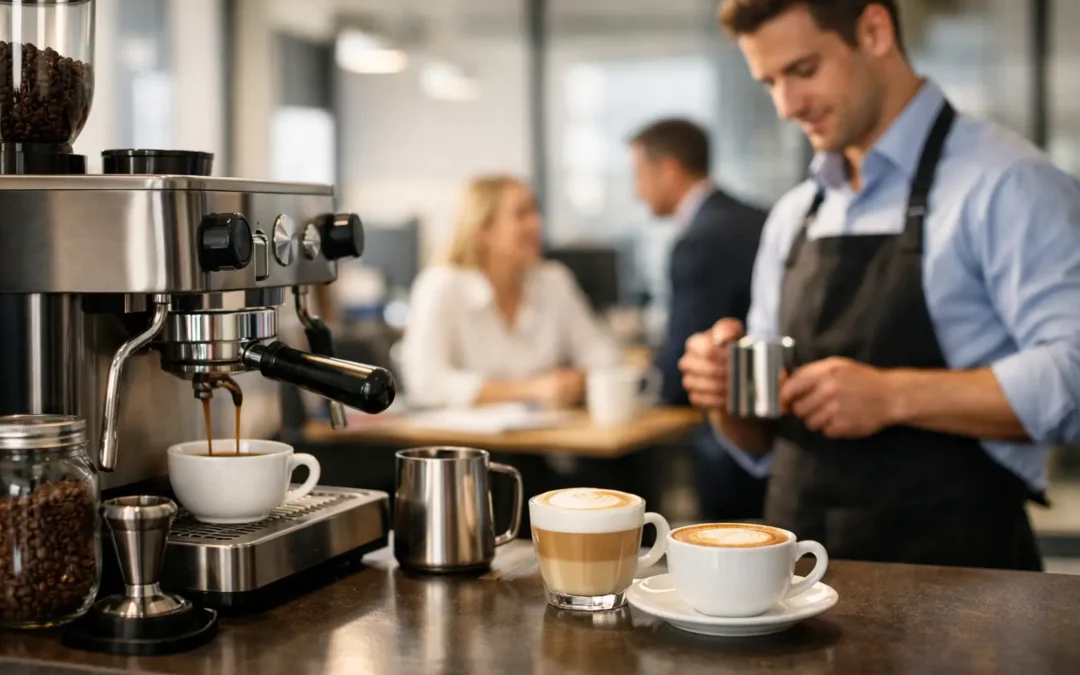
That mid-morning slump hits differently when the office coffee tastes burnt, watery, or straight out of a pod. So, can offices offer barista coffee and actually make it practical? Absolutely. The better question is what kind of setup suits your team, your space, and the experience you want people to have.
For some workplaces, barista coffee is a daily culture play. For others, it is a way to turn a client meeting, staff celebration, or campaign launch into something more polished and memorable. Either way, café-quality coffee is no longer locked behind a shopfront. Offices can bring it in, and they do not have to build a full café to make it happen.
Can offices offer barista coffee without building a café?
Yes, and that is where many businesses get it wrong. They assume barista coffee means expensive fit-outs, plumbing works, bench space, machine servicing, grinder calibration, milk storage, staff training, and ongoing maintenance. That is one path, but it is not the only one.
A modern office can offer barista coffee through several models. Some install professional equipment and train internal staff. Some partner with a regular coffee cart or van. Others book mobile barista service for certain days, events, team milestones, or high-traffic periods. The best option depends on whether you want an everyday coffee station or a flexible service that appears when it matters most.
If your real goal is better coffee with less operational fuss, a mobile barista setup often makes more sense than buying machines and hoping someone in the office can suddenly pour a silky flat white. Great coffee is part beans, part equipment, and a huge part skill. Without all three, the result is usually disappointing.
Why offices are asking if they can offer barista coffee
This shift is not just about caffeine. It is about experience. Good coffee changes how a workplace feels. It gives staff a reason to pause, connect, and enjoy a small ritual that feels considered rather than cheap and functional.
From a business point of view, there are a few clear drivers. Staff notice when an employer lifts the standard of everyday perks. Clients notice when they are handed a well-made latte instead of instant coffee in a chipped mug. Event guests notice when there is a real coffee service on site instead of an urn on a trestle table.
There is also a practical reason. Many offices have already tried the machine route and found the hidden costs stack up fast. Beans go stale. Milk runs out. Cleaning gets skipped. The machine breaks down. Nobody wants to be responsible for ordering supplies or descaling equipment on a Friday afternoon. Barista coffee sounds premium because it is, but it does not have to mean more admin.
What counts as barista coffee in an office?
This matters because not every upgraded coffee setup qualifies. A bean-to-cup machine is often marketed as barista-style, but that is not the same as coffee made fresh by a skilled barista using properly dialled-in beans and milk textured with care.
Barista coffee means the details are handled properly. Espresso extraction is balanced. Milk has texture, not foam like soap suds. The beans are fresh and chosen for flavour, not just convenience. Drinks are made to order, whether that is a flat white before a morning briefing or a round of long blacks for a boardroom meeting.
That human element makes a difference. A machine can produce consistency at a basic level. A barista brings judgement, hospitality, and the ability to adjust for weather, milk type, bean age, and customer preference. That is why the cup tastes better and the whole interaction feels more elevated.
The main ways offices can offer barista coffee
If you are weighing up the options, it helps to think in terms of frequency and purpose.
For daily in-house coffee, a permanent machine setup may suit a larger workplace with strong demand and budget for equipment, servicing, and trained staff. This can work well, but only when the office is willing to invest properly. Cutting corners on gear or training usually shows up in the cup.
For regular but flexible service, a booked mobile coffee van or barista station can be ideal. It brings the café to your workplace without asking your team to run it. That makes sense for offices that want a weekly or fortnightly coffee activation, staff appreciation mornings, or a reliable way to cater to meetings and internal events.
For one-off occasions, mobile coffee is one of the simplest upgrades you can make. Product launches, recruitment days, open offices, conferences, wellness events, and end-of-year celebrations all benefit from fresh espresso made on site. It gives people something to gather around and adds a hospitality touch that feels generous rather than flashy.
The trade-offs every office should think about
Can offices offer barista coffee? Yes. Should every office do it the same way? Definitely not.
Space is one factor. A permanent coffee bar needs room, storage, power, and workflow planning. A mobile setup reduces that burden, but you still need practical access and enough space for service.
Volume matters too. If ten people want coffee once a day, the answer may look different from an office with two hundred staff and constant visitor traffic. There is also the question of timing. A daily setup suits routine demand. A mobile service suits peak moments when you want quality and impact without a long-term commitment.
Budget is another real consideration. A cheap office machine might appear affordable upfront, but over time there are beans, milk, cups, maintenance, repairs, and staff time to account for. A mobile barista service can be easier to budget because the service, labour, and coffee quality are bundled together. In some cases, it is the more efficient option, not just the nicer one.
Then there is expectation. Once people get a proper cappuccino at work, they will know the difference. That is a good thing if you are ready to maintain the standard. It is less helpful if the plan is to make a big impression once and then slide back to stale beans and patchy service.
Can offices offer barista coffee as a staff perk?
They can, and it is one of the more grounded workplace perks because people actually use it. Unlike novelty extras that look good in a job ad but barely affect daily life, coffee is woven into the workday. It starts conversations, breaks up long stretches at a desk, and makes the office more inviting.
That said, the value comes from quality and consistency. If the coffee is genuinely good, people appreciate it. If it is sold as premium and tastes average, the effect disappears quickly. Barista coffee works best as a perk when it feels like a real upgrade, not a token gesture.
It can also support hybrid workplaces. On anchor days, team meetings, or all-hands sessions, good coffee gives people another reason to show up and enjoy being there. That may sound small, but culture is often built through repeat experiences, not grand statements.
Can offices offer barista coffee for clients and events?
This is where the impact is immediate. A well-run coffee service creates atmosphere the moment people arrive. It softens waiting time, encourages conversation, and gives your office a more welcoming, polished feel.
For client meetings, it signals care. For activations and brand events, it adds energy. For internal celebrations, it turns a standard gathering into something people remember. Coffee is social by nature, which is why it works so well in workplaces that want to bring people together without overcomplicating the event.
In Adelaide, where good coffee is appreciated and standards are high, that quality gap is even more obvious. If you are going to offer coffee in a professional setting, it should taste like someone cared about it.
What to look for in an office barista setup
Fresh beans are the starting point. If the coffee itself is flat, no amount of nice branding or shiny equipment will rescue the cup. After that, look at the service model. Is it easy to book, easy to host, and suited to your numbers? Does it handle different milk options and drink preferences? Can it keep service moving during busy periods?
Hospitality matters just as much as flavour. A great office coffee service should feel smooth, friendly, and well-paced. People should know where to go, what is available, and how long they are likely to wait. The best setups feel effortless from the customer side, even though a lot is happening behind the scenes.
That is one reason many businesses prefer a specialist provider over a DIY arrangement. A team that roasts quality beans and serves coffee professionally brings both product knowledge and service rhythm. That combination is hard to fake.
So yes, offices can offer barista coffee. The smart move is choosing a model that matches your workplace rather than forcing a café build where one is not needed. Good coffee should make the day feel better, not create another operational headache. When the setup is right, every cup does a bit more than wake people up – it makes the office feel more generous, more capable, and far more enjoyable to be in.
Want better coffee at work? LygonCoffee roasts in small batches in Adelaide and supplies workplaces with fresh beans and barista-style setups. Explore our office coffee options.