
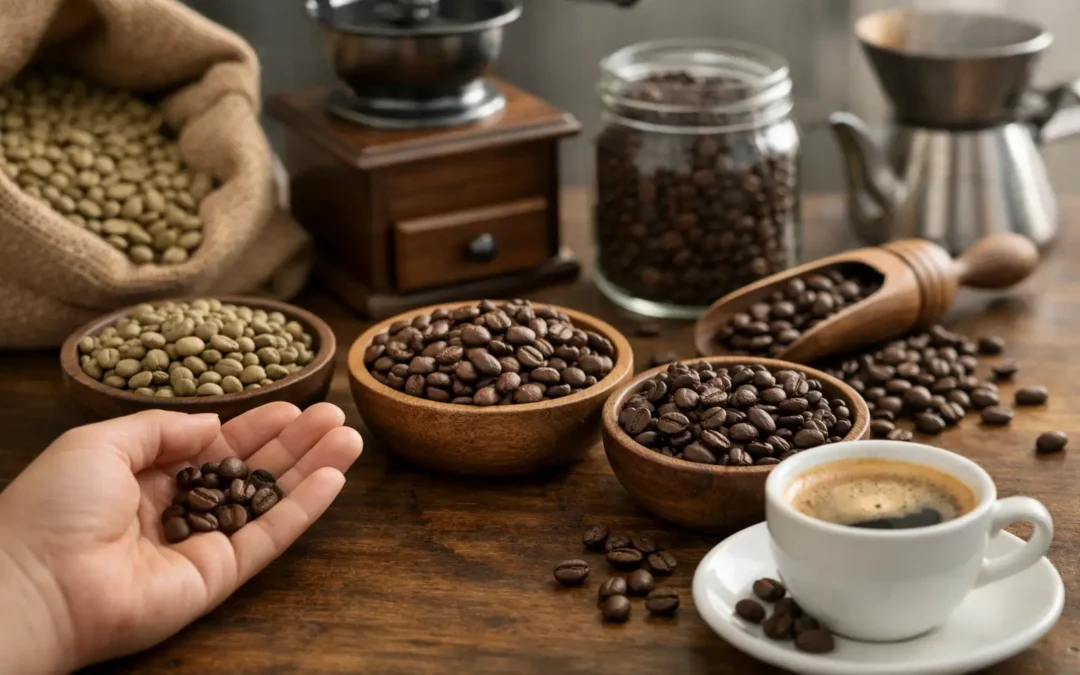
You can spend good money on a bag that looks beautiful, smells promising, and still end up with a flat, bitter cup at home. That usually happens when people buy beans by branding alone, not by understanding how to choose coffee beans for their taste, brew method, and routine. The right bag is not the fanciest one on the shelf. It is the one that matches how you drink coffee, how you brew it, and what flavours you actually enjoy.
For some people, that means a chocolatey, full-bodied espresso that cuts cleanly through milk. For others, it means a lighter roast with stone fruit, citrus or floral notes that shine in a filter brew. Neither is more correct. Good coffee starts with fit.
How to choose coffee beans without overcomplicating it
The easiest place to start is with your cup, not the label. Ask yourself what you want your coffee to taste like in the morning. Rich and comforting? Bright and juicy? Smooth and sweet? Once you know that, the details on the bag begin to mean something useful.
If you mostly drink flat whites, lattes or cappuccinos, look for beans with chocolate, caramel, nut or toffee notes. Those flavours tend to hold their shape in milk and still taste balanced. If you drink black coffee, especially as pour over or batch brew, you can explore lighter and more delicate profiles such as berries, citrus, florals or tea-like sweetness.
That is why two people can try the same coffee and feel very differently about it. A bean that tastes lively and elegant as a black coffee might seem too sharp in milk. A darker, richer blend that tastes perfect in espresso may feel heavy if you are chasing a cleaner filter cup. Choosing well is less about chasing a trend and more about matching the bean to the way you actually drink.
Start with roast level
Roast level shapes flavour more than most people realise. It is not the only factor, but it is often the quickest clue.
Light roasts usually highlight the character of the origin. You will notice more acidity, more fruit, and more delicate aromatics. They can be excellent for filter coffee, AeroPress and drinkers who like definition in the cup. The trade-off is that they can be less forgiving if your grinder or brewing method is inconsistent.
Medium roasts tend to be the sweet spot for a lot of households. They keep some origin character while adding more body and sweetness. You might taste chocolate, caramel, red fruit or roasted nuts, depending on the coffee. They are versatile and work well across espresso and many manual brew methods.
Dark roasts bring deeper roast-driven flavours such as cocoa, smoke and bittersweet intensity. Some people love that punch, particularly in milk-based drinks. Others find it masks the bean’s natural character. Darker is not automatically stronger in caffeine, despite the common myth. It simply tastes more roasted.
If you are buying for an office, a household with mixed preferences, or a machine that is used every day, a medium or espresso-style roast is often the safest place to begin.
Origin matters, but not in a snobby way
Coffee origin tells you where the beans were grown, and that affects flavour. Climate, altitude, processing and variety all influence what ends up in the cup.
Beans from Brazil are often known for chocolate, nuts and low acidity, which makes them popular in espresso blends. Colombian coffees can be balanced and sweet with caramel, red fruit and gentle citrus. Ethiopian coffees are often more floral or fruit-forward, while coffees from Guatemala or Costa Rica can sit beautifully in the middle with sweetness, structure and clarity.
Single origin coffees come from one region, farm, or cooperative and are chosen to showcase a distinct flavour profile. They are brilliant if you enjoy tasting the personality of a coffee. Blends combine beans from different origins to create a more consistent and often more approachable cup. A well-built blend can be reliable, balanced and very satisfying, especially for milk coffee or busy weekday brewing.
There is no rule that says single origin is better. Sometimes a blend is exactly what you want – steady crema, solid body, and flavour that lands every morning without fuss.
Freshness is not a small detail
If there is one thing to check before buying, it is the roast date. Freshly roasted beans make a real difference to aroma, sweetness and crema. Coffee is at its best within a practical window, not forever.
For espresso, beans are often at their best a few days after roasting and can perform beautifully for several weeks after that, depending on storage. For filter coffee, a slightly different sweet spot can apply, but the point remains the same: freshness matters. If a bag only shows a best-before date and gives you no clue when it was roasted, you are guessing.
That does not mean beans should be used the same day they were roasted. Coffee needs a little time to rest and release gas. But if you are buying beans for flavour, look for transparency around roasting and buy in quantities you can actually finish while they are still tasting lively.
Small-batch roasting is especially helpful here because it shortens the gap between roasting and brewing. You are not just buying coffee. You are buying a fresher start to every cup.
Match the bean to your brew method
A bean can be excellent and still disappoint if it is not suited to your setup.
For espresso machines, look for beans roasted with enough development to create body, sweetness and balance under pressure. If you love milk drinks, choose something with cocoa, caramel or nut-driven notes. For stovetop brewing, similar profiles usually work well.
For plunger, AeroPress, V60 or batch brew, you have more room to enjoy lighter and more expressive coffees. Floral and fruit-led beans can feel more open and layered in these methods. If your grinder is basic or your technique varies from day to day, a medium roast may give you a better and more forgiving result than a very light one.
This is where practical honesty helps. The best bean for a skilled home barista with a dialled-in grinder is not always the best bean for a busy office kitchen or a household trying to get out the door by 8 o’clock.
Read tasting notes like a guide, not a promise
Tasting notes are useful, but they are not a guarantee that your cup will taste exactly like blueberry jam, orange blossom or hazelnut praline. They are there to point you in the right direction.
If you already know you enjoy classic coffee flavours, start with notes like chocolate, toffee, brown sugar, almond or malt. If you want something brighter, look for citrus, berries, stone fruit or florals. If acidity tends to put you off, avoid coffees described as sharp, winey or highly acidic.
A good label should make choosing easier, not more confusing. Clear flavour notes, roast style, origin details and brew recommendations all help you buy with confidence.
Price tells part of the story
Cheaper coffee is not always a bargain, and expensive coffee is not always right for you. Higher prices can reflect better sourcing, lower-yield farms, more careful processing and fresher roasting. That often translates to better flavour and consistency.
Still, value is about suitability as much as cost. If you want a dependable everyday espresso for the office, you may get more enjoyment from a balanced blend than from a premium single origin that asks more of your grinder and palate. If coffee is part of your ritual and you love exploring flavour, spending a little more can open up a much wider range of experiences.
The smart move is to buy intentionally. A well-chosen bag that gets finished fresh is better value than an expensive one that sits in the pantry going stale.
Storage can protect a good choice or ruin it
Once you have worked out how to choose coffee beans, storing them properly keeps that effort from going to waste. Keep beans in an airtight container, away from heat, moisture and direct light. A cool cupboard is usually better than the fridge, where moisture and food odours can interfere.
Buy whole beans if you can and grind only what you need. Ground coffee loses aroma and flavour quickly. If you are investing in quality beans, grinding fresh is one of the easiest upgrades you can make.
If you go through coffee slowly, buy smaller bags more often rather than one giant bag that fades before you finish it. Freshness is part of quality, not a bonus feature.
The best choice is the one you will enjoy again tomorrow
There is real pleasure in learning your preferences and refining your cup. Maybe you start with a smooth, chocolatey blend for milk coffee and later branch into brighter single origins for weekends. Maybe your office needs something crowd-pleasing and consistent, while your home setup is where you experiment. Both are good decisions.
Coffee should feel rewarding, not intimidating. If a bean tastes great, suits your brew method, and makes your daily ritual better, that is the right choice. And once you find a fresh roast that does that consistently, keep it close – great coffee earns its place one cup at a time.
Try it fresh. Our OmniSoul blend is roasted in small batches in Adelaide, with delivery included Australia-wide and 10% off when you subscribe. Visit the shop.