
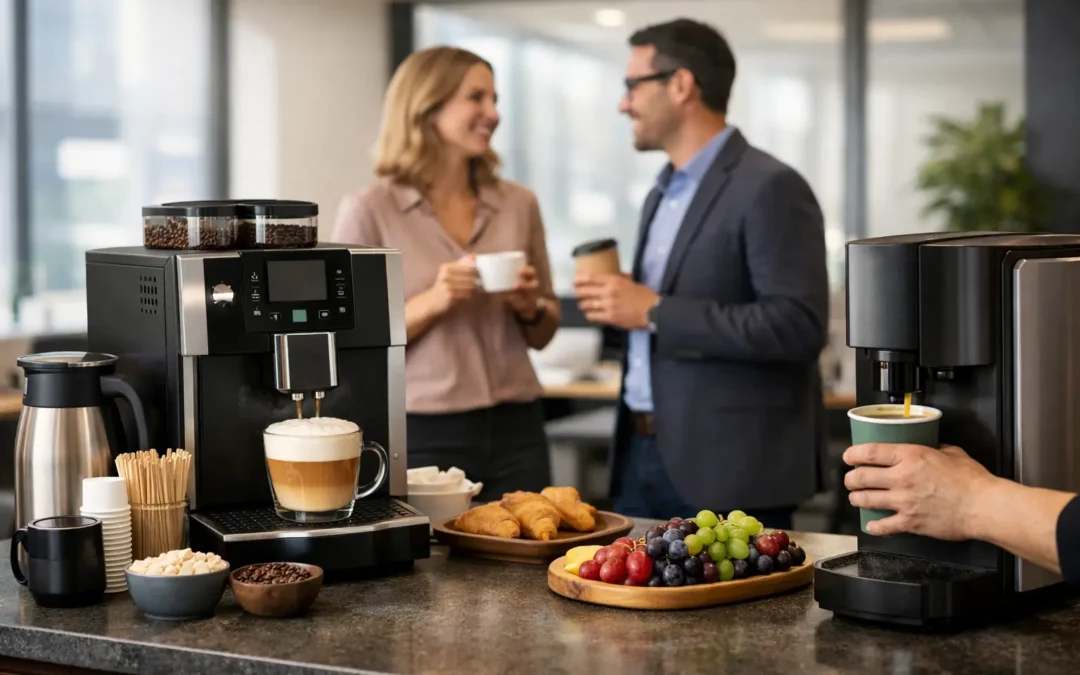
The quickest way to tell whether an office has thought seriously about staff experience is often sitting in the cup. Office coffee catering trends are moving well beyond stale instant jars in the kitchenette and the usual pod machine compromise. Workplaces want something fresher, more polished and far more enjoyable – not as a gimmick, but as a practical part of culture, hospitality and day-to-day productivity.
That shift is changing what employers, office managers and event organisers expect from coffee service. Good coffee at work is no longer just a perk for flashy launches or end-of-year functions. It is becoming part of how businesses welcome teams back on site, host clients, reward staff and add energy to ordinary mornings without adding another thing to manage internally.
What office coffee catering trends are really responding to
The biggest change is simple: people know what good coffee tastes like now. Staff who happily order a flat white from a specialty café before work are rarely excited by burnt beans, tired milk or temperamental office machines. Expectations have lifted, and office coffee service has had to lift with them.
At the same time, many workplaces are trying to make the office more appealing in a hybrid work environment. Better coffee has become part of that equation. Not because coffee alone will transform attendance, but because it sends a clear message – this workplace cares about quality, comfort and the details that shape the day.
There is also a practical side. Traditional office setups can be messy to maintain. Machines break down, beans go stale, milk runs out and nobody wants to be the person troubleshooting a grinder at 8.30 on a Monday morning. Catering models that bring trained baristas, fresh beans and a full mobile setup on site solve that problem neatly.
Café-quality service is replacing DIY office coffee
One of the strongest office coffee catering trends is the move away from relying entirely on in-house equipment. For many businesses, especially those hosting team days, client events or promotional activations, a mobile coffee service makes more sense than buying and maintaining expensive machinery.
The appeal is obvious. A proper coffee setup arrives ready to go, staffed by people who know extraction, milk texture and service flow. The drinks are consistent, the line moves quickly, and the experience feels elevated from the first pour. That matters in workplaces where presentation counts.
This does not mean every office should ditch its machine tomorrow. For some teams, an everyday bean supply and simple in-house setup still works well. But when the goal is to impress guests, treat staff or create an atmosphere, mobile barista service is becoming the preferred option because it removes the weak links.
Fresh roasting matters more than branding alone
Another clear shift is that businesses are asking better questions about what is actually being served. It is not enough for coffee to arrive in nice cups with a polished machine in the background. More clients want to know where the beans come from, how fresh they are and whether the flavour profile will suit a broad office crowd.
That is a welcome change. Freshly roasted specialty coffee brings a completely different result in the cup – cleaner sweetness, better balance and more character. In an office setting, the sweet spot is usually coffee that feels approachable and generous rather than overly niche. People want richness and comfort, but they still notice when the quality is there.
For caterers, this means the product matters just as much as the setup. A sleek van and quick service are only half the story. The beans need to deliver.
Flexibility is becoming part of the service
Offices are no longer all running on the same schedule, and coffee catering has adapted. Some businesses need a high-volume burst for a 9 am all-hands meeting. Others want a van on site for several hours during a staff appreciation day, conference break or brand activation. More clients are looking for service that can flex around timing, headcount and location rather than a one-size-fits-all package.
This is where mobile coffee catering has a real advantage. It can pop up in a city office forecourt, a warehouse car park, a community event or a corporate campus without asking the host to reorganise half the building. That mobility makes quality coffee far easier to deliver where people actually are.
The trade-off, of course, is planning. Popular dates fill quickly, and larger activations need room, access and a realistic service window. The best results usually come when organisers think of coffee as part of the event flow rather than an afterthought added the week before.
Coffee is being used more deliberately in workplace culture
A few years ago, office coffee often sat in the “nice extra” category. Now it is being used much more intentionally. Employers are bringing in barista coffee to mark milestones, support recruitment days, welcome interstate teams, soften early starts and add warmth to internal events that might otherwise feel routine.
That matters because coffee creates a natural pause point. People gather, chat, meet someone new and settle into the day. In practical terms, it helps with hospitality. In human terms, it helps create a workplace that feels looked after.
The strongest office coffee catering trends are not really about caffeine. They are about experience. A well-run coffee station changes the energy of a room. It gives staff and guests a familiar ritual, done well, without the usual queue down the street or the disappointment of a mediocre machine coffee from the kitchen.
Custom branding is growing, but quality still has to lead
For marketers and event teams, branded coffee moments are becoming more popular. Custom cups, signage and polished mobile setups can turn a standard refreshment station into something more memorable at launches, expos and public-facing events.
Done properly, this works brilliantly. Coffee has built-in foot traffic, and people are more likely to engage when they are offered something genuinely enjoyable. But branding only works when the drink itself is worth waiting for. If the coffee feels average, the activation feels average too.
That is why the best branded coffee experiences combine presentation with real specialty standards. The visual side draws people in. The flavour is what makes the interaction stick.
Simpler menus are winning over bloated options
Another notable trend is the move towards tighter, smarter menus. Offices do not usually need twenty drink variations and obscure syrups to keep people happy. They need a menu that covers the favourites quickly and well – flat whites, lattes, cappuccinos, long blacks, hot chocolate and a few thoughtful alternatives.
This is not about limiting choice for the sake of it. It is about service quality and pace. A streamlined menu keeps queues moving and ensures each cup is made properly. In busy workplace environments, that balance matters more than novelty.
Of course, dietary needs still matter. Oat, almond and lactose-free options are increasingly expected, not exceptional. The same goes for decaf. Good catering now treats these as part of normal service rather than awkward add-ons.
Sustainability is moving from talking point to expectation
Sustainability has become a more serious consideration in office catering decisions, and coffee is no exception. Clients are paying more attention to cup waste, bean sourcing, milk choices and the environmental footprint of single-serve systems.
This is one reason mobile barista service can appeal to offices looking for a cleaner alternative to endless pods and disposable internal supplies. Depending on the setup, it can reduce waste, improve portion control and offer a more thoughtful service model. Businesses also like working with suppliers who care about product quality from roast to cup rather than treating coffee as a throwaway commodity.
That said, sustainability claims need to be practical, not just polished. Offices still need fast service and reliable logistics. The best providers are the ones who can improve the experience and reduce compromise at the same time.
What this means for Adelaide workplaces
For Adelaide businesses, these trends point in a clear direction. Coffee catering is becoming more local, more experience-driven and more quality-focused. Employers want service that feels easy to book, easy to run and genuinely worth offering. They also want providers who understand hospitality, timing and the difference between simply serving coffee and creating a polished moment.
That is exactly why specialist operators are standing out. A coffee partner that roasts its own beans, understands flavour and can bring a full café experience on site offers something far stronger than a generic catering add-on. LygonCoffee sits naturally in that space, especially for workplaces that want freshness, reliable service and a cup that tastes like it was made by someone who truly cares.
The most effective coffee catering is not trying to imitate a café badly inside an office kitchen. It is bringing the best parts of café culture directly to the workplace – fresh beans, skilled baristas, warm service and that first sip that tells people straight away they are in good hands.
If you are planning staff hospitality, a client event or simply want to make office days feel more inviting, the smart move is to think beyond equipment and ask what kind of coffee experience people will actually remember.
Want better coffee at work? LygonCoffee roasts in small batches in Adelaide and supplies workplaces with fresh beans and barista-style setups. Explore our office coffee options.