
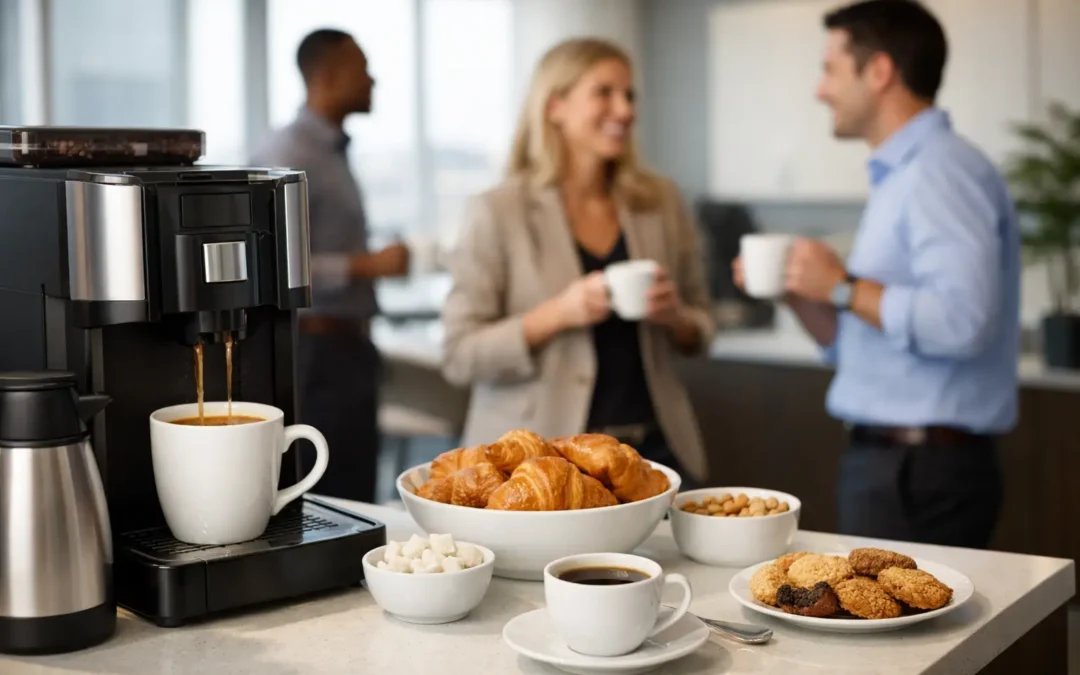
A flat white from a dusty pod machine is not fooling anyone. If your team starts the day with burnt coffee, empty milk cartons and a queue at the lift to get out for a decent cup, this office coffee solutions guide is for you. Good workplace coffee is not a perk people barely notice. It shapes the rhythm of the day, lifts morale and says something clear about how your business looks after its people.
Why an office coffee solutions guide matters
Office coffee is often treated like a box-ticking exercise. Buy a machine, order whatever beans are easiest, and hope no one complains too loudly. The problem is that coffee sits right at the intersection of culture, convenience and quality. When it is done well, it gives people a reason to pause, connect and reset. When it is poor, it becomes a daily frustration that quietly drags on the mood of the whole office.
There is also a practical side. Teams want speed in the morning, consistency across the week and options that suit different tastes. Office managers want something easy to maintain. Business owners want value, not endless servicing costs or a benchtop setup that still sends everyone out to a cafe by 9 am. The right solution depends on the size of your team, how often people are on site, and whether you want coffee to be a simple utility or a genuine part of the workplace experience.
The main office coffee solutions to consider
Most workplaces end up choosing between four paths: pod machines, traditional bean-to-cup machines, manual espresso setups, or mobile barista service. Each has its place, but they deliver very different results.
Pod machines
Pod systems are popular because they feel easy. They are compact, quick to install and simple for almost anyone to use. For a very small office with low coffee demand, they can seem like the obvious answer.
The trade-off is in the cup. Pod coffee is built for convenience first, freshness second. That means less aroma, less body and far less character than freshly ground speciality beans. Costs can also creep up over time, and the waste adds up quickly. If your business cares about quality, sustainability or giving staff something they will actually look forward to, pods tend to hit a ceiling pretty fast.
Bean-to-cup machines
Bean-to-cup machines are the middle ground many offices aim for. They grind fresh beans on demand and can produce espresso-based drinks with a press of a button. For medium-sized teams, this can be a strong option because it offers more flavour than pods without requiring trained staff to run it.
Still, not every bean-to-cup setup delivers cafe-quality coffee. The machine matters, but the beans matter just as much. Freshly roasted speciality coffee will always get you closer to a richer, cleaner cup than stale bulk stock. Maintenance is another factor. If the machine is not cleaned properly or milk systems are neglected, quality drops fast.
Manual espresso machines
A proper espresso setup can produce excellent coffee in the office, but it is rarely the easiest road. It needs good equipment, fresh beans, a quality grinder and someone who knows what they are doing. In the right environment, that can be brilliant. Some offices have a coffee enthusiast on staff who loves the ritual and can pull consistently good shots.
For most workplaces, though, this setup introduces too much variability. Great coffee one day, rushed and watery coffee the next. It can also create bottlenecks in busy periods. If your office wants a hands-on coffee culture and has the time to support it, manual espresso can work. If you need reliability with minimal fuss, there are smoother ways to get there.
Mobile barista coffee service
This is where the conversation changes. A mobile coffee service brings barista-made drinks directly to your workplace, function or activation, without asking your team to manage equipment, stock or cleanup. It is less about owning a machine and more about delivering the full coffee experience where people already are.
For staff appreciation days, corporate gatherings, launch events or regular office visits, this option gives you freshness, speed and hospitality in one go. The difference is immediate. Instead of a machine humming in the corner, you have the aroma of freshly brewed coffee, a proper menu and drinks made to order. It feels generous because it is. It also removes the usual compromise between convenience and quality.
How to choose the right office coffee solution
The best office coffee setup starts with a simple question: what problem are you actually trying to solve?
If your team only wants a basic caffeine option for a handful of people, a small machine may be enough. If people complain about taste, leave the office for coffee runs or gather around the one nearby cafe every morning, the issue is bigger than access. It is quality and experience.
Volume is another key factor. A team of eight has very different needs from a workplace of eighty. Smaller groups may be fine with a low-maintenance bean setup and regular fresh bean delivery. Larger teams often need something that handles demand without long waits, especially during meetings, early starts or special events.
Then there is frequency. Some businesses need an everyday solution. Others need coffee to shine on particular occasions, like a staff breakfast, a client open day or a branded activation. That is where a mobile coffee van can make more sense than investing in machinery that sits underused most of the time.
Budget matters too, but it helps to think beyond the sticker price. A cheap machine with poor coffee can still cost you through waste, low staff satisfaction and constant off-site coffee runs. A higher-quality solution often pays back in consistency, convenience and a better workplace feel.
Fresh beans change everything
Even the best machine cannot rescue old coffee. If your office setup relies on beans, freshness should be near the top of your checklist. Small-batch roasted beans offer more clarity, sweetness and depth in the cup. You can taste the difference, but you also smell it the moment they are ground.
This is especially important in workplaces trying to lift the standard of their daily coffee without overcomplicating things. Fresh roasted beans give bean-to-cup and espresso machines their best chance to perform. They also create a stronger sense of care. Staff notice when the coffee tastes intentional rather than generic.
A blend designed for everyday drinking can be ideal in an office setting because it delivers consistency and broad appeal. You want something smooth, balanced and easy to enjoy black or with milk. The goal is not to impress one coffee purist in accounting. It is to make the daily cup genuinely good for the whole team.
When a mobile coffee van makes the most sense
Some occasions call for more than an office machine ever can. If you are hosting a corporate event, welcoming clients, rewarding staff or adding energy to a campaign, barista-made coffee on site creates a different kind of atmosphere. It is practical, but it also feels polished and memorable.
This is particularly useful when your workplace does not want the burden of installing and managing equipment full-time. A mobile service gives you coffee exactly when it matters most. You get trained baristas, cafe-style service and drinks made fresh on the spot, all without turning your kitchen into a service station.
For Adelaide businesses, this can be a smart way to offer premium hospitality while keeping logistics simple. Lygon Coffee is one example of how a local speciality roaster and mobile coffee team can cover both sides of the equation – fresh beans for everyday supply and on-site barista service when you want coffee to do more than just keep people awake.
The details people forget
Milk options, cup sizes, cleaning routines and restocking schedules may not be the glamorous part of coffee planning, but they shape the day-to-day result. A great office coffee solution should account for how people actually drink coffee, not how you imagine they might.
That means thinking about dairy and non-dairy milk, whether your team prefers espresso-based drinks or simple filter coffee, and who is responsible for keeping things running. If no one owns the process, quality usually slips. The best systems are the ones that match your team’s habits and can be maintained without drama.
It is also worth considering whether coffee is part of your brand experience. For some businesses, offering clients or guests a properly made coffee says as much as the reception desk or meeting room does. It signals care, confidence and attention to detail.
The best office coffee setup is the one people actually use and enjoy. Not the one that looked good in a catalogue, and not the cheapest one someone could sign off before lunch. Start with taste, think honestly about how your workplace runs, and choose a solution that makes every cup feel a little more like a highlight than an afterthought.