
Many cities now host nomadic coffee vans that change how you access specialty coffee, bringing quality brews, flexible locations, and local ties while prompting new regulations and business models.
Key Takeaways:
- Nomadic coffee vans expand access to specialty coffee by serving underused locations, events, and workplaces, bringing convenience and variety to customers who skip traditional cafés.
- Mobile vendors exert competitive pressure on brick-and-mortar cafés, prompting changes in pricing, hours, and community engagement while maintaining lower overhead and operational flexibility.
- Entrepreneurs gain low-cost entry to test concepts and build brands, and municipal authorities face growing need to update vending rules and public-space policies.
The Evolution of the Mobile Barista
Shifts in vendor ambition mean you expect café-grade drinks from roving vans, with precise extraction times, water specs and single-origin offerings replacing generic pours.
Observing customer patterns, you see mobile operations schedule pop-up hours to match foot traffic and events, adapting menus and service speed without sacrificing shot consistency.
Transitioning from utility carts to high-spec mobile laboratories
Operators convert former utility carts into compact labs where prosumer grinders, PID boilers and filtered water systems let you replicate shop-standard brewing on the move.
Space planning forces you to optimize workflow, placing tamping stations, waste bins and storage so every shot remains consistent under tight spatial constraints.
The influence of specialty coffee standards on street vending
Standards from specialty roasters require you to follow roast-date windows, dosing charts and extraction parameters, increasing demand for traceability and clear flavor profiles at street level.
Training programs teach you tasting protocols and calibration routines, while supplier partnerships deliver micro-lots and brewing specs that help preserve cup quality across shifting locations.
Economic Drivers of the Nomadic Model
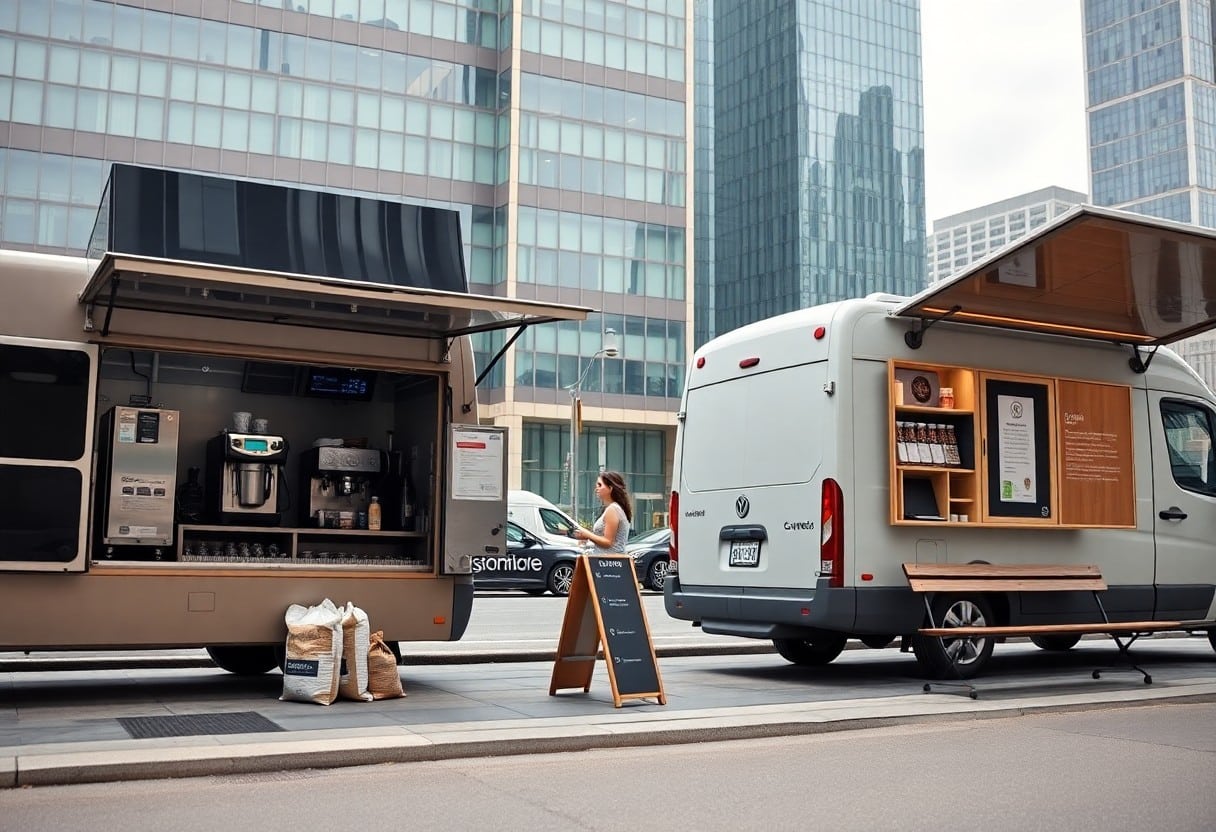
You see how nomadic vans shift the cost base away from long-term leases and high fixed overhead, converting many expenses into variable costs tied to hours, routes, and events so you can scale more cautiously.
Operating these units lets you test locations, refine offerings based on real-time foot traffic, and redeploy assets quickly, which reduces the financial risk of committing to expensive, static retail space.
Mitigating the risks of high-rent urban real estate
By relocating daily or seasonally you avoid vacancy costs and lease escalations, matching supply to demand and minimizing exposure when a neighborhood softens or rents spike.
Lowering entry barriers for independent artisanal roasters
Smaller upfront investment in a van or shared kitchen allows you to start roasting or selling branded coffee with limited capital, proving product-market fit before investing in a storefront.
Access to direct customer feedback at regular stops and events lets you iterate blends, pricing, and packaging rapidly, while pop-up visibility helps you secure wholesale accounts or crowdfund a permanent roastery.
Reimagining the Urban “Third Place”
Urban mobile cafés shift how you claim brief public moments, turning sidewalk waits into meaningful exchanges and micro-meetups that compete with fixed cafés for attention.
Mobile vendors also plug gaps where permanent “third places” are missing, offering varied atmospheres that adapt to your routine and local rhythms.
Transforming underutilized public spaces into social hubs
When a van parks near a quiet plaza you get chances to meet neighbors and small-business owners in settings that previously felt empty.
Pop-ups add programming like music or local art that encourages you to linger, making previously overlooked squares feel curated and inviting.
The role of transience in fostering hyper-local community engagement
Transient coffee stalls create urgency that nudges you into repeated, short interactions, building familiarity faster than many permanent spots.
Short-term arrivals change foot traffic patterns so you discover nearby amenities and conversations that strengthen ties with a very specific block or street.
Neighborhoods with rotating caffeine providers often see micro-economies emerge, and you benefit from curated offerings and vendors who tailor services to local tastes.

Technological Innovations in Off-Grid Brewing
Mobile brewing tech condenses commercial extraction and thermal stability into transportable rigs, so you can deliver consistent shots and extended service windows without a fixed kitchen.
Advancements in portable precision espresso equipment
Precision portable espresso units now pack PID control, volumetric dosing and pressure profiling, allowing you to replicate shop recipes and maintain consistency across routes.
Sustainable energy solutions for high-volume mobile operations
Solar arrays paired with high-capacity battery banks enable you to power grinders, boilers and point-of-sale systems through peak hours, reducing reliance on generators or shore hookups.
Battery management systems, efficient inverters and predictive load scheduling let you monitor consumption in real time and scale capacity as you expand routes or handle large events.
Cultural Impact and Consumer Perception
You find that nomadic coffee vans alter daily rituals by inserting curated pauses into your routes, turning corners into informal meeting points and creating micro-communities around consistent baristas. These mobile spots shift expectations, so you increasingly value small, authentic interactions over anonymous, algorithm-driven choices.
Communities adapt quickly, so you notice changing patron habits-weekday commuters chasing seasonal blends, creatives choosing spots for brief work sessions. Your perception of quality becomes tied to story and singular encounters rather than polished, corporate uniformity.
The appeal of the bespoke experience over corporate uniformity
Baristas in vans craft menus and moments tailored to locals, which teaches you to equate quality with person-to-person service and visible craft. That intimacy encourages repeat visits and faster word-of-mouth than broad marketing campaigns.
Choices you make shift from price and speed toward flavor nuance and maker story, so you tolerate short lines or waits for a handcrafted cup. The emphasis moves convenience toward meaningful, memorable encounters.
Nomadic branding as a symbol of urban agility and craft
Branding on a van signals adaptability, so you read visual cues-hand-painted logos, curated playlists-as indicators of authenticity and city-savvy craft. The brand feels active and responsive rather than static.
Mobility lets you associate brands with neighborhoods and moments, enabling you to follow a favorite maker across markets and seasons. Your loyalty becomes tied to movement and the narratives that form between stops.
Storytelling through menus, local collaborations and limited runs gives you tangible reasons to seek out a van; you collect experiences and narratives that big chains rarely provide, reinforcing a sense of local belonging.
Navigating Regulatory and Logistical Challenges
Regulatory complexity in many cities means you must map local codes, health rules and mobility permits; consult resources like Tamar Sharon The Case for Mediated Posthumanism for theoretical context, then translate mandates into concise checklists for inspections and risk mitigation.
Operators, you should build proactive relationships with enforcement and planners, prepare template applications and insurance packets, and track permit windows so pop-up schedules align with municipal cycles and reduce permit-related downtime.
Overcoming municipal zoning and licensing restrictions
Municipal rules often allow pilot schemes and special events, so you should pursue temporary permits, partner with neighborhood associations, and present clear safety and waste plans to increase approval odds and shorten review times.
Supply chain management for fluid retail locations
Supply chains for mobile coffee require timed micro-deliveries and compact inventory; you must prioritize local suppliers, set short reorder points, and use demand forecasts to avoid stockouts during peak shifts.
Routes, you should schedule deliveries around service peaks, use route-optimization tools to minimize idle time, and coordinate handoffs with micro-fulfillment hubs to keep perishables fresh and costs down.
Storage strategies like insulated bins, modular shelving, and cross-dock handoffs let you expand capacity without a fixed storefront; you should plan surge days, maintain backup coolers, and establish rapid-repair protocols for equipment failures.
Conclusion
Hence you should view nomadic coffee vans as practical catalysts for change in urban caffeine culture, offering convenient specialty brews, flexible service, and community touchpoints that alter where and how you consume coffee. Continued consumer demand and smart local policy will determine whether this trend matures into a lasting renaissance or remains a vibrant niche.
FAQ
Q: What exactly are nomadic coffee vans?
A: Nomadic coffee vans are mobile coffee businesses built into vans, trucks or trailers that serve espresso drinks, filter coffee and grab-and-go items. Operators range from single-barista ventures to micro-roasters that bring fresh beans directly to neighborhoods, offices and events. Popular setups include converted food trucks, popup carts and retrofitted vans with professional espresso machines and on-board grinders.
Q: Do nomadic coffee vans actually signal a renaissance in urban caffeine culture?
A: Signs point to a mini-renaissance: younger consumers value convenience, specialty coffee and unique experiences, and vans meet all three. Vans introduce more spontaneous consumption patterns, making high-quality coffee available outside traditional café hours and locations. The movement pushes cafés to rethink service, product ranges and community engagement rather than replacing them outright.
Q: How do vans compete with established brick-and-mortar cafés?
A: Price, speed and novelty give vans a competitive edge for commuters and event crowds. Cafés maintain advantages in seating, long-form service, water access and consistent infrastructure for complex menus. Partnerships and hybrid models, such as cafés operating their own vans or hosting popups, are increasingly common.
Q: What impact do mobile coffee vendors have on local communities and public space?
A: Vans expand access to specialty coffee in underserved neighborhoods and at outdoor gatherings. Social interaction often forms around van queues, creating micro hubs that can energize streets and parks. Regulatory control of public space and local business dynamics can create tension when vans cluster near brick-and-mortar shops.
Q: Are mobile coffee operations sustainable and ethical in sourcing?
A: Sustainability practices vary, with many operators prioritizing compostable cups, waste reduction and transparent sourcing. Small scale roasting and direct trade relationships allow some vans to offer high-traceability beans with lower freight impact. Energy use from generators and disposable ware remain environmental challenges for the sector.
Q: What business and regulatory challenges do operators face?
A: Permitting, zoning and health-code compliance present major hurdles depending on city rules. Insurance, vehicle maintenance and seasonal weather also affect profitability and continuity of service. Successful operators combine strong branding, efficient service workflows and clear relationships with local authorities.
Q: Will the trend endure or is it a passing fad?
A: Long-term viability depends on consistent quality, regulatory adaptation and the ability to integrate with urban rhythms. If operators scale responsibly and invest in supply chains and community ties, vans can become a durable complement to cafés rather than a passing fad. Urban coffee culture will likely diversify, with stationary cafés, micro-roasters and mobile vendors coexisting and pushing each other to improve.