

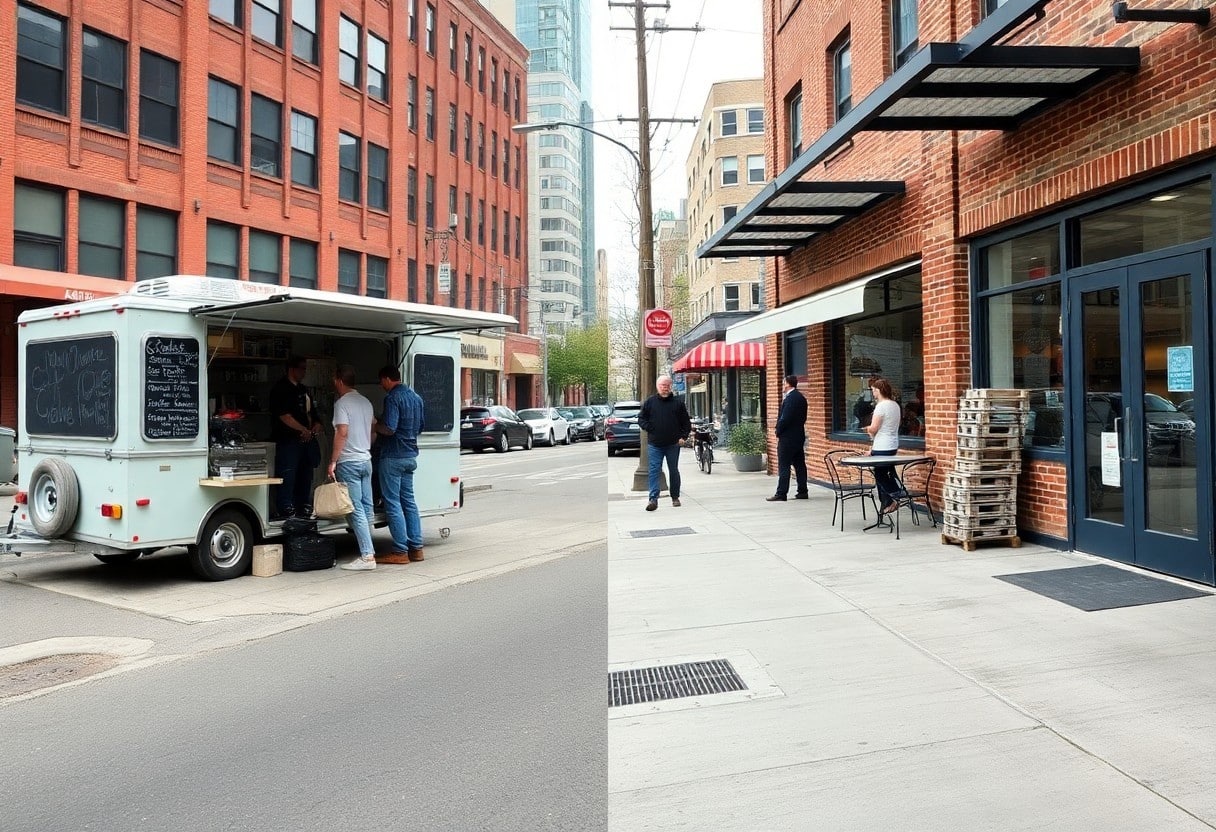
Just weigh mobile flexibility versus fixed location stability to decide which reaches more customers; mobile vans chase events and peak spots while cafés attract regular neighborhood traffic, helping you choose. Read detailed Pros and Cons of Coffeeshop Ownership: Mobile vs Brick- …
Key Takeaways:
- Mobile coffee vans reach a wider and more varied audience by moving to events, business districts, and high-footfall times, capturing customers across multiple locations.
- Stationary cafés build consistent local customer bases and repeat visits through a stable location, seating, amenities, and predictable hours.
- Customer reach depends on target demographics, location strategy, operating hours, and marketing; combining mobility with a fixed presence or pop-ups often yields the best overall reach.
Analyzing the Core Dynamics of Customer Reach
You evaluate customer reach by audience variety, visit frequency, and convenience; a mobile van secures transient, diverse contacts while a café attracts consistent, repeat business, so tactical choices depend on whether you prioritise breadth or depth.
Comparing cost per contact and conversion rates helps you decide which model scales with your goals; small location tests and loyalty tracking reveal whether moving locations or a fixed address better converts interest into regulars.
Geographic mobility versus fixed-point accessibility
Mobile vans let you chase peak demand and new neighborhoods, so you can tap events, offices, and campuses while adjusting hours to match foot traffic patterns.
Stationary cafés give you a predictable address where you can build community, accumulate local footfall, and rely on habitual visits that increase lifetime value.
The impact of visibility on brand awareness and recognition
Visibility on busy streets and social feeds makes you discoverable; a van draws curiosity through novelty and pop-up moments, while a café depends on consistent signage and a memorable storefront to register with locals.
Brand recognition grows when you repeat visual cues and customer experiences, so you should standardise menu design, uniforms, and social content to ensure customers link those cues to your quality.
The Mobile Coffee Van: Agility and Event-Driven Exposure
Mobile vans put you at the center of crowds, letting you chase peak foot traffic and pop-ups while testing new neighborhoods and concepts.
On weekdays you can set up near offices for commuter sales and weekends let you pivot to festivals, adjusting routes quickly to follow demand.
Capitalizing on high-density temporary markets and festivals
Events like markets and festivals concentrate customers into short windows where you can sell high volumes, raise awareness, and win repeat visitors with swift service.
Navigating seasonal shifts and time-of-day demand fluctuations
Seasonal shifts change where people gather; you may reduce hours in winter or target indoor venues to keep traffic steady.
Evening and morning peaks require different menus and staffing, so you offer quick breakfast options near transit at dawn and warmer drinks near nighttime gatherings.
The Stationary Café: Stability and Community Integration
Stationary cafés anchor you in a fixed catchment, letting you cultivate steady morning rush and neighborhood loyalty through consistent hours, visible signage, and predictable service quality.
Local presence allows you to schedule events, partner with nearby shops, and rely on repeat visits from commuters and residents who value a dependable spot for their daily routine.
Securing a consistent base of daily commuters and local residents
Commuters respond to speed and reliability, so you can optimize menu choices, payment flow, and staffing to capture peak-hour traffic and convert brief stops into regular patronage.
Establishing a “Third Place” environment for long-term customer retention
Creating a welcoming interior, comfortable seating, and predictable ambience gives you reasons for guests to linger and return, turning transactions into relationships.
Sustaining that environment means adjusting music, seating layouts, and loyalty perks to match local preferences so you can deepen connections and boost visit frequency over time.
Comparing Operational Barriers to Market Entry
| Mobile Coffee Van | Stationary Café |
|---|---|
| Lower fixed rent but higher vehicle and outfitting costs; you can phase purchases. | Higher fit-out and lease commitments; you must secure reliable foot traffic. |
| Flexible site testing and ability to chase events; parking logistics matter. | Stable site with predictable customers; location choice locks your catchment area. |
Initial capital investment and site selection logistics
Costs for a van concentrate on vehicle purchase, equipment, and branding, so you can scale spending as you validate routes and events.
Location for a café demands larger up-front lease and fit-out; you must analyze pedestrian counts and competitors before committing to a long-term site.
Regulatory constraints and licensing affecting service radius
Licenses for a mobile van include parking permits, street trading consents, and health certifications, which you must secure for each operating area.
Local zoning and event rules often limit where and when you can trade, so you should map permitted zones before planning daily routes.
Operationally, cross-jurisdictional restrictions and time-limited permits can compress your effective service radius, requiring you to prioritize high-yield stops and maintain clear records to avoid fines.
Marketing Strategies for Maximizing Audience Engagement
You should schedule targeted, location-based announcements and limited-time offers to keep regulars engaged and drive spontaneous visits to either your van or café; combine push notifications, email blasts, and local partnerships to match capacity with demand.
Consider testing different messaging for your van routes versus storefront days, tracking how you convert foot traffic and online clicks so you can refine schedules and promotions; simple loyalty incentives help turn first-time buyers into repeat customers.
Leveraging social media for real-time mobile location tracking
Use real-time stories, geo-tags, and pinned posts so your followers know your van’s exact location; prompt check-ins and live updates let you create urgency and shorten the path to purchase for customers nearby.
Utilizing local SEO and physical storefront presence for search dominance
Optimize your Google Business Profile, local citations, and review responses so customers find you when they search nearby; display accurate hours, images, and accessibility details to reduce friction and improve click-to-visit rates.
Track keyword trends and mobile search queries so you can tailor service pages and blog posts, and ask for reviews after visits to help improve rankings and social proof for both mobile and stationary formats.
Scalability and Long-Term Growth Potential
Scalability for your coffee business depends on capital, operational complexity and market saturation; a van lets you test new neighborhoods with lower upfront costs, while a café offers predictable capacity and easier team scaling.
Expansion through mobile fleet deployment versus multiple brick-and-mortar outlets
Mobile fleets allow you to expand incrementally with lower real-estate costs and faster route adjustments, whereas adding brick-and-mortar locations gives fixed presence, higher brand stability, and greater per-site overhead.
Assessing the lifetime value of customers in each business model
Comparing customer lifetime value shows cafés often deliver higher repeat spend per patron through loyalty programs and comfort, while vans generate broader reach but more episodic purchases that require you to convert casual buyers into regulars.
Retention tracking should focus on visit frequency, average ticket, and churn by channel; you can lower CAC-to-LTV ratios by offering subscriptions, localized promotions, or event catering that turn mobile encounters into sustained revenue.
Summing up
Drawing together, you should weigh reach versus depth: a mobile coffee van can reach more varied customers by moving to events, business districts, and commuting hubs, while a stationary café builds steady local traffic and stronger repeat business. If you aim to maximize geographic reach and flexibility, choose a van; if you seek concentrated daily volume and brand presence, choose a café.
FAQ
Q: What primary factors determine customer reach for a mobile coffee van versus a stationary café?
A: Location, visibility, operating hours, and target audience shape customer reach for both formats. A mobile van can appear at high-footfall events, business districts, and changing neighborhoods, while a café relies on a fixed spot, street access, and local foot traffic. Pricing, product variety, and service speed influence how often customers return. Customer convenience, such as quick takeaway versus a sit-down experience, also affects who each model attracts.
Q: Can a mobile coffee van reach more customers than a stationary café?
A: A mobile van can reach more customers in volume temporarily by moving to events, office parks, and transit hubs where demand concentrates. A café can build steady, repeat business and capture nearby residents, workers, and regulars who prefer a consistent location. Seasonal spikes and special events often favor vans, while consistent daily traffic favors cafés. Measurement of reach depends on whether the goal is short-term exposure or long-term customer base.
Q: How does location flexibility of a van compare with the fixed advantages of a café?
A: A van gains flexibility by shifting to locations with peak demand and testing multiple neighborhoods with low initial overhead. A café gains predictability, the ability to create a branded space, and passive discovery from regular passersby. Costs for prime locations differ: vans incur permits and time costs moving, cafés pay rent and utilities for a permanent spot. Choice depends on whether the owner values reach variability or stable local presence.
Q: What role do operating hours and event presence play in expanding customer reach?
A: Extended hours and presence at morning rush, lunch, and evening events increase a van’s exposure by meeting customers in different routines. A café that opens early and stays open late captures multiple dayparts and builds habitual visits. Participation in festivals, markets, and corporate catering boosts short-term visibility for vans and can introduce new customers to cafés through pop-ups. Strategic scheduling and event selection translate directly into more customer touchpoints.
Q: How do marketing and digital channels affect reach for vans and cafés?
A: Social media, location-based ads, and real-time updates are especially powerful for vans because customers need to know where the van will be. Cafés benefit from consistent local SEO, review sites, and loyalty programs that encourage repeat visits. Cross-promotion, collaborations, and online ordering drive reach for both formats. Clear messaging about location and hours reduces friction for customers trying to find either option.
Q: Which customer segments are easier to reach with a van versus a café?
A: Commuters, event-goers, and office workers are easier to reach with a van that brings coffee to their path. Students, remote workers, and locals who want seating and ambiance are easier to reach with a café. Tourists and casual passersby may choose either depending on convenience and signage. Matching product style-quick grab-and-go versus relaxed sit-down-aligns the business with the most reachable segments.
Q: Which option offers better long-term customer retention and growth in reach?
A: A café typically builds stronger long-term retention because of consistent location, atmosphere, and opportunities for loyalty programs and community ties. A van can grow reach rapidly by testing markets and scaling presence across multiple spots, but retaining customers long-term requires repeat appearances or expanding to multiple vehicles or fixed locations. Combining both approaches-using a van to promote a café or adding pop-ups-can maximize both immediate reach and long-term retention.