
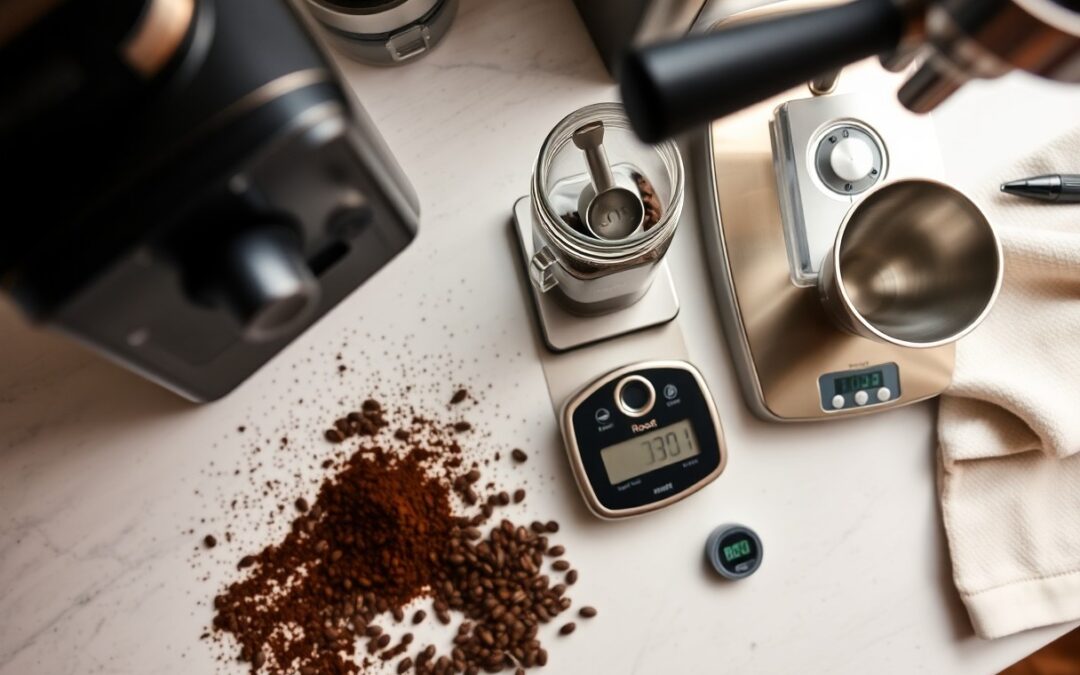
You can preserve peak coffee bean freshness by storing beans in an airtight, opaque container, keeping them cool and dry, and grinding only before brewing; rotate stocks and buy smaller batches to maintain flavor consistency.
Key Takeaways:
- Store whole beans in an opaque, airtight container placed in a cool, dark spot away from heat, light, and moisture to slow staling.
- Grind beans immediately before brewing with a burr grinder to preserve volatile aromatics and adjust grind size for your brew method.
- Buy freshly roasted beans in small batches and use within 2-4 weeks of roast date; freeze only for long-term storage and portion to avoid repeated thawing.
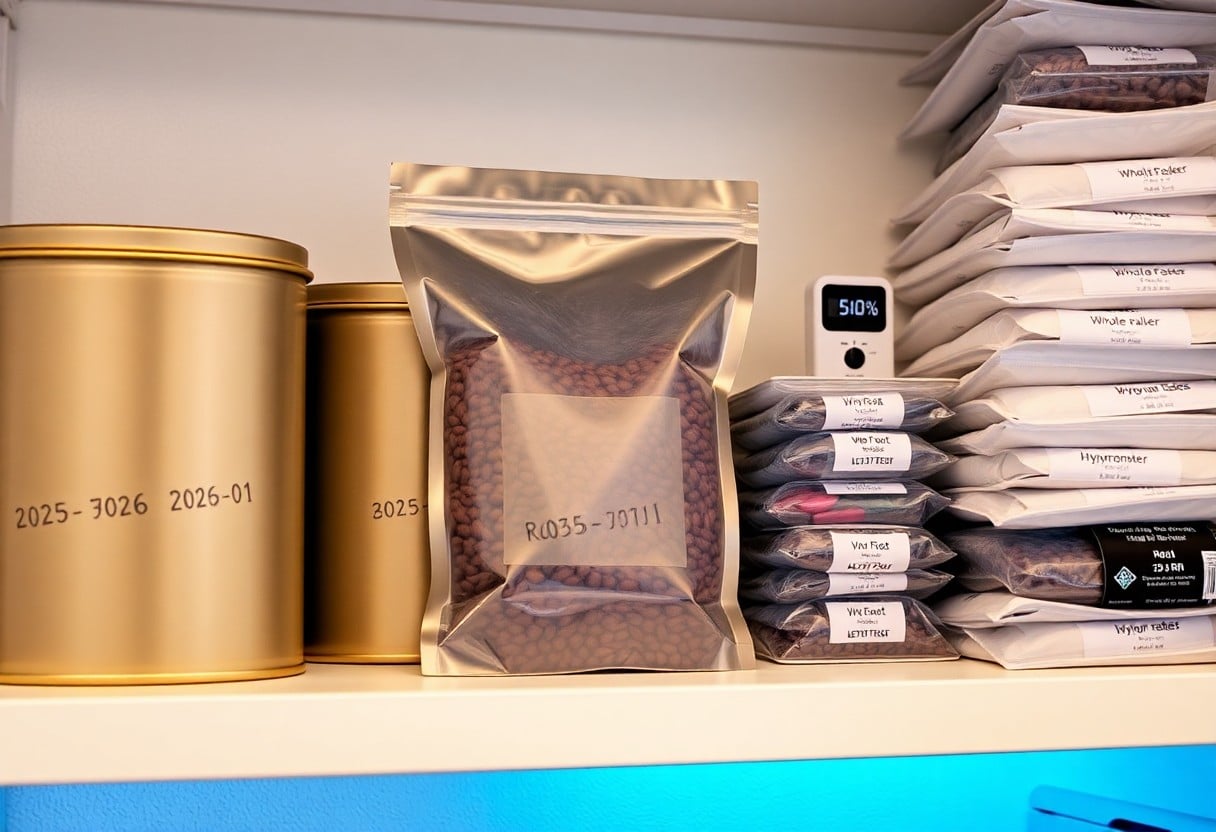
Critical Factors Affecting Coffee Bean Longevity
Beans lose their peak flavor through chemical changes after roasting, so you must limit contact with oxygen, moisture, light, and heat to preserve oils and aromatics.
- Oxidation and air exposure
- Moisture and humidity
- Light exposure
- Temperature fluctuations
- Time since roast
This approach focuses on airtight storage, cool dark placement, whole-bean use, and rotating stock to keep your brews consistently fresh.
Understanding Oxidation and Air Exposure
Oxygen reacts with roasted compounds and you will detect faded aroma and muted flavor as volatile oils break down; sealing containers and minimizing headspace slows this process.
Oxidation and Air: Quick Guide
| Effect | Action for you |
| Loss of aroma | Use airtight, opaque containers |
| Rancidity over time | Store whole beans, avoid grinding early |
| Moisture accelerates staling | Keep beans dry and consider desiccants |
The Role of Light and Temperature Fluctuations
Light degrades delicate aromatic compounds and you should keep beans in opaque containers away from windows and direct bulbs to prevent photodegradation.
Temperature swings promote expansion, contraction, and faster oxidation, so you should pick a stable, cool spot away from ovens and sunlit shelves.
Light & Temperature: Practical Tips
| Issue | What you do |
| Direct sunlight | Store in opaque jars or cabinets |
| Heat sources nearby | Move beans away from appliances and radiators |
| Frequent temperature changes | Choose a consistent pantry or cupboard |
How-To Select the Perfect Storage Container
Choose a container that blocks light and minimizes air exposure so you retain bean oils and aromatics longer; matte or colored materials prevent UV damage, tight lids reduce oxidation, and sizes that limit headspace help maintain freshness between uses.
Prioritizing Airtight and Opaque Materials
Glass jars with silicone seals give you visible inspection but must be stored in a cupboard; stainless steel or ceramic containers offer opaque protection that keeps flavor stable while airtight seals block oxygen and moisture that dulls taste.
Utilizing One-Way Degassing Valve Technology
Select bags or canisters with one-way degassing valves so you can seal freshly roasted beans without trapping CO2; this prevents swelling while keeping oxygen out and lets you store beans longer without loss of aroma.
Valve designs vary: flat disk valves are inexpensive while angled or multi-layer valves offer faster venting and longer durability, so you should choose based on roast level and storage length.
Monitoring CO2 release after roasting helps you determine when to seal or when to let beans rest; you can press gently to feel resistance and track aroma to decide the optimal moment for long-term storage.
Essential Tips for Maintaining a Stable Environment
Keep ambient temperature steady by storing beans away from heat sources and direct sunlight; your kitchen’s microclimates around ovens, windows, and refrigerator doors accelerate staling. Use opaque, airtight containers and divide large purchases into smaller portions to limit oxygen exposure and preserve aroma.
- Store beans in opaque, airtight containers.
- Avoid cabinets above the stove or near windows.
- Label containers with roast date and rotate stock.
- Limit how often you open primary storage to reduce air exchange.
Store jars or sealed bags in a cool, dark interior cabinet or pantry away from sinks and appliances that create heat or steam. Rotate by roast date and use smaller daily jars to reduce exposure. This preserves aromatic oils and slows oxidation for more consistent brews.
Identifying Optimal Storage Locations in the Kitchen
Choose interior pantries, lower cupboards, or a cabinet on the opposite side of the kitchen from the stove for the steadiest temperature and lowest light. Avoid above-fridge spots, windowed cabinets, and areas that experience frequent temperature swings.
Managing Moisture and Relative Humidity
Control moisture by keeping beans sealed and away from sinks, dishwashers, and humid appliances; moist air accelerates flavor loss and can cause clumping. Use food-safe desiccant packs or vacuum sealing if your kitchen stays humid, and never leave beans in their retail bag unprotected.
Monitor relative humidity with a small hygrometer and aim to keep it below 60%; use a dehumidifier or airtight storage when necessary to prevent moisture uptake that dulls flavor and promotes clumping. This helps maintain consistent extraction and flavor in every brew.
How-To Buy Coffee for Maximum Freshness
Scan packaging for a clear roast date and choose beans roasted within the last two weeks so you brew at peak flavor; avoid bags labeled only with “best by” or vague timelines.
Choose roasters that publish batch numbers and origin details, and pick bags with one-way valves or nitrogen flushing so you receive fresher beans and can schedule purchases around roast timing.
Interpreting Roast Dates and Batch Information
Read roast dates as your starting point for freshness, treating them as the moment flavor begins to develop rather than an expiration marker.
Pay attention to batch codes and ask the roaster when in doubt, since batch size and roast profile influence when you should drink the beans for the profile you prefer.
Selecting Whole Beans over Pre-Ground Varieties
Pick whole beans whenever possible because you control grind size and grind immediately before brewing, preserving volatile aromatics that ground coffee loses quickly.
Store whole beans in an opaque, airtight container away from heat and light, and grind only the amount you need right before you brew to maintain maximum freshness and aroma for each cup.
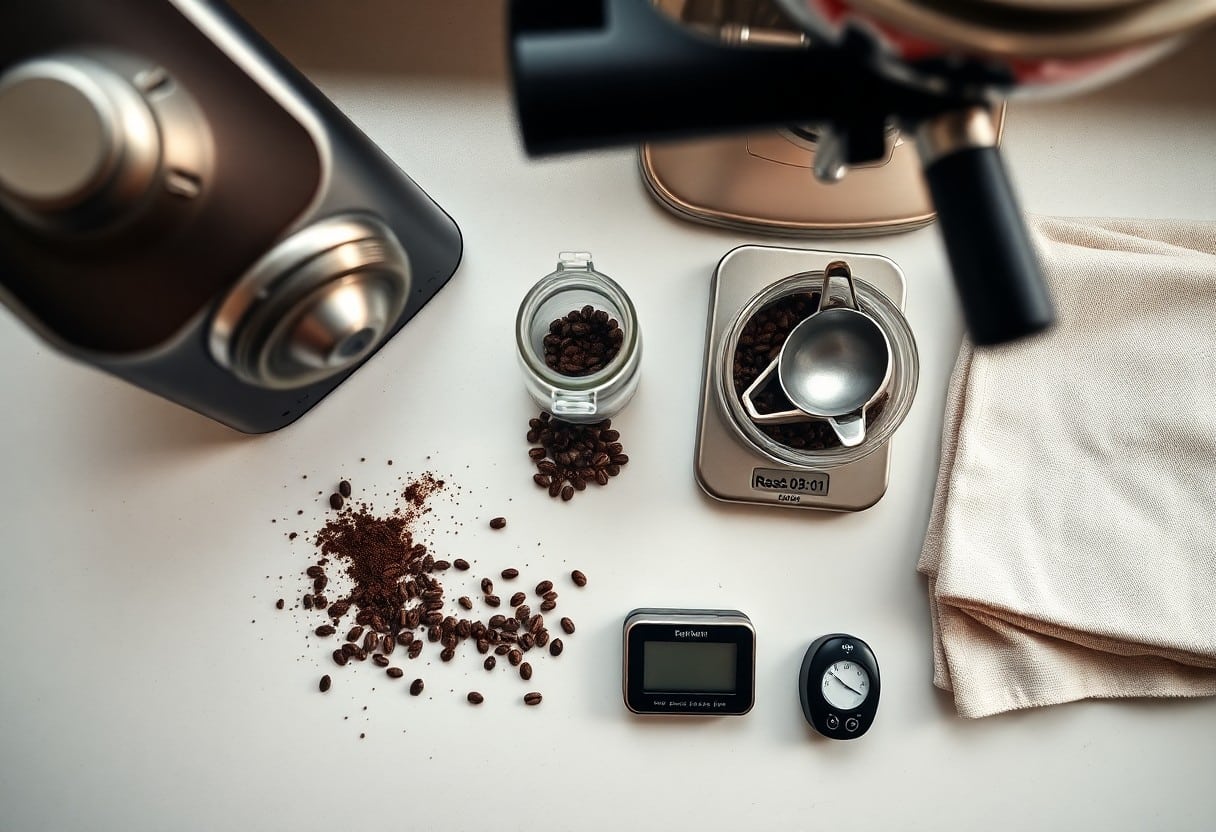
Practical Tips for Grinding and Preparation
You should grind just before brewing and match grind size to your method: consistent particle size eases extraction and preserves aroma.
- Use a burr grinder for uniformity
- Weigh beans to control dose
- Adjust grind in small steps while tasting
After grinding, you should brew within 60 seconds to capture maximum flavor and aroma.
Timing the Grind for Maximum Flavor Retention
Aim to grind within a minute of brewing so you preserve volatile aromatics; you’ll notice brighter, fresher cups when grind time is minimized.
Minimizing Exposure During the Brewing Process
Seal grounds and containers quickly and avoid leaving grounds exposed on the counter; you should preload portafilters or dose directly into filters to limit air contact.
Use short transfer paths and closed lids on grinders; you can tamp and start extraction immediately to reduce oxygen and heat affecting the flavor.

Advanced Preservation Methods for Bulk Storage
You can protect large coffee lots by segmenting, controlling environment, and choosing packaging that limits oxygen and moisture exposure to preserve peak flavor over time.
Store batches in stable, cool conditions and implement first-in, first-out rotation so you use older stocks before they degrade.
- Portion into smaller, dated packages to reduce repeated exposure.
- Choose airtight containers or vacuum bags for long holds.
- Use oxygen absorbers or inert-gas flushing when appropriate.
- Maintain consistent cool, dark storage and track inventory.
Preservation Options
| Method | Best use case |
|---|---|
| Vacuum sealing | Medium-term bulk with limited access |
| Deep-freezing | Long-term storage for surplus roasts |
| Opaque, airtight bins | Daily-use supply near brewing area |
Guidelines for Safe Deep-Freezing
Freeze beans only when fully cooled and dry, portion into moisture-proof bags, expel as much air as possible, and label bags with roast and freeze dates so you can rotate effectively.
Vacuum Sealing for Extended Shelf Life
Package beans in food-grade vacuum bags and remove excess headspace to limit oxygen exposure; you should date each pack so you can monitor age and quality.
Vacuum sealing works best when paired with inert-gas purging; if you can flush with nitrogen before sealing, you significantly slow oxidative staling.
Monitor seals for integrity and store vacuumed packs in a cool, dark area; once thawed or opened, use beans quickly to avoid moisture uptake and flavor loss.
Conclusion
The best way to keep beans fresh is to store whole beans in an airtight container away from heat, light, and moisture. Grind just before brewing so you preserve aromatic oils, and buy small batches to match your consumption.
The roast date matters; choose beans roasted within two weeks for optimal flavor, and keep containers in a cool, dark spot rather than the fridge. You will taste clearer acidity and fuller aroma when you control these variables consistently.

FAQ
Q: How do I choose beans for maximum freshness?
A: Buy whole beans with a clear roast date printed on the bag, not just a best-by date. Select beans roasted within the last 2-3 weeks for the most vibrant flavor; single-origin or blended choices depend on taste, not freshness. Purchase smaller quantities that match your consumption rate so you use beans while they are still near their peak.
Q: What is the best way to store beans after opening?
A: Transfer opened beans to an opaque, airtight container with a small footprint and store it in a cool, dry cupboard away from heat sources and direct light. Keep only a few days’ worth of beans in a daily-use container and leave the main supply sealed. Avoid storing beans in clear bags, near the oven, or in humid areas.
Q: Can I keep beans in the refrigerator or freezer to extend freshness?
A: Refrigeration introduces moisture and odors and is not recommended for routine storage. Freezing works for long-term preservation if done correctly: divide beans into single-use portions, seal airtight to prevent moisture and odor transfer, freeze once, then thaw completely before opening to prevent condensation. Avoid repeatedly removing and refreezing beans.
Q: Should I grind beans ahead of time or right before brewing?
A: Grind immediately before brewing for maximum aroma and flavor because grinding greatly increases surface area and speeds oxidation. Use a quality burr grinder for consistent particle size. If pre-grinding is unavoidable, grind only what you will use within a few hours and store it in a small airtight container.
Q: How long after roasting are beans at their best?
A: Allow most beans to degas for 24-72 hours after roast before brewing for optimal flavor development; lighter roasts often benefit from slightly longer rest, darker roasts can be brewed sooner. The most favorable flavor window typically spans about 3 days to 2-3 weeks after roast, although beans remain usable beyond that with diminishing complexity.
Q: How do grinder type and grind consistency affect perceived freshness?
A: A burr grinder delivers uniform particle size and minimal heat compared with blade grinders, producing clearer extraction and preserving nuanced flavors that signal freshness. Inconsistent grind creates over- and under-extraction that can mask freshness, so keep your grinder clean and calibrated for the brew method you use.
Q: What are the signs that beans have gone stale or past their prime?
A: Stale beans smell flat or like cardboard, taste dull or one-dimensional, and produce weak crema in espresso. Surface oil can indicate older dark roasts but does not always mean the beans are spoiled. Perform a quick aroma and small-brew taste test; if the cup lacks brightness and complexity, replace the beans.