
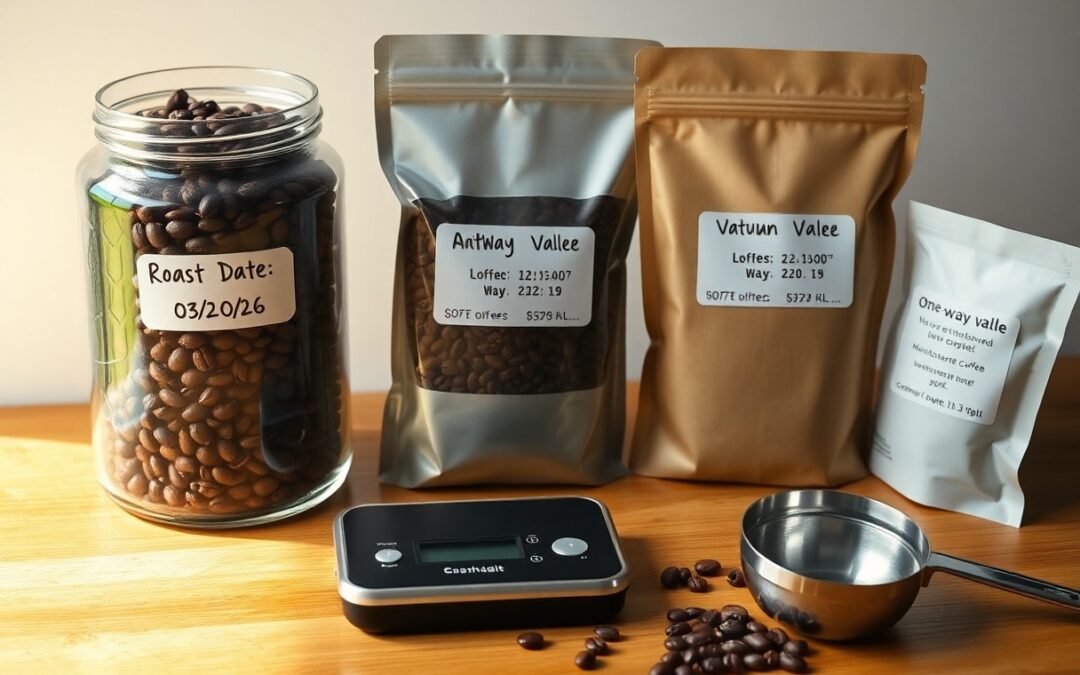
Freshness determines how quickly your beans lose flavor. You should store whole beans in airtight containers, keep them cool and dark, grind just before brewing, and learn when beans are too fresh via Is Your Coffee Too Fresh?
Key Takeaways:
- Buy whole beans with a clear roast date, purchase amounts that match weekly consumption, and store in an opaque, airtight container in a cool, dry spot; freeze only long-term surplus and thaw before use.
- Grind immediately before brewing using a clean, well-adjusted grinder and consistent grind size to preserve aromatics and ensure even extraction.
- Track roast dates and rotate stock FIFO; adjust grind size, dose, or brew time as beans age to compensate for CO2 loss and maintain desired flavor.
Identifying Key Factors in Coffee Degradation
Beans lose aroma and acidity quickly when oils oxidize and humidity fluctuates, and you will notice flatness, reduced sweetness, and muted aromatics if storage fails.
- Oxygen exposure: breaks down aromatics
- Humidity swings: cause staling and mold risk
- Heat and light: accelerate volatile loss
- Grind size and time: increase surface oxidation
Assume that you will taste measurable decline within days if air, moisture, or heat are not controlled.
The Role of Oxidation and Moisture
You should limit air contact with freshly roasted beans by using sealed, low-oxygen containers and moisture control, since oxidation and hydrolysis blunt acids and aroma rapidly.
Impact of Temperature and Light on Volatile Compounds
Heat increases the vaporization of delicate esters and thiols while light triggers photochemical breakdown, so you must store beans cool and shielded to preserve aromatic complexity.
Temperature and Light Effects
| Condition | Effect on Volatiles |
|---|---|
| High temperature | Accelerates loss of floral and fruity esters |
| Direct light | Photodegrades aldehydes and sulfur compounds |
| Temperature swings | Promote condensation and moisture uptake, harming aroma |
Light causes photochemical reactions that fragment key aromatic molecules, so you should avoid transparent containers and display bins to keep delicate notes intact.
Storage Actions
| Action | Benefit |
|---|---|
| Opaque, airtight tins | Blocks light and limits oxygen |
| Cool, consistent location | Slows volatile loss |
| Avoid refrigeration | Prevents moisture cycles and staling |
Selecting Beans for Maximum Freshness Potential
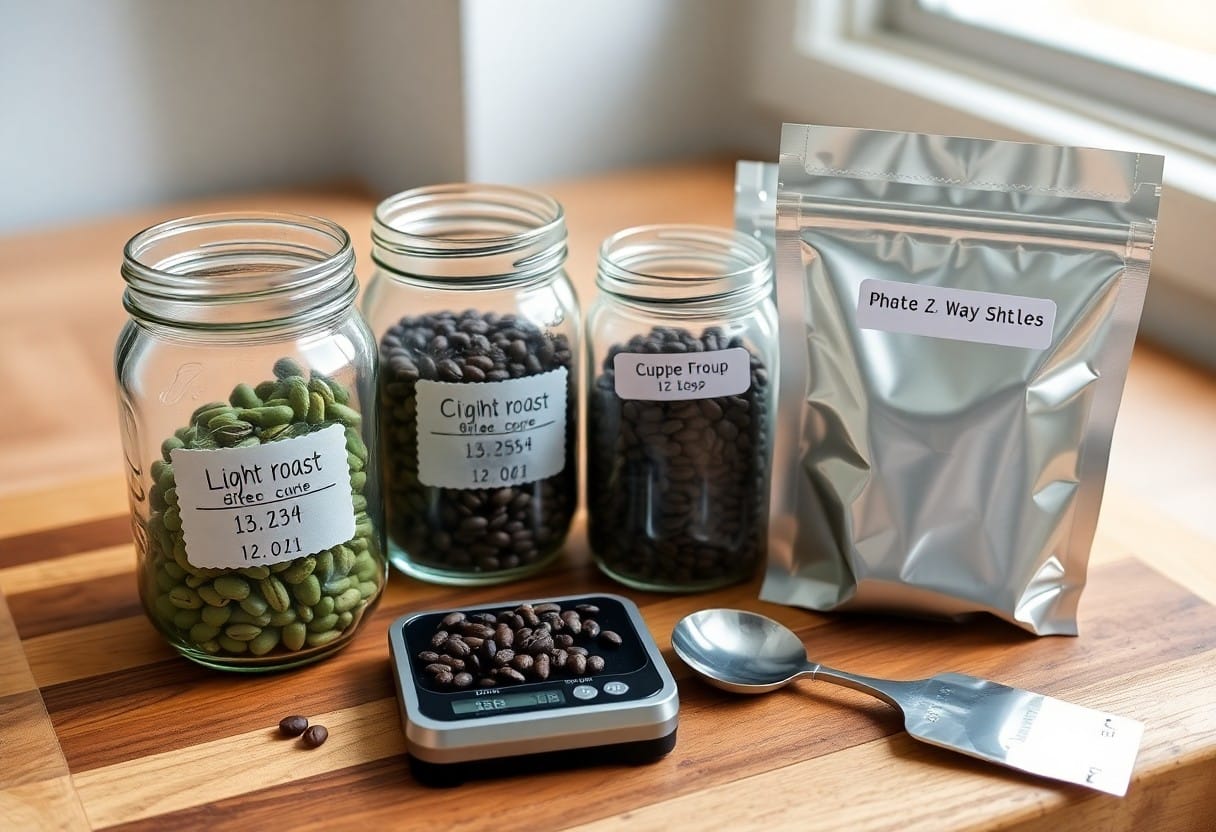
You should prioritize beans with clear roast dates and packaging that minimizes oxygen exposure to preserve volatile aromatics. Choose smaller, single-batch bags when possible so you can rotate stock before flavors degrade.
Look for bags with one-way valves, opaque material, and tight seals; these features limit staling and light damage so your coffee stays truer to roast profile during storage.
Tips for Evaluating Roast Dates and Packaging Seals
Inspect roast dates and favor beans roasted within two weeks for peak clarity, especially if you brew frequently. Verify whether the roaster lists a roast-day or a “best by” window and prefer specific dates over vague ranges.
- Check for a visible roast date stamped on the bag.
- Prefer one-way valve packaging to release CO2 without letting air in.
- Avoid clear bags that expose grounds to light and heat.
Assess the seal integrity by squeezing the bag lightly and scanning for punctures or poor folds; open packaging reduces shelf life. Knowing how to read roast dates and spot proper seals helps you select beans that maintain freshness longer.
Choosing Whole Beans Over Pre-Ground Options
Choose whole beans when possible because grinding just before brewing preserves aromatic oils and prevents rapid flavor loss; pre-ground coffee exposes a larger surface area that stales faster. You’ll notice cleaner acidity and fuller body with freshly ground beans.
Grinding at or just before extraction lets you match grind size to your method, controlling extraction and reducing bitterness; invest in a reliable burr grinder so you can dial in consistency and prolong peak freshness.
How-To Optimize Your Home Storage System
You should portion beans by roast date into small, labeled bags or jars to limit exposure and keep only what you’ll use within one to two weeks. Put older batches at the front so you always work through inventory efficiently.
Arrange your storage by grind size and brew method to avoid repeated openings and accidental cross-contamination, and mark lids with roast dates to track freshness at a glance.
Utilizing Vacuum-Sealed and Opaque Containers
Use vacuum-sealed bags for bulk beans and transfer daily portions into small opaque jars so you limit oxygen and light exposure while keeping large quantities sealed. In this way you maintain peak flavor in the portions you brew most often.
Keep all containers airtight and choose materials that block UV; you should also label seal dates and discard beans beyond two to three weeks from roast for best results.
Best Practices for Stable Climate Control
Maintain a cool, dark, and dry environment-aim for consistent temperatures between 55-70°F and humidity below 60% so your beans age slowly and avoid mold. Place storage away from heat sources like ovens and direct sunlight to prevent temperature swings.
Avoid refrigeration and frequent temperature changes that can introduce moisture and odors; instead rely on steady room conditions and insulated cabinets if your kitchen heats up while cooking.
Monitor humidity with a compact hygrometer and use silica gel packs in sealed containers if your home runs humid, and you should check seals regularly for wear to keep conditions stable.
Preserving Quality During the Brewing Process
Your brewing technique controls how freshly roasted beans express themselves; minimize time between grinding and extraction to retain volatile aromatics and prevent flatness in the cup.
The Importance of Grinding Immediately Before Use
You should grind right before brewing to trap aromatics in the grounds and avoid oxidation that dulls flavor, especially with lighter roasts.
Properly set grind size by adjusting the burrs one step at a time and dose consistently so extraction remains predictable as the beans degas.
Adjusting Extraction Based on Bean Age
When beans are very fresh, you should coarsen the grind slightly or lengthen contact time to tame perceived acidity while preserving sweetness and floral notes.
Experiment with small changes-try 5-10% brew ratio shifts, 5-15 second time adjustments, or minor grind tweaks-and use your tasting notes to lock in the ideal balance for each batch.

To wrap up
Drawing together the key practices helps you maintain consistent bean freshness for better coffee quality. You buy small batches, note roast dates, store beans airtight in a cool, dark place, grind immediately before brewing, and rotate inventory. You monitor extraction and adjust grind and dose as freshness shifts. These habits put you in control of flavor clarity and cup balance.

FAQ
Q: What does “bean freshness” mean and why does roast date matter?
A: Bean freshness describes the chemical and sensory state of coffee beans after roasting, driven by volatile aromatics and trapped carbon dioxide. Roast date tells how long ago beans were roasted; flavor peaks typically within a window after roast when aromatics have mellowed from sharp roast notes but before oxidation diminishes brightness and complexity. Choosing beans with a clear roast date lets you plan resting time and brewing to hit that optimal window for peak flavor.
Q: How long do whole beans stay fresh compared to ground coffee?
A: Whole beans retain flavor longer because less surface area is exposed to oxygen; most specialty beans show best results for 1-4 weeks after roast for nuanced profiles, with acceptable quality up to 6-8 weeks depending on roast level and storage. Ground coffee loses volatile compounds quickly, with noticeable degradation within 15-30 minutes after grinding for the most delicate aromas and within a few hours for strength and clarity. Grind immediately before brewing to capture the best flavor.
Q: What storage methods deliver the most consistent freshness at home?
A: Store beans in an opaque, airtight container kept in a cool, dry place away from heat and direct sunlight; containers with one-way CO2 valves work well for recently roasted beans because they release gases without letting oxygen in. Keep beans in small daily-use batches and refill from a larger sealed container to limit repeated exposure. Avoid storing beans in clear bags on a counter or next to ovens and windows, which accelerates staling.
Q: Should I freeze coffee beans to extend freshness, and what is the correct method?
A: Freezing can extend shelf life for coffee you do not plan to use within a few weeks, but repeated temperature changes cause moisture migration and flavor loss. For best results, portion beans into airtight, moisture-proof bags, remove as much air as possible, freeze once, and only thaw the exact portion needed immediately before grinding. Never refreeze thawed beans and avoid opening the frozen bag multiple times.
Q: How long should beans rest after roast before brewing, and how does degassing affect extraction?
A: Freshly roasted beans release carbon dioxide for several days; lighter roasts often benefit from 3-7 days of rest, while darker roasts may be drinkable sooner but still release gas. Excess CO2 can disrupt extraction, causing uneven water flow and sour flavors in espresso or rapid channelling in pour-over. Allow beans to rest enough for controlled degassing, monitor extraction behavior, and adjust grind size or dose if trapped gas affects performance.
Q: How often should I buy beans and what size should I purchase for consistent quality?
A: Purchase quantities that match your consumption so beans are used within their peak window; home drinkers who brew daily often do well buying 250-500 g weekly, while occasional drinkers might buy smaller 100-200 g packs every 1-2 weeks. Prioritize frequent, smaller purchases from roasters with transparent roast dates rather than bulk storage to maintain a steady supply of fresh beans.
Q: How can I tell when beans have gone stale and what brewing adjustments help if beans are not at peak freshness?
A: Stale beans lose aromatic complexity, present flat or cardboard-like flavors, and show muted acidity; ground stale coffee often smells dull instead of fragrant. If using beans past their peak, increase dose slightly, use a slightly finer grind, or increase brew temperature to extract more soluble material and restore perceived strength, while understanding that lost volatile aromatics cannot be fully recovered.