
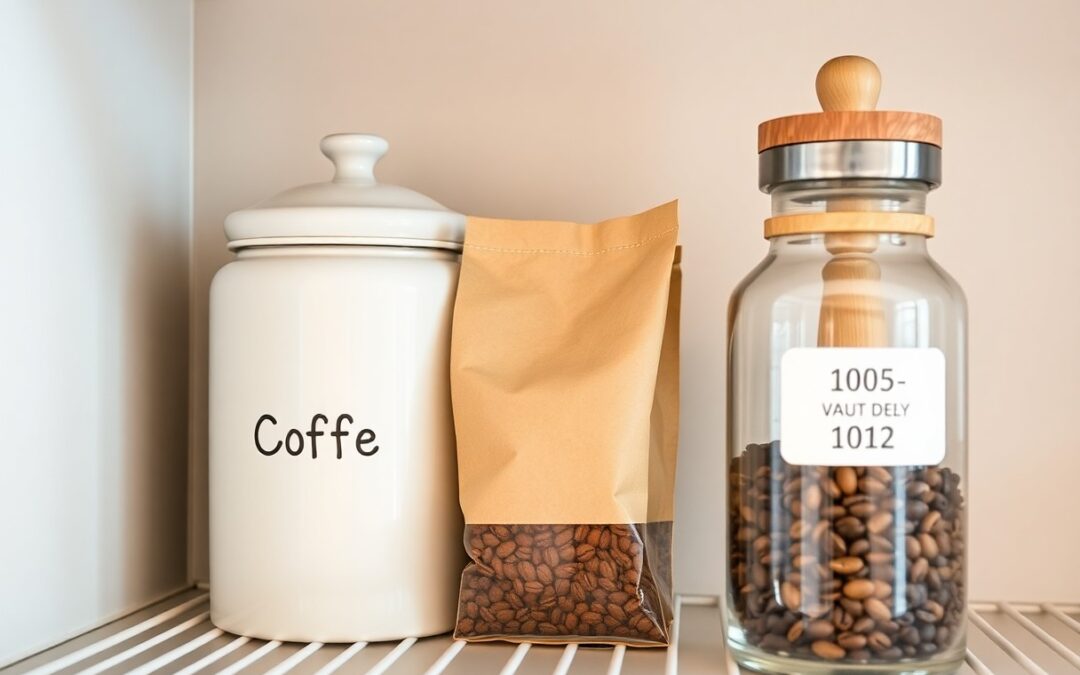

This guide shows you exactly how to store coffee beans so you retain aroma and flavor: use airtight, opaque containers, keep beans cool and dry away from light, avoid the fridge, and buy whole beans in small batches to grind fresh.
Key Takeaways:
- Store whole beans in an airtight, opaque container with a one-way valve and keep it in a cool, dark cabinet away from heat and sunlight.
- Avoid refrigerating or freezing beans you use daily; freeze only beans you won’t use within two weeks in truly airtight bags and thaw before opening.
- Buy smaller amounts and grind immediately before brewing to maximize aroma and flavor.
The Primary Factors That Degrade Coffee Freshness
Oxygen strips oils and volatile aromas from roasted beans, so you notice flatter, duller cups within days; moisture speeds staling and can trigger mold if you leave beans exposed to humidity.
- Oxygen (oxidation)
- Moisture (humidity)
- Light (photodegradation)
- Temperature swings (heat and cold)
The best practical tips are airtight, dry, dark, and cool storage – check community experiences at What’s the best way to store my opened coffee beans?
Understanding the impact of oxidation and moisture
Oxidation breaks down the oils and aromatics you expect in a fresh cup, so you should keep beans in sealed containers and buy smaller quantities to match your grind frequency.
Oxidation & Moisture – Effect vs. What you do
| Oxidation | You lose aroma and brightness; store in airtight containers and avoid frequent exposure. |
| Moisture | Beans absorb smells and can mold; keep beans dry and avoid refrigeration where condensation forms. |
How light and temperature fluctuate flavor profiles
Light causes photodegradation of oils and aromas, and you should use opaque containers or store bags in dark cupboards to prevent flavor fade.
Heat accelerates chemical reactions that age beans, so you must avoid warm spots like near ovens or windows and prefer a cool, stable area.
Light & Temperature – Impact vs. Practical step
| Light | You get muted, oxidized flavors; use opaque, UV-blocking storage or a dark cabinet. |
| Temperature | You shorten freshness window with heat; keep beans cool and stable, not cold enough to condense moisture. |
How to Select the Ideal Storage Container
Choose a container that blocks light, limits oxygen, and suits how often you brew; smaller, airtight jars prevent stale beans by reducing exposed surface area. Match capacity to your consumption so you open it less and keep beans in a cool, dry spot away from heat sources.
Comparing airtight ceramic, metal, and glass vessels
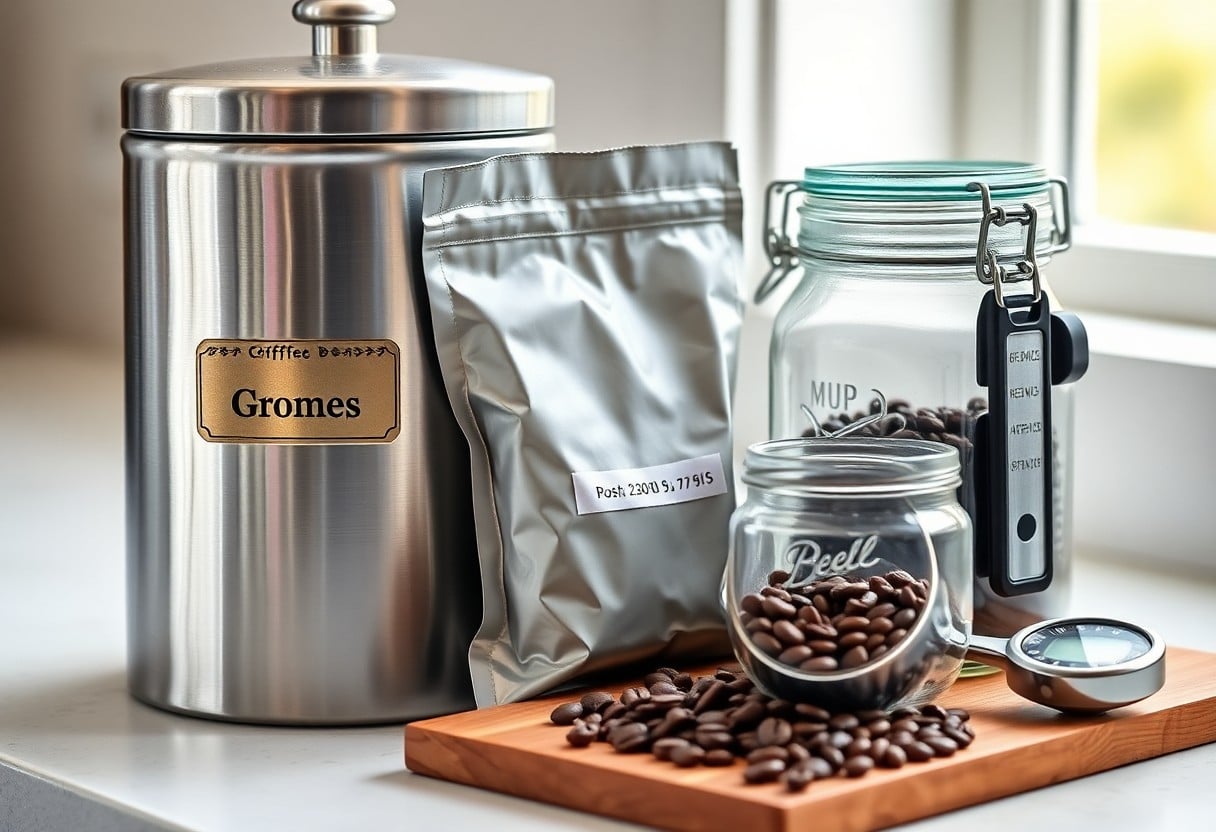
Compare materials by light protection, odor resistance, and seal quality so you can pick what fits your routine: ceramic and stainless steel block light and resist flavors, while clear glass offers visibility but needs opaque storage to protect freshness.
Quick Comparison
| Material | What it offers for you |
|---|---|
| Ceramic | Blocks light, neutral taste; heavier and decorative |
| Stainless steel | Excellent light/odor barrier; durable and compact |
| Glass | Non-reactive and visible; best if opaque or stored in dark place |
The necessity of one-way CO2 degassing valves
Use containers with one-way degassing valves when you keep recently roasted beans so you can release CO2 without letting oxygen in, preserving aroma and preventing pressure build-up. Choose valves that sit flush and pair them with a tight lid for best results.
Valves channel gas outward through a membrane, allowing you to store beans days longer while minimizing oxidation; for extended storage combine a valve with an airtight, opaque container and swap seals if they show wear.
How to Use the Freezer for Long-Term Preservation
Freezing whole beans in airtight, freezer-safe containers halts oxidation and preserves flavor for months while allowing you to keep beans whole for the freshest grind.
Store beans in small, labeled packs so you thaw only what you need and avoid repeated temperature swings that degrade your coffee’s taste.
Techniques for vacuum-sealing and moisture protection
Vacuum-sealers remove air so you can pack beans in Mylar or thick freezer bags that resist freezer burn and keep oils intact.
Layering a desiccant packet between sealed bags or adding an oxygen absorber before sealing further reduces moisture risk and helps you protect flavor during long storage.
Best practices for thawing beans to prevent condensation
Thaw beans gradually by moving sealed packs from freezer to refrigerator for 12-24 hours so you avoid condensation forming on your beans.
Avoid opening the package until the beans reach room temperature, because sudden exposure to warm air draws moisture onto them and blunts your beans’ aroma.
Allow opened beans to come fully to room temperature before you decant them into your grinder, and grind only what you’ll brew to protect remaining frozen portions.
Purchasing Tips to Ensure Maximum Quality
Shop with roast dates and local roasters in mind; prioritize recent roasts and resealable bags with one-way valves to limit exposure to air.
- Check roast date, not best-by date
- Prefer whole beans over pre-ground
- Buy amounts that match your two-week use
- Choose packaging with valves and resealable zippers
Thou will keep beans at peak by buying smaller batches and verifying roast dates before checkout.
Why whole beans are superior to pre-ground coffee
Whole beans retain volatile oils and aromas that grind exposes to oxygen, so you preserve brighter flavors when you grind on demand.
You also control grind size for each brew method, which improves extraction and gives more consistent cups than pre-ground blends.
Calculating the ideal volume for a two-week consumption cycle
Calculate your two-week need by multiplying grams per cup by cups per day and then by 14 to avoid overbuying and stale leftovers.
Divide the resulting total into common retail sizes-choosing the next smaller bag helps ensure you finish beans within the fresher window.
Measure with a kitchen scale for accuracy, note that a tablespoon is roughly 5-7 g, and add a buffer for guests or stronger brews when ordering.
How to Maintain Your Storage Equipment
Check containers and lids for stains, cracks, or clouding that can trap moisture and odors; you should clean compromised items promptly to avoid flavor transfer. You can keep a small towel nearby to dry parts thoroughly after washing to prevent mold and rust.
Rotate stored beans by date labels so you use older batches first and avoid long-term storage beyond peak freshness; you should also keep spare jars and vacuums on hand to swap out damaged units quickly.
Removing residual coffee oils to prevent rancidity
Use a mild, scent-free detergent and warm water to wash removable parts of grinders and storage jars, then air-dry completely so oils don’t oxidize. You should avoid harsh solvents that leave residues or strong fragrances that mask bean aroma.
Brush crevices and burrs with a soft nylon brush to remove trapped grounds before wiping surfaces, and periodically run a small quantity of dry rice through grinders for a gentle cleaning between deep washes.
Inspecting seals and gaskets for airtight integrity
Inspect seals and gaskets monthly for cracks, hardening, or embedded particles that compromise the vacuum; you can test airtightness by pressing a sealed bag and watching for air return or feeling for a secure suction on lids.
Replace worn or distorted gaskets promptly and store spare seals so you can restore airtight protection without delay; you should select replacements specified by the manufacturer to maintain proper fit and performance.
Conclusion
So you store whole beans in an opaque, airtight container in a cool, dry spot, buy only a one- to two-week supply, grind immediately before brewing, and keep beans away from light, heat, moisture, and air. If you must freeze beans for long-term storage, portion and vacuum-seal them to limit condensation and odor transfer.
FAQ
Q: Why do roasted coffee beans lose freshness?
A: Oxygen causes oxidation of the oils and compounds that make coffee taste and smell fresh. Roasted beans release carbon dioxide for days after roasting, and that degassing affects flavor and extraction. Moisture, heat, light, and exposure to strong odors speed chemical changes that flatten aroma and taste.
Q: What type of container keeps coffee beans freshest?
A: An airtight container with minimal headspace preserves freshness by limiting oxygen exposure. Opaque, non-reactive containers such as ceramic or stainless steel block light and avoid off-flavors. Bags with a one-way valve are useful for short-term storage because they let CO2 escape without letting air in. Clear jars and thin plastic bags allow light and air in and should be avoided for long-term storage.
Q: Are whole beans or pre-ground coffee better for freshness?
A: Whole beans stay fresher longer because grinding increases surface area and speeds oxidation. Grind immediately before brewing to capture the peak aroma and flavor. Pre-ground coffee loses volatile aromatics quickly and is best used within a week of opening when stored airtight and away from heat.
Q: Can I store coffee in the refrigerator or freezer?
A: Refrigerator storage exposes beans to moisture and food odors and usually reduces flavor, so avoid it. Freezing works for long-term storage if beans are divided into small, airtight, moisture-proof portions and frozen only once. Thaw a sealed portion to room temperature before opening to prevent condensation on the beans.
Q: How long do coffee beans stay fresh after roasting and after opening?
A: Peak flavor often occurs between a few days and two weeks after roasting, depending on roast and bean. Whole beans kept sealed at room temperature are generally best within 2-4 weeks after opening. Pre-ground coffee is best used within 1 week of opening. Vacuum-sealed or frozen beans can remain usable for several months but will not taste as lively as freshly roasted beans.
Q: How can I tell if my coffee beans have gone stale?
A: Stale beans show a weak or flat aroma compared with fresh beans and brew into a dull, lifeless cup with little complexity. A cardboard or papery smell indicates oxidation. Very oily surfaces on dark roasts suggest age and prolonged storage but do not always mean the beans are undrinkable.
Q: What practical habits keep coffee beans fresher in daily use?
A: Buy smaller quantities that match your consumption rate and purchase beans close to their roast date. Store beans in an airtight, opaque container in a cool, dark place away from heat sources. Portion beans if you freeze them and avoid repeatedly opening the frozen container. Grind just before brewing and clean grinders regularly to prevent stale residue from affecting flavor.