
That bag of freshly roasted coffee smells incredible on day one. A week later, if it has been sitting open beside the kettle or soaking up heat near the window, the cup can taste flatter, duller and strangely lifeless. If you have ever wondered how to store roasted beans so they keep their richest flavours for longer, the answer is less about fancy gear and more about protecting them from the few things coffee hates most.
Roasted beans are at their best when they are shielded from air, light, heat and moisture. Get those four right and your morning brew stays vibrant, sweet and balanced. Get them wrong and even a beautifully roasted coffee can lose the character that made it special in the first place.
Why roasted beans lose flavour so quickly
Once coffee is roasted, it starts changing straight away. That is not a flaw – it is simply the nature of a fresh product. Roasting creates the aromatic compounds that give coffee its chocolatey depth, fruit brightness, caramel sweetness and nutty finish. Those compounds are delicate. Oxygen breaks them down, warmth speeds that process up, light can damage them, and moisture throws the whole balance off.
Beans also release carbon dioxide after roasting. This is called degassing, and it is one reason freshly roasted coffee often comes in bags with a one-way valve. The valve lets gas out without letting much air in. It is a small detail, but it matters. Good storage works with that natural process instead of fighting it.
The key trade-off is freshness versus convenience. If you open and close a bag ten times a day, coffee is exposed to more oxygen. If you decant it into a clear jar because it looks nice on the bench, it gets hit with more light. The best storage setup is the one you will actually use consistently, while still keeping those enemies of freshness under control.
How to store roasted beans at home
For most households, the best place to keep roasted coffee is in its original bag, tightly sealed, inside a cool, dark cupboard. If the bag has a zip closure and one-way valve, that is usually a better option than moving the beans into a container just because it feels more organised.
Original coffee bags are often designed for storage. They limit light exposure and help manage degassing. If the bag does not reseal well, place it inside an airtight, opaque container rather than pouring the beans loose into a glass jar on display.
Cupboard location matters more than people realise. A shelf near the oven, toaster or dishwasher is not ideal because heat and steam fluctuate through the day. The same goes for a sunny kitchen bench. Choose a spot that stays relatively cool and dry, away from direct light and away from appliances that throw out warmth.
If you buy beans for espresso and go through them quickly, you may not need anything more complicated than this. For many coffee drinkers, simple and consistent storage beats an elaborate setup every time.
The container question
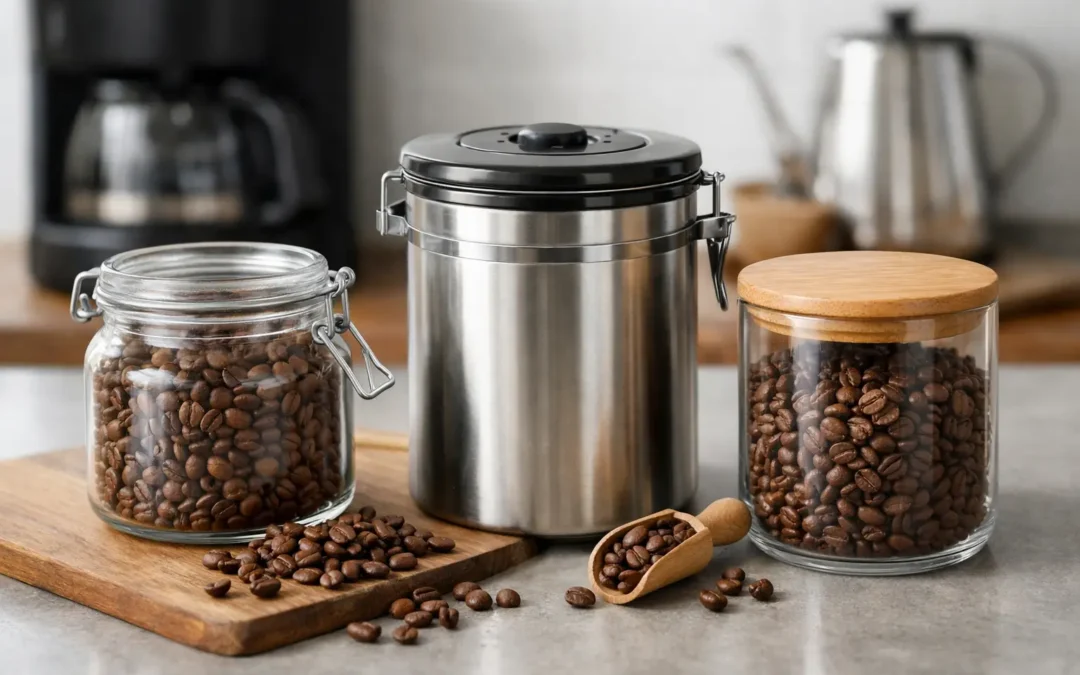
If you do want a separate container, look for one that is airtight and opaque. Ceramic, stainless steel or tinted storage canisters are generally better than clear glass. Glass is fine only if it lives inside a dark cupboard, not out in the open where light can reach it.
Some containers are designed to push excess air out or limit oxygen inside the canister. They can work well, especially if you buy quality beans and want to protect them properly. But they are not magic. If you keep opening the lid repeatedly or leave the container near heat, the benefit drops away.
The most practical option is often a modest-sized canister that holds about what you will use in a week or two. That way, you are not exposing a huge volume of beans to fresh air every time you make a cup.
Should you keep coffee in the fridge?
Usually, no. The fridge sounds cool and safe, but it brings two problems coffee does not handle well: moisture and odours. Roasted beans are porous enough to absorb surrounding smells, and nobody wants their morning brew picking up notes of leftover curry or last night’s garlic dip.
Temperature changes also create condensation. If beans move in and out of a cold environment, moisture can form on the surface, which is bad news for flavour and for grinding consistency. For everyday use, a cool pantry or cupboard is a better choice than the fridge.
This is one of those areas where well-meaning advice often goes wrong. Cool is good. Damp and odour-heavy is not.
Can you freeze roasted beans?
Yes, but only if you do it carefully. Freezing can be useful when you have more coffee than you can finish at peak freshness, especially if you buy in larger quantities for home, the office or event prep. The trick is to freeze beans in well-sealed, portioned amounts and avoid repeated thawing and refreezing.
If you are going to freeze coffee, divide it into smaller airtight packs first. Freeze what you will not use soon, and leave out only the amount you expect to drink over the next week or two. When you are ready to use a frozen portion, let it come fully to room temperature before opening the container. That helps prevent condensation from settling on the beans.
Freezing is not the first choice for daily coffee, but it is better than letting a large stash stale in the cupboard for a month. It depends on your buying habits. If you are ordering fresh beans regularly and finishing them quickly, you probably do not need the freezer at all.
How long do roasted beans stay fresh?
There is no perfect single number because roast style, packaging and brew method all play a part. Still, most roasted beans show their best character within a few weeks of roasting, and many drink beautifully for around two to six weeks when stored well.
Espresso drinkers often notice changes more sharply because espresso is less forgiving. As beans age, the shot can run differently, crema can fade, and flavour can flatten out. Filter coffee can be a bit more flexible, but stale beans still show up in the cup as muted aroma and less sweetness.
A good rule is to buy what you can realistically finish while it still tastes lively. That might be a smaller bag more often rather than one big bag that lingers in the cupboard. Freshly roasted coffee is one of life’s simple upgrades, and it makes sense to treat it that way.
Common mistakes when storing roasted beans
The biggest mistake is leaving beans exposed to air. Rolling down the bag loosely and hoping for the best will cost you flavour fast. The second is storing them in direct sunlight or near a heat source. The third is using the fridge for everyday storage.
Grinding too far ahead of time is another one worth mentioning. If whole beans lose freshness steadily, ground coffee loses it much faster because so much more surface area is exposed to oxygen. If you want the best cup, store beans whole and grind just before brewing.
It is also easy to overbuy. There is a temptation to stock up, especially when good coffee arrives fresh and fragrant. But coffee is not like tinned food. It is a seasonal, aromatic product that rewards good timing as much as good storage.
How to store roasted beans for the office or events
If you are buying coffee for a workplace kitchen, studio, showroom or event setup, storage needs to be practical as well as flavour-focused. Keep unopened bags in a cool, dark cupboard and rotate through stock so the oldest roasted bags are used first. Once opened, transfer only the amount needed for a few days into an airtight container and keep the rest sealed.
This matters even more in busy spaces where multiple people dip into the coffee stash. Bags get left open, scoops go missing, and beans end up beside hot equipment. A simple system keeps quality consistent and saves waste.
For businesses that care about serving a polished coffee experience, storage is part of the standard, not an afterthought. Great beans deserve a bit of care between the roaster and the grinder. That is one of the reasons specialty roasters like Lygon Coffee focus so heavily on freshness from the start.
The simplest way to get better coffee from the same beans
If you remember only one thing about how to store roasted beans, make it this: keep them sealed, cool, dark and dry. You do not need a complicated ritual. You just need to protect what the roast has already built into the bean.
When coffee is stored well, every brew has a better chance of showing off its real character – the sweetness, the aroma, the finish that makes you pause for another sip. That small bit of care pays you back every morning, and your beans will thank you for it in the cup.