
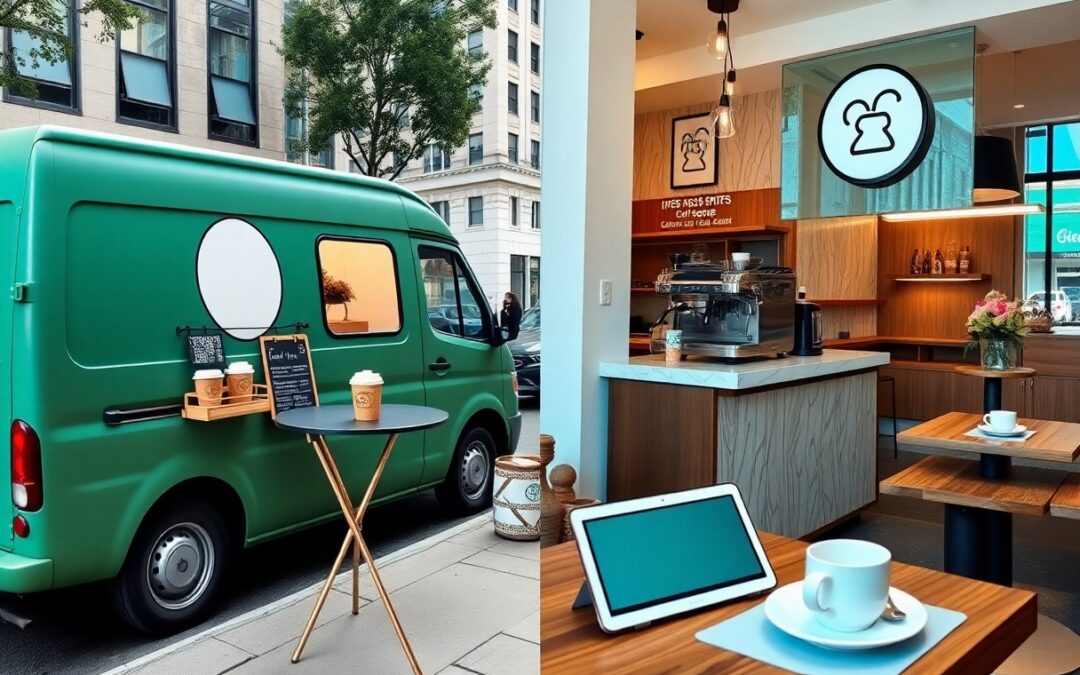
Branding for a coffee van and a chic café requires clear visuals, tone, and service design so you can craft distinct identities that attract different customers.
Key Takeaways:
- Audience and personality: coffee van targets on‑the‑go, casual customers-adopt bold, playful visuals, concise messaging, and fast-order cues; chic café targets relaxed, premium patrons-adopt refined typography, muted palette, and leisurely service rituals.
- Design and materials: van requires high-contrast graphics, durable signage, compact menu boards, and spill-proof branded packaging; café can use layered textures, curated lighting, bespoke furniture, and plated presentation to signal craft.
- Touchpoints and experience: van emphasizes visibility, location-based social posts, quick transactions, and pop-up collaborations; café emphasizes in-store rituals, curated playlists, table service, events, and a consistent sensory atmosphere.
Identifying Core Brand Factors for Mobile and Brick-and-Mortar Spaces
You must weigh mobility, speed, and visibility when branding a van versus a café: the van needs bold, readable graphics, concise messaging, and frictionless ordering, while the café can build layered atmosphere, curated service, and extended menus.
- Van: compact menu, fast service, high-contrast visuals, clear pickup flow
- Café: seating layout, sensory cues, staff interaction, menu depth
- Both: consistent logo, color palette, and tone of voice
After mapping these factors, you set priorities that make each model immediately recognizable and fit for how customers use the space.
Defining the target demographic for on-the-go vs. sit-down service
Identify who you serve: vans attract commuters, event attendees, and quick-lunch crowds, while cafés draw locals, remote workers, and social groups; you then align hours, price points, and promotion channels to those routines.
Establishing a unique value proposition for each business model
Craft a value proposition that highlights convenience, predictability, and portability for a van, and emphasizes comfort, discovery, and linger-time benefits for a café so customers immediately understand what you deliver.
Differentiate by proving the promise: offer signature grab-and-go packaging and reliable pickup times for vans, and curated seating zones, seasonal menus, and staff-driven hospitality for cafés so you turn first-time visitors into repeat patrons.
How-to Design Visual Assets for Maximum Impact
Scale your visuals to context: oversized, high-contrast branding for a moving van and refined patterns with muted tones for a chic café interior. Use bold type and simplified marks for speed-read scenarios, then introduce subtler typographic details where customers linger.
Keep materials and finishes consistent by matching outdoor vinyl durability to interior textiles and wood tones so your brand reads the same at curb and counter. Test visibility at different distances and lighting to confirm practical impact.
Adapting logos and color palettes for van exteriors vs. interior decor
For van exteriors, simplify your logo into bold, single-color versions suitable for wraps and quick recognition; inside your café, apply full-color marks, patterns, and layered textures on menus, upholstery, and tile to create atmosphere.
Selecting signage and menu boards that fit the specific environment
Choose signage that reads instantly: backlit channel letters or high-contrast vinyl for your van, and handcrafted chalkboards, illuminated rails, or printed menu panels for your café where guests pause and browse.
Test fonts and sizes in situ by mounting mockups at eye level and walking past with typical sightlines so you confirm legibility, weather resistance, and harmony with your overall palette.
Tips for Creating a Consistent Sensory Brand Experience
Keep your visual and tactile elements aligned so customers instantly recognize your brand: color, logo, cup texture, and menu typography reinforce recall.
Match scent, sound, and service pace to each format-your café invites lingering while your van promises quick comfort; use a short daily checklist to stay consistent.
- Use consistent cups and staff attire so you visually reinforce brand identity.
- Train tempo cues so you control dwell time in the café and turnover at the van.
- Choose one signature scent per format to anchor customer memory.
Curating music and lighting for the chic café atmosphere
Curate a playlist that reflects your brand mood and keep volume low so your customers can converse comfortably; rotate tracks seasonally to refresh the vibe.
Layer warm, dimmable lighting with focused task lights so your space feels intimate while your staff maintains clear sightlines for quality service.
Utilizing scent and service speed to brand the coffee van journey
Scent choices on your van should be bold and immediate-fresh-baked or spiced notes draw passersby and create rapid recognition along your route.
Speed of service becomes a sensory cue: streamline ordering, tighten preparation choreography, and display progress so your customers feel served efficiently and warmly.
Knowing how scent and speed interact helps you design repeatable rituals-pick one signature aroma, time offerings to peak foot traffic, and train brisk, friendly interactions that cement your mobile identity.
Key Factors in Selecting Packaging and Collateral
Packaging sets immediate expectations: you should match materials and finishes to each concept so every touchpoint reinforces brand promise. For a van pick high‑visibility, durable substrates; for a café choose tactile, long‑lasting pieces that reward lingered contact.
- Visibility and legibility on the move
- Material feel for in‑house service
- Cost, waste and reuse strategy
The choices you make shape perception and repeat business.
Prioritizing durability and visibility for mobile takeaway cups
For a coffee van you should select insulated, crush‑resistant cups with high‑contrast logos so customers see your brand from a distance and cups survive handling; bright accents and repeat patterning turn every order into mobile marketing.
Enhancing the premium feel of in-house ceramics and linens
Select matte glazes, weighted saucers and heavyweight linen that feel deliberate in hand; you should keep logos subtle and finishes consistent so service reads as refined rather than loud.
Choose a restrained palette and thoughtful imprint placement so every cup and napkin contributes to a cohesive table story and signals attention to craft.
Handwash fragile pieces, standardizeサイズ and train staff on plating and fold techniques so you preserve appearance and assure a repeatable premium experience.
How-to Leverage Digital Marketing Based on Location
Local targeting means mapping your campaigns and listings to where customers actually are; you should segment ads by neighborhood, schedule promotions for peak foot traffic, and use hyperlocal keywords so your coffee van or café ranks in nearby searches.
Using geo-tagging and social media for the roaming van
Pin each stop on Instagram Stories, share ETA updates, and encourage customers to tag your van; you should mix scheduled posts with live check-ins, use geotag stickers, and run location-specific offers to convert on-the-go followers into visitors.
Building community loyalty through café events and local SEO
Host tasting nights, pop-up collaborations, or loyalty perks that you promote via Google My Business and neighborhood forums; you should optimize your café’s listing with local keywords, up-to-date hours, and event posts to appear in “near me” searches.
Cultivate partnerships with nearby shops, sponsor local meetups, and collect emails onsite to build your mailing list; you should measure which events drive repeat visits and refine meta descriptions and reviews to showcase community ties.
Conclusion
You craft distinct identities by matching form to function: a coffee van thrives on bold, portable branding, punchy menu names, and social-ready visuals; a chic café benefits from refined typography, a cohesive sensory palette, and deliberate service rituals. You maintain consistency across touchpoints, test local responses, and refine offerings until each concept resonates with its intended audience.
FAQ
Q: What are the primary brand differences between a coffee van and a chic café?
A: A coffee van brand should emphasize mobility, immediacy, and friendly accessibility, while a chic café brand centers on atmosphere, craftsmanship, and a curated guest experience. A van benefits from high-impact, legible visuals and a playful or practical voice; a café benefits from refined details, sensory cues, and a consistent in-space narrative.
Q: How should target audience and tone differ for each concept?
A: A coffee van should speak to commuters, event attendees, and casual passersby with clear, upbeat messaging and fast-service cues. A chic café should attract diners seeking ambiance, longer visits, and Instagram-ready moments with a calm, sophisticated tone and storytelling about origins and craft.
Q: What visual elements should be prioritized for a van versus a café?
A: A van needs bold, high-contrast logos, simple color palettes, and typography that reads at distance and on curved surfaces. A café can use more nuanced type, layered textures, ambient lighting, and detailed signage that reward closer inspection.
Q: How do physical touchpoints differ: vehicle wrap and menu boards vs interior finishes and in-store signage?
A: Vehicle wraps and exterior menus require weather-resistant materials, quick-read layouts, and placement that catches sightlines at different angles. Interior finishes for a café should coordinate colors, materials, and lighting to create a cohesive mood and tactile comfort for longer stays.
Q: What guidance should I follow for menu design, naming, and packaging for each model?
A: Van menus should be short, prioritized for speed, and organized by order flow; packaging must be compact, spill-resistant, and clearly branded for takeaway. Café menus can offer plated items and seasonal storytelling, with packaging and presentation designed for dine-in aesthetics and social sharing.
Q: Which marketing tactics work best for a coffee van compared to a chic café?
A: Vans perform well with location updates, real-time social posts, local event partnerships, and mobile-friendly loyalty. Cafés benefit from curated photography, reservation systems, email newsletters, influencer visits, and hosting community or tasting events that reinforce place-based identity.
Q: How should staffing, uniforms, and service style support each brand?
A: Van staff should be trained for speed, multitasking, and outdoor service conditions, wearing practical, weather-ready uniforms that read clearly from a distance. Café staff should deliver slower, attentive service with tailored uniforms and training that emphasize hospitality, menu knowledge, and brand storytelling.