
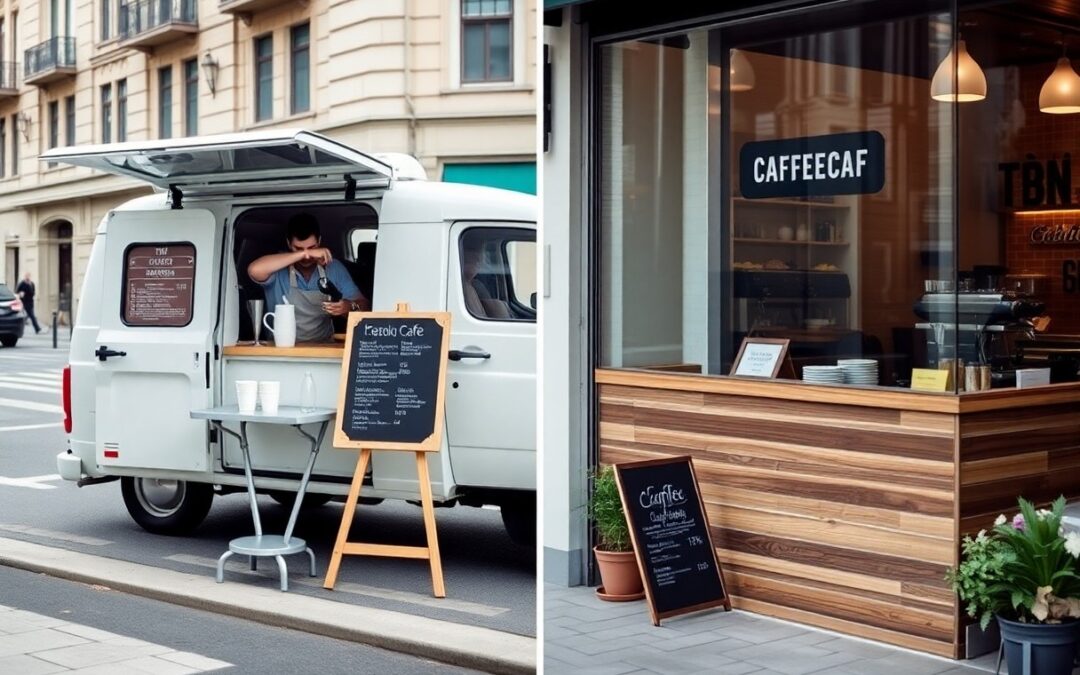
Coffee on wheels gives you mobile reach and low overhead, while cafés offer you consistent space, staff support, and customer comfort; this guide helps you weigh costs, customer experience, and scaling to choose the best model for your goals.
Key Takeaways:
- Mobile coffee vans offer flexibility: they can relocate for events, incur lower rent and staffing costs, and test new markets with minimal risk.
- Cafés provide stability through a permanent location that builds regular foot traffic, supports larger menus and seating, and fosters a consistent customer experience.
- Business choice depends on goals: choose a van for mobility and lower startup costs, or choose a café for predictable revenue and stronger community presence.
Location Dynamics and Market Reach
Urban mobility patterns and event cycles shape how you pursue customers: vans chase peaks and festivals, while cafés anchor regulars with predictable hours and presence.
The Agility of Mobile Coffee Vans
Vans let you follow foot traffic, test neighborhoods overnight, and reach festival crowds so you can pivot locations based on real-time demand.
Establishing Consistent Foot Traffic in Fixed Cafés
Cafés give you a fixed address that builds neighborhood recognition, making repeat visits easier and encouraging habitual routines among locals.
Consistency in signage, service hours, and local partnerships helps you convert curiosity into daily patronage and steady revenue.
Comparative Financial Structures
Side-by-side overview
| Coffee Van | Café |
|---|---|
| Lower startup: vehicle, espresso kit, permits | Higher startup: fit-out, lease deposits, equipment |
| Variable monthly costs: fuel, event fees, maintenance | Fixed monthly costs: rent, utilities, higher staffing |
| Revenue tied to location and events | Steady income from regular footfall |
| Fewer permits but mobile compliance | More licenses, health inspections, long-term contracts |
Initial Capital Expenditure and Startup Costs
Startup costs for vans are typically lower, and you will mostly invest in the vehicle, a compact espresso setup and permits, while cafés require larger capital for fit-out, signage, higher-grade equipment and lease deposits.
Managing Ongoing Operational Overheads
Operating a van keeps fixed overheads down, so you pay less rent but must budget for fuel, frequent maintenance and variable event or site fees that affect daily margins you can achieve.
Staffing and stock strategies differ: you should plan lean shifts and tight inventory for vans, whereas cafés require stable staffing, waste controls and predictable supplier contracts to manage higher recurring costs.
Regulatory and Licensing Landscapes
Regulations for vans and cafés differ in scope and permanence, so you must identify which licences apply-food business registration, vehicle-specific certifications, public liability insurance and local permits all matter for compliance.
Operators face varying renewal cycles and inspection frequencies, and you should budget for permit fees, mandatory training, and occasional modifications to meet evolving local requirements.
Navigating Health and Safety Standards
You will need to meet food hygiene ratings, staff training requirements, safe food storage protocols and clear allergen labeling whether you operate a van or a café.
Inspections assess cleanliness, equipment maintenance and record-keeping, so you should maintain logs, cleaning schedules and temperature checks to demonstrate compliance at any visit.
Zoning Laws and Street Trading Permits
Local councils dictate where you can trade: cafés typically require planning permission for structural changes, while vans depend on street trading consents, time restrictions and exclusion zones near certain sites.
Permits vary by ward and you should confirm application fees, insurance minimums and renewal timelines to avoid fines or forced relocation.
Appeals are possible if a permit is refused, but you should prepare site plans, insurance documents and community support to strengthen your case during the review process.
Operational Scalability and Menu Design
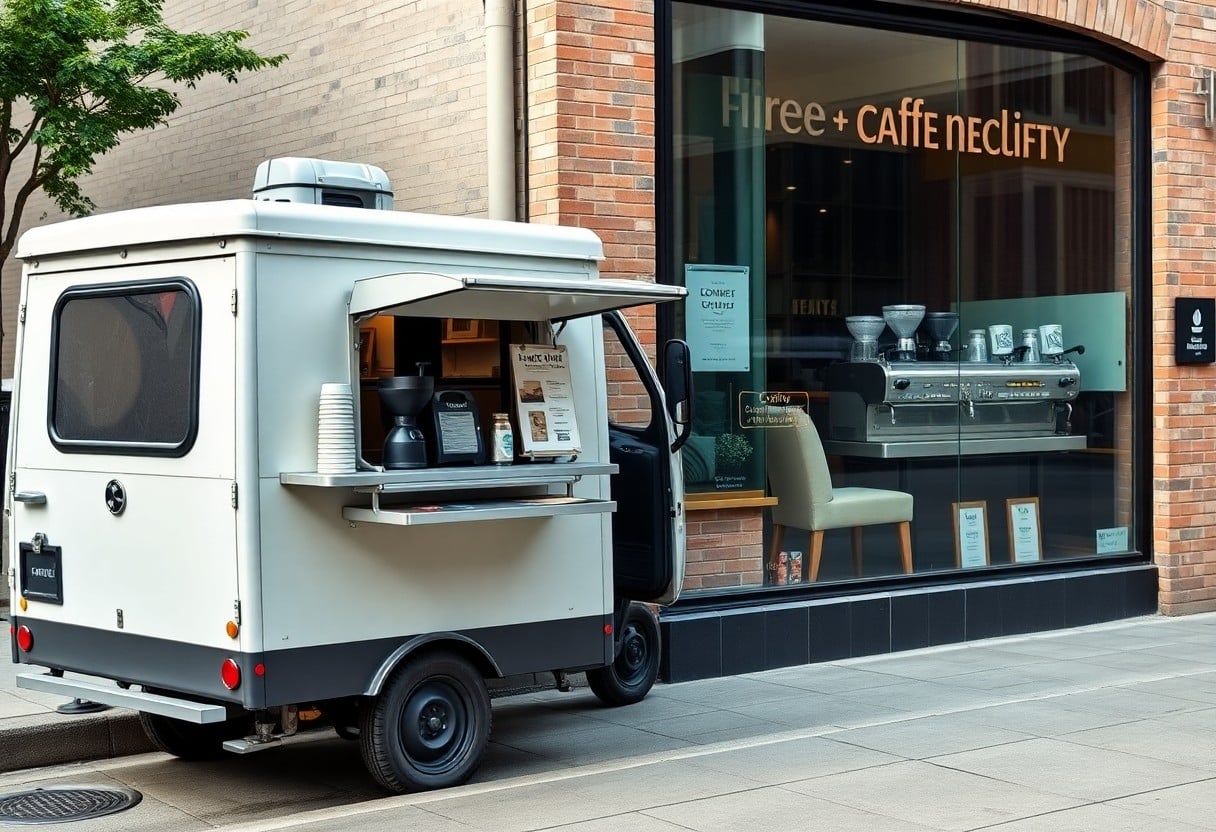
Scaling your operations depends on fixed space and staffing: cafés can add shifts, stations, and wholesale channels to grow service volume and menu complexity, while vans must plan around single-operator workflows, limited storage and hourly permits. You should model peak throughput and supplier reliability to decide whether mobile or brick-and-mortar growth meets your goals.
Mobile units force tight, cross-functional menus that maximize each ingredient and speed service; you must prioritize high-margin drinks and low-prep food. Cafés can afford experimental menu rotations, batch-brew options, and prepared foods that demand more equipment and staff, allowing you to broaden offerings without sacrificing consistency.
Equipment Constraints of Compact Mobile Kitchens
Space constraints in a van dictate every decision: refrigeration, grinder placement and work flow must minimize steps so you can serve quickly during rushes. You should design with modular racks, multi-use prep surfaces and clear cleaning zones to meet health inspections and keep service reliable.
Equipment choices trade capacity for mobility; you may select a compact espresso machine with lower steam power or a small oven instead of full-size units, meaning some menu items cannot be offered. You should factor fuel, water capacity and weight limits into equipment lists to avoid service interruptions.
Diversifying Offerings in a Full-Service Environment
Menu diversification in a full-service café lets you introduce baked goods, hot breakfasts and seasonal specialty drinks that require ovens, proofers and extra refrigeration; you can refine offerings based on sales data and customer feedback. You should coordinate inventory and prep schedules so expanded menus don’t slow service.
Beyond menu complexity, diversifying requires trained baristas, clear recipes and supplier relationships to maintain quality across more SKUs; you can introduce pairings and limited-time items to drive repeat visits while monitoring labor and food costs to protect margins.
Risk Management and Market Stability
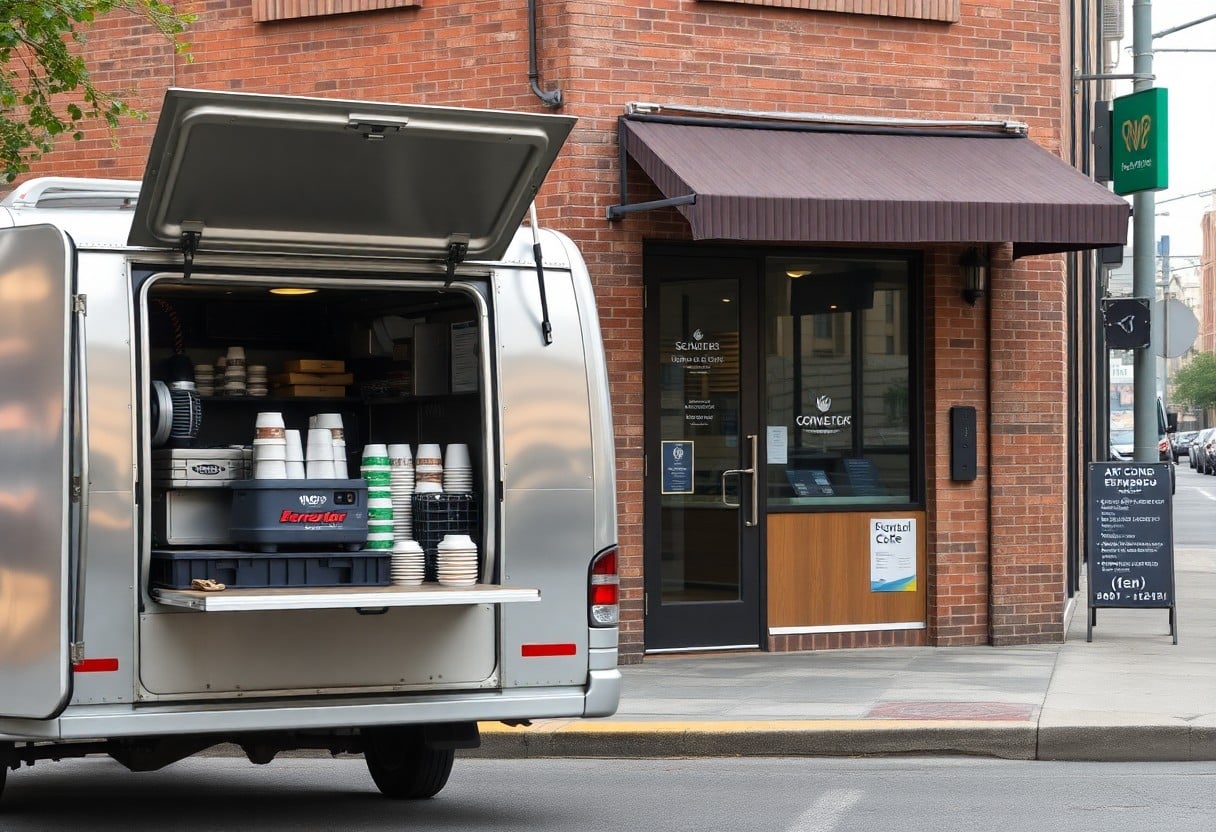
You must weigh mobility against predictability: a coffee van allows agile location choices but exposes you to sudden demand swings and shorter planning horizons, while a café steadies daily patterns and aids forecasting for staffing and supply.
Operators like you should maintain contingency funds and dynamic pricing to absorb short-term shocks; cafés trade higher fixed overhead for more consistent cash flow, which can soften the impact of local market shifts.
Weather Dependency and Seasonal Fluctuations
Rain can blunt van footfall and force relocations or closures, leaving you with volatile daily revenue that’s hard to forecast compared with an indoor café.
Seasons affect your staffing and menu choices: a van can follow seasonal hotspots but often faces steeper off-season drops than a café anchored by regular local customers.
Long-term Lease Obligations and Market Shifts
Leases commit you to long-term costs that a café must carry even if demand softens, whereas a van avoids rent but faces permit and parking rule changes that can quickly alter viable trade locations.
Market trends can shift customer flows slowly, giving you time to adapt, but abrupt zoning or rent escalations can force immediate strategy changes for fixed sites you occupy.
Clauses in long-term contracts matter to you: review escalation formulas, renewal options, and break terms so demographic shifts or new competitors don’t trap you in unsustainable expenses.
Final Words
From above you can see how coffee vans give you flexibility with location and quick setup while cafés offer stability, consistent menu and a permanent customer base. You should assess your priorities: mobility, staffing, permits, and brand presence. Visit When Is a Mobile Coffee Cart Better Than a Coffee Van for … for event-specific comparisons to help you decide which model suits your goals.
FAQ
Q: What is the primary difference between a coffee van and a café in terms of business model?
A: A coffee van operates as a mobile business focused on short, high-turnover transactions and location flexibility, while a café runs from a fixed premises that emphasizes repeat visits, longer stays, and a stable customer base. The van model relies on route choice, events, and footfall patterns to generate sales, whereas the café model depends on consistent daily traffic, local loyalty, and predictable operating hours.
Q: How do startup and ongoing costs compare between a coffee van and a café?
A: A coffee van typically requires lower initial capital for vehicle purchase and basic equipment but may have higher maintenance and fuel expenses over time. A café demands higher startup costs for leasehold improvements, furniture, utilities setup, and often a larger equipment set, with ongoing expenses that include rent, utilities, and higher staffing costs. Cash-flow profiles differ: vans can reach breakeven faster in some markets, while cafés often provide steadier month-to-month revenue once established.
Q: How do customer experience and atmosphere differ between the two formats?
A: Cafés offer a controlled, comfortable environment with seating, curated interior design, and opportunities for customers to linger, work, or socialize, which supports premium pricing and menu variety. Coffee vans deliver quick-service encounters, often outdoors or at events, creating a sense of novelty and convenience that suits grab-and-go customers. Brand presentation, menu storytelling, and customer interaction style must be adapted to each format to meet expectations.
Q: What limitations and advantages exist for menu offerings and equipment?
A: Vans face space and power constraints that limit the number of menu items and size of equipment, encouraging streamlined menus focused on high-margin core drinks and simple food items. Cafés can house larger espresso machines, grinders, ovens, and refrigeration, enabling expanded menus, specialty drinks, and food preparation. Both formats can use batch-prep techniques and smart sourcing to maintain quality while controlling waste.
Q: How do staffing needs and operational complexity differ?
A: Coffee vans often run with one to two staff members, creating simpler scheduling but placing significant reliance on multitasking and the owner’s presence in many cases. Cafés require more staff roles-baristas, cooks, managers-and structured shifts, which increases payroll costs and human-resources complexity but allows task specialization and higher service capacity. Training, quality control, and customer service systems are imperative in both models to maintain consistency.
Q: What regulatory and permitting differences should operators expect?
A: Mobile coffee vans must secure vehicle licensing, food-safety permits, vendor permits for specific locations or events, and compliance with local parking and street-vending rules. Cafés need commercial food-service permits, building and occupancy approvals, health inspections, and often landlord permissions tied to lease agreements. Timeframes and fees for approvals vary widely by jurisdiction, affecting launch speed and ongoing compliance costs.
Q: Which format scales more easily and how should a business choose between flexibility and stability?
A: Scaling a fleet of coffee vans can be faster in terms of unit rollout and market testing, since each van requires lower capital than a new storefront, but operations become complex with logistics, maintenance, and route management. Scaling cafés tends to demand higher capital per location and longer site-selection cycles, yet offers more predictable revenue streams and clearer systems for replicable customer experience. The choice depends on capital availability, appetite for operational complexity, desired brand experience, and strategic goals for growth versus mobility.