
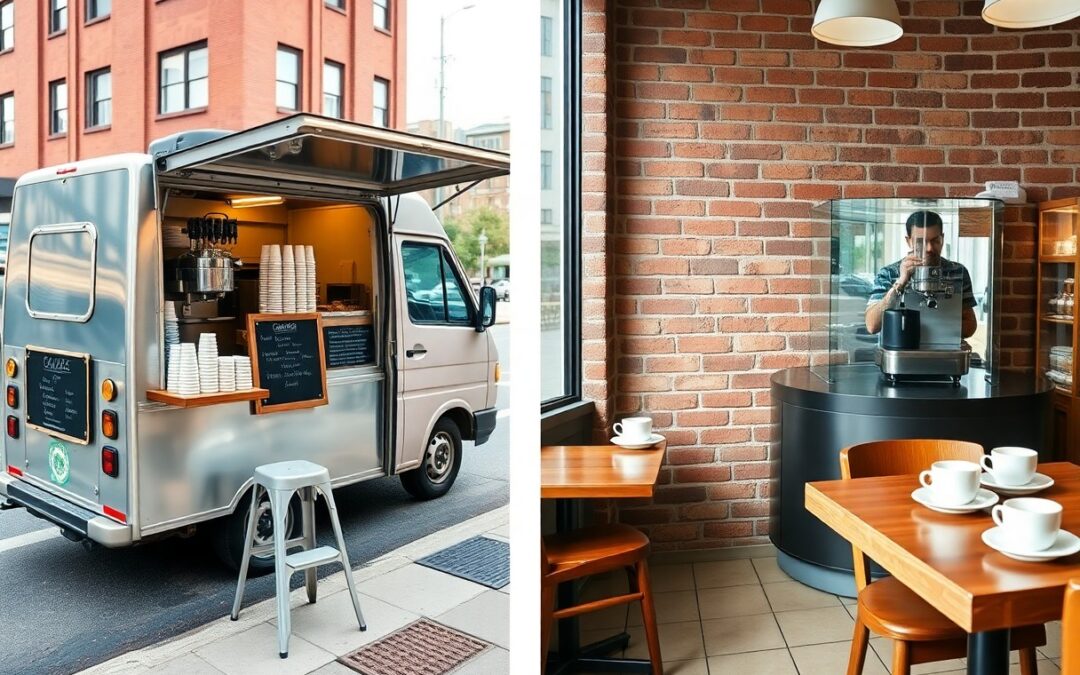
Coffee vans offer mobility, lower overhead, and flexible hours, while cafés provide stability, larger menus, and a fixed customer base; you should weigh startup costs, licensing, weather dependence, and staffing to choose which suits your goals.
Key Takeaways:
- Coffee vans have lower startup and ongoing costs and offer location flexibility, but face limited menu capacity, weather dependence, and permit/parking challenges.
- Cafés support higher customer volumes, consistent hours, and multiple revenue streams (sit-in service, food sales), but require larger capital, fixed rent, and more staffing and management.
- Operational differences shape lifestyle and risk: vans demand mobility, vehicle maintenance, and variable income; cafés demand front-of-house management, higher overhead, and steadier cash flow.
Initial Capital Investment and Startup Costs
Costs vary widely between a van and a café: a van reduces rent and long-term fixed expenses but requires vehicle purchase, conversion, generator, and compliance fees that can quickly add up. You should compare total upfront spend including permits and initial stock when assessing which model suits your budget.
Budgeting must factor in deposits, fit-out or conversion, equipment, insurance, licensing, and a cash buffer for 6-12 months of operations. You will face different payback timelines-vans often reach breakeven faster but demand higher maintenance reserves, while cafés need larger initial capital and longer ramp-up.
Vehicle acquisition and fit-out vs. leasehold improvements
Buying a van involves chassis cost, professional conversion for hygiene and power, roadworthiness and food-safety certifications, plus the potential to resell the vehicle later. You will need to plan for depreciation, specialist insurance, and location permits that vary by municipality.
Refitting a leased premises typically includes tenant improvements, extraction, plumbing and electrical upgrades, and landlord conditions that can inflate costs before opening. You should negotiate contributions and anticipate longer lead times and higher professional fees compared with a basic mobile fit-out.
Essential equipment requirements for mobile and fixed sites
Equipment needs overlap but diverge in scale: both require espresso machines, grinders, refrigeration, hot-water systems and POS, yet you will opt for compact, low-power models for a van and higher-capacity commercial machines for a café. You must match equipment to expected throughput.
Power and water infrastructure dictate equipment choices for vans: onboard tanks, pumps, inverters or generators change both capital and operating budgets, while cafés benefit from stable mains power, larger boilers and direct plumbing that support heavier-duty kit. You should price installation and ongoing energy costs accordingly.
Servicing and spares planning reduces downtime: you must budget for routine maintenance, emergency repairs, and at least one critical spare part so a single failure doesn’t stop sales. You will pay a premium for mobile technicians and faster part delivery when operating on the road.

Strategic Location and Audience Reach
You can shift routes to follow high-demand times and events, letting short bursts of intense sales offset slower days while preserving flexibility to test new neighbourhoods and menus.
Location shapes your permitting, opening hours, and customer profile; a fixed café gives consistent visibility and predictable access to repeat customers, while a van requires constant operational adjustments.
Capitalizing on mobility and event-based foot traffic
Mobile setups let you chase festivals, markets, and office rushes, turning concentrated crowds into rapid sales and exposure that builds brand recognition across multiple areas.
Events demand tight logistics, reliable power and water plans, and flexible staffing, so you must plan inventory and permits carefully to avoid missed opportunities or wasted stock.
Building a consistent local community in a fixed premises
Fixed locations allow you to become part of daily routines, host regulars, and craft an in-store atmosphere that encourages lingering visits and predictable morning and lunchtime trade.
Regulars provide steady income and word-of-mouth referrals, but you absorb higher rent and utility costs and must deliver consistent quality to maintain trust and loyalty.
Beyond daily service, run small workshops, partner with nearby shops, and offer loyalty perks so you deepen local ties, smooth weekday lulls, and turn casual customers into advocates.
Operational Overheads and Recurring Expenses
Van costs affect you: fuel, maintenance, insurance and pitch fees replace commercial rent, making outgoings more variable but often reducing fixed monthly burden compared with a café.
Cafe operations saddle you with steady expenses like rent, business rates, utilities and staff wages, so you must plan margins and peak trading to absorb those commitments.
Managing fuel, pitch fees, and vehicle maintenance
You will juggle fuel bills, pitch fees and routine servicing; careful route planning and maintenance schedules keep the van running, but unexpected repairs can quickly erode your margins.
Navigating high rent, business rates, and utility costs
High rents force you to set higher prices or chase consistent footfall to cover business rates and energy bills, so your profitability hinges on reliable customer numbers.
Fixed costs such as rates and utilities are predictable for budgeting, yet they can drain your cashflow during slow periods unless you diversify sales or cut discretionary spending.
Lease negotiations and targeted energy upgrades give you options: shorter leases limit long-term exposure while efficient appliances and lighting reduce your monthly outlay.
Menu Flexibility and Service Capacity
Space constraints in a coffee van force you to prioritize high-margin drinks and simplify stock, improving speed and minimizing waste. This typically reduces variety compared with a café, so you rely on fast turnover and targeted offerings to keep profits steady.
Running a café allows you to offer an expansive menu and manage larger order volumes, but you face higher staffing and inventory demands. You can capture varied customer preferences and increase average spend through diverse food and drink combinations.
Optimizing a condensed menu for limited workspace
Compact menus let you perfect preparation routines so you can serve consistently from cramped quarters. You focus on core recipes that share ingredients to cut waste and training time.
Focus on multi-use ingredients and modular recipes to expand perceived variety without extra equipment. You maintain speed during peak events while rotating seasonal items to keep regulars interested.
Expanding revenue through seating and diverse food pairings
Seating in a café creates opportunities for longer customer dwell times and higher ticket sizes through food pairings. You can upsell pastries, sandwiches, and combo deals that a van struggles to offer.
Pairings with food increase average spend and broaden your appeal for breakfast and lunch crowds, but you must manage plating, prep space, and food safety. You also need more staff and reliable supply chains to keep menu quality consistent.
Regulatory Compliance and Licensing
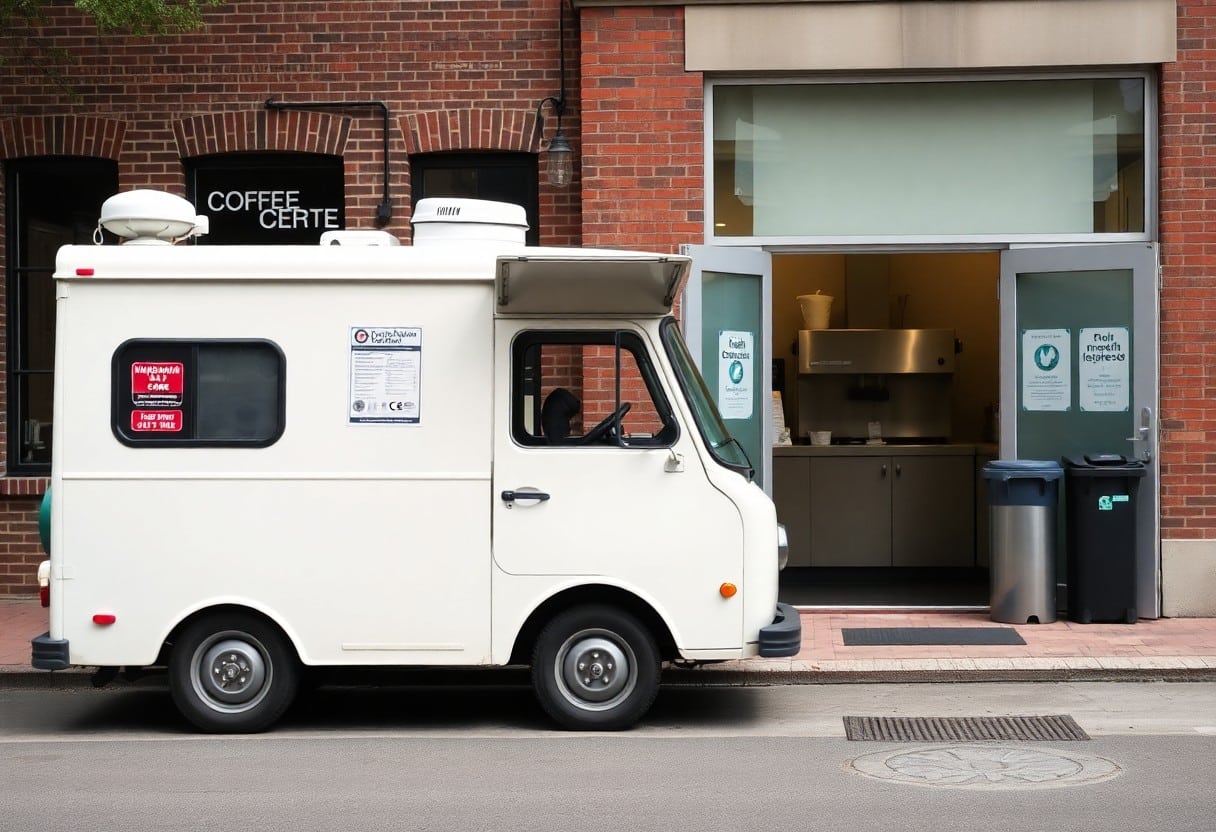
Running a coffee van means you juggle transient permits, vehicle inspections, and food safety certifications that change with each council, so you must keep meticulous records and renewal calendars.
Compared with a café, permanent sites often simplify inspection routines and long-term licenses, but you still handle building compliance, fire safety checks, and occasional health department audits.
Securing mobile street trading permits and health certifications
Securing mobile permits requires you to apply to multiple local authorities, demonstrate vehicle and equipment compliance, and pass food hygiene inspections while allowing time for site-specific approvals and seasonal restrictions.
Managing zoning laws and permanent establishment regulations
Managing zoning rules forces you to confirm allowed vending locations, setback distances from fixed businesses, and restrictions during events or on private land, which can limit where you operate day to day.
Expect to liaise with planning officers for permanent pitches, submit change-of-use or business-rate paperwork, and obtain landlord or council approvals if you want a long-term, café-like presence.
Marketing and Brand Identity
Branding should reflect whether you run a van or a café, since you will sell either mobility or a settled experience to customers; you can emphasize community ties or on-the-go convenience, and reference comparisons like Coffee Cart vs Coffee Truck: Which Is Best for Your Event? when planning strategy.
Consistency builds recognition, so you should standardize your logo, packaging, menu names, and tone across channels to make every interaction predictable and professional for repeat business.
Leveraging social media for a dynamic, moving location
You should use social posts to announce routes, share real-time updates, and post high-quality images that show location and mood, which helps followers find you and promotes impulse visits.
Establishing a physical destination and curated atmosphere
Atmosphere in a café allows you to control seating, lighting, and music so customers linger and spend more, while a van must create instant visual appeal at the counter to attract passersby.
Seating choices and layout affect how long people stay, so you should plan for comfort and sightlines if you want dwell time, or emphasize speed and curbside visibility if you rely on turnover.
Final Words
Now you must weigh the mobility and low overhead of a coffee van against the consistent foot traffic, seating, and broader menu a café provides. A van offers flexibility and lower startup costs but limits storage, staff capacity and can suffer from weather, permits, and variable locations. A café builds stronger brand presence and steadier income yet demands higher rent, fixed hours, more staff and larger capital outlay.
FAQ
Q: What are the main advantages of a coffee van compared to a café?
A: A coffee van offers mobility, allowing you to reach events, business districts, and different neighborhoods throughout the day. Lower initial rent and smaller fit-out costs make startup cheaper than leasing a shop. Shorter staffing needs reduce payroll costs and simplify scheduling. Direct sales at events and contracts with businesses can produce high-volume, concentrated revenue bursts.
Q: What are the main disadvantages of running a coffee van versus a café?
A: Limited space restricts menu variety, storage, and equipment, which can reduce average spend per customer. Weather and location constraints create unpredictable foot traffic and daily revenue swings. Vehicle maintenance, parking permits, and fuel add recurring operational headaches. Lack of seating and a permanent presence can weaken brand recognition and repeat customer habits.
Q: How do startup and operating costs compare between a van and a café?
A: Startup for a van typically includes vehicle purchase or conversion, espresso equipment, signage, initial stock, and permits, resulting in a lower upfront figure than a full shop fit-out. A café requires lease deposits, build-out, plumbing and ventilation work, furniture, and larger initial inventory, raising initial capital needs. Operating costs for a van include fuel, maintenance, mobile permits, and event fees, while cafés face fixed rent, utilities, larger staff wages, and higher ongoing maintenance for a storefront.
Q: How do profit potential and revenue streams differ?
A: Coffee vans can achieve strong margins on single items and benefit from concentrated sales at busy events or contracts, producing quick cash flow. Cafés can generate steadier daily income through higher footfall capacity, expanded food menus, and add-on sales like pastries, retail bags of beans, and specialty drinks. Long-term profitability for a café often depends on customer loyalty and consistent volume, while a van relies on securing regular spots and event bookings.
Q: What licensing, health, and regulatory issues should I expect for each option?
A: Mobile units require vehicle registration, mobile vendor permits, food hygiene certifications, and compliance with vehicle health and safety standards; water supply and waste disposal plans must meet local rules. Cafés face building permits, food business registration, fixed premises health inspections, occupancy limits, and sometimes zoning restrictions. Both formats demand consistent record-keeping for food safety and staff training in hygiene practices.
Q: How do work-life balance and daily operations compare?
A: Running a van often means early starts, long setup and teardown periods, and physical work delivering and restocking equipment, with the benefit of varied locations and the potential for flexible scheduling. Managing a café usually involves longer continuous opening hours, supervisory duties, staff management, and front-of-house presence, producing more predictable daily routines but heavier managerial responsibility. Owner involvement tends to be high in both models during early growth stages.
Q: Which option is better for scaling or selling the business later?
A: Scaling with multiple vans can be faster and require less capital per unit, allowing rapid geographic expansion and franchising of the mobile model, though each unit carries limited throughput. Scaling cafés requires larger capital for additional sites and management layers but can build a stronger brand presence and higher per-location revenue. Resale value depends on consistent financial records, established customer base, and transferable contracts; cafés often show steadier earnings, while van fleets appeal to buyers seeking mobility and event-focused income.