

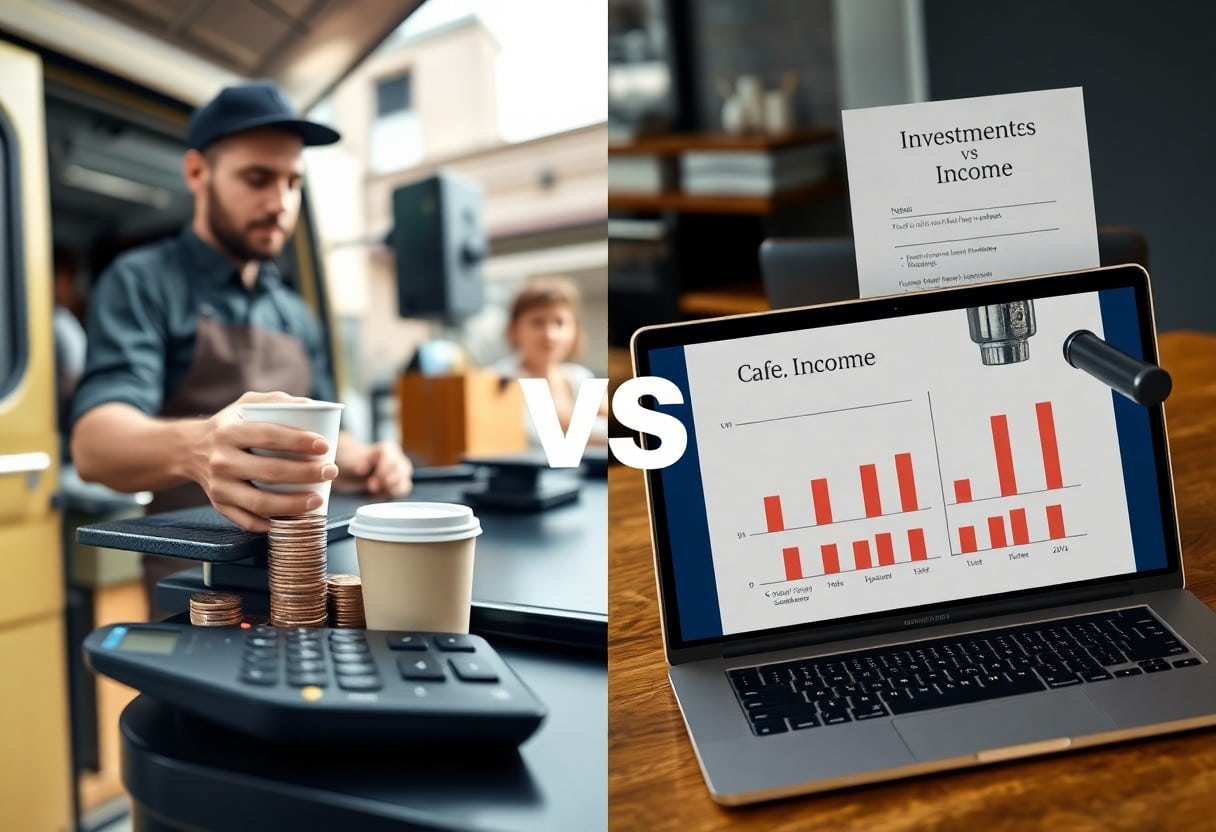
With clear cost comparisons and revenue projections, you can assess whether a coffee van or a café yields faster returns, predictable income, and manageable expenses while weighing scaling and location impacts.
Key Takeaways:
- Coffee van requires significantly lower startup capital (vehicle, equipment, permits) and typically reaches breakeven faster, while a café demands larger rent and fit-out costs with a longer payback period.
- Coffee van has lower fixed overheads and flexible operating hours but limited daily customer volume, whereas a café carries higher fixed costs yet can generate steadier, higher average sales and ticket sizes.
- Coffee van offers mobility and lower risk for testing locations or seasonal demand, while a café provides stronger brand presence and greater long-term growth potential if consistent footfall exists.
Initial Capital Expenditure: Outfitting and Equipment
Outfitting your operation requires allocating capital for core equipment, permits, initial inventory and a contingency, with vans prioritizing compact extraction gear while cafés need full-size espresso groups, refrigeration and back-of-house fittings.
Planning your budget by separating equipment, installation, professional fees and short-term working capital helps you evaluate financing, leasing options and expected depreciation.
Mobile Unit Acquisition and Customization
Mobile unit purchases range from lower-cost used vans to fully converted trucks, and you should price in vehicle condition, modification labor, registration and mobile-specific certifications.
Customization for a van demands electrical capacity, potable water systems, waste containment and ventilation, so you must budget for branded exterior work, extraction-grade machines and compliance inspections.
Brick-and-Mortar Leasehold Improvements and Fit-out
Leasehold fit-outs typically incur higher trades costs for plumbing, gas, electrical upgrades, extraction hoods and structural alterations, and you should factor landlord requirements and tenant improvement allowances into estimates.
You will face longer lead times for permits, contractor scheduling and bespoke millwork in a brick-and-mortar fit-out, increasing pre-opening expenses but delivering greater capacity and customer comfort.
Budgeting extra for fire suppression, accessibility upgrades, commercial waste handling and signage-often 15-30% above contractor quotes-gives you a buffer against scope changes and protects opening cash flow.
Operational Overheads and Fixed Costs
Operational fixed costs tilt the balance: a café locks you into monthly rent, utilities, and staff wages that compress your margins but offer predictable scaling for forecasting and financing.
You gain lower baseline commitments with a van, but variable expenses and seasonal dips mean you must plan cash reserves and flexible staffing to cover slow periods.
Rent and Utilities vs. Pitch Fees and Fuel
Rent for a café often dominates monthly outgoings, so you need precise sales targets and contingency for lease increases and utility spikes.
Fuel and pitch fees for a van vary by location and event; you should model travel, setup time, and per-day site charges to understand true operational breakeven.
Insurance, Licensing, and Permit Requirements
Insurance premiums differ by format: a café centers on property and stock cover while a van demands vehicle insurance and higher public liability, so you must compare quotes.
Licensing can impose recurring costs and restrictions-food safety certificates, council trading permits, and inspection schedules require you to budget time and fees into operations.
Permits often have lead times and renewal fees, so you should track expiration dates, keep documentation accessible, and set aside funds to avoid fines or temporary closures.
Labor Dynamics and Staffing Financials
Labor costs shift sharply between a van and a café; you face lower hourly payroll in a mobile unit but absorb significant owner-hours and opportunity cost for peak service windows.
Comparing total staffing overhead, you will find cafés carry steady wages, benefits, scheduling complexity, and payroll taxes that increase fixed monthly burn and require buffer in pricing.
Owner-Operator Efficiency in Mobile Units
You can run a coffee van solo to cut payroll, but your personal capacity limits service volume and growth unless you budget for relief shifts or part-time help.
Scaling Workforce and Payroll Taxes for Cafés
Staffing a café requires layered roles-baristas, shift leads, kitchen support-and you must forecast overtime, employer tax rates, and paid leave into labor cost models.
Payroll taxes, workers’ compensation, and benefits typically add about 12-30% on top of base wages; you should stress-test scenarios to see how margin compression affects net income as staff scales.
Revenue Streams and Volume Projections
Coffee vans often mix drink sales, grab-and-go snacks, and event catering, letting you diversify revenue without high fixed costs. With lower overhead, you can turn a modest daily customer count into healthy margins by optimizing price points and upsells for peak times.
Cafés will usually rely on steady in-store sales, subscriptions, and premium offerings to hit volume targets, requiring you to balance rent, staff, and menu breadth. You should model weekday versus weekend traffic to forecast break-even and project income at varying occupancy levels.
Footfall Consistency and Peak Hour Limits
Daily footfall for a van can swing widely by location and weather, so you should plan conservative, realistic averages and contingency days for poor conditions. Tracking repeat customers and local events will sharpen your volume projections over time.
Peak hours often compress revenue into short windows, meaning you must assess service speed and staffing to avoid missed sales. You can simulate busy periods to estimate maximum throughput and the incremental revenue lost when queues exceed acceptable wait times.
Menu Diversification and Average Transaction Value
Menu choices directly shape your average transaction value; you should test combos and add-ons to raise ticket size without complicating operations. For a van, simple high-margin items increase profitability; for a café, layered offerings justify higher average spends.
Expanding items like seasonal drinks, food pairings, and loyalty discounts can nudge customers to spend more per visit, but you must monitor prep time and ingredient costs to keep margins healthy. You should A/B test additions before committing shelf space and menu real estate.
Pricing strategy matters: you should set combo discounts to increase average spend while keeping perceived value. Small price tiers, clear upsell prompts, and bundled offers will boost per-customer revenue without elongating service times.
Profit Margin Analysis and Unit Economics
You weigh per-item margins against fixed costs; mobile vans often yield higher gross margin per cup thanks to lower rent while cafés rely on volume to recover overheads. Review setup trade-offs in Pros and Cons of Coffeeshop Ownership: Mobile vs Brick- ….
Cost of Goods Sold (COGS) Comparison
Compare COGS line-by-line: beans, milk, syrups, disposables and waste, noting bulk discounts for cafés versus higher per-item disposable costs for vans.
COGS Breakdown
| Mobile Van | Fixed Café |
|---|---|
| Beans 18-22%; disposables 6-10% | Beans 22-28%; reusable wares lower disposables |
| Higher per-cup packaging, variable waste | Bulk purchasing lowers unit cost, higher storage |
Net Margin Targets for Mobile vs. Fixed Locations
Expect net margins around 10-25% for efficient mobile operations and 5-15% for fixed cafés early on; you should model location, labour, and cup volume to refine targets.
Risk Mitigation and Return on Investment (ROI)
You should model cash flow scenarios for each concept, isolating fixed and variable costs to see which option limits downside and speeds ROI.
Consider setting aside working capital, buying adequate insurance, and testing pricing to reduce volatility; you can use payback period and ROI percentage to compare performance objectively.
Asset Depreciation and Resale Value
Vehicles lose value faster than built-in café fixtures, and you should budget for higher depreciation and mechanical upkeep when forecasting resale value.
Assess resale prospects by keeping service records, choosing widely supported equipment, and maintaining clean branding so you can recoup more on sale or pivot into leasing or franchising.
Break-even Timelines and Growth Scalability
Sales volume required to break even is usually lower for a coffee van because initial capital and monthly overheads are smaller, so you can reach payback in months rather than years.
Scale considerations differ: you can open additional vans with modest capital and replicate routes quickly, while expanding cafés requires larger property, staffing, and permit commitments that extend timelines.
Track daily margins, test peak locations and catering contracts to accelerate break-even; you should run scenario analyses and reinvest early profits into the fastest-growing channels to shorten payback and support expansion.
Summing up
Drawing together you see that a coffee van requires far lower startup costs and quicker breakeven, letting you convert investment to income faster if you prioritize mobility and low overhead. A café demands higher capital, staff and fixed costs but offers greater scale, predictable weekday revenues and asset value. You should weigh available capital, time commitment and growth goals to choose the model that fits your income timeline.
FAQ
Q: What are typical startup costs for a coffee van versus a café?
A: Startup costs vary by location and quality of build. A coffee van commonly requires $20,000-$80,000 for vehicle purchase and conversion, $3,000-$15,000 for espresso equipment and smallwares, $1,000-$5,000 for permits, POS and initial stock, plus branding and fit-out costs of $500-$5,000. A café commonly requires $80,000-$400,000 for leasehold improvements, commercial equipment $20,000-$100,000, deposits and first months’ rent $10,000-$80,000, furniture and signage $5,000-$30,000, and working capital for staff and inventory $10,000-$50,000.
Q: How do monthly operating expenses compare between a van and a café?
A: Monthly expense profiles differ in scale and composition. A coffee van typically incurs fuel, maintenance, parking or pitch fees, mobile permits, insurance, stock and single or two-person wages, often totaling $2,000-$6,000 per month in many markets. A café has rent and utilities, payroll for several staff, larger inventory, waste and washing costs, higher insurance, and marketing, often totaling $10,000-$40,000 per month depending on location and size.
Q: What revenue should I expect from a coffee van versus a café?
A: Revenue depends on footfall, location, hours and mix of products. A well-sited coffee van can sell 80-200 drinks per day with average spend $3-$7, producing roughly $6,000-$35,000 per month in many cases. A café serving breakfast and lunch with seating may generate higher average spend $6-$12 per customer and monthly takings in the $20,000-$120,000 range for small to medium sites in busy areas.
Q: How long does it typically take to break even for each business model?
A: Payback periods depend on margins, fixed costs and initial investment. A coffee van often reaches breakeven in 6-18 months if operated consistently in good locations and with controlled costs. A café commonly requires 12-36 months or longer to break even because of larger fit-out costs and higher fixed monthly overheads.
Q: How do profit margins and return on investment compare between a van and a café?
A: Margin profiles reflect different cost structures. A coffee van frequently posts higher percentage net margins, commonly in the 10-25% range after wages and variable costs, because overheads are lower. A café typically has lower net margins, often 5-15%, because rent and staffing scale up; investors should expect ROI timelines around 1-3 years for vans and 3-7 years for cafés, with wide variation by market and management.
Q: What financing and funding options suit a coffee van versus a café?
A: Financing choices include personal savings, small business loans, equipment finance, leasing, investor capital, and grants. A coffee van is easier to finance with smaller loan amounts, vehicle/equipment financing or a lease-to-own approach. A café often needs larger loans or investor capital to cover fit-out and deposits, plus a stronger business plan and cash buffer for the initial months of operations.
Q: What are the main risks and hidden costs to plan for when choosing between a van and a café?
A: Risks and hidden costs affect both models but differ in type. A coffee van faces location variability, weather-related revenue swings, higher maintenance and vehicle downtime, and stricter mobile permits in some areas. A café faces rent increases, longer lease commitments, higher staffing and compliance costs, and larger food waste and utility bills. Building a 3-6 month cash reserve, budgeting for equipment replacement, and securing multiple revenue channels such as catering or events help mitigate those risks.