
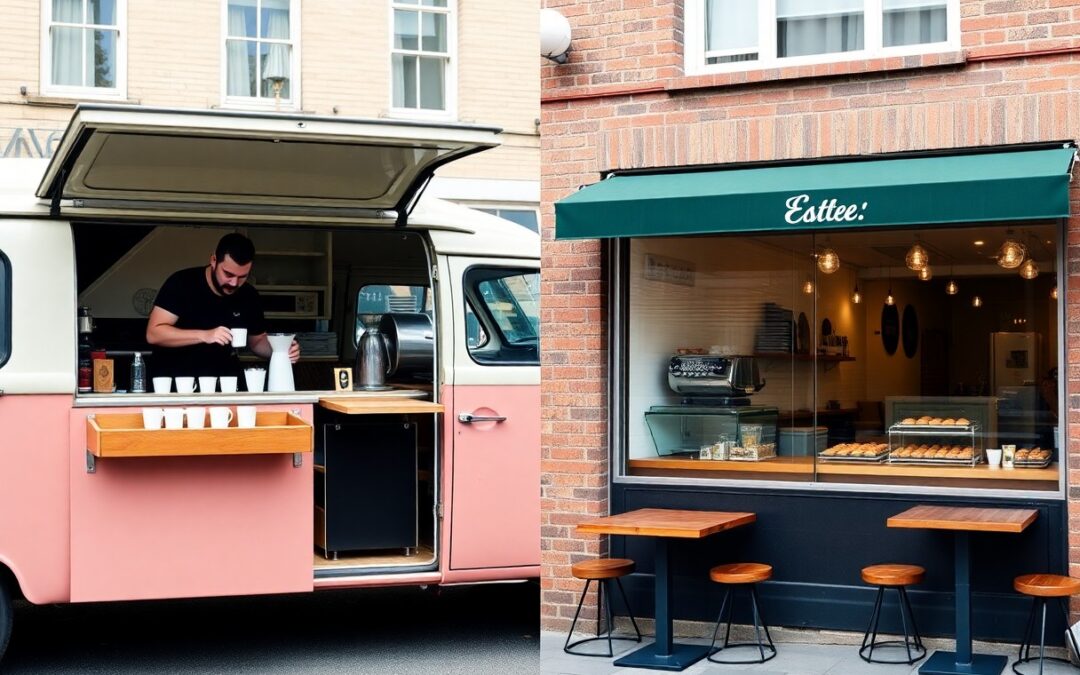
Key Takeaways:
- Peripatetic coffee vans deliver authenticity through immediacy, visible brewing, and personal interaction with owners who source and prepare beans on the spot, creating a sense of place and spontaneity.
- Established cafés deliver authenticity via curated atmosphere, consistent technique, and layered rituals-trained staff, stable menu, and physical space that frame the coffee experience as intentional and repeatable.
- Choice depends on preference: vans prioritize originality and local connection at the cost of consistency and comfort; cafés prioritize reliability and contextual cues but can feel institutional and staged.
Defining Authenticity in the Specialty Coffee Sector
Authenticity in specialty coffee hinges on how you interpret provenance, craft, and the social rituals around a cup, and you judge it by consistency between claim and experience. You expect sourcing transparency, reproducible technique, and stories that align with the sensory result to consider a brew genuinely authentic.
You test authenticity by placing a cup against expectations: whether a van’s immediacy or a café’s curation delivers the same traceable flavors and knowledgeable service that the origin narrative promises.
The intersection of craft, origin, and narrative
Craft defines your expectation: precise roasting and extraction signal competence, and you read those cues against declared origin and processing details. You penalize mismatch between tasting notes and provenance claims more than theatrical storytelling.
Origin stories convince you when they specify farms, varieties, and processing methods, because you can then connect those facts to identifiable flavor markers and barista explanations during service.
Sensory perception and the aesthetics of service
Sensory cues shape how you judge authenticity: aroma, acidity, mouthfeel, and consistency during service all feed your assessment, and you weigh each sip against the environment that produced it. You find honesty where presentation and flavor cohere.
Service aesthetics influence perception because you register transparency in a van’s open workflow and expertise in a café’s curated rituals, and either context validates authenticity when taste and narrative align.
Visuals, sound, and tactile elements guide you before the first sip, so you notice when a refined setting serves a weak cup or when modest surroundings deliver exemplary brewing, both of which condition your final judgment of authenticity.
The Peripatetic Coffee Van: The Allure of Transience
You notice how a mobile setup makes authenticity feel immediate: the van’s site, sound, and short-lived crowd shape a cup tied to place and moment rather than brand signifiers.
Street movement means you judge quality by encounter-how the barista talks about beans, how the crema looks, and how the experience interrupts your day with something genuine.
Spontaneity and the disruption of urban routine
Morning detours become invitations as you reroute for a promising aroma; that small disruption turns your commute into a string of discoveries that redefine what feels real.
The “street food” ethos and nomadic intimacy
Neighbors gather and you find yourself swapping ordering tips and tasting notes, making the interaction itself a key part of the coffee’s authenticity.
Sitting curbside, you absorb stories about sourcing and technique directly from the maker, so provenance feels lived and accessible rather than remote or packaged.

The Established Café: The Architecture of Permanence
You learn the cues of an established café quickly: worn bar stools, a predictable espresso pull, a staff who can finish your order. Those physical constants signal permanence, letting you relax into routines and rituals that a van rarely provides. Fixed layout supports memory, efficiency, and a sense of belonging.
Cultivating the “Third Place” through physical design
Design arranges seating, sightlines, and acoustics so you feel invited to linger; window seats, plants, and layered lighting create micro-environments for work, gossip, or solitude. Circulation paths and counter placement guide interactions, turning strangers into acquaintances and the shop into your habitual third space.
Heritage, ritual, and the stability of local identity
Memory anchors the café: local posters, a long-serving barista, and a consistent roast profile teach you what this place means across seasons. Those signals let you map personal history onto the shop, making rituals-your morning order, weekend meetups-feel like an extension of neighborhood identity.
Local patronage and community events cement the café’s role, so you associate its menus, decor, and timing with civic rhythms; the café becomes a living archive of gatherings, arguments, celebrations, and quiet afternoons that define your sense of home.
Consumer Perception and Social Capital
Perception guides how you assign social value to a coffee choice: a steady café signals expertise and status, while a wandering van conveys grassroots authenticity and community access. Your social capital shifts when peers read those cues, so the venue becomes part of how you present taste and affiliation.
The prestige of the curated interior environment
Inside a carefully designed café you encounter signals-lighting, displays, staff knowledge-that let you claim cultivated taste and membership. You often trade higher price for the social proof that these interiors provide, using visits as content and conversation currency.
Agility and the democratization of the coffee experience
Mobility lets a coffee van lower barriers to specialty coffee by appearing where you live, work, and gather, making quality more accessible. You experience participation and novelty that feel less about status and more about shared moments.
Practical benefits include lower cost, direct interaction with baristas, and heightened local visibility, all of which let you build trust and connect provenance stories to real community encounters.

Comparative Impact on Community Fabric
| Peripatetic Coffee Van | Established Café |
|---|---|
| Pop-up social nodes that stir short-term foot traffic and animate overlooked corners. | Consistent gathering place that preserves routines, local networks and intergenerational ties. |
The coffee van as a catalyst for urban activation
You notice vans turning vacant lots into lively spots, drawing passersby with curated pours and micro-events that increase local activity and diversify who occupies public space.
Vans create brief but intense rituals where you meet neighbors and local makers, offering low-cost experiments that test ideas and introduce new cultural flavors to familiar streets.
The brick-and-mortar shop as a multi-generational anchor
A brick-and-mortar café anchors routines, where you rely on consistent hours, familiar staff and a physical presence that signals stability in the neighborhood.
Regular rituals-study sessions, morning commutes, weekend visits-turn the shop into a place where you observe generations sharing space and forming lasting relationships.
Beyond daily service, the shop accumulates local markers-photos, noticeboards, staff histories-so you inherit community narratives that persist across years and families.
Final Words
To wrap up you assess authenticity by what you value: a peripatetic coffee van gives immediacy, local sourcing stories and personal barista interaction that make you feel part of a moment, while an established café offers consistent technique, curated space and provenance that makes you trust the product. You decide whether spontaneity and neighborhood charm or consistency and context define authenticity for you.
FAQ
Q: What does “authenticity” mean when comparing a peripatetic coffee van to an established café?
A: Authenticity combines bean provenance, transparent roasting and sourcing, brewing technique, barista knowledge, and the cultural or personal story behind the cup. A van often trades on mobility and direct encounters that highlight momentary connections, while a café anchors experience in a consistent space, rituals, and repeatable service.
Q: Which setting is more likely to produce higher coffee quality?
A: Quality depends on equipment, operator skill, ingredient control, and consistency. Many vans use compact but well-tuned grinders and machines and can deliver excellent espresso when owners prioritize maintenance and water profiling. Established cafés usually have larger, more stable equipment and infrastructure that support consistent extraction over long service hours.
Q: Does a mobile van inherently make coffee feel more authentic?
A: Mobility adds context and immediacy but does not guarantee authenticity by itself. A van that emphasizes traceable sourcing and educates customers about beans can feel deeply authentic. The same standards of transparency and care can be met in cafés, so authenticity follows practice rather than venue type.
Q: How do sourcing and roasting practices differ between vans and cafés?
A: Sourcing choices reflect operator values rather than the fixed format of the business. Many vans partner with independent roasters or offer small-batch roasts that showcase traceability and freshness. Cafés often maintain long-term supplier relationships and may run single-origin programs or in-house roasting, enabling broader education and menu depth.
Q: How much does barista skill influence perceived authenticity?
A: Barista skill directly shapes flavor, consistency, and the storytelling that frames authenticity. Skilled operators can dial in shots, adjust grind and dose, and explain origin and process to customers. Training and shift structure favor cafés for sustained service, but focused van operators commonly match or exceed those skills through concentrated practice.
Q: Which model builds stronger community and cultural authenticity?
A: Community forms around regularity, interaction, and meaningful exchanges. Cafés create stable “third places” with seating, routines, and events that embed them in neighborhood culture. Vans create pop-up intimacy and serendipity, inserting themselves into markets and events and attracting diverse crowds; both formats can build authentic cultural ties when they offer consistent presence and engagement.
Q: How should a customer choose between a van and a café when seeking authentic coffee?
A: Customers should prioritize transparency, taste, and the story behind the cup. Ask about roast date, bean origin, and brewing methods, and taste when possible. Choose a café for consistency, space, and program depth, or pick a van for personal interaction, novelty, and on-the-spot provenance storytelling; the better choice depends on which aspects of authenticity matter most to the individual.