
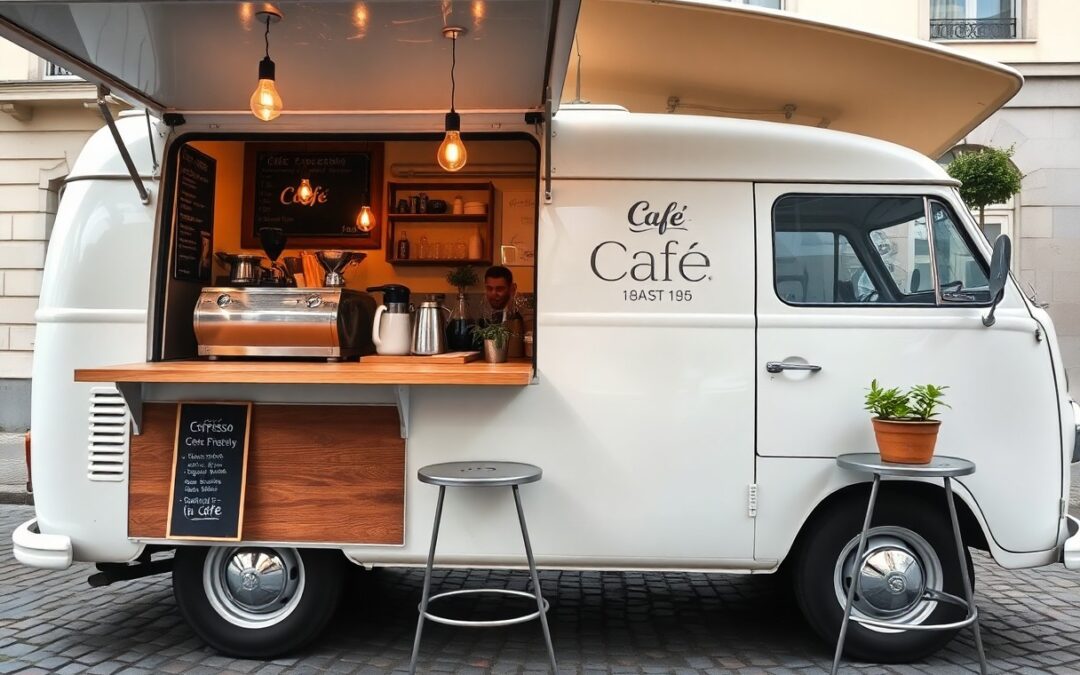
Van design choices can transform your simple coffee van into a stylish café on wheels; you get layout, equipment, branding, and service guidance to build a profitable mobile café.
Key Takeaways:
- Design upgrades: prioritize a compact café-style layout with an eye-catching exterior wrap, a serving window and drop-down counter, warm lighting, and removable seating to create a welcoming atmosphere without sacrificing mobility.
- Equipment and menu: install a compact espresso machine, quality grinder, water filtration and efficient storage; offer a tight menu of high-margin espresso drinks and grab-and-go pastries to speed service and reduce waste.
- Branding and operations: build a consistent visual identity and packaging, publish reliable hours and locations, maintain active social media, and train staff for fast, friendly service and efficient workflow.
Designing the Interior Layout
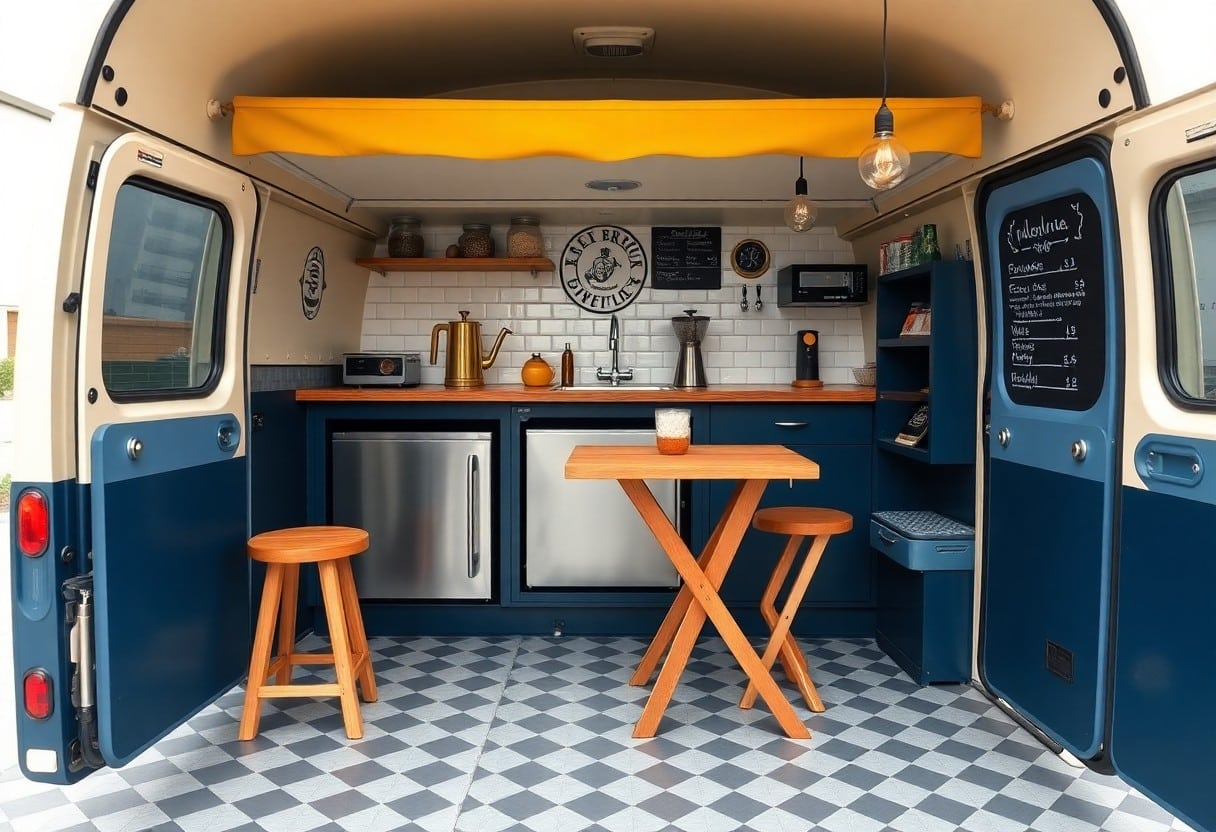
Plan the layout around a clear service triangle: machine, grinder, and service window so you minimize motion. Place storage under counters and use vertical shelving to free floor space. Keep plumbing and electrical runs short to avoid costly retrofits while preserving counter continuity for efficient service.
Balance seating and prep by reserving compact fold-down counters for occasional customers while you dedicate the main counter to drink assembly. Use glass or light finishes to make the space feel larger and maintain sightlines for safe, fast service.
Tips for maximizing workflow in confined spaces
Optimize every inch by mapping steps your staff take during peak shifts and positioning tools so you minimize motion. Standardize shot, steam, and pour zones so your team works predictably, and include clearly labeled storage for syrups, cups, and disposables.
- Keep grinders and beans within arm’s reach of the machine so you cut steps.
- Mount commonly used syrups and tools on the counter or wall to free drawers.
- Choose compact, multi-function equipment to reduce footprint without sacrificing output.
Recognizing how small changes reduce time and strain will help you decide equipment placement and crew routines.
How-to choose stylish yet durable materials
Select materials that resist stains, heat, and scuffs-porcelain tiles, stainless steel, and commercial-grade laminates perform well and let you maintain a polished look. Match finishes to your brand while choosing surfaces that accept easy cleaning and repair.
Consider upholstery and trim in dark, stain-tolerant fabrics and opt for modular counter panels you can swap if damaged; these choices let you keep the van stylish without frequent overhauls.
Equipping the Mobile Café
When upgrading your van, balance workflow, power, and storage while consulting proven plans like Building A Coffee Cart to adapt countertop layouts and service access to a mobile footprint.
Essential factors for selecting commercial-grade machines
You must match machine capacity, power draw, and serviceability to your expected volume and vehicle electrical limits. Evaluate boiler type, group count, and grinder burr quality.
- Capacity aligned with peak cups per hour
- Power and amperage compatible with van systems
- Accessible panels for routine maintenance
This lowers downtime and helps maintain consistent drink quality.
Tips for installing efficient water and waste systems
Plan your fresh and greywater volumes, onboard heater, and filtration according to local codes and service hours. Select pumps, float switches, and backflow prevention that fit compact layouts.
- Tank sizes scaled for full-day service
- Reliable pumps with auto-shutoff
- Proper filtration and UV options where needed
The correct sizing prevents mid-shift shortages and fines.
Install isolation valves, accessible drain points, and inspection ports so you can service lines quickly and avoid costly downtime.
- Accessible shutoffs for each tank
- External drain access for easy emptying
- Secure mounts to prevent sloshing on the road
The setup saves time during inspections and daily maintenance.
Power and Utility Management
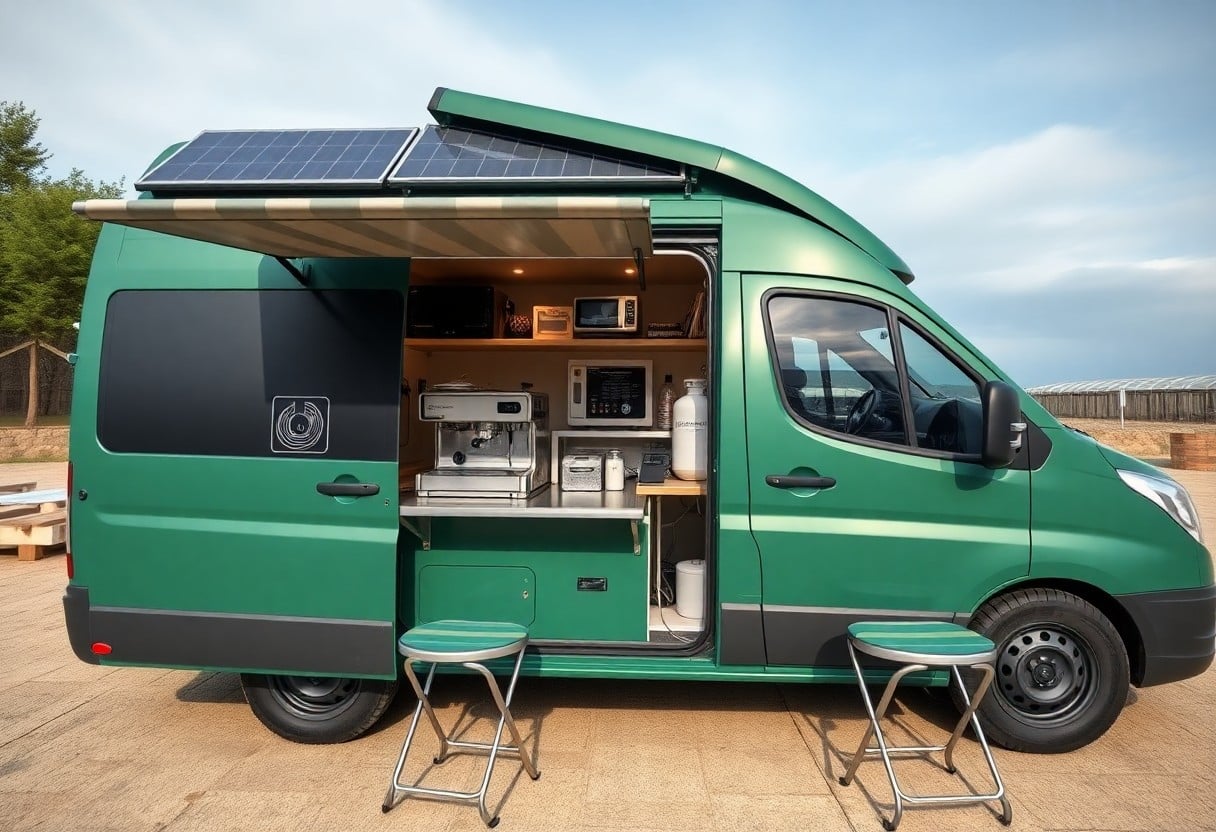
You must balance run-time priorities: power for grinders and espresso machines first, refrigeration next, lighting and POS last to avoid brownouts during peak service. Efficiently place outlets, label circuits, and include surge protection to minimize downtime and simplify troubleshooting.
Plan on a dedicated distribution panel, an inverter/charger sized to peak load, and a battery bank sized for brief blackouts and equipment startup demands. Integrate remote monitoring to track consumption and faults from your phone.
How-to calculate electrical loads for equipment
Begin by listing each appliance with its rated wattage and expected duty cycle, and note startup multipliers for motors like espresso machines and compressors. Multiply continuous loads by duty cycles to estimate average draw and record peak startup watts separately.
Next convert total watts to amps at your system voltage, then size conductors, breakers, and inverter to handle both continuous and peak loads with a 20-30% safety margin. Update calculations whenever you add or swap equipment to keep margins accurate.
Factors in choosing silent and sustainable power sources
Consider noise ratings (dBA), emissions, and fuel availability when comparing generators or battery systems, prioritizing inverter generators or lithium battery packs for quieter operation. Weight and mounting constraints will influence your choices as much as runtime.
Evaluate maintenance intervals, refueling logistics, and lifecycle costs so the power source fits your service model and reduces interruptions.
- You should prefer inverter generators for low harmonic distortion when running sensitive electronics and espresso equipment.
- You can extend silent operation with solar panels and a charge controller paired to batteries for daytime service.
- You must plan for secure mounting, ventilation, and easy access for routine service to keep downtime low.
- Any backup strategy should include redundancy, quick refuel or battery-swap options, and a tested transfer procedure.
Branding and Exterior Styling
You can treat the van surface as layered signage: place a bold logo, a readable menu near the service window, and small accents that hint at your interior vibe so customers identify the van from afar.
Choose materials and finishes that match your concept – a muted matte wrap for a refined café or brushed metal trim for an industrial look – while keeping cleaning and durability in mind.
Tips for creating a cohesive visual identity
Keep your palette tight, select one signature typeface, and repeat a simple icon so every element from cups to uniforms feels connected to your van.
- Limit colors to two or three for instant recognition
- Use high-contrast type for legibility at distance
- Place the logo where it reads from typical approach angles
- Coordinate packaging and staff attire with exterior hues
The repeat of a single motif on cups, aprons, and signage ties each customer touchpoint back to your mobile café.
How-to use vehicle wraps to attract customers
Use bold imagery and concise copy on a full or partial wrap so your van functions as a moving billboard that communicates product, vibe, and call to action as it passes potential customers.
Make sure you provide printers with vector art, correct scale, and bleed, proof the wrap at full size, and plan removable sections for permits and service access to avoid costly reworks.
Final Words
Presently you can transform a simple coffee van into a stylish café on wheels by prioritizing cohesive design, optimized layout, and quality equipment. Your brand identity, focused menu, and consistent service attract repeat customers while smart storage and workflow keep operations efficient. Ongoing maintenance and attention to detail preserve your image and performance.
FAQ
Q: What permits and legal steps are required to convert a simple coffee van into a mobile café?
A: Check local municipal rules for mobile food vendor licenses, food handler permits, and vehicle conversion approvals. Obtain health department certification for food service, and meet sanitation standards for water, waste disposal, and refrigeration. Secure vehicle insurance that covers commercial use, and confirm parking and zoning rules where you plan to operate.
Q: How should I plan the interior layout for efficient service in a small van?
A: Measure available space and design a workflow that moves linearly from order to brew to pickup. Position the espresso machine, grinder, and milk station close together, and place sinks and waste disposal at the rear for cleaning. Add secure storage under counters, sliding shelves for cups and supplies, and a low-profile service window to reduce crowding.
Q: What equipment is best for a stylish, compact café on wheels?
A: Choose a compact commercial espresso machine rated for high-cycle use and a reliable grinder with timed dosing. Install a tankless water heater or a properly sized water tank and pump system, and select undercounter refrigeration or insulated coolers for milk and perishables. Mount equipment with vibration-resistant brackets and use dual-power options (shore power plus inverter or small generator) for flexibility.
Q: How can I give the van a stylish, branded look inside and out?
A: Pick a simple color palette and one standout material, such as painted plywood, matte metal, or butcher block, to create visual cohesion. Wrap the exterior with a custom vinyl graphic or paint and add a clear, on-brand logo near the service window. Use small, durable décor like removable cushions, a framed menu board, and branded cups or sleeves to reinforce the cafe identity.
Q: What lighting, sound, and small design touches create an inviting atmosphere?
A: Install layered lighting: warm LED overheads, task lighting at the bar, and accent strips under counters to highlight surfaces. Add a compact Bluetooth speaker for background music and a small shelf with succulents or glass jars to soften the space. Use warm color-temperature bulbs and dimmable switches to adjust mood for morning rush versus evening events.
Q: How do I design a menu that fits a mobile setup and keeps service fast?
A: Limit the menu to a tight selection of espresso-based drinks, two or three signature variations, and a few grab-and-go pastries or sandwiches. Pre-portion syrups and toppings and prepare some items offsite to reduce on-van prep time. Price items to cover higher per-serving costs from smaller equipment and limited storage, and offer combos or loyalty stamps to increase repeat sales.
Q: What operational and marketing strategies help a coffee van succeed long-term?
A: Establish a consistent schedule and publish it on social media so customers know where to find you; use location posts and stories each day. Train staff on speed, consistency, and customer service; keep concise checklists for open/close, cleaning, and inventory. Partner with local businesses and events for pop-ups, collect email or loyalty info for repeat traffic, and monitor sales trends to refine hours and menu offerings.