

With clear science and practical tips, you can preserve coffee flavor by avoiding myths about freezing, refrigeration, and sealed jars; understand what truly slows staling and how storage choices affect aroma so you brew consistently fresher cups.
Key Takeaways:
- Whole beans retain flavor far longer than pre-ground coffee; grind immediately before brewing to preserve aroma and oils.
- Store beans in an opaque, airtight container at room temperature away from heat, light, air, and moisture; frequent use of the fridge or freezer introduces condensation and odors that degrade flavor.
- Roast date matters more than “best by” labels: coffee often tastes best a few days after roasting and remains drinkable for weeks, so buy quantities that match your consumption and choose recent roasts.
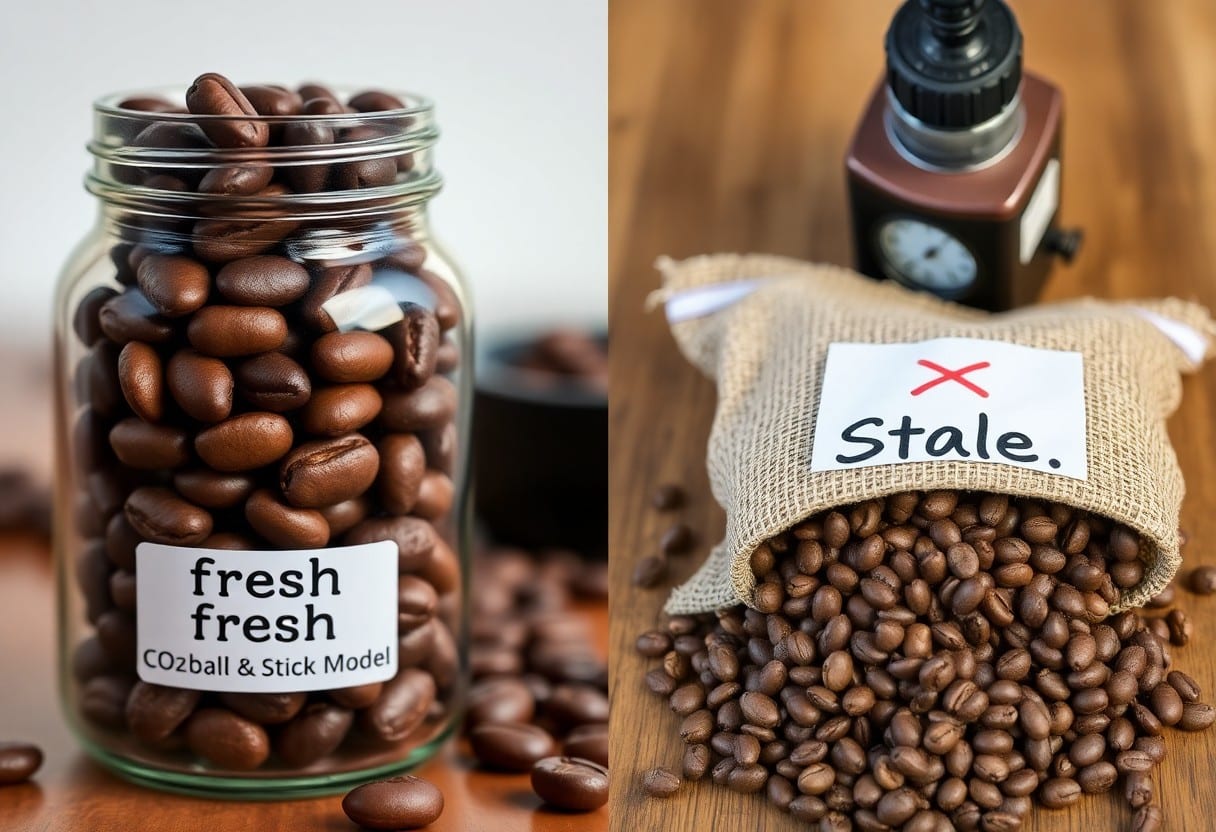
The Chemistry of Coffee Staling
Oxygen attacks oils and fragile aromatics, so you notice bright notes fade as compounds oxidize into flatter, less complex flavors.
Roast-generated free radicals and thermally altered compounds continue to evolve after cooling, which means you experience subtle shifts in acidity and sweetness even in stored beans.
Oxidation and Volatile Compound Loss
Oxidation strips low-molecular-weight volatiles quickly, so you detect stale, cardboard-like aromas within days when beans contact air.
Exposure increases reactive surface area, so you find ground coffee loses its volatile profile far faster than whole beans and will taste muted sooner.
The Impact of Degassing Post-Roast
Degassing releases CO2 and carries off some aromatics, so you should balance how long you let beans rest before sealing or brewing to avoid sourness or loss of clarity.
Pressure-managed packaging with one-way valves allows CO2 to escape while blocking oxygen, so you can prolong aroma retention after roast.
Timing varies by origin and roast level, so you might find some coffees peak in aroma a few days after roasting while others stabilize over weeks.
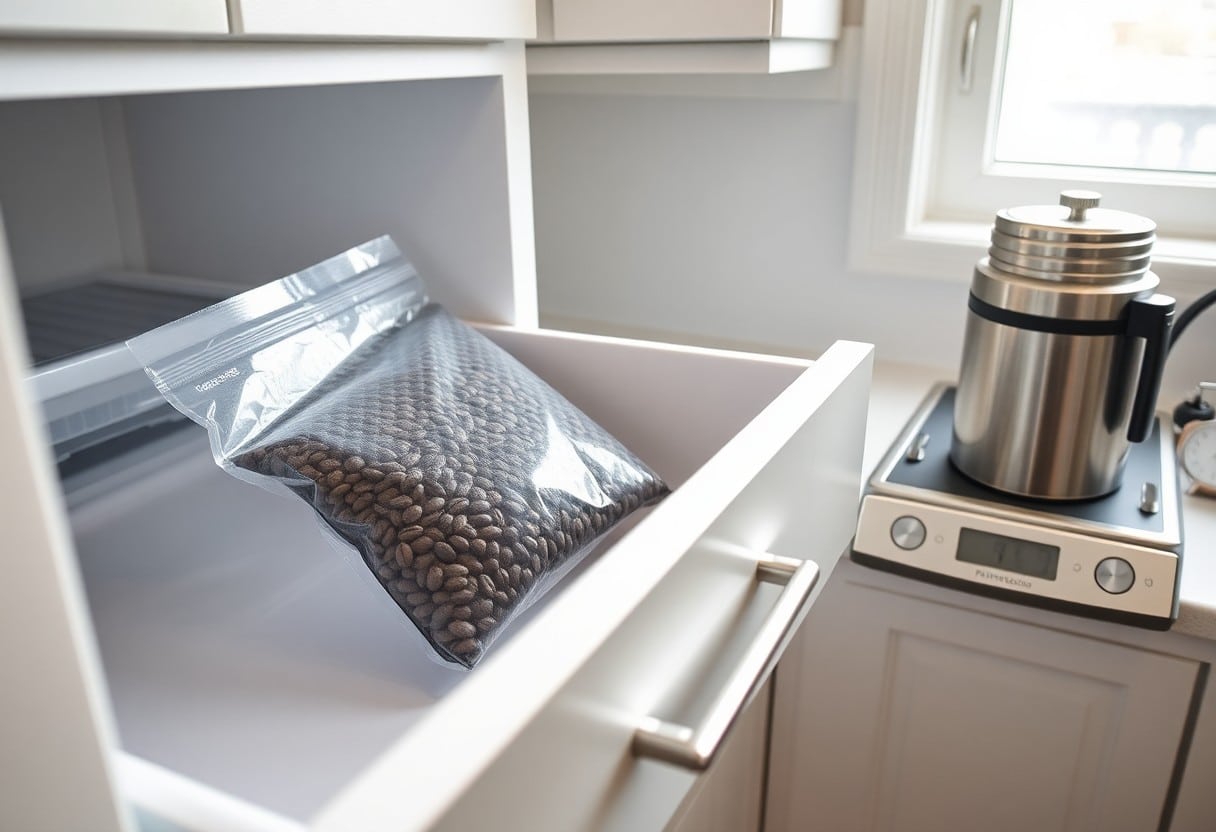
Debunking the Freezer and Refrigerator Myth
Freezing your beans can trap moisture and accelerate staling when you thaw them, so you’ll often lose bright aromatics and taste. Read controlled comparisons at Myth of Fact? 1 Common Coffee Myths Debunked to see how freezing affects freshness.
Refrigerating beans exposes them to odor transfer and humidity swings that you can’t manage, leaving you with muted flavor and off-notes.
Moisture Migration and Condensation Risks
Condensation forms when frozen beans warm, and you’ll end up with moisture on the surface that speeds oxidation and extraction problems during brewing.
Porosity and the Absorption of Food Odors
Packaging and bean pore structure let volatile compounds escape and let external smells in, so you’ll taste fridge aromas if beans sit near strong foods.
Beans stored by you should be kept in opaque, airtight containers at room temperature, away from spices and strong-smelling items to preserve aroma and clarity.
The Reality of Airtight vs. Vacuum Storage
Airtight containers slow oxygen exposure but do little for trapped volatile compounds, so you should still expect flavor changes over weeks if beans remain warm or moist.
Vacuum storage removes air to reduce oxidation, but you should understand that it cannot stop gas exchange through micro-cracks and may compress delicate oils, altering aroma.
Limitations of Standard Sealed Canisters
Standard sealed canisters give you short-term protection yet often lack one-way valves and don’t manage CO2, leading to stale or bloated packages after degassing.
Many containers also fail to block light or temperature swings, so you should store beans in dark, cool spots even when using a sealed canister.
Benefits of Active CO2 Displacement
Active CO2 displacement replaces oxygen with inert gas so you can preserve volatile aromatics and extend perceived freshness without overcompressing the beans.
This method also reduces pressure build-up during degassing, so you won’t rely on flimsy one-way valves that can fail under strain.
You can pair CO2 displacement with opaque, insulated storage and small daily portions to maximize flavor retention and minimize waste.

Environmental Factors: Light and Heat
Sunlight on beans speeds the breakdown of volatile compounds and coffee oils, so you should avoid exposing stored coffee to direct rays and warm windowsills.
Store beans in opaque, cool containers and away from heat sources to limit flavor loss.
- Oxidation of lipids
- Faded aromatics
- Accelerated staling
Perceiving a flat, cardboard-like aroma tells you the beans were exposed to light or heat.
UV Degradation of Coffee Lipids
UV radiation causes lipid oxidation that produces rancid or soapy notes, so you should use true light-blocking packaging and avoid clear displays that let sunlight reach your beans.
Kinetic Energy and Accelerated Aging
Movement inside bags during transport or handling shakes oils toward the surface and increases contact with oxygen, so you should minimize agitation and decant into smaller airtight vessels as you consume the coffee.
Vibration from grinders, shelves, or vehicle travel increases microabrasion and surface exposure, which speeds stale flavors; you should store beans where they remain still and protected from constant motion.
Handling that makes beans tumble releases fines and exposes fresh surfaces to air, so you should scoop gently and limit transfers to preserve aroma and flavor.
Evaluating Bean Quality and Roast Dates
Check the roast date on the bag to judge how close beans are to their peak; you should expect whole beans to show their best complexity within a window that varies by roast and origin. If only a best-by date is present, treat it as less informative than a clear roast date when deciding what to buy and use.
Compare roast level and packaging when assessing quality, since lighter roasts often blossom later while darker roasts peak sooner and lose nuance faster; you should favor whole beans in one-way-valve bags and smaller purchases to preserve intended flavors between roast and decline.
Understanding the Peak Flavor Window
Know that the peak flavor window shifts by roast and bean type: many medium roasts shine between about 4-14 days after roast, whereas dark roasts can be at their best earlier and very light roasts sometimes benefit from a slightly longer rest. You should run consistent brews to learn how specific beans evolve so you can time consumption for your preferred profile.
Physical Signs of Degraded Beans
Smell offers the fastest cue: you should expect vivid, clean aromas-flat, cardboard-like, sour, or musty scents indicate staling or contamination and mean flavors have deteriorated. If you detect rancid or chemical notes, stop using the beans for brewing.
Look for visual and tactile clues such as faded color, excessive chipping, an oily sheen where it’s unexpected, or visible mold and insect damage; you should discard beans showing multiple signs since those defects signal irreversible quality loss and poor extraction results.
Best Practices for Long-Term Preservation
You should store whole beans in airtight containers and grind only what you need to preserve volatile oils and slow flavor loss.
Store small, sealed portions for daily use while keeping bulk reserves in cool, dark containers to reduce oxygen and moisture exposure.
Selecting Opaque and Non-Reactive Materials
Choose opaque, non-reactive containers such as stainless steel, ceramic, or tinted glass with tight seals to block light and prevent off-flavors.
Avoid clear jars and reactive metals that transmit light or impart tastes; opt for one-way valves or vacuum-seal options when available.
Proper Placement in Domestic Environments
Keep containers in a cool, dark cupboard away from ovens, windows, and heat-producing appliances to minimize temperature fluctuations that speed staling.
Place opened beans toward the back of cabinets and away from vents or the fridge to reduce humidity swings and odor transfer while maintaining access.
Consider storing a small daily jar on the counter for convenience and keeping the bulk supply sealed in a stable, cool spot to maximize shelf life.
Final Words
The roast date and storage method determine your cup more than marketing claims. You maintain freshness by buying smaller quantities, keeping beans in an opaque airtight container away from heat, and grinding just before brewing. You can use the freezer for long-term storage only if beans are vacuum-sealed; daily-use beans should stay at room temperature. You will taste the difference when freshness comes from simple, correct handling.

FAQ
Q: Do coffee beans go bad or just lose flavor?
A: Whole coffee beans do not spoil like fresh produce, but they do lose aroma and flavor as volatile compounds oxidize and evaporate. Oxygen, light, heat, and moisture speed the degradation process. Proper storage slows flavor loss so beans remain enjoyable for weeks rather than tasting flat after a few days.
Q: Is freezing coffee beans a good way to keep them fresh?
A: Freezing is an effective long-term option when beans are portioned and sealed airtight to prevent moisture and odor transfer. Small vacuum-sealed or double-bagged portions minimize repeated thaw cycles and keep outside air from reaching the beans. Thaw a portion to room temperature before opening to avoid condensation on the beans.
Q: Should I store coffee beans in the refrigerator?
A: Refrigerators expose beans to frequent temperature changes and ambient moisture that can cause condensation and flavor degradation. Beans also absorb odors from other foods in the fridge. A cool, dark pantry in an airtight container is a better short-term choice.
Q: Are one-way valves on retail bags important?
A: One-way valves let CO2 released after roasting escape without letting oxygen in, preventing bag bloating and reducing oxidation. Bags with valves and light-blocking material provide good short-term protection. Once opened, transfer beans to an opaque, airtight container to limit exposure to air and light.
Q: Should I buy whole beans or pre-ground coffee?
A: Whole beans retain their aromatic oils and volatile compounds much longer than pre-ground coffee. Grinding immediately before brewing preserves peak flavor and aroma. Pre-ground coffee is more convenient but loses freshness quickly, usually within days of grinding.
Q: How long after roasting are beans at their best?
A: Peak flavor depends on roast level and extraction method, but a common window is 3-14 days after roast for many brewing styles; espresso may benefit from a short degassing period of 2-7 days. Beans remain pleasant for several weeks if stored properly, while noticeable staleness often appears after a month or more.
Q: How can I tell if my coffee beans are stale or off?
A: Fresh beans smell fragrant, complex, and lively; stale beans smell flat, dull, or cardboard-like and lack vibrancy. Brewed coffee from stale beans tastes muted, lacks acidity and aroma, and may produce weak crema on espresso. Oily sheen alone can indicate roast level rather than spoilage, so taste and smell are better indicators.