

There’s no mystical alchemy, but you can use practical, science-backed methods-controlled rehydration, gentle heat, and roast or grind adjustments-to recover aroma and flavor in dormant beans and assess whether restoration is worthwhile.
Key Takeaways:
- Alchemical methods cannot miraculously restore dormant bean freshness; practical interventions like re-roasting, controlled rehydration, or modifying grind and brew parameters can partially recover aroma and flavor.
- Controlled rehydration and brief, measured heat exposure can revive some volatile compounds, but compounds lost through prolonged aging cannot be fully replaced.
- Prevention through airtight, cool, low-oxygen storage and timely consumption preserves freshness far better than any restorative technique.
The Hermetic Seal: Analyzing the Anatomy of a Dormant Seed
Examination of the seed interior shows tightly packed cotyledons, desiccated cytoplasm, and a thin living embryo you must protect when attempting revival. You should note that the outer barriers and internal reserves determine the window for restoring freshness.
Lipid Oxidation and the Loss of Cellular Vitality
Peroxidation of seed lipids accelerates rancidity, producing free radicals that damage membranes and reduce the germination potential you aim to recover. You can monitor lipid breakdown with peroxide assays or sensory cues, and cold, dry storage slows deterioration but rarely reverses past damage.
Structural Integrity and the Lignified Seed Coat
Lignified seed coats block moisture and gas exchange, so you must consider scarification or controlled hydration to breach the barrier without harming the embryo. Microscopic fissures and mineral deposits change imbibition dynamics, and you should weigh mechanical or chemical treatment against increased infection risk.
Scarification by gentle abrasion or brief acid exposure increases water uptake and can reactivate metabolism in some beans, but you must trial small batches to confirm that the embryo remains viable before scaling the method.
The Solvent of Life: Hydro-Dynamics in Rejuvenation
Water acts as the primary carrier for metabolic restart; you should moderate contact time and temperature so moisture penetrates without promoting rot. Controlled wetting restores pliability and triggers enzymatic repair while you monitor weight and texture for signs of excess hydration.
Manipulating Osmotic Potential for Deep Hydration
Osmotic adjustments enable you to pull water deeply into bean tissues by using low-concentration solutes that reduce abrupt influx. Gentle gradients prevent cellular collapse while you observe swelling and seed-coat permeability to time subsequent hydration steps.
Mineral Infusion and Electrolytic Balance
Mineral supplementation can restore ionic balance and reactivate membrane transport; you can include trace amounts of calcium and magnesium to stabilize cell walls and support enzyme cofactors. Test small batches to gauge responsiveness before scaling treatments.
Calcium ions strengthen pectin networks and reduce leakage during rehydration, so you may provide buffered sources at low concentrations to avoid osmotic shock. Monitor conductivity and flavor changes as proxies for internal ionic shifts.
Electrolyte management also involves balancing anions like phosphate and sulfate, which influence respiration and ATP synthesis; you can use mild mineral mixes to sustain early metabolic pulses while periodic rinses prevent salt buildup that would reverse hydration benefits.
The Calcination Phase: Utilizing Alkaline Catalysts
You can apply mild alkaline treatments to shift bean pectin and oils, gently coaxing aromas back into dormant beans; consult How to Revive Stale Coffee Beans – LifeTips – Alibaba.com for a practical kitchen method.
Breaking Pectin Bonds via Sodium Bicarbonate
Apply a dilute sodium bicarbonate rinse to break pectin bonds, allowing you to dry and roast small test batches to assess flavor without producing soapy notes.
Chemical Softening of the Sclerotic Layer
Soften the sclerotic outer layer with brief alkaline contact at controlled temperature so you can increase moisture permeability and release trapped volatiles.
Monitor pH and exposure time closely, because you will want to halt treatment before structural damage or off-flavors develop.

Thermal Transmutation: The Application of Controlled Heat
Heat reactivates mobility in bean lipids and starches, allowing you to recover aroma and soften textures without chemical additives. Gentle, controlled warming can reverse some age-related firmness while preserving volatile compounds if you monitor time and temperature.
Applying low, even heat with intermittent moisture helps you avoid scorch or excessive drying; test small batches to find the sweet spot for each bean type.
Kinetic Energy and Starch Retrogradation
Starch retrogradation stiffens cooked beans as amylose chains reassociate; by reintroducing heat and moisture you can partially disrupt those bonds and restore tenderness. Careful staging of temperature cycles lets you target retrograded regions without overcooking.
Accelerating Molecular Agitation in Aged Fibers
Kinetic energy from agitation raises molecular agitation in aged fibers, so you can use gentle tumbling, shaking, or stirring during warming to loosen compacted matrices.
Accelerating treatment by combining mild steam and motion increases penetration and aroma release, but you should avoid prolonged high temperatures that drive off desirable volatiles.
Microscopic disruption techniques such as low‑power ultrasound or brief vacuum pulses can enhance diffusion and soften cell walls, and you can trial short exposures to balance restoration against structural damage.
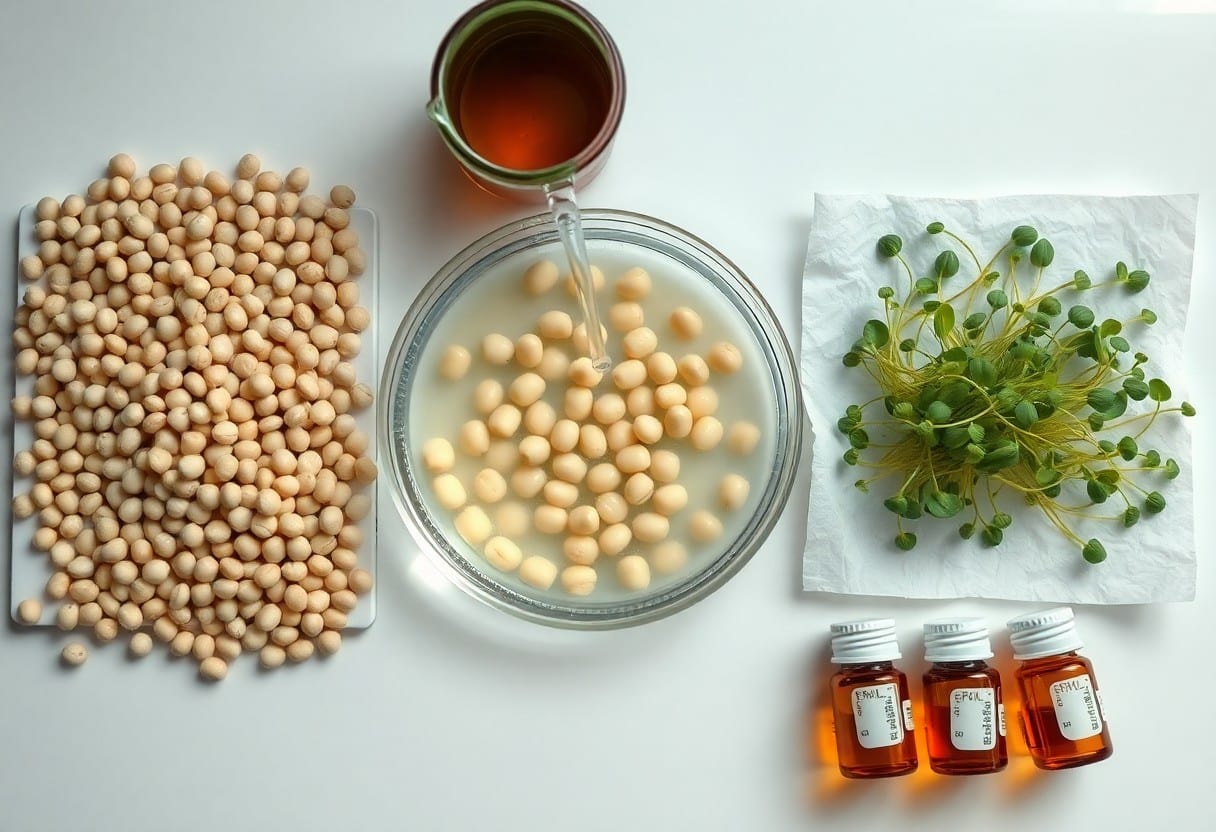
Biological Alchemy: Sprouting and Enzymatic Activation
Sprouting initiates a cascade of enzymatic changes that you can trigger to restore bean flavor and digestibility by applying measured moisture and warmth to coax dormant seeds back into metabolic life.
Awakening the Germination Potential
Germination techniques you apply-soaking, frequent rinsing, and consistent gentle heat-reactivate endogenous enzymes, soften cell walls, and reduce compounds that cause bitterness and poor texture.
Reducing Phytic Acid for Enhanced Bioavailability
Soaking in slightly warm water with periodic drainage lowers phytic acid levels, so you can improve mineral availability before or during sprouting without harming seed viability.
Fermentation with lactic cultures or a short souring phase further degrades phytates and creates organic acids that you can use to boost nutrient uptake and extend palatability.
Modern Apparatus: High-Pressure and Vacuum Synthesis
Pressure rigs allow you to compress bean matrices to redistribute moisture and coax bound aroma compounds back toward extractable phases, often improving perceived freshness without chemical additives.
Vacuum chambers enable you to evacuate intercellular gases and then reintroduce tailored atmospheres or vaporized aromatics, promoting deeper infusion while limiting oxidation.
Cavitation Effects on Dense Legume Tissues
Cavitation pulses produce localized shear and microfractures, so you can increase permeability in dense cotyledons and facilitate movement of restorative agents.
Microbubble interventions permit you to target tissue interfaces with controlled energy, enhancing uptake of moisture and volatile precursors without widespread cell collapse.
Artificial Restoration of Volatile Aromatic Profiles
Aroma reconstitution methods let you expose beans to calibrated vapor blends so you can refill faded olfactory notes while monitoring textural impact.
Encapsulation approaches allow you to embed volatile-rich microcarriers that release compounds under pressure or mild heating, enabling staged restoration tailored to sensory goals.
Optimization demands you iterate concentrations, release triggers, and sensory thresholds, using analytical headspace data and tasting panels to avoid over- or under-correction.
Conclusion
Considering all points, you should accept that true alchemical revival of dormant bean freshness is not possible; you can partially restore aroma and texture by rehydrating beans briefly, applying gentle heat, or grinding just before brewing, but lost volatile compounds and chemical changes cannot be reversed. You will get modest improvement with careful treatment, yet consistent freshness depends on proper storage and sourcing recently roasted beans.
FAQ
Q: Are there alchemical methods to revive dormant bean freshness?
A: No magical alchemy exists that can fully restore chemical compounds lost from beans. Chemical changes caused by oxidation, loss of volatile oils, and moisture changes are largely irreversible for roasted coffee beans and ground spices. Practical treatments can improve texture or temporarily boost aroma, but results fall short of original freshness. Distinguishing between dried legumes and roasted coffee is important because each responds to different practical techniques.
Q: Can re-roasting stale coffee beans make them fresh again?
A: Re-roasting can change a stale bean’s flavor profile and mask some flatness, but it cannot recreate the original volatile aromatics that were lost. Low-temperature re-roasting will darken and dry the bean further, risking bitter or burnt notes if done too long. Small, experimental batches in a skillet or low oven may produce a slightly more uniform roast, but most professionals advise using stale beans for less demanding applications rather than trying to restore them to peak quality.
Q: Will steaming, microwaving, or briefly heating roasted beans restore aroma?
A: Brief gentle warming can release surface oils and intensify aroma for a short time, creating the impression of freshness. Introducing moisture by steaming or microwaving typically harms roasted beans; trapped moisture accelerates degradation and can ruin grind consistency. Warmth-only methods carry a temporary benefit at best and should be used just before brewing rather than as a storage fix.
Q: How can I revive dried legumes (beans) that seem old and hard?
A: Soaking and proper cooking are the best revival methods for dried legumes. Overnight soak in cold water for 8-12 hours hydrates seeds and cuts cooking time; a quick-soak method involves boiling for 2-3 minutes then letting sit 1 hour. Pressure cooking achieves the best texture for older beans and shortens cooking time substantially. Adding a pinch of baking soda can accelerate softening but will alter flavor and reduce some nutrients; always boil kidney beans briskly for at least 10 minutes to destroy lectins before simmering.
Q: What storage techniques prevent beans from becoming dormant or stale?
A: Airtight, opaque containers kept cool and dry slow oxidation and moisture uptake. Vacuum sealing or using oxygen absorbers extends shelf life for roasted coffee and dried legumes; vacuum-packed portions avoid repeated exposure to air. Freezing roasted coffee in single-use airtight packets preserves freshness longer, provided thawing is not repeated. Keep dried legumes in a cool pantry and protect them from insects with sealed containers or food-safe jars.
Q: How do I tell if beans are beyond recovery and should be discarded?
A: Visible mold, sliminess, insect infestation, or a sour/musty odor indicates spoilage and the beans should be discarded. Rancid smell in roasted coffee or an off chemical aroma means oils have gone bad and the product is no longer suitable for consumption. For dried legumes, pervasive powder, holes, or live insects signal loss of quality; texture alone (very hard after soaking attempts) can also indicate old beans that will not cook to a pleasant texture.
Q: What useful alternatives exist for stale beans that can’t be fully revived?
A: Stale roasted coffee beans work well for cold-brew concentrates, homemade coffee rubs, baked goods, or as an ingredient in chocolate and dessert recipes where intense fresh aroma is not required. Stale dried legumes can be ground into flours for soups, flatbreads, or pet feed, used in long-cooked stews where texture is less critical, or composted for soil improvement. Creative culinary uses extract value without trying to force full freshness back into a degraded product.