
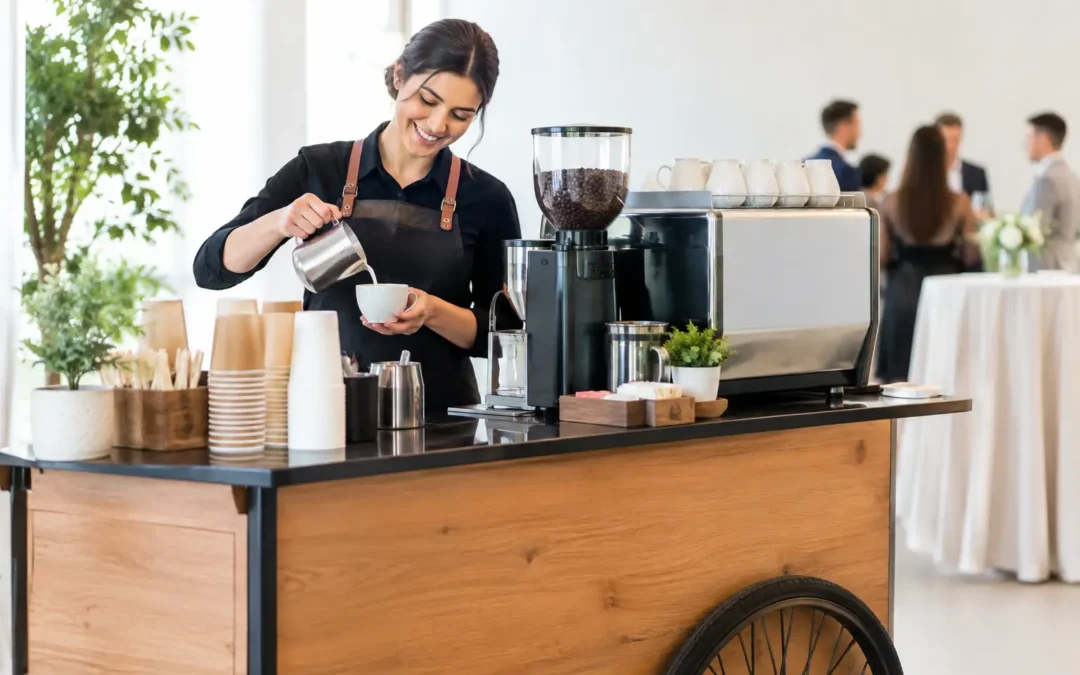
A great event coffee cart does more than hand guests a flat white. It creates a welcoming first stop, keeps conversations flowing and gives people a small, freshly brewed moment to look forward to. This event coffee cart checklist helps organisers plan the details that make mobile coffee service feel effortless for guests, rather than rushed behind the scenes.
Start with the purpose of the coffee service
Before choosing drinks or estimating cups, decide what the cart needs to achieve. Coffee service at a 9 am staff training day has a different rhythm from a public festival, a product launch or an evening wedding. At a workplace event, a quick, reliable morning rush may be the priority. At a branded activation, the cart may need to be a conversation starter, with a menu and presentation that reflect the campaign.
Think about when guests will arrive, where they will naturally gather and how long they are likely to stay. If coffee is the first thing attendees see, it can set a polished, generous tone from the outset. If it is one feature within a larger event, place it where guests can find it easily without blocking registration, catering or foot traffic.
Event coffee cart checklist: the essentials
A mobile coffee cart brings café-quality equipment to your venue, but the site still needs to support good service. Confirm these practical details early, ideally before finalising your run sheet:
- Guest numbers and service window: Share expected attendance, plus the times coffee is needed. A two-hour morning service for 60 guests requires a different setup from all-day service for 500 people.
- Venue access: Check vehicle entry points, loading zones, lift dimensions, stairs, gates and the distance from parking to the serving area. Tight access is manageable when it is known in advance.
- Power: Ask the venue what power is available, where outlets are located and whether the circuit is dedicated. Coffee machines draw serious power, so this cannot be an afterthought.
- Water and waste: Confirm whether a nearby water source is available and where wastewater can be managed. For outdoor events, this may shape the ideal cart location.
- Space and surface: Allow room for the cart, the barista, a clear guest queue and safe movement around the setup. A level, stable surface matters, particularly on grass, gravel or uneven paving.
- Weather plan: For outdoor service, organise shade, shelter and a wet-weather alternative. Wind, rain and harsh sun affect both guest comfort and coffee equipment.
- Venue rules: Some sites have specific requirements for bump-in times, public liability documents, noise, waste, generators or food-service areas.
These details may sound operational, but they protect the guest experience. A well-positioned cart means the aroma of freshly ground coffee reaches the room, orders move smoothly and nobody is left wondering where their morning caffeine has gone.
Allow enough time for bump-in and pack-down
Coffee service looks simple once the machine is humming, yet preparation is where event flow is won or lost. Your provider may need time to park, unload, set up equipment, heat the machine, dial in the coffee and prepare the service area before the first guest arrives.
Build bump-in time into the venue schedule, especially at offices, convention spaces and busy public sites where deliveries compete for access. Pack-down also needs a clear window after service. If the venue closes immediately or the loading bay is booked by another supplier, flag this when arranging the booking.
Match the menu to the crowd
A focused menu generally serves an event better than an oversized one. Espresso coffee, milk-based favourites, long blacks, tea and a considered decaf option cover most corporate and private functions beautifully. For warm Adelaide days, iced lattes or cold drinks can make a real difference, particularly at outdoor activations or afternoon events.
Milk choices deserve early attention. Oat, soy, almond and lactose-free milk are common requests, but guest preferences vary. For an internal office function, ask staff in advance. For a public event, choose a practical range based on expected demand and the length of service. If dietary requirements are significant, tell the coffee provider rather than assuming a standard menu will suit everyone.
Seasonality can add character without complicating the operation. A rich hot chocolate in winter, an iced long black in summer or a simple signature drink can give the menu its own story. The best choice depends on whether you want speed, variety or a memorable branded touch. Usually, you can have two of the three without slowing the queue too much.
Consider food, but do not let it hold up coffee
Pastries, biscuits or a light breakfast pairing can make a coffee cart feel even more generous. It also changes the service rhythm. If food is supplied separately, place it close enough for guests to enjoy both, but far enough away that one queue does not clog the other.
For large events, coffee often performs best beside grab-and-go food rather than a plated breakfast. Guests can collect a cup, make their choices and keep moving. That matters when everyone has a session to get to at the same time.
Plan for the rush, not the average
Most events do not have a steady stream of orders. They have peaks. A conference break, a 10 am team meeting, a keynote finish or the opening of a trade stand can send half the room towards coffee within minutes.
Give your provider a realistic schedule, including speeches, breaks and registration times. If there is a predictable rush, consider a longer service window, a second service point or a streamlined menu during the busiest period. The right approach depends on guest expectations and budget, but it is always easier to plan for a surge than explain a queue after it forms.
For corporate bookings, one useful question is whether coffee will be complimentary, voucher-based or purchased by guests. Complimentary coffee encourages uptake and creates a welcoming gesture, while vouchers help control volume. Paid service may suit public events, though clear signage and payment options become more important.
Make the cart part of the event experience
A mobile café can be functional, or it can become a feature people photograph, talk about and remember. For product launches and marketing activations, ask how the cart can work with your brand colours, signage, cups or campaign message. Keep the design purposeful. Guests should recognise the activation quickly, while still feeling they are being offered proper specialty coffee rather than a promotional prop.
Location plays a big role here. A cart tucked behind a partition will not create much energy, even if the coffee is excellent. A cart near the entrance, networking area or main gathering space can invite natural interaction. Just leave enough clearance for the queue, accessibility and venue traffic.
Lygon Coffee brings the craft of freshly roasted speciality coffee to events while keeping the logistics practical, from the first espresso of the morning to the final takeaway cup.
Share one clear event brief
The easiest way to avoid crossed wires is to provide a single, current brief before the event. Include the venue name and full address, on-site contact and mobile number, access instructions, parking details, setup location, service times, expected guests, menu preferences and any relevant dietary or branding notes.
If the site is unusual, photos can be helpful, especially for outdoor areas, narrow driveways or multi-level buildings. Let the provider know about changes as soon as they happen. An attendance increase, revised start time or a relocated entrance can affect staffing, stock and setup planning.
Do a final check 48 hours out
Two days before the event, confirm the details that can change at the last minute: guest numbers, weather, access, power, venue contact and run-sheet timing. This is also the moment to check that your internal team knows where the coffee cart will be and whether guests need vouchers, directions or a service announcement.
A coffee cart works best when it feels like it was always meant to be there. Give the practical details the attention they deserve, then let guests enjoy the rich flavours, friendly service and familiar comfort of a beautifully made cup.