
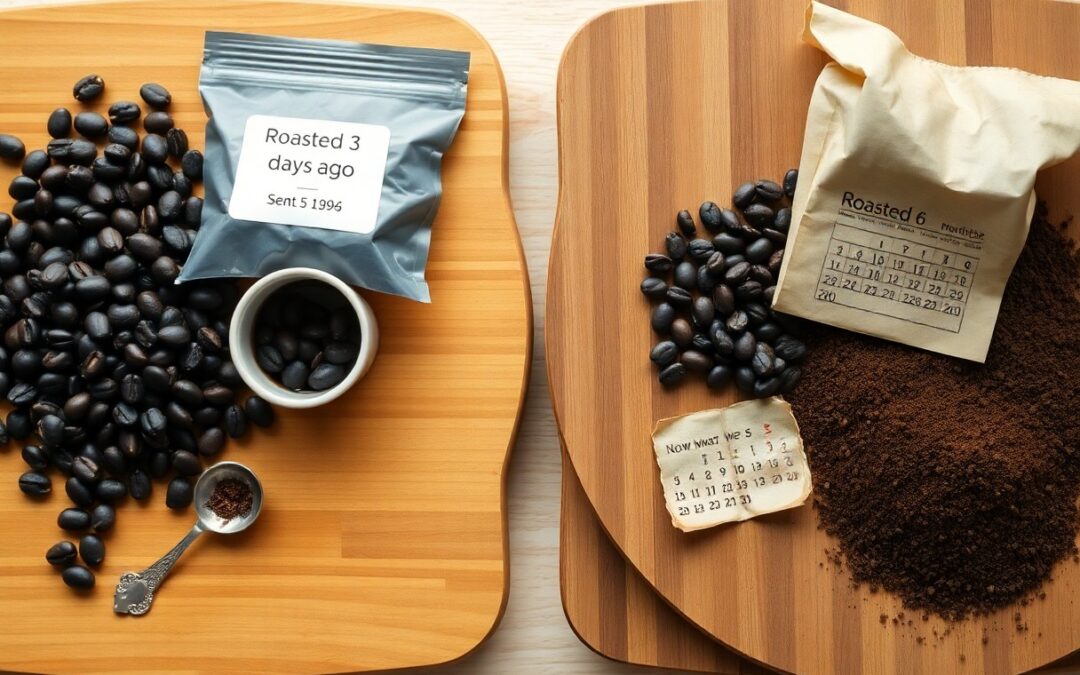
Aroma changes as beans age, shifting volatile compounds and altering what you perceive; you assess roast date, storage and grind to predict scent. Consult A Science Guide To Coffee Freshness for the scientific evidence.
Key Takeaways:
- Freshly roasted beans offer the richest, most complex aroma within a limited window (about 3-14 days after roasting); oxidation and time progressively strip volatile aromatic compounds.
- Grinding and exposure to air accelerate aroma loss, with ground coffee losing volatiles far faster than whole beans; oxygen, heat, and moisture shift scents toward flat or cardboard-like notes.
- Bean degassing and roast development affect aroma release: very fresh beans emit CO2 that can hinder extraction and mute some aromas, while slightly rested beans often produce a more balanced aromatic expression.

The Chemistry of Volatile Organic Compounds (VOCs)
VOCs in fresh beans arise from enzymatic pathways, Maillard reactions during roast, and precursor breakdown, and you perceive them as the floral, fruity, and spicy top notes that define cup identity.
Profiles shift rapidly after roasting and during storage, so you need to consider both concentration and odor threshold when assessing how freshness alters the aroma spectrum.
Degassing and the Release of Carbon Dioxide
Degassing expels trapped CO2 along with many light volatiles, and you notice a pronounced fragrance bloom shortly after roast that diminishes as gases escape.
Oxidation and the Degradation of Lipid-Derived Aromas
Oxygen reacts with unsaturated lipids to form peroxides and carbonyls, and you will detect stale, papery, or fatty off-notes that suppress delicate floral and nutty nuances.
Peroxides decompose into volatile aldehydes and ketones that reduce aromatic complexity, so you should store beans in cool, low-oxygen, opaque containers to slow the oxidative cascade and preserve lipid-derived aromas.
Peak Freshness: The Post-Roast Maturation Period
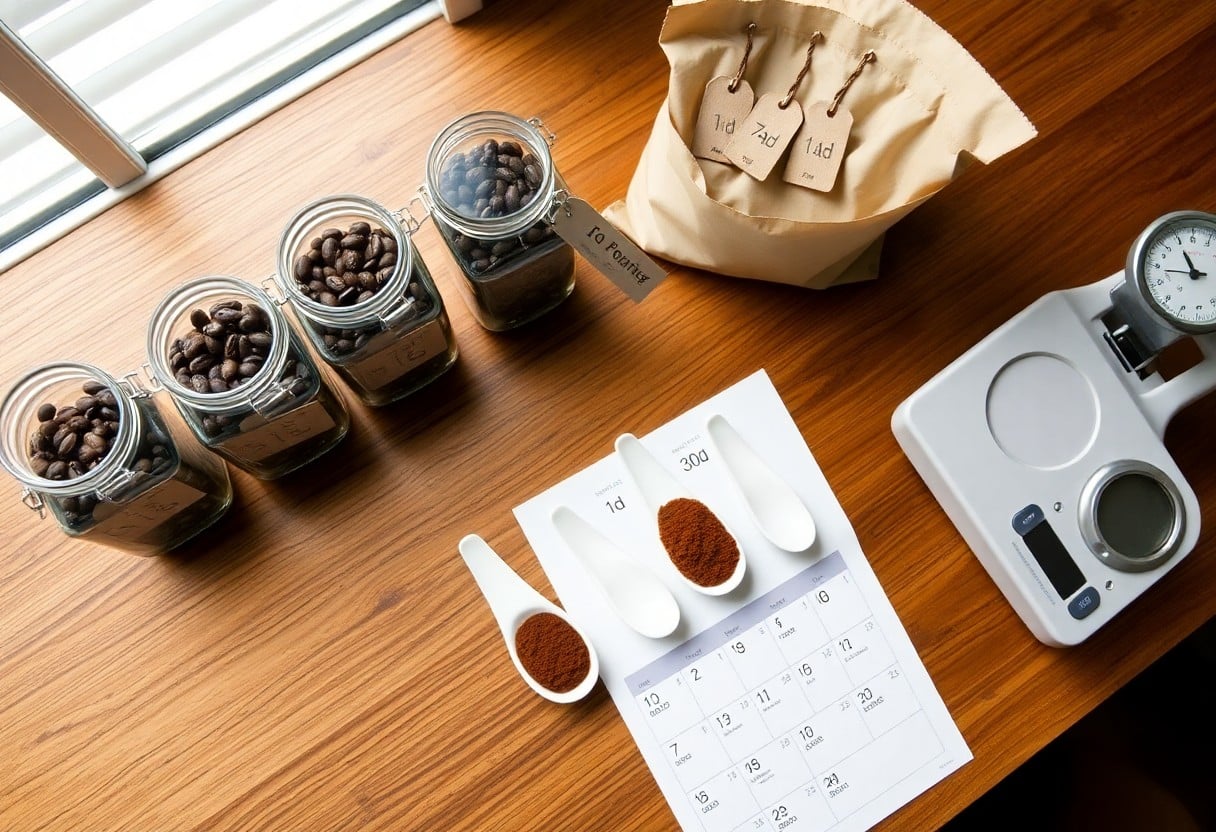
During the immediate weeks after roast, you will observe aromatic oils and gases stabilizing as volatile compounds recombine and dissipate. You should schedule tastings within this maturation period to capture balance between brightness and developed sweetness; sampling too early masks complexity, while waiting too long flattens top notes.
The Role of the Resting Phase in Flavor Clarity
Resting beans allows trapped CO2 to escape and fragile aromatics to cohere, giving you clearer flavor lines. You should perform short cuppings across several days to detect when acidity softens and tertiary notes emerge, guiding your brew timing and service decisions.
Identifying the Optimal Window for Aromatic Intensity
Timing the sweet spot depends on roast profile and origin; you should chart aroma intensity daily for the first two weeks and note peaks in floral, fruit, or caramel cues. Use consistent grind, dose, and water to isolate bean-driven changes.
Experimentation with cupping at 3, 7, and 14 days helps you map the aromatic curve for each lot; you should record sensory notes and correlate them with roast date so future batches slot into predictable windows for maximum olfactory impact.
Tracking sensory scores against roast dates lets you predict when volatile top notes peak and when body broadens; you should build simple logs to identify consistent windows for service, shipment, or blending.
Impact of Stale Beans on the Olfactory Profile
Staleness strips volatile aromatics, so you detect muted citrus, tea, and floral cues that once defined bright roasts.
Olfactory numbness reduces your ability to pick single-origin nuances, making blends feel homogenized and less rewarding to explore.
Loss of Enzymatic Acidity and Floral Top Notes
Enzymatic decline causes you to lose citric lift and delicate floral aromatics, leaving the cup flatter and less inviting.
The Emergence of Flat, Earthy, and Rancid Secondary Tones
Rancidity and oxidation push oils into sour, cardboard-like notes, so you perceive stale, greasy aromas that dominate the cup.
Earthy amplification muddies aromatic clarity, causing you to miss subtle spice, fruit, or floral signatures that once stood out.
Oxidation accelerates breakdown of volatile compounds, so you often detect damp, papery smells and a lingering aftertaste that signals advanced staling.
Environmental Factors Accelerating Aromatic Decay
Heat speeds volatilization of delicate aromatics, so you notice muted florals and citrics sooner when beans sit warm; rapid molecular motion also promotes secondary reactions that alter headspace composition.
- Thermal stress
- Oxygen exposure
- Light exposure
- Moisture/humidity
Oxygen drives oxidation of key aroma compounds and you should limit air contact during cooling and storage. After you cool and seal beans promptly you slow the cascade that erodes the aroma spectrum.
Thermal Influence on Molecular Kinetic Energy
Temperature increases molecular kinetic energy so you witness faster volatilization and accelerated breakdown of aroma precursors; you can preserve notes by keeping storage temperatures low and stable.
Humidity and the Hydrolysis of Soluble Solids
Moisture promotes hydrolysis of soluble sugars and proteins in the bean matrix, and you will observe sweet and fruity esters convert to less aromatic products as humidity rises.
You should control relative humidity because fluctuating moisture accelerates enzymatic and non‑enzymatic hydrolysis that flattens the overall aroma profile, making freshness preservation more difficult.
Sensory Evaluation: Distinguishing Freshness in the Cup
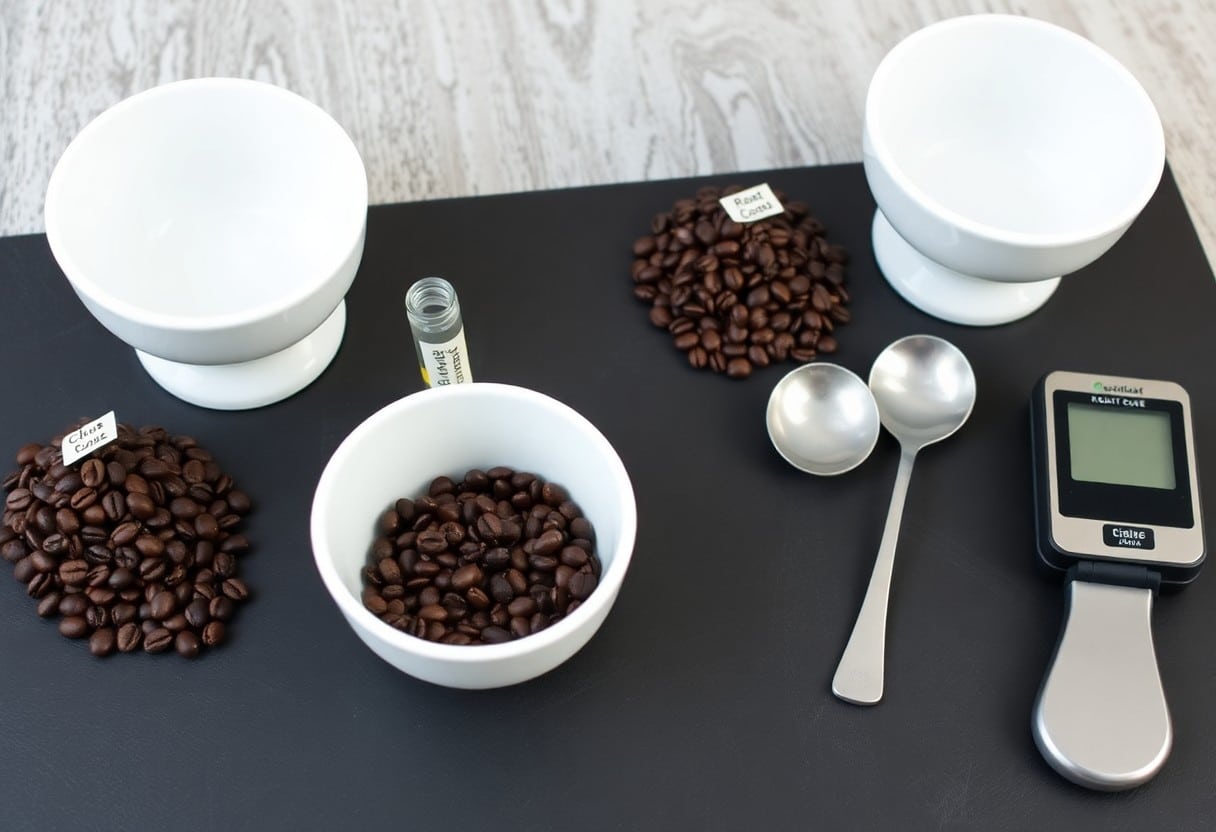
Tasting fresh cups trains you to distinguish volatile aromatics from the flat, staled notes that develop as beans age, sharpening your ability to score fragrance layers and acidity-sweetness balance.
Sensory Benchmarks
| Aroma Intensity | Bright and volatile vs dull and compressed |
| Fragrance Persistence | Long-lived top notes vs rapid decline |
| Acidity Expression | Clear and lively vs muted and flat |
| Mouthfeel | Clean, lively finish vs heavy, lifeless finish |
Bloom Dynamics and Fragrance Perception
Observe the bloom to watch CO2-driven aromatic release and to predict whether top notes will hold or dissipate as the cup cools, which informs how you weight initial sniff versus later sips.
Comparative Cupping of Aged vs. Fresh Roast Profiles
Compare simultaneous brews to reveal brightness and fleeting florals in fresh roasts versus heavier caramelized or papery tones in aged beans, enabling you to flag age-driven shifts in profile.
Smell at timed intervals so you can chart fragrance decay and identify which scent families-citrus, floral, roasted-persist or vanish, linking those patterns to bean age and storage conditions.
Comparative Notes
| Metric | Fresh vs Aged Observations |
| Citrus & Floral | Pronounced and lively vs subdued or absent |
| Caramel/Maillard | Balanced presence vs dominant, syrupy tones |
| Off-Notes | Minimal vs grainy, cardboard tendencies |
| CO2/Bloom | Active bloom with aromatic lift vs weak bloom and muted release |
Final Words
Presently you can taste how bean freshness sculpts the aroma spectrum: just-roasted beans release volatile compounds that deliver bright floral, fruity, and caramel notes, while aged beans lose top notes and gain flat, oxidized or cardboard-like scents. Proper storage and prompt grinding preserve those volatiles so you extract the intended spectrum, and your roasting level will interact with age to mask or expose specific aromas.
FAQ
Q: What does the phrase “elusive aroma spectrum” mean when talking about coffee bean freshness?
A: The term refers to the full range of volatile aroma compounds that a brewed coffee can express, from high notes like florals and citrus to base notes like caramel and chocolate. Volatile compounds include esters, aldehydes, ketones, pyrazines, and phenols; each compound has its own volatility and odor threshold that shapes how the cup smells. Freshness influences which compounds are present and in what concentrations, creating a shifting balance that makes aromas feel complex or muted.
Q: How does roast date affect the timing and intensity of the aroma spectrum?
A: Roasted beans undergo rapid degassing of CO2 and many volatile molecules in the first hours to days after roast, changing aromatic intensity. Lighter roasts often show pronounced top notes (fruity, floral) within several days, while darker roasts may produce richer caramelized and smoky notes but lose delicate volatiles sooner. A practical window for peak aromatic complexity commonly spans roughly 3-14 days for filter brews and 7-21 days for espresso, with variation by origin and roast profile.
Q: What chemical processes cause aroma changes as beans age?
A: Oxidation consumes and transforms volatile compounds, lowering concentrations of fragile esters and aldehydes that produce bright, fragrant notes. Lipid oxidation and hydrolysis alter mouthfeel and can generate rancid or stale off-notes over weeks to months. Adsorption to bean matrices and slow loss through packaging valves also reduce volatile availability, while continued slow reactions among Maillard-derived compounds shift the aroma balance toward heavier, less volatile molecules.
Q: How does grinding fresh versus aged beans change the aroma experienced in the cup?
A: Grinding increases surface area and accelerates volatilization and oxidation, so aroma loss is much faster after grinding than while beans are whole. Whole beans preserve volatile compounds by limiting air exposure; grinding immediately before brewing captures the maximum portion of the aroma spectrum. Finely ground coffee will lose aromatic intensity faster than coarser grinds because of the greater exposed surface area.
Q: Which storage and packaging factors most influence how long the aroma spectrum remains vibrant?
A: Oxygen, humidity, light, and temperature each affect volatile stability and oxidation rates. Oxygen-permeable packaging accelerates aroma loss, while one-way degassing valves and vacuum or inert-gas flushing reduce oxygen contact. Cool, dark, dry storage slows chemical degradation; repeated opening of containers introduces fresh oxygen and moisture that speed aroma decline.
Q: How does bean freshness interact with extraction variables to shape the perceived aroma?
A: Fresh beans deliver higher concentrations of volatile, water-soluble aroma compounds, which extraction transfers into the cup as aromatic intensity and clarity. Under-extraction can mask delicate top notes, while over-extraction can emphasize bitter, heavy compounds that overshadow subtle aromatics. Espresso brewed from very fresh beans may produce greater crema and volatile lift, while stale beans tend to yield flat, muted, or stale-smelling results regardless of extraction precision.
Q: What practical steps can a home brewer take to preserve the aroma spectrum of coffee beans?
A: Buy beans in quantities you will use within a few weeks and choose roasters that list roast dates. Store whole beans in an opaque, airtight container with minimal headspace at a cool, stable room temperature and away from direct light. Grind immediately before brewing and avoid frequent trips to the freezer for daily-use beans; reserve long-term freezing only for sealed batches you will not reopen repeatedly. Use sensory checks-smell and pull a small dose-if aroma seems flat, rotate to fresher stock.